
Florida Defective Ladder Injury Claims and Recall Evidence
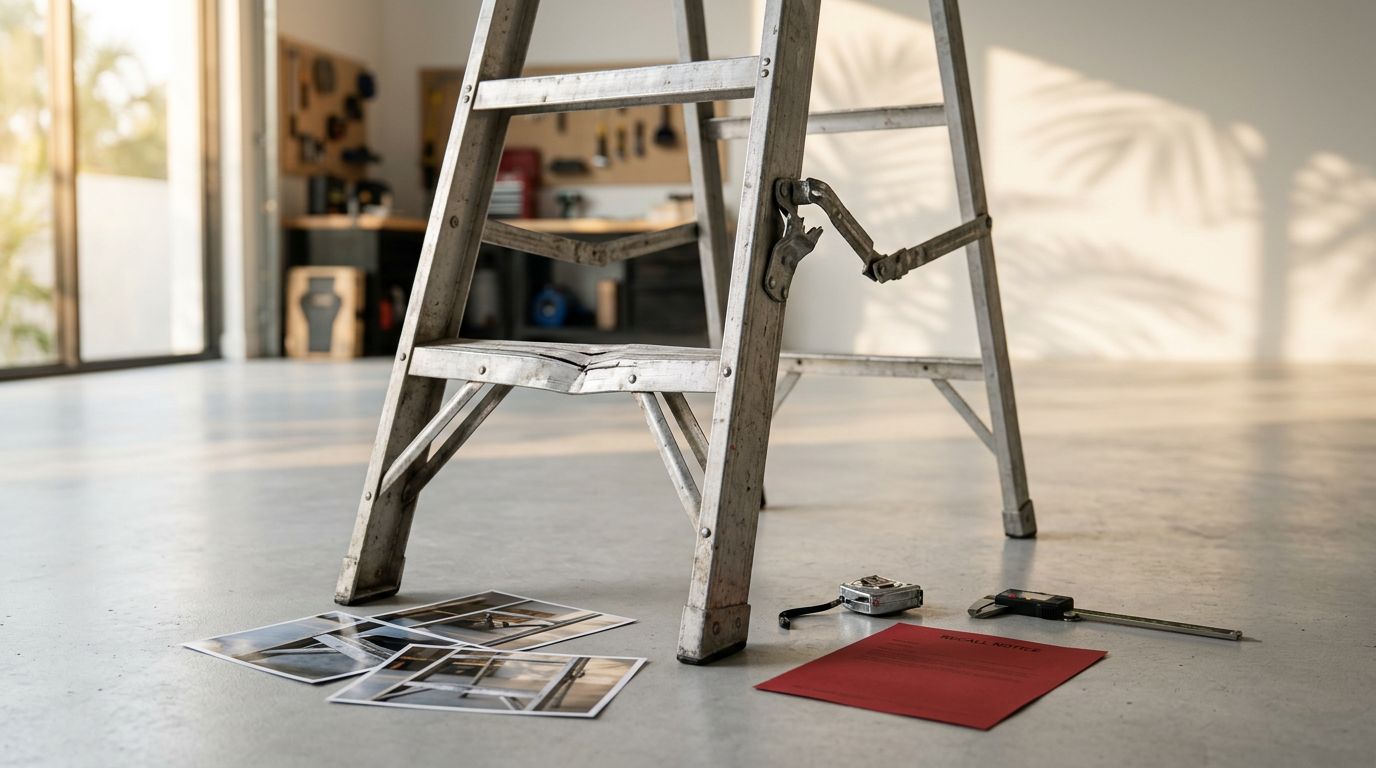
A ladder can fail before you have time to grab the side rail. For people researching defective ladder injury claims, the strength of the case often depends on what happened to the ladder after the fall.
A product recall, model number, broken component, or earlier safety complaint may help show that the ladder had a dangerous condition. However, injured people still need evidence connecting that condition to the fall, injury, and financial losses. The first step is identifying the possible legal claim and preserving the product.
When a Ladder Defect Can Support a Florida Injury Claim
A ladder injury claim may involve product liability, negligence, premises liability, or workers’ compensation. The correct legal theory depends on who supplied the ladder, where the accident occurred, and what caused the fall.
Design, manufacturing, and warning defects
A design defect affects the product as designed. For example, a ladder may have an unstable base, weak locking mechanism, unsafe hinge, or structure that creates an unreasonable fall risk during normal use.
A manufacturing defect occurs when one ladder differs from the intended design. A missing fastener, improperly attached rung, cracked rail, or defective locking part may create this type of claim.
Warning defects involve missing or unclear instructions. A ladder may require a particular setup, weight limit, surface, or inspection procedure. If the manufacturer knew about a serious hazard but failed to provide a reasonable warning, that failure may support liability.
The product must also be connected to the accident. A defect that never caused the ladder to move, break, collapse, or become unstable may not establish a successful claim by itself.
Who may be legally responsible?
Potential defendants can include the manufacturer, distributor, retailer, rental company, maintenance contractor, or another business that supplied or altered the ladder. A property owner or contractor may also face liability if an unsafe ladder or work area caused the fall.
For example, a store may have rented a ladder with a damaged hinge. A construction company may have left a ladder with a missing safety component at a job site. A property owner may have provided equipment that employees or visitors were expected to use.
The facts matter more than the label placed on the claim. A lawyer will examine who owned the ladder, who inspected it, who controlled the area, who received complaints, and whether anyone repaired or modified the product.
Evidence That Supports Defective Ladder Injury Claims
Recall evidence can be important because it may show that a manufacturer or government agency identified the same hazard in the same product line. The CPSC ladder recall records include product descriptions, hazard information, affected models, remedies, and manufacturer details.
A recall doesn’t automatically prove liability. It can still provide a valuable lead, particularly when the recalled condition matches the way the ladder failed.
Start with the model and serial number
Find the ladder’s brand, model number, serial number, manufacturing date, and warning labels. These details often appear on a sticker, plate, rail, hinge, or side section. Photograph each identifying mark before the label fades or the ladder gets discarded.
Search the CPSC recalls database using the brand and model. Check the date of the recall, the affected production range, the listed defect, and the recommended remedy. The timing can matter. A recall announced after an injury may help show that the hazard existed, but it may not prove the company knew about the problem before the accident.
A current example involves Louisville Ladder. On August 6, 2026, the CPSC announced a recall of more than one million attic stairway ladders because bolts could break during use, creating a fall hazard. The Louisville Ladder recall notice identifies the affected products and explains the reported risk.
A recall helps, but it doesn’t prove every case
A recall notice usually establishes that a product or component presented a recognized safety concern. It doesn’t establish that every accident involving that brand resulted from the recalled defect.
The case becomes stronger when several facts line up:
- The injured person used the recalled model or an affected production unit.
- The ladder failed in the way described by the recall.
- The ladder was used for its intended purpose and within its stated limits.
- Photos, witnesses, inspection records, or physical damage support the account.
- Medical records connect the fall to the claimed injuries.
Prior consumer reports may also help identify a pattern. The SaferProducts.gov public search database allows users to review reports involving dangerous consumer products. Search by brand, model, retailer, component, or product description.
A report is not automatically proof that the underlying event occurred exactly as described. Still, report dates, report numbers, photographs, and repeated complaints can help identify notice and guide further investigation. Preserve copies of useful reports because online records can change.
A recall is one piece of evidence. The key question is whether the recalled hazard caused this particular ladder to fail.
Preserve the Ladder and the Accident Scene
Physical evidence can answer questions that memory cannot. A photograph may show a bent rail, broken rung, separated hinge, missing foot, or warning label that later disappears.
Do not repair, clean, modify, return, or throw away the ladder after the accident. If the ladder belongs to a store, employer, contractor, landlord, or rental company, send a written request that the product and related records be preserved. A lawyer can issue a formal preservation letter and seek inspection of the ladder.
Photograph the product before anyone moves it
Take wide photographs of the area and close photographs of the ladder. Capture the surface beneath it, nearby objects, lighting, wet spots, uneven flooring, damaged parts, and the ladder’s position after the fall.
Keep the original files. Don’t rely only on social media copies or screenshots. Record when and where each photograph was taken. If surveillance cameras may have captured the accident, request that the property owner preserve the footage immediately because many systems automatically overwrite recordings.
Collect documents connected to the ladder, including:
- The receipt, rental agreement, online order, or delivery record.
- The instruction manual, packaging, and warranty information.
- Inspection, maintenance, repair, and replacement records.
- Workplace incident reports and safety training materials.
- Names and contact information for witnesses.
If someone changed the scene before photographs were taken, write down what changed and who made the change. That detail may become important when the other side argues that the ladder was safe.
Medical records connect the defect to the losses
Seek medical care promptly, even when pain appears manageable. Falls can cause traumatic brain injuries, spinal damage, fractures, torn ligaments, and soft-tissue injuries that worsen over time.
Tell medical providers that the injury resulted from a ladder fall. Follow treatment instructions and attend follow-up appointments. Gaps in care can give an insurer an argument that the injury was minor or came from another cause.
Keep records of emergency care, imaging, surgery, therapy, prescriptions, mileage, missed work, reduced hours, and changes in your ability to perform household tasks. In serious cases, future treatment and reduced earning capacity may form a large part of the claim.
Workplace Ladder Falls and Third-Party Liability
A ladder fall that happens during work may begin as a workers’ compensation claim. Florida workers’ compensation is generally no-fault, so an employee usually doesn’t need to prove that the employer caused the accident to seek covered medical care and wage benefits.
Report the accident to the employer as soon as possible. Florida generally requires notice within 30 days, although exceptions can apply. Delays can create disputes about whether the accident happened at work or whether the injury came from another source.
The Florida workers’ compensation ladder fall guide explains why early reporting and documentation matter after a workplace fall.
Workers’ compensation may be only one part of the case
Workers’ compensation benefits may cover authorized medical treatment and a portion of lost wages. They usually don’t provide damages for pain and suffering. The employer also generally has protection from a separate negligence lawsuit, subject to limited statutory exceptions.
A defective ladder may create a separate claim against an outside company. That party might be the manufacturer, retailer, equipment rental business, property owner, general contractor, or subcontractor.
The Florida third-party injury claims guide explains how a workplace injury can produce two different legal paths. The workers’ compensation claim may address immediate benefits, while a third-party lawsuit may seek broader damages when another party’s defect or negligence caused the fall.
Don’t sign a release with a manufacturer, retailer, rental company, or insurer before determining whether it could affect other claims. A settlement with one party may involve reimbursement rights, liens, or a release of related claims.
Florida Deadlines, Fault, and Compensation
Time limits can affect whether Florida defective ladder injury claims remain available. Under section 95.11(3)(d), a product-liability action for personal injury based on the design, manufacture, distribution, or sale of a product generally has a four-year statute of limitations. The current Florida statute of limitations should be reviewed with the facts of the case.
Ordinary negligence claims that accrued on or after March 24, 2023, generally have a two-year limitations period under Florida’s revised negligence law. A claim can involve more than one legal theory, so the deadline can’t be selected by looking at the accident date alone.
Florida’s product-liability repose statute can create another barrier. Section 95.031(2)(b) may bar some claims after 12 years from the product’s delivery, subject to statutory exceptions and a longer period for certain products. The ladder’s age, sale date, and delivery history should be investigated early.
Fault can reduce or prevent recovery
Florida’s modified comparative fault law may reduce damages when the injured person shares responsibility for the accident. Under Florida’s comparative fault statute, a plaintiff who is more than 50 percent at fault generally can’t recover in an action covered by the statute.
The defense may argue that the ladder was used on an uneven surface, exceeded its weight rating, leaned improperly, or was altered after purchase. Those arguments make photographs, instructions, witness accounts, and expert inspection important.
A successful personal injury claim may include past and future medical costs, lost income, reduced earning capacity, physical pain, disability, disfigurement, and loss of normal activities. Workers’ compensation benefits follow different rules and don’t provide the same categories of damages as a third-party product claim.
Conclusion
A ladder recall can provide a valuable connection between a known product hazard and a Florida fall, but the recall is only part of the proof. The model, physical condition, accident scene, medical records, witnesses, and timing must support the claim together.
Preserve the ladder, report a workplace accident promptly, search official recall and safety-report databases, and review the possible legal theories before deadlines expire. Strong defective ladder injury claims begin with evidence that shows exactly what failed and why that failure caused the injury.