
VA Neuropathy Ratings: Proving Nerve Damage and Functional Loss
Numbness can be easy to describe but hard to rate. For veterans, VA neuropathy ratings depend on more than painful tingling in the hands or feet. The VA must identify the affected nerve and measure how the condition limits real function.
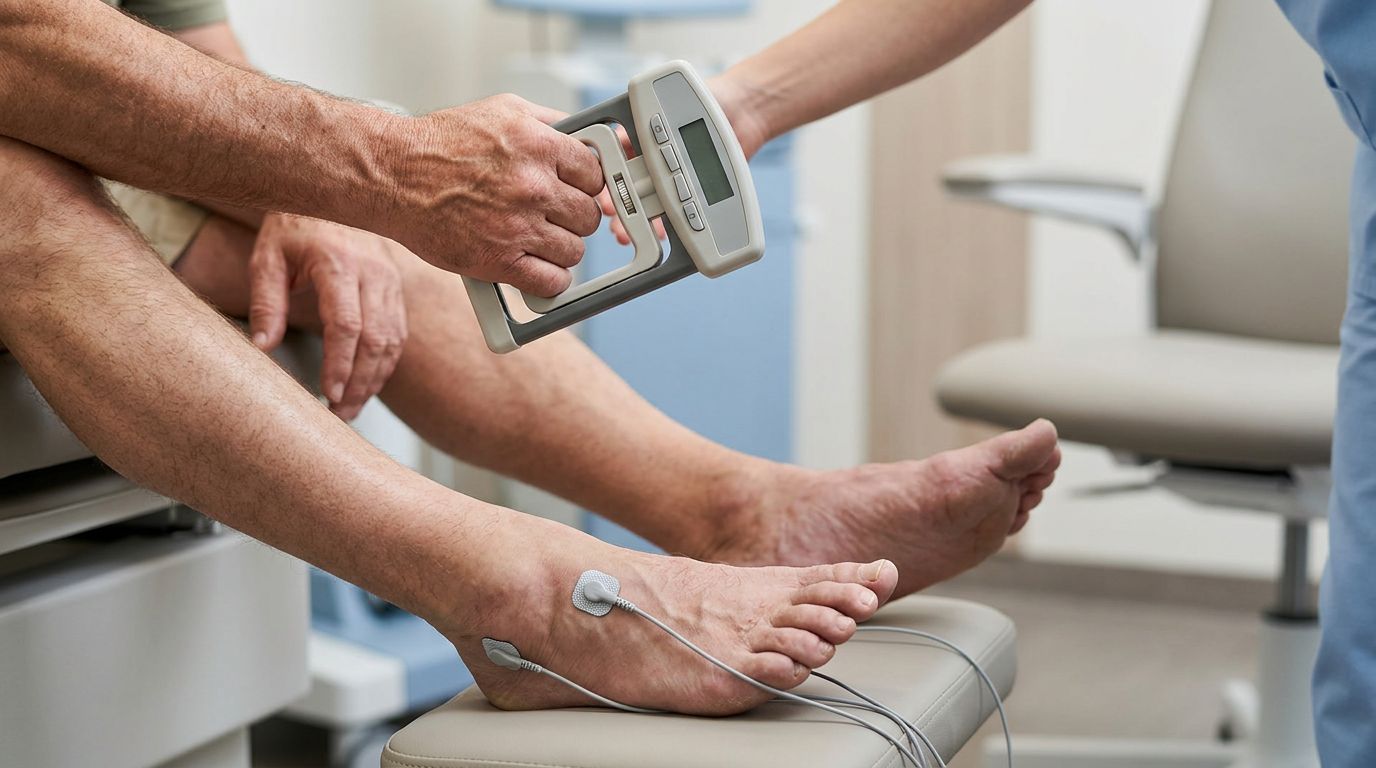
An EMG may support the diagnosis, yet a strong claim also shows weakness, falls, lost grip strength, foot drop, or other day-to-day losses. The medical record needs to connect the test result to the life you live.
How VA Neuropathy Ratings Are Assigned
The VA rates peripheral nerve conditions under 38 C.F.R. section 4.124a. The regulation focuses on impairment of motor, sensory, or mental function. In most neuropathy claims, the central issues are sensation and movement.
There is no single rating percentage for every diagnosis labeled “peripheral neuropathy.” A veteran with diabetic nerve damage in both feet may receive a different evaluation than someone with ulnar nerve damage in one hand.
The affected nerve controls the diagnostic code
The VA uses separate diagnostic codes for named nerves and nerve groups. Lower-extremity cases often involve the sciatic, femoral, tibial, or common peroneal nerve. Upper-extremity cases may involve the median, ulnar, radial, or other arm nerves.
Medical records should identify the nerve when possible. A vague diagnosis can still support service connection, but a clear nerve localization helps the VA select the correct code and percentage.
Severity terms have practical meaning
Most peripheral nerve codes use tiers such as mild, moderate, moderately severe, severe, and complete paralysis. “Incomplete paralysis” does not mean the nerve has stopped working entirely. It means the veteran has impaired function that falls short of the code’s description of complete paralysis.
The VA compares symptoms with the affected nerve’s duties. For example, a nerve that controls ankle movement raises different concerns than one that controls finger sensation or wrist flexion. The question is how much ability the veteran has lost.
Nerve Testing Helps Identify the Problem
Nerve conduction studies and electromyography, often called EMG testing, can document slowed conduction, axonal loss, radiculopathy, or the pattern of nerve damage. These tests often help separate peripheral neuropathy from a spinal condition, arthritis, or circulation issue.
Still, an abnormal test does not automatically produce a high rating. The schedule measures disability, so the VA considers testing alongside examination findings and functional limitations.
What an EMG or nerve conduction study can show
An EMG and nerve conduction study may help a clinician answer several important questions:
- Which nerve or nerve roots show abnormal function.
- Whether the damage affects one side or both sides.
- Whether findings suggest sensory involvement, motor involvement, or both.
- Whether the evidence supports neuropathy rather than a different neurological diagnosis.
A normal test also does not end every claim. Symptoms may fluctuate, and some small-fiber neuropathy cases do not appear clearly on standard electrodiagnostic testing. Treatment records, neurological examinations, and a clinician’s explanation still matter.
Testing must match the clinical record
A useful report identifies the study date, the nerves examined, and the clinician’s impression. However, it should fit the rest of the file. If an EMG shows sciatic involvement but the record never describes leg weakness, altered gait, or reduced reflexes, the VA may view the condition as largely sensory.
For a fuller discussion of how the VA rates peripheral neuropathy, focus on the connection between the medical finding and the limitation it causes at home, work, and in public.
Functional Loss Separates Mild Symptoms From Higher Ratings
Pain, burning, tingling, and numbness are real symptoms. They can interfere with sleep, concentration, and mobility. Yet sensory symptoms alone often support a lower tier of compensation than symptoms that reduce muscle control.
VA regulations state that wholly sensory involvement should receive a mild rating or, at most, a moderate rating. A VA Board decision applying that sensory-only rule illustrates why detailed functional evidence matters.
Sensory symptoms can support a compensable rating
Sensory neuropathy may cause pins-and-needles sensations, burning pain, reduced vibration sense, numb toes, or decreased light-touch sensation. A veteran may struggle to feel uneven pavement or notice a blister.
Those symptoms can support service connection and compensation. However, the rating may remain mild or moderate if strength, reflexes, muscle bulk, and active movement remain intact.
Motor deficits can support a higher percentage
Motor loss changes the rating picture. Medical evidence may show reduced ankle dorsiflexion, diminished grip, weakened wrist movement, impaired balance, abnormal gait, muscle atrophy, or reduced reflexes. A veteran’s reports add important context when they describe dropping tools, using a cane, tripping on stairs, or being unable to operate foot pedals safely.
A statement that “my feet are numb” is less persuasive than records showing how numbness, weakness, and balance loss affect walking, driving, or working.
For the sciatic nerve, severe incomplete paralysis requires marked muscular atrophy. Complete paralysis has a demanding standard: the foot dangles and drops, there is no active movement of muscles below the knee, and knee flexion is weakened or rarely lost.
Common Nerve Codes and Percentage Ranges
The percentage depends on the code, nerve, extremity, and severity. For arm conditions, the schedule often distinguishes between the major and minor hand. The following examples show why the diagnosis alone cannot predict a rating.
| Nerve and diagnostic code | Mild | Moderate | Higher levels |
|---|---|---|---|
| Sciatic nerve, DC 8520 | 10% | 20% | 40% moderately severe, 60% severe with marked atrophy, 80% complete |
| Femoral nerve, DC 8526 | 10% | 20% | 30% severe, 40% complete |
| Common peroneal nerve, DC 8521 | 10% | 20% | 30% severe, 40% complete |
| Median nerve, DC 8515 | 10% | 20% minor, 30% major | 40% minor or 50% major severe, up to 60% minor or 70% major complete |
The VA’s sciatic nerve rating example shows the familiar DC 8520 scale: 10 percent for mild incomplete paralysis, 20 percent for moderate, 40 percent for moderately severe, and higher levels where the record supports them.
Pain-only claims may fall under neuralgia rules
The VA can rate peripheral neuralgia under the nerve involved. Under 38 C.F.R. section 4.124, neuralgia is usually a dull, intermittent pain in a typical nerve distribution. Its maximum rating is generally moderate incomplete paralysis.
That limit matters when a claim documents pain but lacks weakness, atrophy, reflex changes, or other organic findings. A doctor should state whether the diagnosis is neuralgia, neuritis, paralysis, or another neurological condition.
Bilateral Neuropathy and Separate Ratings
Peripheral neuropathy often affects both legs or both arms, particularly when diabetes causes the condition. The VA generally evaluates each affected extremity separately under the applicable nerve code. It then combines the evaluations under VA math, rather than adding percentages in a simple total.
When both paired extremities have compensable ratings, the bilateral factor may apply. This can raise the combined evaluation before the VA rounds it to the final percentage.
Diabetes and nerve damage may receive separate evaluations
Diabetes mellitus and its complications can receive separate evaluations when the symptoms are distinct. A veteran with service-connected diabetes may also receive ratings for neuropathy in the right leg, left leg, or upper extremities if the medical evidence supports each condition.
The link between the conditions needs to be clear. Medical opinions, endocrinology records, and treatment notes that identify diabetic neuropathy can be important. Read more about VA diabetes ratings and neuropathy when nerve damage developed as a complication of diabetes.
Avoid double-counting the same loss
Separate ratings are not automatic merely because several diagnoses appear in the chart. The VA does not pay twice for the same symptom under different codes. For example, leg weakness from lumbar radiculopathy and weakness attributed to sciatic neuropathy may overlap.
The VA pyramiding rule for nerve conditions can affect claims involving both spinal and peripheral nerve diagnoses. Clear medical opinions help distinguish separate disabilities from duplicate symptoms.
Build Evidence That Shows Daily Limitations
A persuasive claim combines objective medical evidence with a specific account of function. Gather neurology records, EMG or nerve conduction results, medication history, primary-care notes, and physical therapy records. Include records of falls, braces, cane use, diabetic foot care, or hand-function treatment when they apply.
A supporting statement should use concrete facts. Explain how often symptoms occur, which side they affect, whether they cause falls or dropped objects, and what tasks have become unsafe or impossible.
Prepare for the C&P examination
At a Compensation and Pension examination, describe symptoms accurately without minimizing them. Mention flare-ups, nighttime burning, numbness while driving, reduced endurance, trouble buttoning clothing, or the need to watch your feet while walking.
Also explain what you can no longer do reliably. The examiner may test sensation, strength, reflexes, muscle bulk, gait, and range of motion. If the report misses an important problem, address it with treatment notes or a medical opinion.
Match the appeal to the missing proof
A denial or low rating often identifies the problem. The VA may have accepted service connection but found only mild sensory symptoms. It may have overlooked a test result, failed to consider weakness, or selected the wrong nerve code.
If new medical evidence is needed, a Supplemental Claim may fit. If the existing record already proves the error, Higher-Level Review may be more appropriate. Florida veterans can review VA appeal options for denied claims before choosing a lane.
A Rating Should Reflect What Nerve Damage Takes Away
Accurate VA neuropathy ratings require more than a diagnosis and a pain scale. They depend on the affected nerve, reliable testing, examination findings, and proof of lost function.
A complete record gives the VA a clearer picture of the difference between sensory discomfort and disabling motor loss. That distinction can determine the code, the percentage, and the benefits a veteran receives.