
Florida Medical Malpractice After Vital Signs Go Unchecked
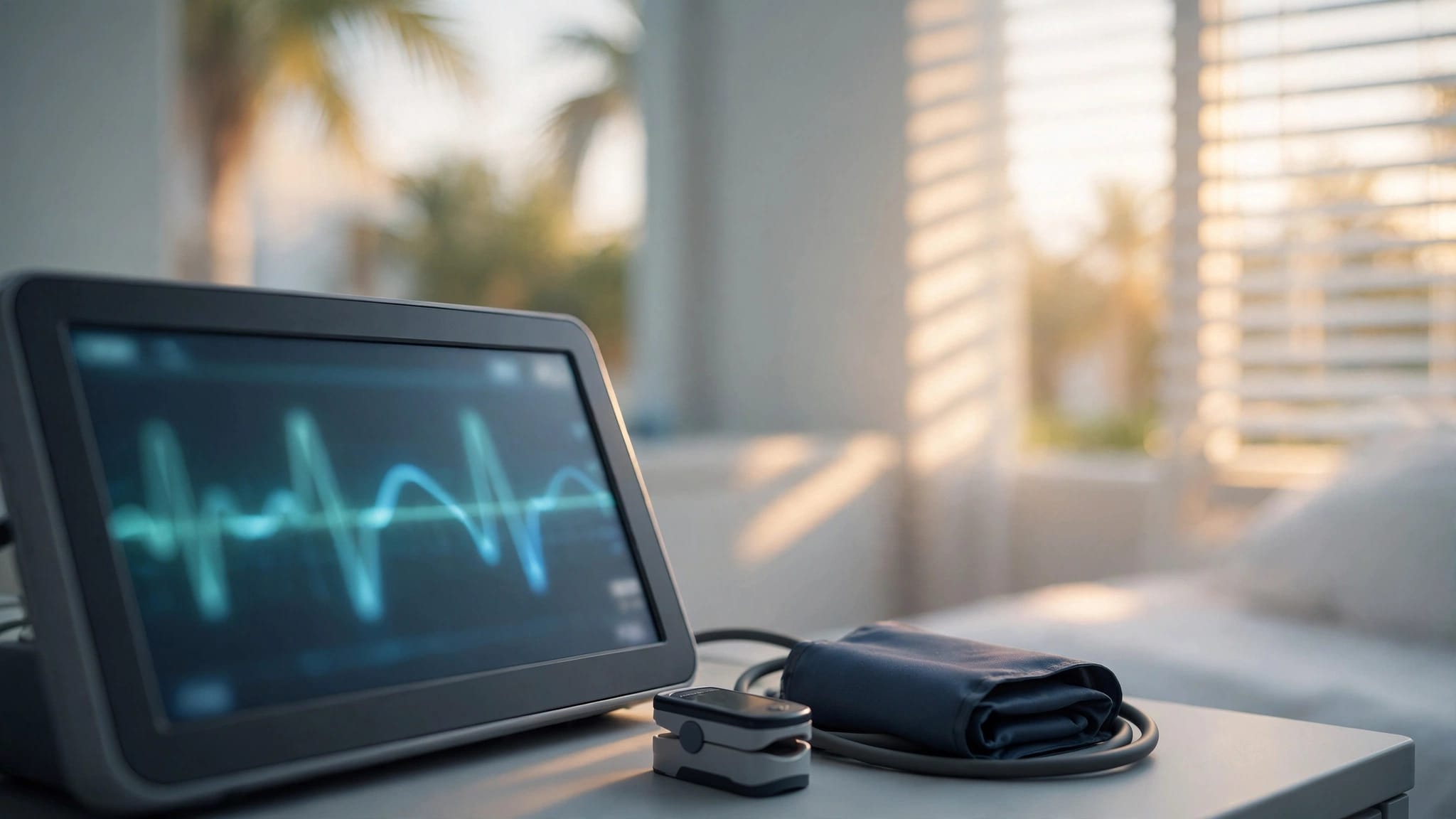
A dangerous change in a patient’s condition can appear first in a number on a monitor. When staff miss falling oxygen levels, a racing pulse, low blood pressure, or a slowing respiratory rate, the delay can cause permanent harm or death.
Florida medical malpractice claims based on unmonitored vital signs involve medical negligence, but an adverse outcome alone doesn’t establish liability. Under Florida law, the facts must show that a health care provider breached the applicable standard of care and caused compensable harm.
The records, timeline, and qualified medical expert review often guide a presuit investigation. They can help determine whether Florida’s presuit requirements can be satisfied. This article provides general information, not legal advice.
Key Takeaways
- An abnormal or missed vital-sign reading alone doesn’t establish Florida medical malpractice. The evidence must show that a health care provider breached the applicable standard of care and caused compensable harm.
- Medical records, monitoring logs, medication records, communications, and electronic audit trails can help establish what staff knew, when they knew it, and how they responded.
- A qualified medical expert generally helps evaluate whether monitoring and escalation were appropriate and whether earlier intervention probably would have changed the outcome.
- Florida generally requires a presuit investigation and notice-of-intent process before a medical negligence lawsuit. Strict statutes of limitations and repose can affect the claim, so deadline analysis should begin promptly.
Florida medical malpractice after missed vital signs
Vital signs are basic clinical data, yet their meaning depends on the patient’s condition, recent treatment, and pattern over time. A single abnormal reading may need a repeat check. A trend of worsening readings may demand immediate action.
Under Florida law, a medical negligence claim generally turns on the provider’s conduct, not simply one set of vitals. It asks whether the responsible health care provider met the applicable standard of care based on information available then. That includes whether nurses, physicians, or other clinicians recognized, documented, communicated, and responded to signs of decline.
Warning signs that may require escalation
The facts vary by setting. A patient recovering from surgery may need different monitoring than a patient in an emergency department, ambulatory surgical center, hospital, intensive care unit, or nursing facility. Each setting may have different monitoring policies.
However, concerning patterns can include:
- Falling oxygen saturation after opioid medication, sedation, or anesthesia may signal a monitoring concern. Medication errors may present a related but distinct theory when they affect monitoring or treatment.
- A low blood pressure reading paired with a rapid pulse, which may point to bleeding, infection, or shock.
- Increasing respiratory rate, confusion, fever, or reduced urine output that may accompany sepsis.
- Repeated abnormal readings that staff charted but did not report to a physician.
- Monitor alarms that were silenced, ignored, disconnected, or not investigated.
An abnormal reading, a silenced alarm, or a poor outcome alone doesn’t automatically establish negligence. The assessment considers staffing, orders, policies, clinical judgment, documentation, and what an appropriately attentive provider would have done then.
Monitoring is more than collecting numbers
Medical records can contain pages of vital-sign entries and still reveal poor care. Staff must assess the data in context. They may need to notify a physician, repeat a reading, administer treatment, call a rapid-response team, order testing, or transfer the patient to a higher level of care.
A documented abnormal vital sign can be powerful evidence, but the full sequence matters most: what staff knew, when they knew it, and what they did next.
Florida law evaluates conduct based on the clinical setting and the information available at the time, rather than judging care with the benefit of hindsight.
Proving a failure to monitor caused harm
A missed or ignored abnormal reading is only one part of a viable claim. A medical negligence claim requires proof of a breach, causation, and damages. Evidence must show that timely monitoring or treatment probably would have avoided or reduced the injury.
That evidence often begins with a presuit investigation into the care provided and whether earlier action could have changed the outcome.
For a fuller explanation of duty, breach, causation, and damages, review Florida’s governing negligence standard.
Medical records often tell the timeline
An attorney and medical expert may review far more than the discharge summary. Important records may include nursing flowsheets, emergency department notes, medication administration records, physician orders, laboratory results, code-blue documentation, and electronic audit trails. Emergency medical services records may also help when the patient arrived by ambulance.
The timing often becomes central. For example, an expert witness may compare when oxygen levels declined with when staff gave sedating medication, called the doctor, started oxygen, or summoned emergency support. That comparison may reveal a delayed diagnosis or delayed treatment, but a charting gap doesn’t automatically establish liability.
Family members can also preserve useful information. Write down the names of facilities and clinicians, dates of treatment, conversations with staff, and any explanation given after the event. Preserve copies of relevant medical records, but don’t alter them or rely only on memory.
Expert review separates concern from proof
These cases usually require qualified expert support because jurors need help understanding what appropriate monitoring requires. An expert witness may address the expected monitoring frequency, alarm response, escalation protocols, and whether earlier intervention would probably have changed the outcome.
Florida law requires more than a patient’s personal belief that care was inadequate. The statute on presuit investigation of medical negligence claims requires reasonable grounds for both negligence and injury before a claim proceeds. Those grounds should include a qualified medical expert opinion, not simply hindsight about the outcome.
Who may be responsible for a monitoring failure?
The doctor who entered the admission order isn’t always the only possible defendant. Liability for medical negligence depends on each individual health care provider’s assigned duties, knowledge, employment or agency relationship, conduct, causation, and damages.
Nurses, physicians, and other treating clinicians
Bedside nurses often obtain and assess vital signs, then report meaningful changes through the clinical chain of command. A health care provider, including a physician, may be responsible for setting monitoring parameters, responding to calls, evaluating the patient, or ordering treatment.
Respiratory therapists, anesthesiology personnel, physician assistants, nurse practitioners, and emergency staff may also have duties related to observation and response. The medical records should identify who had direct patient contact when the patient’s condition deteriorated.
When a hospital may share liability
A hospital can face a claim for its own direct negligence or through vicarious liability for an employee’s negligence within the scope of employment. Medical records may show staffing assignments, orders, chart access, and clinical communications. The case may also examine staff training, monitoring equipment, alarm policies, and failures to follow internal escalation rules.
Many physicians work as independent contractors, so a hospital isn’t automatically liable for every health care provider’s act. Patient-facing representations, employment contracts, staffing policies, agency relationships, and the facility’s control over care can affect the analysis, including at an ambulatory surgical center. Investigators may identify the proper liability insurance carrier or claims contact, but coverage doesn’t establish negligence or guarantee payment.
A careful presuit investigation identifies each potentially responsible party before presuit notice is sent. Missing a responsible party can create serious procedural problems later.
Florida’s presuit process comes before a lawsuit
Florida generally requires a claimant to complete a reasonable presuit investigation before filing a medical negligence lawsuit. Chapter 766 establishes the screening process, but exact requirements, including the good-faith basis and any required expert support, depend on the claim and current statute.
First, the claimant reviews the care and gathers supporting records during that presuit investigation. Where required, a qualified medical expert provides a corroborating written opinion. An expert witness must address reasonable grounds for both negligence and injury, but the opinion isn’t a guarantee of case success.
Notice of intent starts the screening period
After the presuit investigation, the claimant sends a notice of intent to initiate litigation to each prospective defendant. The package includes the expert witness’s supporting material, required medical-information authorization, and other records or provider information under the current statute. Verify those statutory details before publication.
Florida’s notice-of-intent statute provides a 90-day period after each prospective defendant receives the notice of intent. Defendants may investigate and respond during that period, while the parties may use informal discovery, evaluate evidence, and discuss settlement or arbitration.
A health care provider or insurer may evaluate the claim and available liability insurance, then reject it, make an offer, admit liability, or offer voluntary binding arbitration. That binding arbitration option is voluntary, not mandatory, and doesn’t guarantee resolution. Any rejection must have support from an expert witness stating reasonable grounds for a defense.
Do not send notice without a deadline analysis
A presuit investigation should include a deadline review before notice is sent, because a late or defective notice can put a claim at risk. The notice process may toll the statute of limitations, but tolling and any additional post-rejection period must be calculated under the current statute and facts. Review the current official Florida Legislature text before relying on that calculation.
Presuit rules reward early record collection. They also make it risky to wait until the final weeks before a filing deadline.
Florida medical malpractice statute of limitations deadlines can close a case
Under Florida law, a medical malpractice action generally must begin within two years of the incident. The period may instead run from when the injury and a reasonable possibility of medical negligence by a health care provider were discovered, or should have been discovered.
A separate four-year statute of repose usually runs from the incident. This statute of repose may have limited exceptions involving fraud, concealment, intentional misrepresentation, or minors. Verify the current statutory language and case law, because these exceptions aren’t a complete or universal list.
The current text of Florida’s medical malpractice limitations statute sets out these time limits. The discharge date isn’t always decisive, particularly when a patient later learns that inadequate monitoring may have contributed to the injury. Deadlines are fact-specific, and this general information isn’t legal advice.
Why discovery disputes are common
A patient may know something went badly during a hospital stay without knowing why. The statute of limitations can still begin when available facts should reasonably prompt an investigation into a possible malpractice claim.
For that reason, obtaining complete medical records quickly can support a timely presuit investigation and a clearer statute of limitations analysis. The Florida medical malpractice timeline explains how the filing deadline, presuit period, and a notice of intent can affect the limitations calculation. Presuit tolling has statutory limits.
Don’t assume the statute of limitations can wait until the two-year anniversary. An expert witness review and the required 90-day screening period take time, so start the presuit investigation well before the final weeks.
Damages after preventable patient deterioration
Compensation in a successful case depends on proven harm, causation, claimant’s legal status, and the conduct of the health care provider. In a medical negligence claim, economic damages may include past and future medical bills, rehabilitation costs, lost income, reduced earning capacity, and other documented losses. Economic damages may also include documented future care after a catastrophic injury, with an expert witness addressing life-care or vocational needs.
Noneconomic damages address pain, suffering, disability, disfigurement, and loss of enjoyment of life. Evidence supporting noneconomic damages may include treatment records and testimony about daily limitations. Section 766.118, part of Florida’s medical negligence damages law, contains statutory provisions concerning noneconomic damages, but Florida court decisions affect their enforceability. Current statutes and controlling case law should guide the analysis of noneconomic damages, including the text of section 766.118.
Fatal cases raise wrongful death issues
If inadequate monitoring contributes to death, the personal representative of the estate brings the wrongful death claim for eligible survivors and the estate. An injured patient’s personal injury claim follows a different framework.
Recoverable losses in a wrongful death case may include lost support and services, medical expenses, funeral expenses, and certain survivor losses.
Florida law places special restrictions on damages after a death caused by negligent medical care. Depending on current statutes and decisions, adult children may be unable to recover the loss of parental companionship, instruction, and guidance when a parent dies. Parents of an adult child may also face limits on recovery for mental pain and suffering.
Families should review the current wrongful death damages statute and related decisions to understand the distinction between estate claims and survivor claims. These cases require prompt action because the usual statute of limitations is two years from the date of death.
Frequently Asked Questions
Does a missed vital sign automatically establish Florida medical malpractice?
No. The evidence must show that a health care provider failed to meet the applicable standard of care and that the failure probably caused the patient’s injury or death.
What evidence may support a claim involving unmonitored vital signs?
Relevant evidence may include nursing flowsheets, monitor records, medication administration records, physician orders, laboratory results, communications, and electronic audit trails. The timeline can help show whether staff recognized a deterioration and responded appropriately.
Is an expert witness required for a Florida medical malpractice claim?
Florida medical negligence claims generally require qualified medical expert support during the presuit investigation. The expert addresses whether there were reasonable grounds for negligence and injury, but an expert opinion doesn’t guarantee that the claim will succeed.
What deadlines apply to a Florida medical malpractice claim?
A claim generally must begin within two years of the incident or, in some circumstances, within two years after the injury and a reasonable possibility of negligence were discovered or should have been discovered. A separate four-year statute of repose and the presuit process may also affect the deadline, so the current statute and specific facts should be reviewed promptly.
A careful review can protect your options
Failure to monitor vital signs can contribute to catastrophic injury and may support Florida medical malpractice or medical negligence. Liability depends on specific facts, including whether a health care provider breached the standard of care. The breach must cause injury and damages.
A presuit investigation can help preserve records and evaluate deadlines before taking procedural steps. An expert witness may be needed to assess the care provided. Early review doesn’t guarantee a claim, recovery, or successful lawsuit, and this general information isn’t legal advice.