
Florida Workers’ Comp Scarring Benefits After Job Injuries
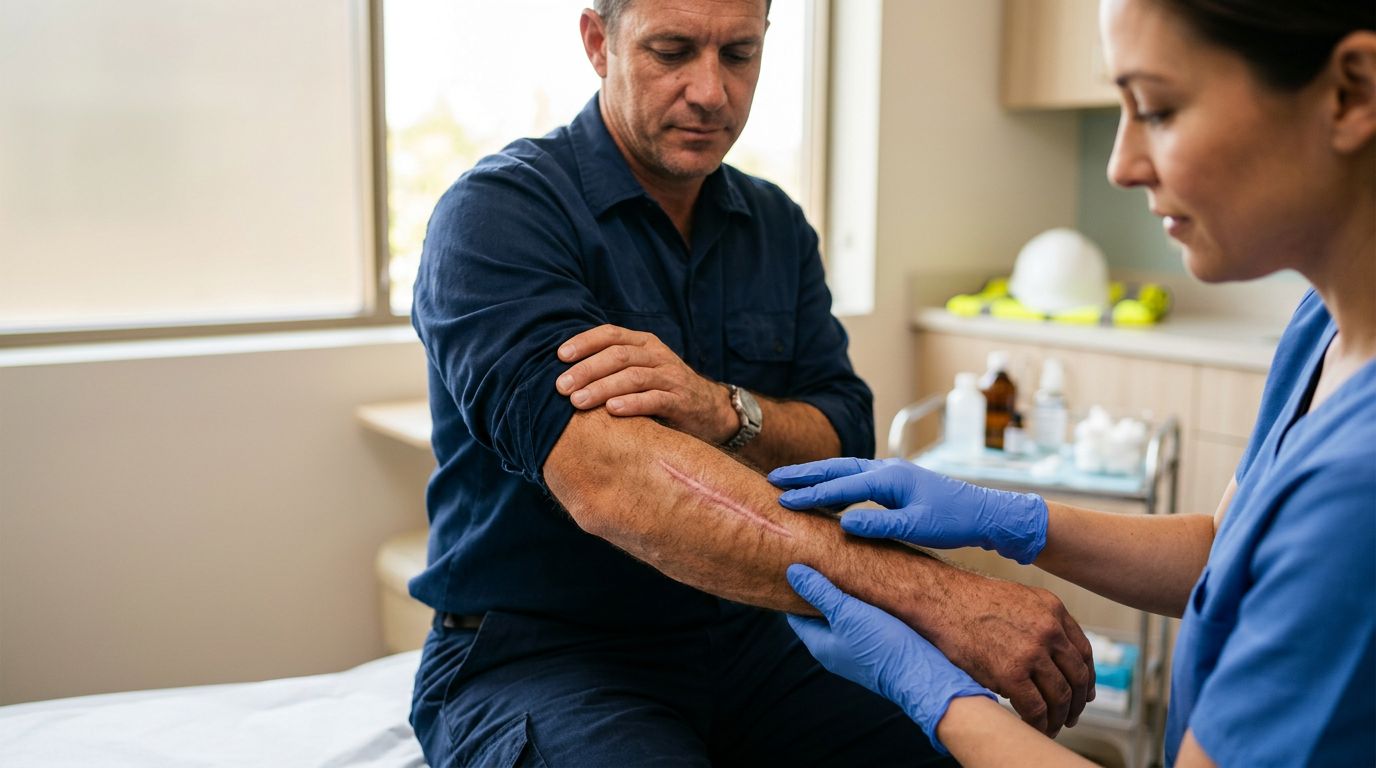
A severe workplace burn, crushing injury, or laceration can leave a permanent mark long after the wound closes. For people searching Florida workers comp scarring benefits, the hard truth is that a visible scar does not automatically trigger a separate cash payment.
Florida workers’ compensation can still cover medical care, lost wages, and benefits for lasting impairment. The result depends on how the scar affects your body, your treatment needs, and your ability to work.
Key Takeaways for Florida Workers With Permanent Scars
- Florida law does not provide an automatic, stand-alone payment solely because a workplace injury left a visible scar.
- A scar may support permanent impairment benefits when it causes measurable loss of motion, sensation, strength, or other lasting function.
- Authorized medical care may include treatment for scar tissue, contractures, nerve symptoms, or medically necessary reconstructive procedures.
- Report the injury promptly, attend authorized appointments, and preserve photographs and medical records from the beginning of treatment.
- A low impairment rating, delayed treatment approval, or missed filing deadline can reduce or end benefits connected to a serious work injury.
Florida Workers Comp Scarring: What Chapter 440 Covers
Florida’s workers’ compensation system pays defined benefits under Chapter 440. Those benefits differ from the damages available in a personal injury lawsuit. The current Chapter 440 statutory framework focuses on medical treatment, wage replacement, and disability benefits.
A visible scar does not create an automatic award
Older information may suggest that Florida pays a fixed amount for serious disfigurement. Current law does not create a general, automatic scar award for a facial scar, arm scar, or other permanent mark.
Workers’ compensation also does not pay tort-style pain and suffering damages against the employer. A scar can be emotionally difficult and highly visible, yet appearance alone may not create impairment income benefits.
A permanent scar can be strong medical evidence, but it must connect to a recognized permanent loss before it supports an impairment payment.
This doesn’t mean the scar is irrelevant. Its location, depth, treatment history, and effect on daily activities can shape the medical and benefits analysis.
When a scar may support permanent impairment
A Florida workers comp scarring claim becomes stronger when the injury leaves an anatomic or functional abnormality after treatment reaches a plateau. Scar tissue can tighten skin around a joint, limit hand movement, reduce grip strength, cause nerve pain, or make heat exposure unsafe.
For example, a burn across the fingers may leave a contracture that prevents a cook, mechanic, or health care worker from fully bending the hand. A facial burn can affect eyelid movement, vision protection, or sensation. Those functional consequences matter more than the scar’s visibility alone.
The authorized physician should document numbness, hypersensitivity, reduced range of motion, weakness, recurrent skin breakdown, and work restrictions. Accurate records give the impairment evaluation a medical foundation.
Maximum Medical Improvement and Impairment Ratings
Temporary benefits usually come first while you recover. Later, maximum medical improvement, often called MMI, changes how the carrier evaluates a permanent scar or injury.
MMI does not mean you have fully recovered
An authorized doctor reaches MMI when further treatment is not expected to produce material improvement. You may still have pain, limited use of a limb, permanent discoloration, or a need for ongoing care.
Before MMI, a worker who cannot work at all may qualify for temporary total disability benefits. A worker on light duty who earns less may qualify for temporary partial disability benefits. Combined temporary total and temporary partial benefits are generally limited to 104 weeks.
After MMI, the doctor evaluates permanent loss and assigns an impairment rating when supported by the condition. Review how MMI affects Florida workers’ compensation benefits before assuming that a release from treatment ends every part of the claim.
How impairment income benefits are calculated
Under Florida Statutes section 440.15, impairment benefits arise after MMI and a permanent impairment rating. The carrier must begin payment within 14 days after learning of the impairment.
In general, impairment income benefits are paid biweekly. Their duration is commonly three weeks for each percentage point of impairment. The weekly amount is generally 75% of the temporary total disability rate, subject to statutory limits and adjustments.
For 2026 injuries, the maximum weekly temporary total disability rate is $1,358. Your own rate depends on average weekly wages, which often include earnings from the 13 weeks before the accident. Pay stubs, overtime records, and wage statements can matter when the carrier calculates benefits.
Medical Treatment for Scar Tissue and Burn Injuries
Medical benefits and impairment benefits are separate. A worker may need months of care for a scar even if the injury does not produce a high impairment rating.
Authorized treatment can address more than appearance
Depending on the injury, authorized care may include wound management, physical therapy, occupational therapy, medication, specialist referrals, compression garments, and treatment for nerve-related symptoms. When a procedure is medically necessary and reasonably related to the work injury, reconstructive or scar-revision treatment may also be at issue.
Burns often create complications beneath the skin. Thick scar tissue can restrict a shoulder, neck, wrist, or knee. Heat sensitivity, itching, loss of sensation, and repeated skin breakdown can interfere with work even after the initial burn heals.
Workers with serious burns should review the available Florida workers’ comp benefits for burn injuries, especially when a scar affects movement or creates lasting medical needs.
Describe functional problems at every appointment
Avoid vague statements such as “my scar bothers me.” Tell the doctor what happens during actual tasks. Explain if the scar pulls when you reach overhead, cracks when you bend a joint, burns under safety gear, or makes it hard to hold tools.
Also report sleep disruption, tingling, swelling, weakness, and activities that worsen symptoms. Consistent descriptions carry more weight than dramatic language.
Read each work-status form before leaving the appointment. If it lists duties you cannot safely perform, raise the issue with the physician promptly. A form that releases you to full duty can affect wage-loss benefits and the carrier’s view of your claim.
Evidence and Deadlines That Protect the Claim
Scars change over time. Early photographs and clear medical records can show the original severity in ways a later exam cannot.
Report the injury and preserve the timeline
Florida workers generally must notify the employer about a work injury within 30 days. Report the incident as soon as possible in writing, through an email, text message, or incident report when available.
Include the date, time, work task, location, witnesses, and every injured body part. A report that mentions only a hand burn may create problems later if you develop arm numbness, shoulder limitations, or emotional symptoms that were present but undocumented.
A Petition for Benefits generally has a two-year deadline. The exact deadline can depend on the accident date, your knowledge of the work connection, authorized treatment, and benefit payments. A one-year gap without authorized medical care or indemnity benefits can also create a serious limitations issue.
Build a record that matches your symptoms
Take dated photographs throughout treatment, not only after the scar has healed. Keep emergency-room records, referral slips, prescriptions, therapy notes, work-status forms, pay stubs, and carrier correspondence.
A simple record of daily limits can help, too. Note when scar tissue prevents you from wearing protective gloves, lifting objects, typing, driving, or completing household tasks. Keep descriptions factual and tied to specific symptoms.
Avoid posting injury updates or activity photos on public social media. An insurer may use a single image without context to challenge your reported restrictions. Meanwhile, ask the employer to preserve video footage and identify coworkers who witnessed the accident or saw the injury soon afterward.
Responding to a Low Rating or Benefit Denial
The first impairment rating is important, but it is not always the final word. A rating should match the permanent medical findings in the record.
Review the rating report before accepting it
Request a copy of the MMI evaluation, impairment rating report, and the payment calculation. Compare the report with prior records that describe restricted motion, nerve symptoms, surgery, therapy, and ongoing limits.
A zero-percent rating may end impairment income benefits, yet it does not automatically resolve every medical issue. The scar may still require treatment, or the work restrictions may support a dispute about other benefits.
Workers who believe the rating understates the lasting effects of an injury can review options for challenging a low impairment rating. Medical evidence must support any challenge.
Use a Petition for Benefits when a dispute remains
A carrier may deny a specialist referral, scar treatment, wage-loss check, or impairment payment. When informal requests fail, a Petition for Benefits can bring the dispute before the Office of the Judges of Compensation Claims.
The petition should identify the work accident, injury, employer, carrier, and each benefit requested. Asking for an evaluation is different from requesting surgery, temporary disability checks, or impairment income benefits. Clear requests reduce later disputes over what the carrier received.
After receiving a petition, the carrier generally has 14 days to pay the requested benefit without prejudice or file a response. A lawyer can evaluate the medical records, wage calculation, deadlines, and requested relief before a dispute costs more time.
Frequently Asked Questions About Scar Benefits
Can I receive workers’ comp for a cosmetic scar?
A cosmetic scar alone does not guarantee a separate payment under Florida workers’ compensation law. However, medical care may still be available when the scar requires authorized treatment. If it also causes functional loss, nerve symptoms, restricted movement, or another measurable abnormality, it may support an impairment rating.
Can my impairment rating change after MMI?
An MMI finding means the doctor believes further recovery is unlikely, but disputes can arise when the rating does not fit the medical evidence. Scar contractures, sensory loss, or reduced function should appear in the records before the rating evaluation. Seek prompt review if the report leaves out documented symptoms or limitations.
Are impairment benefits paid as a lump sum?
Impairment income benefits are generally paid on a biweekly schedule rather than as an automatic lump sum. Settlement discussions are separate and depend on the disputed benefits, medical evidence, future treatment issues, and the terms the parties agree to. Never assume a carrier’s first offer reflects the full value of a lasting injury.
A Scar Deserves a Complete Benefits Review
A severe workplace scar can affect function, work capacity, and future medical needs. Visible damage alone is not the legal test, but documented permanent effects can support meaningful workers’ compensation benefits.
Report the injury, follow authorized care, keep a clear record, and review every MMI decision and impairment rating closely. Early action protects the proof and deadlines that a serious scarring claim may depend on.