
Florida Pool Drain Entrapment Claims and Safety Inspection Records
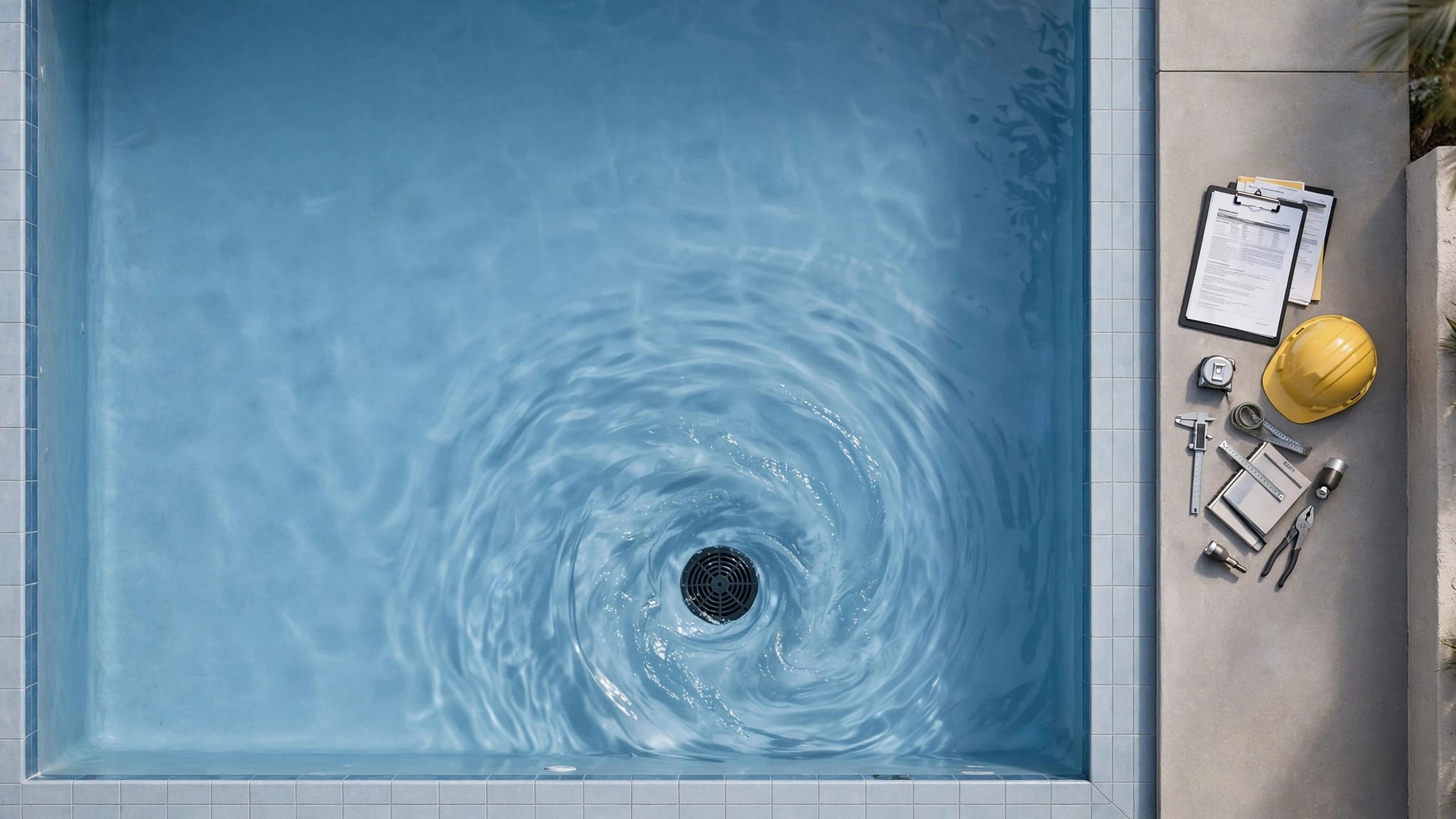
A pool drain can create a powerful suction hazard in seconds. When an injury or death follows, Florida pool drain entrapment claims often depend on records showing how the pool was built, inspected, repaired, and operated before the incident.
Those records can disappear after an owner replaces a drain cover, alters equipment, or receives notice of a claim. Medical care comes first, but prompt evidence preservation can protect a family’s ability to determine what happened and who had responsibility for pool safety.
Key Takeaways
Pool drain entrapment occurs when suction at a drain holds a person’s hair, body, limb, clothing, or other body part against the opening. The risk can involve a missing, broken, improperly fitted, or incompatible drain cover, as well as failures in a pool’s suction-safety system.
Florida law contains specific anti-entrapment requirements for public pools and spas. However, a serious incident at a private residential pool can still support a negligence claim when the facts show an unsafe condition, poor maintenance, inadequate supervision, or a failure to take reasonable safety measures.
Useful evidence often includes:
- Pool inspection reports, operating permits, and correction notices.
- Drain-cover make, model, approved flow rate, and installation date.
- Maintenance logs, repair invoices, contractor records, and equipment manuals.
- Surveillance footage, witness statements, incident reports, and photographs of the pool equipment.
- Medical records and documentation of treatment, lost income, rehabilitation, and lasting limitations.
A recent inspection does not automatically end the inquiry. The important question is whether the records, equipment condition, and sequence of events support or contradict the claim that the pool was reasonably safe.
How Florida Pool Drain Entrapment Happens
A pool circulation pump moves water through skimmers, drains, pipes, filters, and return lines. If a drain becomes blocked by a swimmer’s body or hair, suction can create a dangerous hold. The force may prevent a child or adult from getting free without help.
Drain covers and suction hazards
A compliant drain cover is more than a flat grate. It must fit the drain, remain secured, and work within the system’s approved flow rate. A damaged cover, missing screw, cracked fitting, or mismatched replacement may create a serious hazard.
Photos taken soon after an incident can matter because the owner may replace the cover before an investigator sees it. If possible, capture wide photos of the pool and close images of drains, covers, pump equipment, warning signs, and any visible damage.
The pool’s design can affect the risk
Some pools have more than one main drain. Others use a single drain, an unblockable drain, or safety equipment intended to release suction or shut off a pump when a blockage occurs. Those differences may determine which safety measures were required and whether the installed system functioned as intended.
Pool age also matters. Older facilities may have equipment that was later modified, repaired, or brought into compliance through an anti-entrapment device. The claim file should establish the original configuration and every meaningful equipment change afterward.
Public Pool Rules in Florida
Florida’s public-pool requirements are a starting point for many cases involving hotels, apartment communities, condominiums, schools, clubs, and other shared facilities. The Florida Department of Health public-pool program oversees sanitation and safety standards through permits and enforcement.
Florida’s anti-entrapment requirement
Florida Statutes section 514.0315 requires a public swimming pool or spa to have an anti-entrapment system or device that complies with ASME/ANSI A112.19.8 or a successor standard. The current statutory text is available through the Florida Senate’s pool-safety statute.
For a public pool built before January 1, 1993, a single main drain that is not unblockable may require secondary protection. Florida law lists options such as a safety vacuum release system, suction-limiting vent, gravity drainage with a collector tank, automatic pump shutoff, or a system that disables the drain.
Public-pool law differs from backyard-pool cases
Section 514.0315 applies to public pools and spas. It does not, by itself, decide liability for an ordinary private backyard pool. A residential case needs a separate review of local building requirements, the property’s condition, the owner’s conduct, and whether children or invited guests faced a foreseeable danger.
A code violation can support a negligence case, but compliance paperwork alone does not prove that a pool was safe on the day someone was hurt.
The federal Pool Safely safety-law materials also address public-pool drain covers and suction-entrapment protections under the Virginia Graeme Baker Pool and Spa Safety Act. Federal requirements and Florida requirements may both be relevant to a public-pool investigation.
Safety Inspection Records That Matter
Inspection records create a timeline. They can show whether an operator identified a problem, received a correction notice, ordered repairs, or continued allowing swimmers to use the pool despite a known hazard.
Department of Health verification documents
Florida Department of Health anti-entrapment verification materials ask for details that can become important evidence. Those details include the facility name and address, drain-cover make and model, installation date, approved flow rate in gallons per minute, safety-device type, and the licensed contractor’s name.
The form also calls for operation and maintenance manuals to remain onsite. It instructs operators to test safety systems under manufacturer recommendations or applicable code requirements. Missing manuals, vague testing entries, or incomplete contractor information may require closer review.
An attorney may compare the listed drain-cover flow rating with the pool’s pump and circulation system. A cover can appear intact while still being unsuitable for the pool’s actual flow conditions.
Maintenance, repair, and complaint records
Routine pool-service invoices may reveal more than a formal inspection report. Look for references to a loose cover, pump problem, vacuum-release device, drain modification, debris blockage, repeated repairs, or a delayed work order.
Other useful records may include:
- Health-department inspection reports and reinspection records.
- Operating permits and notices of violations or corrections.
- Emails between the property manager, pool vendor, and maintenance staff.
- Incident reports involving prior suction concerns or drain-cover damage.
- Contractor invoices, parts orders, warranties, and installation records.
A clean checklist deserves scrutiny. It may not address a hidden equipment defect, a repair performed later, a drain cover installed incorrectly, or a problem that developed after the inspection.
How to Request Pool Inspection Records
The right source depends on the pool and the agency that regulates it. For a public pool, start by identifying the county where the facility operates and contacting the relevant Florida Department of Health office.
Ask for records by facility and date range
A records request works best when it identifies the pool’s street address, facility name, approximate incident date, and a reasonable date range before the incident. Request inspection reports, permits, enforcement correspondence, correction notices, reinspection records, complaint records, and anti-entrapment verification documents.
Keep a copy of every request and response. If an agency says it has no records, record the date, the office contacted, and the employee’s name. That response may matter later, particularly when a pool operator claims the agency approved the equipment.
Private records need fast preservation
A hotel, condominium association, landlord, apartment manager, or pool contractor may possess the most useful records. Those parties are not likely to provide everything voluntarily after an injury. A lawyer can send a preservation letter that identifies video, incident reports, inspection records, maintenance logs, contractor files, and pool equipment that should not be altered or discarded.
Surveillance systems often overwrite footage within days or weeks. Families facing a fatal event can review these first-week steps after a Florida pool drowning while the evidence is still available.
Do not remove a drain cover, repair equipment, or discard clothing and personal items without legal advice. Preserve original photos and video files rather than relying only on edited clips or social-media posts.
Building a Florida Pool Drain Entrapment Claim
A successful Florida pool drain entrapment case requires more than proof that someone suffered harm in a pool. The evidence must connect an unsafe condition or negligent conduct to the injury.
Identify every party with control
The property owner is not always the only responsible party. Depending on the facts, responsibility may involve a hotel operator, apartment complex, homeowners’ association, property manager, pool-service company, equipment installer, contractor, or manufacturer.
Control is central. The person or company that could inspect, repair, shut down, warn about, or replace dangerous equipment may owe a duty of reasonable care. This broader review of Florida premises liability duty of care explains why control and notice often drive unsafe-property claims.
Connect records to the medical evidence
Medical records document the immediate injury, treatment, and prognosis. Keep emergency records, diagnostic imaging, discharge papers, prescriptions, therapy notes, receipts, work restrictions, and records of missed work.
A near-drowning can cause complications that are not obvious at the scene. Follow medical advice and report all symptoms accurately. Families should also keep a factual timeline with the date, time, weather, witnesses, and statements made by staff or other visitors.
The strongest claims align the physical evidence, pool records, witness accounts, and medical proof. When one record conflicts with another, that conflict may reveal an incomplete report or an attempt to shift blame after the event.
Filing Deadlines and Fault Arguments
Time limits can be short, and waiting for every document before seeking advice can put a claim at risk. For many Florida negligence actions arising from injuries on or after March 24, 2023, the general filing period is two years. Wrongful-death claims also generally have a two-year deadline, although the exact date depends on the claim, defendant, and circumstances.
Public-property cases need early review
A pool owned or operated by a city, county, school district, or other government entity may involve separate notice requirements and limits on recovery. These cases need prompt legal review because ordinary assumptions about filing deadlines may not apply.
Settlement discussions with an insurer do not automatically pause a deadline. Neither does an open investigation by a property owner or public agency.
Insurers may raise comparative fault
An insurer may claim that a swimmer ignored warnings, entered a closed pool, interfered with equipment, or failed to supervise a child. Evidence matters because Florida’s modified comparative negligence rules can reduce recovery based on fault. In many applicable negligence cases, a person found more than 50 percent at fault cannot recover damages.
Avoid guessing in a recorded statement. Give truthful facts you know firsthand, but don’t adopt an adjuster’s description of the event when video, maintenance records, or equipment evidence may later show something different.
Frequently Asked Questions
Can I obtain inspection records after a pool drain injury?
You may request public records from the agency that regulated a public pool. Ask for permits, inspections, correction notices, complaints, reinspections, and anti-entrapment documents. Private maintenance and contractor records may require a preservation request or formal legal process.
What if the pool owner replaced the drain cover?
A replacement can make early photos, witness accounts, and maintenance records more important. The old cover, screws, equipment, and repair invoice may help show what existed at the time of the incident. Do not assume the replacement proves fault, but preserve evidence before the condition changes further.
Does a pool inspection prove the owner was not negligent?
No. An inspection may help the owner, but it is only one piece of evidence. The report may predate the incident, miss an intermittent defect, or fail to address whether a later repair created a hazard.
Protecting Your Rights After a Pool Entrapment Incident
A Florida pool drain entrapment claim turns on facts that can disappear quickly: the drain cover, pump configuration, inspection history, video, and repair records. Fast action can preserve the evidence needed to establish what made the pool unsafe.
Medical documentation shows the harm. Safety records can show the warning signs that came before it. Together, they give an injured swimmer or grieving family a clearer path toward accountability.