
Florida Car Accident Claims Without a Police Report
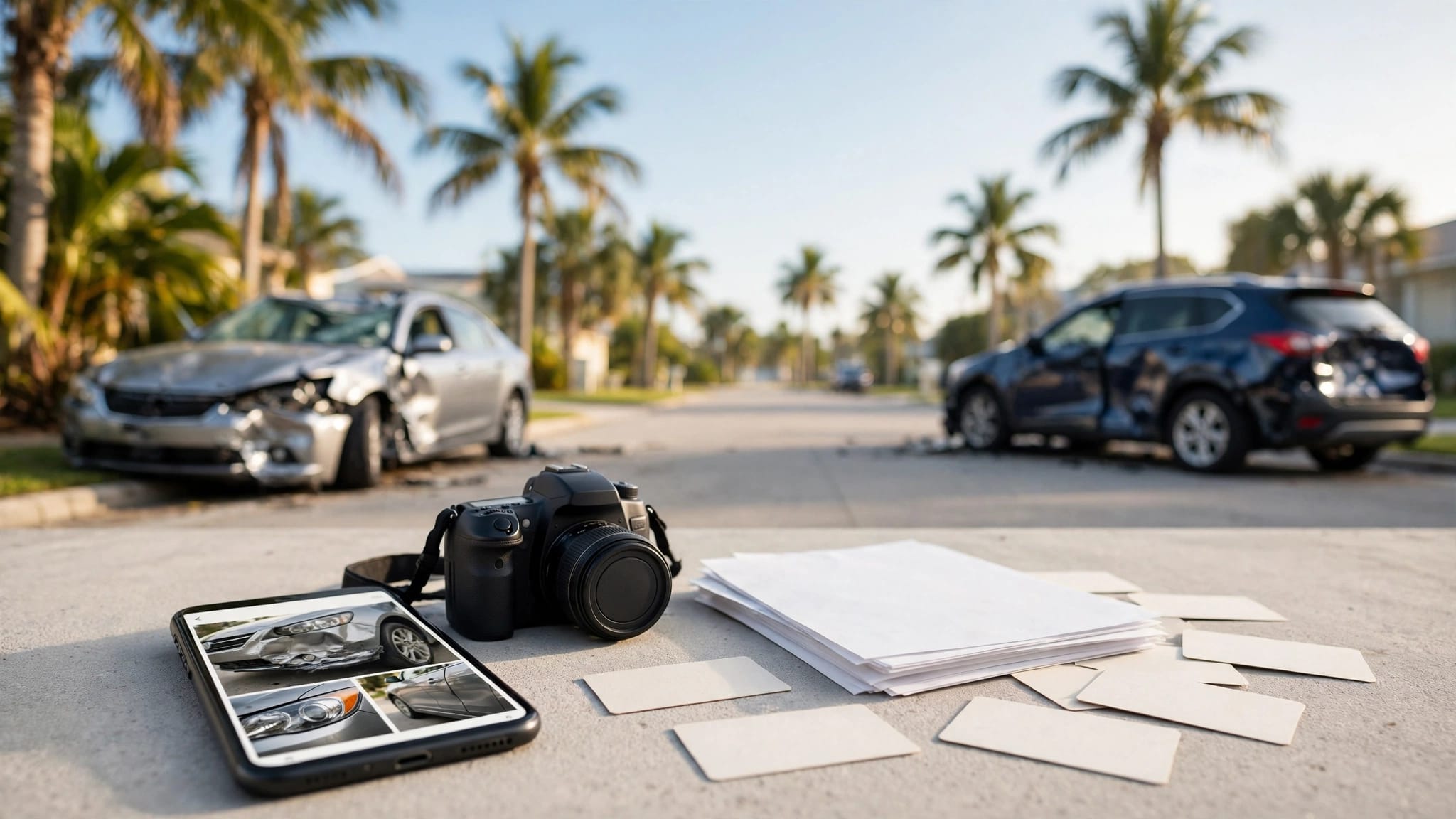
A police officer’s absence doesn’t automatically end your right to seek compensation after a collision. You may still pursue a Florida accident claim for injuries, vehicle damage, and other losses, but you need evidence that clearly shows what happened.
Without an official report, the insurer will look harder at photographs, medical records, witness accounts, and the damage to each vehicle. Acting quickly can protect both your health and the proof your claim needs.
Key Takeaways
- A police report can help, but Florida law does not make one a universal requirement for an insurance claim.
- Certain crashes still trigger legal reporting duties, even when no officer investigates at the scene.
- Medical care should not wait. Florida PIP benefits generally require initial treatment within 14 days.
- Photos, original video, witness information, repair records, and medical documentation can establish fault without a report.
- Most negligence claims arising from crashes on or after March 24, 2023 have a two-year filing deadline, although the correct date depends on the case.
How a Florida Accident Claim Works Without a Police Report
An insurer may question an unreported collision, especially when both drivers offer different versions of events. Still, a report is evidence, not a final decision on civil liability. A report can contain errors, and its absence does not erase another driver’s duty to drive safely.
A successful claim needs a consistent account. Your evidence should connect the crash, the other driver’s conduct, your injuries, and your financial losses. For a closer look at this process, review this Florida crash claim without a police report.
A claim and a reporting duty are different issues
You can notify your own insurer and make a liability claim against another driver even if no report exists. However, the lack of a report may make an adjuster more skeptical of the collision date, impact location, or claimed damage.
Keep your description factual. If you do not know a vehicle’s speed or the exact distance between cars, say so. Guessing can create a contradiction when video, vehicle damage, or witness testimony tells a different story.
Florida may still require a crash report
Florida drivers must report certain crashes involving injury, death, or qualifying property damage. The state’s crash-reporting requirements set out when a driver must notify law enforcement.
If law enforcement does not prepare a report and a written report is required, Florida law can require the driver to submit one within 10 days. Failing to file a required report is a noncriminal traffic infraction. It does not automatically defeat an injury claim, but it can complicate the record.
Protect Evidence Before It Disappears
The best time to build a claim file is immediately after the collision. Video can be erased, damaged vehicles can be repaired, and witnesses often become harder to locate as time passes.
Document the crash scene and vehicles
Take wide photos that show vehicle positions, street signs, lane markings, intersections, debris, traffic signals, weather, and visibility. Then take close photos of dents, paint transfer, broken lights, deployed airbags, damaged clothing, and personal property.
Get the other driver’s name, license plate, insurer, vehicle description, and employer details if the vehicle displays a company name or DOT number. If the driver leaves, record the direction of travel and contact law enforcement promptly.
Preserve the original image and video files. A screenshot or social-media clip may lose date information, sound, and the seconds before impact.
Find independent witnesses and video
Ask witnesses for their names, phone numbers, and a short description of what they saw. A neutral witness may confirm a lane change, red light, unsafe turn, sudden stop, or the position of each vehicle before impact.
Also identify nearby cameras. Businesses, apartment buildings, homes, traffic systems, and delivery vehicles may have useful footage. Many systems record over video within days or weeks, so a prompt written request matters.
The absence of a police report makes independent evidence more valuable. A clear photo sequence and a neutral witness can carry more weight than two conflicting driver statements.
Get Medical Care and Protect PIP Benefits
Some crash injuries become more painful after the initial shock fades. Neck, back, shoulder, wrist, knee, and head symptoms may not seem serious at the roadside. Medical attention protects your health and documents the connection between the collision and your symptoms.
Florida’s 14-day treatment requirement
Florida’s Personal Injury Protection coverage, or PIP, can provide early benefits through your own auto policy without proving the other driver caused the crash. Under the Florida PIP statute, initial services and care generally must begin within 14 days of the accident.
PIP can cover a portion of qualifying medical expenses and lost income, subject to statutory conditions and policy limits. The statute provides up to $10,000 in medical and disability benefits when its requirements are met.
The Florida PIP 14-day rule applies even when the insurer disputes who caused the crash. Do not wait for a fault decision before seeing a qualified medical provider.
Keep a complete treatment record
Tell each provider how the crash happened and describe all symptoms accurately. Mention headaches, dizziness, numbness, tingling, sleep problems, anxiety, limited motion, and pain if you experience them.
Save discharge papers, imaging results, prescriptions, therapy notes, bills, mileage records, work restrictions, and pay stubs. Continued treatment records can show whether symptoms improved, persisted, or interfered with work and daily activities.
Proving Fault Without an Officer’s Account
A police report often includes an officer’s observations, a diagram, citations, and witness names. Without it, the claim still comes down to negligence: whether another driver failed to use reasonable care and caused your losses.
Build one reliable timeline
Write down the date, time, location, travel direction, lane position, road conditions, weather, traffic signals, and sequence of events while your memory is fresh. Include anything the other driver said, but do not exaggerate or assign motives.
Vehicle damage may support the timeline. A long scrape beginning near a rear quarter panel can support a lane-change account. Front-end damage, damage height, and paint transfer can also help explain how the vehicles made contact.
For disputes about liability, evidence for a disputed accident claim can help you understand how insurers assess competing accounts.
Preserve digital vehicle evidence
Many newer vehicles store event data related to speed, braking, throttle input, steering, and seatbelt use in the seconds around a crash. Repairs, salvage, and storage-yard handling can overwrite or destroy that information.
Do not authorize major repairs or dispose of the vehicle before taking thorough photographs. When fault is contested, legal counsel may request that another driver, a business, or an insurer preserve video, electronic data, and physical evidence.
Shared Fault Can Affect Compensation
Florida uses modified comparative negligence for most injury cases. If an insurer claims you share responsibility, the percentage assigned to you can reduce your recovery.
For example, a person with $100,000 in damages who is found 20% at fault may recover $80,000. In most negligence cases, a person found more than 50% at fault cannot recover damages.
Insurers may argue that you sped up, failed to signal, drove in a blind spot, used a phone, or had time to avoid the crash. A Florida accident claim should answer those allegations with records, not assumptions. Review Florida’s 51% fault rule before accepting an unsupported allocation of blame.
Keep Separate Deadlines on Your Calendar
A 10-day reporting deadline, a 14-day PIP deadline, and a lawsuit filing deadline address different legal issues. Missing one does not automatically mean you missed all of them, but each can affect your options.
Written report deadlines can arrive quickly
When a law-enforcement report is not required, Florida’s written crash-report statute may require a driver to file a report within 10 days of the crash.
If police investigated, a long-form crash report is generally completed and submitted within 10 days after the investigation ends. Request a copy when it becomes available and review the location, vehicle descriptions, travel directions, and diagram for errors.
Do not confuse an open claim with a lawsuit deadline
For many negligence claims arising on or after March 24, 2023, Florida provides a two-year period to file suit. Older crashes and claims involving different defendants may follow different rules. Florida’s current personal injury limitations statute should be reviewed early.
Settlement talks, a pending demand, and an adjuster’s promise to keep a file open do not automatically pause the deadline. Put the applicable date on your calendar and leave time for records, negotiations, and legal action.
When an Attorney Can Help
Legal guidance is useful when injuries are serious, fault is disputed, the other driver denies the crash, or an insurer offers less than the documented losses. An attorney can seek camera footage, obtain witness statements, preserve vehicle data, review insurance coverage, and organize the evidence.
A claim for pain, suffering, or other non-economic losses may require proof that an injury meets Florida’s legal threshold. The Florida serious injury threshold explains the medical proof that may be needed when pursuing a claim beyond available PIP benefits.
You should also consider advice before giving a detailed recorded statement to the other driver’s insurer or signing a release. A release can end a claim before future treatment, lost income, and lasting limitations become clear.
Frequently Asked Questions
Can I file an insurance claim if I did not call the police?
Yes. A police report is not a universal prerequisite to filing an insurance claim. Notify your insurer promptly, provide a truthful account, and submit available evidence such as photos, repair estimates, witness information, and medical records.
You should still review whether Florida reporting rules applied to your collision. A required report and an insurance claim are separate matters.
Will an insurer deny my claim because there is no report?
An insurer may investigate the claim more closely, but it should evaluate the available evidence. The outcome may depend on whether your records show how the crash happened, who caused it, and what losses resulted.
A report-free claim is stronger when the photographs, witness accounts, vehicle damage, treatment records, and timeline match one another.
Can I recover pain and suffering damages through PIP?
PIP generally pays limited benefits for qualifying medical expenses and lost income. It does not resolve fault or automatically provide pain and suffering compensation.
To seek non-economic damages from an at-fault driver after a motor vehicle crash, you may need to meet Florida’s serious injury threshold. The medical evidence and available insurance coverage matter.
What if symptoms begin the day after the crash?
Seek medical care as soon as possible. Explain when the symptoms started and how they affect you. Waiting can harm your health, weaken the medical connection to the crash, and jeopardize PIP benefits if initial treatment does not begin within 14 days.
Protect the Facts That Support Your Claim
A missing police report creates more work, but it does not decide your case. Prompt treatment, preserved evidence, reliable records, and an accurate timeline can support a Florida accident claim when the other driver disputes responsibility.
The strongest claim does not depend on one document. It shows a consistent account of the collision, the injuries, and the losses that followed.