
Florida Trampoline Park Injury Claims and Safety Records
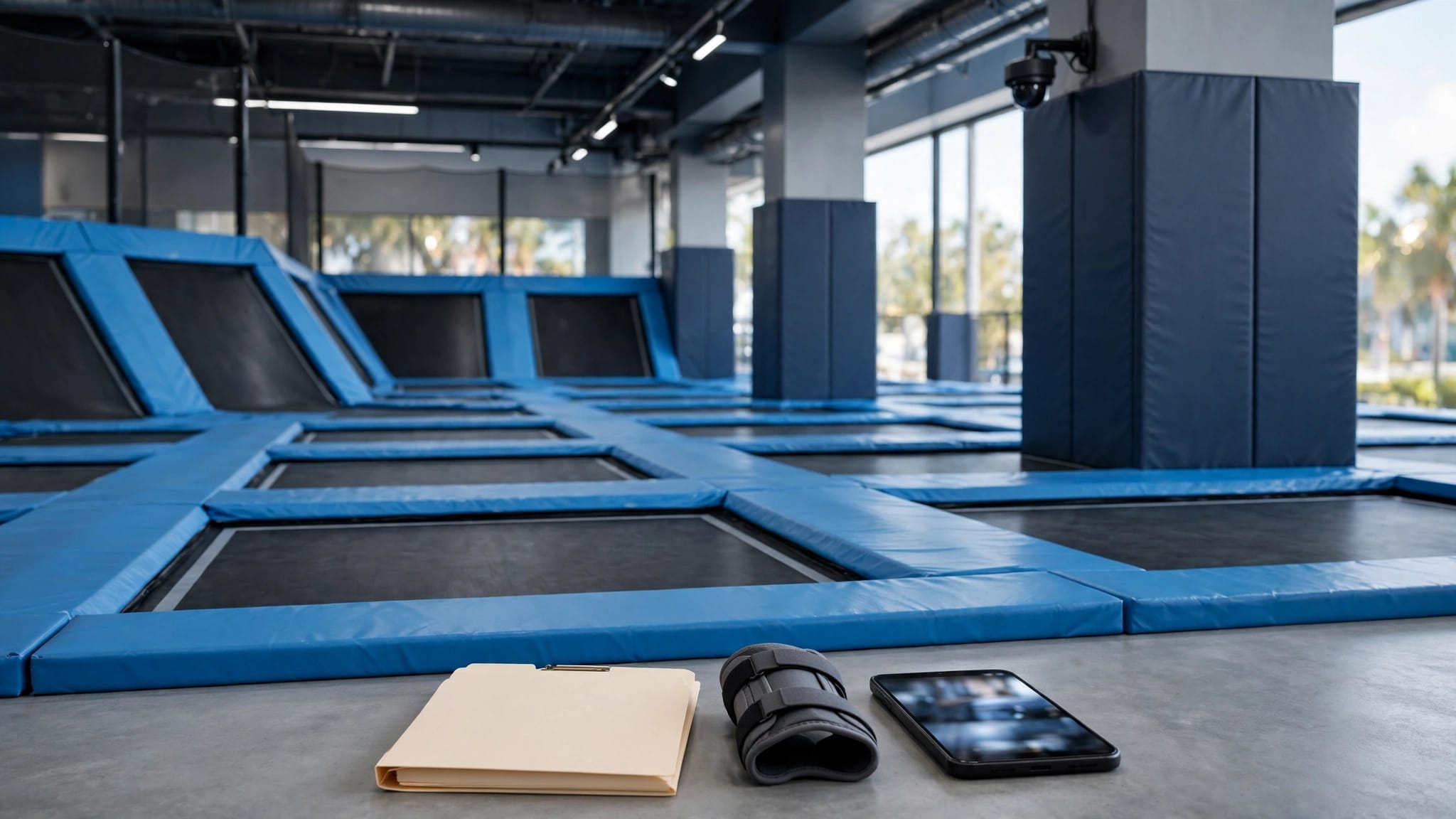
A trampoline park injury can leave a child or adult with a fracture, concussion, spinal injury, or lasting pain after what was meant to be a routine outing. Florida trampoline park injury claims depend on proof, and the records created before and after the accident often tell the clearest story.
The park may control surveillance footage, employee reports, inspection logs, repair records, and the waiver you signed. Acting early can protect evidence before video is overwritten, equipment is repaired, or memories change.
Key Takeaways for Injured Guests and Families
- A successful claim requires more than proof of an injury. The evidence must connect the harm to unsafe equipment, poor supervision, inadequate maintenance, careless operation, or another preventable failure.
- Florida does not use one inspection system for every trampoline park. The park’s equipment, business model, and legal classification affect what state or local records may exist.
- Ask the park to document the incident, then preserve photographs, witness information, medical records, damaged clothing, and original video files.
- Inspection reports may matter, but they are only part of the evidence. Daily checks, repair orders, prior complaints, staff training materials, and surveillance footage can be equally important.
- For many negligence actions arising on or after March 24, 2023, Florida provides a two-year filing period. An insurer’s investigation or settlement discussion does not automatically stop that clock.
A signed waiver and a recent inspection checklist do not automatically explain how an injury happened or remove every possible claim.
Florida Trampoline Park Injury Claims: What Must Be Proven
Most cases against a trampoline park fall under negligence and premises liability principles. The central question is whether a person or company failed to use reasonable care and caused legally measurable harm.
Duty, unsafe conditions, and causation
A park operator has a duty to take reasonable steps to keep guests safe. That may include maintaining trampoline beds and springs, padding exposed areas, limiting overcrowding, separating participants by size or activity, enforcing rules, and training staff to respond to dangerous conduct.
A claim may arise when a worker ignored rough play, a foam pit had inadequate depth, padding had shifted, a trampoline surface was worn, or an attraction remained open despite a known problem. Still, the injury must be connected to that failure. Medical records, video, witness statements, and equipment records can help establish the link.
The same framework applies to other property injuries. This explanation of Florida premises liability duty of care outlines the proof needed to show duty, breach, causation, and damages.
More than one business may be responsible
The company advertising the park may not own or maintain every attraction. A separate contractor might inspect equipment, make repairs, provide staffing, or operate a specialized activity. In some cases, a defective part may point to a manufacturer or distributor.
Identifying every party with control matters. Insurance coverage, maintenance duties, employee supervision, and access to records may be divided among several companies. An incident report listing only the park’s name may not identify everyone involved.
Are Florida Trampoline Parks State-Inspected?
A common mistake is assuming every trampoline park follows the same state inspection rules as a large roller coaster or theme-park ride. Florida law does not support that broad assumption.
The Chapter 546 trampoline exemption
Florida’s Chapter 546 addresses amusement attraction insurance and related local licensing issues. Its list of exemptions includes trampolines classified as nonmechanized playground equipment when no admission fee is charged for the equipment or the area. Review the statutory language in Florida’s Chapter 546 exemptions.
That exemption does not decide every injury claim. A paid indoor park may have many attractions beyond ordinary trampolines, and the facts still matter. The operator must exercise reasonable care even if a particular attraction is outside a state permitting program.
When amusement-ride records may apply
Certain equipment may fall within Florida’s amusement-ride rules. If it does, records may include permit applications, insurance documentation, inspection materials, and required certifications. Florida’s amusement-ride inspection statute addresses permits, inspections, and safety-related violations for regulated rides.
The Florida Department of Agriculture and Consumer Services, Division of Amusement Ride Safety, regulates rides covered by that law. However, a state file may not exist for a particular trampoline feature. The park’s own maintenance history can be more revealing than a single outside inspection.
Safety Inspection and Incident Records to Request
Records build a timeline. They can show when staff first noticed a defect, whether repairs were delayed, and whether similar problems happened before the injury.
Park-held records often matter most
The operator may possess the incident report, staff schedules, training materials, cleaning and inspection checklists, repair invoices, contractor communications, membership agreement, waiver, and internal emails about the attraction. It may also have records of prior guest complaints or prior injuries in the same area.
Ask for a copy of the incident report, but do not treat it as the final account. Employees often write reports shortly after an emergency, when facts are incomplete. Compare it with photographs, witness accounts, emergency medical records, and video.
A written request to preserve evidence can identify surveillance footage, inspection logs, maintenance records, communications, and relevant equipment. Private businesses are not obligated to hand over every document voluntarily, so early preservation matters.
Local and state records may fill gaps
A city or county may hold building permits, certificates of occupancy, fire inspection records, code complaints, or enforcement correspondence. Records requests work best when they include the facility name, street address, date of injury, attraction involved, and a reasonable date range.
Keep copies of each request and response. If an office reports that it has no records, write down the date, agency, and staff member who gave that answer. That information can matter if the operator later claims an agency approved a particular condition.
Some state licensing information is publicly searchable. For example, the state portal includes inspection information for a Panama City Beach trampoline park, although a listing alone does not establish fault or confirm regulation of every attraction.
Steps to Take After a Trampoline Park Injury
Medical care comes first, especially after a head impact, neck pain, loss of consciousness, severe swelling, numbness, or trouble walking. Symptoms can worsen after the initial adrenaline fades, and prompt treatment creates an important medical record.
Report the injury to a manager before leaving if you can do so safely. Request an incident report and ask for the manager’s name. Avoid guessing about the cause or signing a statement you do not understand.
Then preserve the details that may disappear:
- Take wide and close photographs of the attraction, padding, warning signs, entrances, clothing, and visible injuries. Keep the original files.
- Write down the date, time, activity, staff names, witness contact information, and statements made by employees or other guests.
- Keep damaged socks, clothing, wristbands, receipts, and membership materials. Do not alter or discard physical evidence without legal advice.
- Save medical bills, prescriptions, imaging results, therapy notes, work restrictions, school absences, and proof of a parent’s missed work.
Surveillance systems may overwrite footage within days or weeks. The principles in this Florida injury evidence checklist also apply when a business controls the scene and the key records.
Fault Arguments, Waivers, and Compensation
Park insurers often argue that a participant assumed the risk, ignored posted rules, landed improperly, or engaged in prohibited behavior. A waiver can affect a case, but its language and legal effect must be reviewed against the facts. It does not erase evidence of poor maintenance, hidden defects, unsafe staff conduct, or inadequate supervision.
Florida also uses modified comparative negligence in many injury cases. Under Florida Statutes section 768.81, a claimant found more than 50 percent at fault generally cannot recover in actions covered by the statute. A lower percentage of fault can reduce damages.
Compensation may include medical expenses, future treatment, lost earnings, reduced ability to work, pain and suffering, and the impact of a serious injury on daily life. Parents may also face therapy costs, transportation expenses, and missed work when a child needs ongoing care. Documentation of those losses matters as much as documentation of the accident itself.
Filing Deadlines and Publicly Operated Facilities
For many Florida negligence claims that accrued on or after March 24, 2023, the deadline to file suit is two years. The current text of Florida Statutes section 95.11 lists negligence actions in the two-year category.
The exact deadline can change with the injury date, legal theory, defendant, and other facts. A child’s age also does not automatically extend the deadline until adulthood. Waiting for a park to finish its internal review, for an insurer to respond, or for all medical treatment to end can put a claim at risk.
A park run by a city, county, school district, or other public entity requires added attention. Florida Statutes section 768.28 contains special notice, investigation, and recovery rules for government claims. Those procedures should be reviewed promptly because they differ from an ordinary claim against a private business.
Frequently Asked Questions
Can I bring a claim if I signed a trampoline park waiver?
Possibly. A waiver may affect the legal analysis, but it does not automatically defeat every claim. Its wording, the participant’s age, the activity involved, and evidence of negligent maintenance or supervision all matter.
What if the park says it inspected the equipment that day?
A checklist is relevant, but it does not end the inquiry. It may not reveal a hidden defect, a recurring issue, a rushed inspection, a later equipment failure, or unsafe employee conduct.
Can parents request a park’s safety records directly?
Parents can ask, but a private park may refuse to provide records voluntarily. An attorney can seek preservation of video, incident reports, repair history, contractor files, and internal communications before those materials disappear.
Protecting the Evidence That Explains the Injury
The strongest Florida trampoline park injury claims connect the physical evidence, medical proof, witness accounts, and safety records in one clear timeline. A preventable injury may begin with a condition that existed long before the day of the accident.
Prompt action protects both the evidence and the deadline. Inspection records may reveal what the park knew, while maintenance logs and video can show what happened when safety measures failed.