
Florida Dog Park Injury Claims After an Uncontrolled Dog Attack
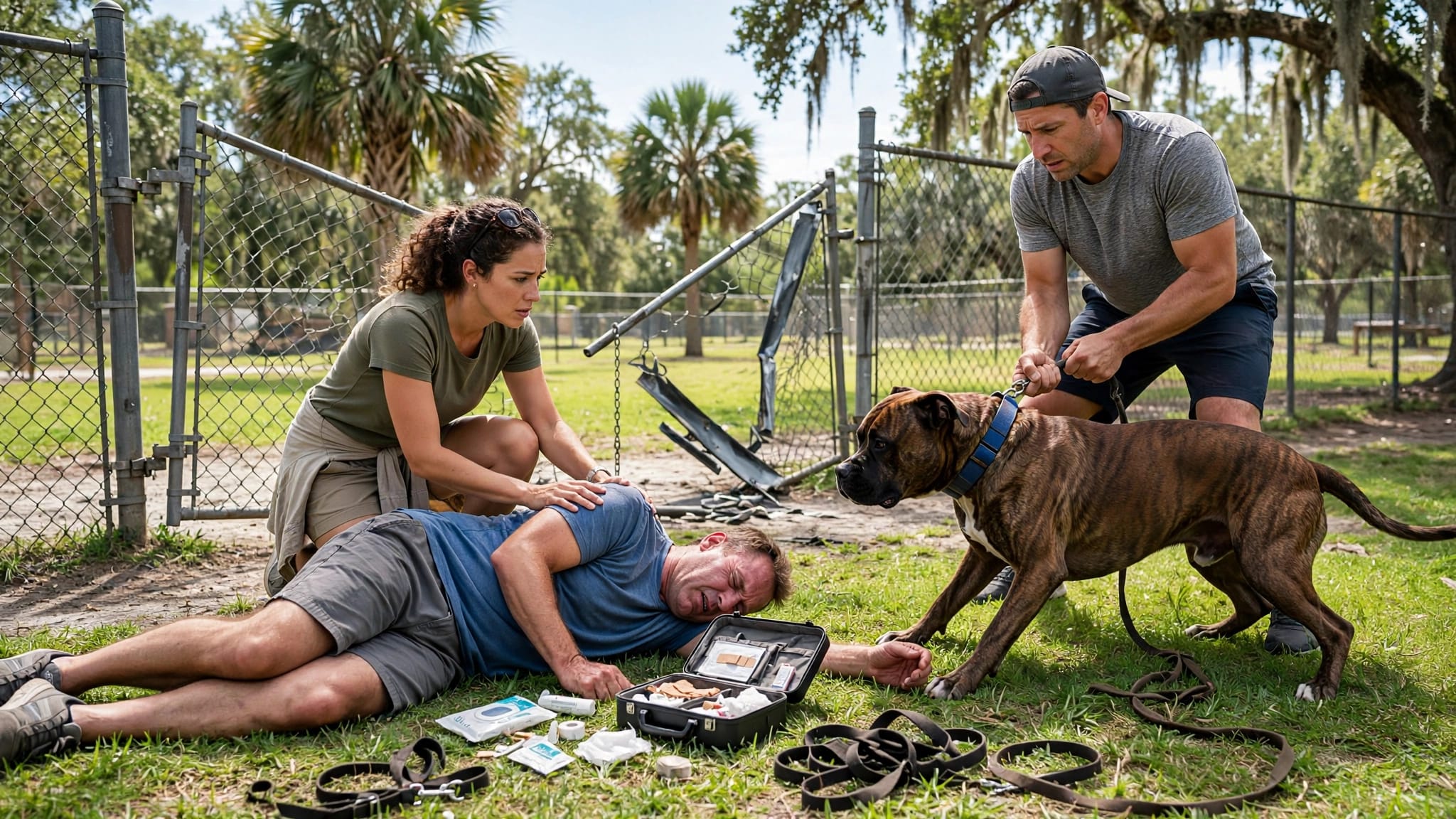
An off-leash dog park can become dangerous in seconds when one uncontrolled dog bites, knocks down, or chases a visitor. The physical injury may be obvious, but the facts collected immediately often determine what happens next.
Florida dog park injury claims can involve more than one legal path. A bite at a public dog run may support a statute focused on dog-owner liability, while a broken gate, ignored safety problem, or careless supervision can create a separate negligence claim. Depending on control and the facts, responsibility may involve the dog owner, a keeper or handler, a private operator, or a public entity.
Prompt medical care, accurate reporting, and preserved evidence protect both your health and your ability to pursue compensation.
Key Takeaways After a Dog Park Attack
- Florida Statute section 767.04 generally imposes strict liability for a qualifying bite in a public place or while someone is lawfully on private property. Statutory exceptions and comparative-fault rules may apply.
- A knockdown, fall, or injury during a multi-dog fight is not automatically a statutory dog-bite claim. Negligence may need to be proven.
- Photograph the injuries, the dog, the gate, posted rules, and the area where the attack happened before conditions change.
- Report bites to animal control or the local health department, and get the owner’s name, contact information, and insurance details.
- A city-owned park may require a written government claim notice before a lawsuit can proceed.
- Homeowners insurance, renters, and umbrella policies may provide coverage. Policy exclusions, limits, and the facts determine whether coverage exists.
Florida Dog Park Injury Claims and the Dog Bite Rule
Florida distinguishes a dog bite from other injuries that can happen in an off-leash area. That distinction matters because Florida dog bite law may require different proof for a qualifying bite.
A bite in a public park can trigger strict liability
Under Florida Statute section 767.04, a dog owner is liable when their dog bites a person in a public place or when the person is lawfully on private property. The statute doesn’t require proof that the owner knew the dog was dangerous or had bitten before.
Florida’s dangerous dog law addresses administrative classification and control rules. An animal-control classification isn’t required before evaluating a private civil claim under section 767.04.
A public dog park will often meet the public-place requirement. Still, identifying the dog and its owner is essential. Get the owner’s full name, phone number, address, dog license information if available, and photographs of the dog.
A bad dog sign can affect a claim in limited circumstances. The statutory warning-sign exception may depend on the sign’s placement and visibility. It doesn’t apply to a child under age 6 or protect an owner whose negligence contributed to the injury.
Non-bite injuries need a closer negligence review
An uncontrolled dog can cause harm without leaving a puncture wound. A large dog may knock down an older visitor, pull a child into a fence, or cause someone to fall while escaping a fight. These injuries can be serious, yet section 767.04 addresses bites.
Knockdowns, falls, chases, and similar non-bite injuries generally require a fact-specific negligence analysis. The evidence may need to show careless handling, ignored warning behavior, a leash-rule violation, or another unreasonable act by the owner.
A clear timeline, witness statements, and video can connect the uncontrolled dog to the injury. They can also help show how the owner’s conduct contributed to the harm.
What to Do in the First Hours After an Attack
After a dog attack, a park employee’s incident report can help, but it is only one account of what occurred. Create and preserve your own record while details remain fresh.
Get medical care and address infection concerns
Seek emergency care for puncture wounds, facial wounds, heavy bleeding, numbness, severe pain, or injuries to a child. Even smaller wounds need prompt medical attention because bites can introduce bacteria and cause later infection.
Tell the provider that a dog caused the injury and describe the location, time, and dog if known. The Florida Department of Health’s rabies guidance advises contacting a health care provider and county health department right away after a possible rabies exposure. Ask whether rabies vaccination or other post-exposure treatment is indicated.
Medical records document the injury’s condition from the start. Keep discharge papers, prescriptions, billing statements, photographs taken during treatment, and recommendations for follow-up care.
Preserve evidence before the park changes
Take wide photographs of the scene and close photographs of injuries, torn clothing, blood, damaged glasses, or a broken leash. Capture gate latches, fence gaps, warning signs, water bowls, and any posted dog-park rules.
Ask witnesses for names and phone numbers, and preserve their witness statements while memories remain fresh. If another dog owner recorded the incident, request the original video rather than a social-media clip that may omit important footage.
Report the incident to park management and animal control. Request a copy of every report, but don’t assume an early report captures every detail. Video may be overwritten, and identifying the dog, owner, keeper, or handler promptly can matter. Employees may not identify all dogs involved unless someone asks quickly.
A crowded dog run can turn a single incident into a disputed multi-dog event. Identifying the attacking dog before owners leave is often more important than debating fault at the gate.
Who May Be Responsible for the Injury?
The dog’s owner is usually the first party to investigate. Responsibility may also extend to a facility or entity whose conduct helped cause the attack.
The dog owner may face direct liability
The dog’s owner, keeper, or person controlling the animal may face dog owner liability when the dog bites a lawful park visitor. Florida’s bite statute is distinct from negligence claims involving known aggression, failure to intervene, or inadequate control.
A negligent supervision theory may apply when someone failed to monitor or control the dog. However, that theory depends on the evidence and doesn’t automatically apply because an attack occurred.
Witnesses can be important when the owner claims the injured person provoked the dog. Preserve exact descriptions of the dog’s behavior, what the owner said, and whether the owner had control of the animal. Animal-control proceedings under Florida’s dangerous dog law are separate from a civil claim for injury.
Private operators and property managers may have duties
A privately operated dog park, apartment dog run, or membership-based facility may face premises liability for failing to use reasonable care. A broken double-entry gate, a fence with an opening, inadequate lighting, or ignored reports of dangerous conditions may support a claim.
Control matters more than a business name on a sign. A property owner, property manager, maintenance contractor, or tenant may each have different responsibilities for the gate, fencing, rules, and surveillance system. A premises liability theory may involve whoever controlled or maintained those conditions.
Public parks follow different claim procedures
A city or county does not automatically face municipal liability because an attack occurred at its park. A claim may depend on notice, control, a dangerous condition, statutory requirements, and exceptions to Florida’s limited waiver of sovereign immunity.
Government claims also face special procedures under Florida Statute section 768.28. Written notice generally must be presented to the responsible agency and the Florida Department of Financial Services within two years after the claim accrues. The statute also provides the government an investigation period before a lawsuit may begin. Deadlines and exceptions should be checked under current law.
Insurance and Damages After a Dog Park Injury
Many dog owners have personal liability coverage through homeowners insurance. The attack doesn’t need to occur at the owner’s home for coverage to be possible.
Coverage depends on the actual policy
An insurance company may investigate liability and coverage under the homeowners insurance policy. Its initial position isn’t necessarily a final determination. Review exclusions, prior bite history, breed-related restrictions, available limits, ownership, and the dog’s usual residence. Renters insurance or an umbrella policy may also provide coverage, while some owners have no applicable policy.
Document every loss, not only the emergency bill
Economic damages may include emergency care, wound treatment, antibiotics, reconstructive procedures, therapy, future medical needs, related expenses, and lost wages. Preserve medical bills, wage documentation, treatment recommendations, and photographs of your injuries.
A serious injury may also support damages for pain and suffering, scarring and disfigurement, emotional distress, and reduced enjoyment of daily activities. Keep a simple symptom journal covering sleep problems, anxiety around dogs, missed events, and tasks you can no longer perform comfortably.
Comparative Negligence, Waivers, and Time Limits
Dog park rules, leash requirements, waivers, and entry signs are relevant evidence. They don’t automatically authorize dangerous conduct or eliminate every potential claim. Still, insurance companies may argue that an injured person contributed to the event.
Shared fault can reduce a recovery
Section 767.04 allows a reduction in damages when the bitten person acted negligently and that conduct helped cause the injury. An insurer may claim a visitor provoked the dog, entered a restricted area, ignored a warning, or tried to separate fighting dogs.
Those arguments require facts, not assumptions. Merely being present in an off-leash area does not establish fault. A statutory bite claim and a negligence-based claim may involve different proof and defenses.
Don’t guess in a recorded statement. Give an accurate account, then let video, photographs, and witnesses support it.
Do not wait for an investigation to finish
Many Florida negligence claims accruing on or after March 24, 2023, may be subject to a two-year statute of limitations. The correct deadline can vary by injury date, claim, defendant, government status, and statutory exception.
A park’s internal review, animal-control investigation, or insurance negotiation does not automatically extend the time to file a personal injury lawsuit. Public-property cases require faster attention because government notice requirements may apply before suit. Early review by a dog bite attorney may help identify the proper legal theory, preserve surveillance or maintenance evidence, and evaluate those notice requirements.
Frequently Asked Questions
Does strict liability apply at an off-leash dog park?
It can apply when a dog bites someone in a public park because Florida law covers bites in public places. An off-leash setting doesn’t automatically defeat a qualifying statutory bite claim. Lawful presence, statutory exceptions, and alleged comparative negligence may still affect the case and damages.
Can I recover damages if another dog knocked me down?
Possibly. A non-bite injury may support a negligence or premises liability claim against the dog owner or the party controlling an unsafe park condition. You must connect the fall or collision to negligent conduct, an unsafe condition, or a hazard the responsible party could have prevented.
What if I do not know who owned the dog?
Report the incident immediately to animal control and provide descriptions, photographs, witness information, and the approximate time and location of the attack. Ask park staff to preserve entry records, surveillance footage, and incident reports. Ownership can be harder to establish after people leave the park.
Protecting Your Claim After a Dog Park Attack
Florida dog park injury claims are strongest when medical records, witness accounts, photographs, incident reports, and park records tell the same story. A qualifying bite may create direct dog-owner liability, while a defective gate, fence, rule, or ignored safety issue may support a separate premises liability or negligence claim.
Act before memories fade and video disappears. Clear evidence can establish who controlled the dog, what the park knew, and how the injury changed your life.
This article provides general information about Florida law and isn’t legal advice.