
Florida Pool Diving Injuries: What Depth Markers Can Prove
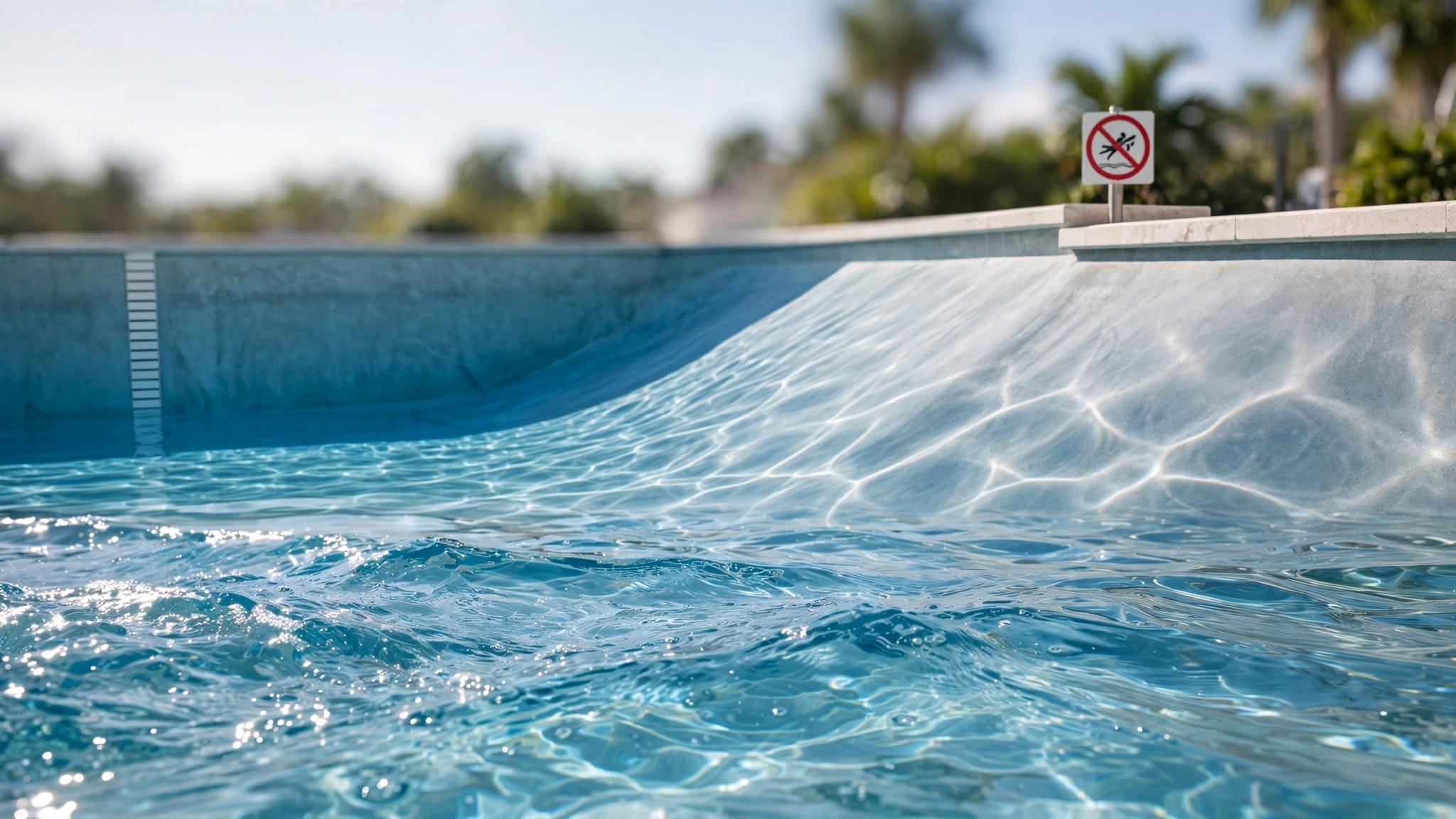
A pool can look deep enough for a dive until someone strikes the bottom. After a serious injury, depth markers and “NO DIVING” warnings may help establish what the swimmer could see and what the pool operator knew.
Florida pool diving injuries often raise questions that photographs alone can’t answer: Was the posted depth accurate? Where did the pool floor slope? Had anyone reported a missing warning? The answers depend on the pool’s rules and its condition when the dive occurred.
Key Takeaways
- Florida’s public-pool marking requirements can provide important evidence, but they don’t automatically apply to every private backyard pool.
- Photographs should show the marker, the approach to the water, and the pool layout before anyone changes the scene.
- A missing or inaccurate warning doesn’t prove a claim by itself. The evidence must connect a responsible party’s conduct to the dive and the injury.
- Video, inspection files, maintenance records, and medical documentation can fill gaps that remain after the pool has been repaired.
Which Florida pools must follow depth-marker rules?
Before comparing a pool to a code requirement, identify who operated it and which rules governed it on the injury date.
Public and shared-use pools
The Florida Department of Health’s public-pool program oversees permits and enforcement of sanitation and safety standards for covered pools. A hotel, apartment community, condominium, club, or other shared facility may fall within the public-pool framework, depending on its use and legal classification.
Florida’s public-pool requirements include provisions in Chapter 514, Florida Statutes, Chapter 64E-9 of the Florida Administrative Code, and the Florida Building Code. The applicable code edition and the pool’s approved plans matter. An inspection report or operating permit can help identify them.
Private residential pools
Don’t assume a hotel-pool marking rule governs an ordinary backyard pool. Residential building requirements and the owner’s duty to guests require a separate review. The state’s building-code framework in Chapter 553 addresses building regulation, including residential pool-safety standards.
A private owner may still face a negligence claim if an unsafe condition caused a foreseeable injury. For example, the investigation might examine what the owner told guests about depth, whether the pool had changed, and whether the owner knew people used a particular edge for diving. The absence of a public-pool code violation doesn’t end that inquiry.
What public-pool depth markers and warnings should show
Markings give swimmers information at the point where they decide whether to enter the water. Their exact location and condition can matter as much as the number printed on them.
Depth, size, and placement
Florida Department of Health public-pool checklist materials specify permanent depth markers at key points, including the shallow end, the slope break, and the deep-end wall. A marker is also specified at the deepest point when that point lies more than 5 feet from the deep-end wall. The listed maximum spacing around the pool perimeter is 25 feet.
The checklist calls for markers at least 4 inches high on a contrasting background, with units such as “FT” or “FEET.” The marked depth should be within 3 inches of the actual depth at normal operating water level, measured 3 feet from the wall. Placement details should be checked against the requirements applicable to that particular pool.
A depth marker describes water depth at a specified location. It doesn’t, by itself, tell a swimmer that diving there is safe.
“NO DIVING” markings
Outside an approved diving bowl, the public-pool checklist specifies “NO DIVING” markings on the deck or curb within 2 feet of the water’s edge. It calls for no more than 25 feet between markings. The checklist also describes minimum letter or symbol sizes.
After an injury, note whether a warning was visible where the person entered, rather than merely present somewhere around the pool. Worn lettering, furniture, poor lighting, or a marker placed beyond the entry point can affect what someone could reasonably see. A clear warning elsewhere may still become relevant to a fault dispute.
How Florida pool diving injuries turn on marker evidence
A useful investigation compares three things: what the swimmer saw, what the pool actually contained, and what the operator’s records show.
Reconstruct the view before the dive
Photograph the entire pool and the approach the person took. Then capture each nearby depth marker and warning from standing height at the entry point. Take close photographs that show lettering, wear, and location. Preserve the original files, which may retain useful date and time information.
The pool’s shape matters. An underwater slope can begin closer to the entry point than someone expects, while the deepest point may lie away from the wall. Record the water level, lighting, obstacles, and any diving board or platform without entering an unsafe area. Later measurements by a qualified professional may be needed to compare the posted depth with the pool’s actual profile.
Match the scene to independent records
Surveillance footage may show the dive, the swimmer’s approach, and whether a warning was obstructed. Witnesses can describe statements made before the incident. Dispatch, emergency medical, and hospital records help establish the sequence of events and the injuries.
Ask whether the pool operator has earlier photographs, inspection reports, repair requests, or complaints about markings. Those records can show when a condition appeared and who had a chance to correct it. In hotel cases, pool-incident video and records evidence may also clarify staff response and the pool’s condition before an emergency.
Preserve the evidence before the pool changes
Medical care comes first. A dive can cause a head injury, neck injury, spinal cord damage, or other harm that needs urgent assessment. Once the injured person is safe, preservation becomes time-sensitive.
Keep original files and identify witnesses
Save original photos and videos, not only cropped clips or social-media copies. Write down the time, entry point, names of witnesses, and any statements you remember firsthand. Keep clothing and personal items that may bear on the incident.
If someone else took video, ask them to retain the original. Avoid asking witnesses to agree with an account they haven’t given. A simple request for their contact information and recollection is more useful than a shared story developed afterward.
Request records before they’re lost
A lawyer can send a preservation letter identifying surveillance footage, incident reports, permits, inspection files, maintenance logs, prior complaints, and contractor records. Some camera systems overwrite footage within days or weeks. Later repainting or repair can also erase the condition of a marker.
Public-pool inspection records may be available through the responsible health agency. Private operational records may require a request to the owner or formal legal process. The first-week steps after a Florida pool incident offer a useful reminder to identify who controls the property and its records early.
A photograph taken after a new warning is painted shows the repair, not necessarily what the swimmer saw before the dive.
What a marker problem can prove in a Florida injury claim
An incorrect depth number or missing warning is important evidence. It isn’t an automatic finding that the owner caused the injury.
Connect the condition to the dive
A negligence claim generally requires a duty of care, a failure to meet that duty, a causal link, and damages. The injured person must show how the marking issue affected the decision to dive or concealed a danger that reasonable care could have addressed.
Consider a marker that says 8 feet beside an entry point where the water is substantially shallower. The investigation must establish which measurement the marker was meant to describe, what the person saw, and whether the discrepancy contributed to the bottom strike. Approved plans, water-depth measurements, video, and witness accounts may be needed. A code issue alone can’t answer those questions.
Identify who controlled the warning
The property owner may not handle daily pool operations. A hotel operator, association, property manager, or maintenance contractor could have separate responsibilities for inspections, repairs, or closing an unsafe area.
Contracts, work orders, and complaints can identify who had the ability to fix a faded marker or replace a warning. They can also show whether someone had notice of the problem. Florida pool diving injuries may involve several parties, but each party’s conduct must be evaluated against its actual role.
Fault, losses, and filing deadlines
Insurers may argue that the swimmer ignored a warning, chose an unsafe entry point, or knew the pool was shallow. Those arguments call for evidence, including the warning’s condition and the swimmer’s view. Avoid guessing about what you noticed or understood in a recorded statement.
In negligence actions covered by Florida’s modified comparative fault rule, a claimant found more than 50 percent at fault generally cannot recover damages. A lower share of fault can reduce recovery. The rule’s application depends on the claim, so an insurer’s proposed percentage isn’t the final word.
Medical records should document the injury and its effect over time. Keep imaging results, treatment and rehabilitation records, bills, work restrictions, and proof of lost income. A serious neck or spinal injury may require future care, which should be supported by medical evidence rather than an early estimate.
For many Florida negligence claims arising on or after March 24, 2023, the general filing period is two years. Claims involving government-owned pools can have additional procedures and require prompt review. An operator’s investigation or an insurer’s settlement discussion doesn’t automatically pause a deadline.
Frequently Asked Questions
Does a missing “NO DIVING” sign mean the pool owner is liable?
No. The applicable rules, the location of the missing warning, and the swimmer’s actions all matter. A claim also needs evidence that a responsible party failed to use reasonable care and that the failure contributed to the injury.
Can I pursue a claim if the depth marker was accurate?
Possibly. An accurate number doesn’t settle whether warnings were visible, the pool layout created another danger, or staff knew about unsafe diving at that location. The injury must still be connected to negligent conduct.
What if the pool has already been repainted or repaired?
Preserve any earlier photographs, video, inspection records, work orders, and witness information. Repair invoices may establish when the change occurred. Later repairs don’t, by themselves, prove what condition existed when the dive happened.
A clear record starts at the pool edge
The question after a dive isn’t only how deep the water was. It’s what the swimmer could see, what the operator knew, and whether a safety failure contributed to the injury.
Preserving the original scene and records gives those questions a fair answer, even if the pool later looks different.