
Florida Marina Dock Injuries: Proving Unsafe Boards
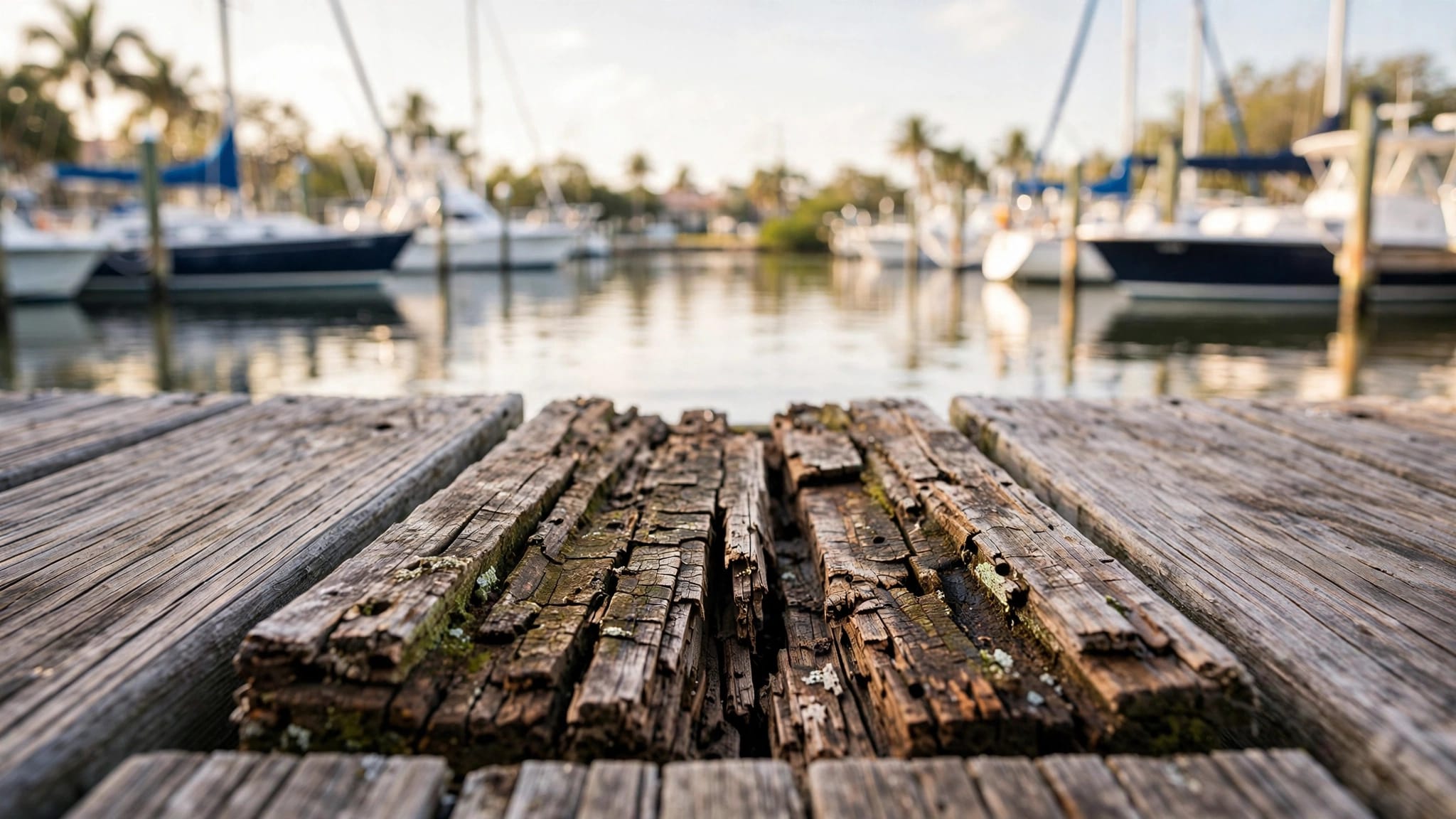
A board gives way under your foot at a Florida marina. By the time you’re able to return, someone may have replaced it. For injuries at a marina dock, proving the board was unsafe can be difficult when the evidence changes so quickly.
The question goes beyond what caused the fall. You may also need to show who controlled the dock, what that party knew about the danger, and how the defect caused your injuries. The board, its repair history, and the people who saw it all matter.
Why the type of dock hazard matters
A fall on a wet dock and a fall through a rotten plank may call for different evidence. Identifying the precise condition helps you investigate the right records.
Temporary hazards on the walking surface
Florida Statute § 768.0755 addresses slips and falls on a transitory foreign substance in a business establishment. For a claim covered by that statute, the injured person must prove the business had actual or constructive knowledge of the condition and should have acted.
Constructive knowledge may come from proof that the substance remained long enough for ordinary care to reveal it. Evidence that the condition occurred regularly can also matter. Whether this statute applies to a particular marina accident depends on the hazard and the setting.
Broken boards and structural defects
A loose fastener, missing plank, or decayed board presents a different question than a temporary substance on the surface. The statute’s spill-specific notice test shouldn’t automatically be applied to every defective-board claim. It also leaves common-law duties concerning business premises intact.
With an unsafe board, the investigation often centers on deterioration, inspection practices, repair requests, and control of the dock. A fall alone doesn’t establish negligence, but the board’s condition may help explain what reasonable maintenance would have found.
Identify who controlled the dock
The marina’s name on a sign doesn’t settle who maintained the place where you fell. A slip operator, property owner, management company, or contractor may have handled inspections or repairs. Responsibility depends on the agreements and what each party did.
Pinpoint the location: the slip number, gangway, fuel dock, or board near a particular cleat. Then ask who inspected that section, received complaints, and could authorize repairs. Those answers may be spread across several businesses rather than kept in one marina office.
Your reason for being there also matters. A paying slip holder, passenger boarding a vessel, and person entering a restricted area may raise different duty questions. The Florida premises liability duty of care provides a starting point, but the facts of your visit still need review.
Show what was wrong with the board
An unsafe plank must be identified with more precision than “the dock was in bad shape.” A useful claim connects a particular defect, at a particular location, to the way the injury happened.
Record the physical defect
Photographs can show cracks, soft or splintered wood, raised edges, loose screws, an uneven gap, or a missing section. Take wide images showing where the board sits and close images showing its condition. If a board broke, photograph both the opening and the broken material without stepping back onto an unsafe area.
Visible decay can be important, but its appearance doesn’t establish how long a defect existed by itself. The evidence of decay in a dock or boardwalk injury case is strongest when photographs can be compared with inspections, complaints, and repair records.
Connect the defect to the injury
Describe what your foot encountered and what happened next. Did a plank shift, break, or catch your shoe? Did an opening cause you to fall onto the dock or into the water? Witnesses and video may help resolve details you couldn’t see during the fall.
Medical records provide the other side of that connection. Tell your treating clinician how the incident occurred, and keep the discharge papers, imaging reports, treatment notes, and work restrictions. Accurate records help distinguish injuries caused by the fall from conditions that predated it.
How to prove prior notice of an unsafe board
A marina may dispute whether anyone reported the board before the injury. Notice evidence helps answer whether the responsible party knew about the problem or should have found it through reasonable care.
Look for complaints and earlier work
A prior slip-holder complaint, employee message, incident report, or repair request can show that someone identified a danger. The details matter: a complaint about a different dock may say little about the board where you fell. Records describing the same plank, adjacent boards, or a recurring problem deserve closer attention.
Compare dates as well. A work order created before the fall and closed without a repair tells a different story from one created afterward. Contractor invoices and follow-up notes may show what work staff requested and whether anyone checked that the problem was fixed.
Test whether inspections should have found it
Even without a recorded complaint, a defect’s condition and history may support an argument that reasonable inspections would have revealed it. Persistent looseness, repeated repairs nearby, or visible deterioration may matter. No single mark proves when a board became dangerous.
An inspection log is most useful when it says who inspected which area, when, and what they observed. A generic notation that staff “checked the docks” may leave the condition of a particular slip unresolved. The time between that entry, any reported damage, and the injury can be central to the case.
A replaced board may no longer show the defect, but an earlier repair request can still show when someone reported it.
Build a timeline from records and witnesses
Notice disputes often turn on sequence. Establish when the board last passed inspection, when someone first raised a concern, and when repairs occurred. Then compare those dates with the fall.
Request records from every responsible party
Inspection sheets, work orders, maintenance contracts, repair invoices, and communications can clarify who controlled the area. A vendor’s file may contain details absent from the marina’s own records. Ask that relevant records be preserved, including those held by a property manager or contractor.
If staff say the dock was inspected that morning, seek the actual record. It may identify a different section, omit the damaged slip, or document a problem that still needed attention. The point is to test the account against the original records.
Find people who saw the condition
A nearby slip holder may have seen the board before the fall. An employee may know whether someone placed a warning or requested a repair. Collect names and contact details promptly, and record each person’s own words without turning an uncertain memory into a firm claim.
Camera footage may capture the fall, but earlier footage could show staff checking the dock or people avoiding a board. Ask for the period before and after the incident, not only the moment you fell. Footage may be overwritten, so a prompt preservation request matters.
Preserve the scene without risking another injury
Marina dock injuries can be hard to document after maintenance begins. Repairs may make the walkway safer while removing visible evidence of its earlier condition. Your health comes first, and you shouldn’t return to a hazardous dock to take photographs.
Report the exact location and condition
Tell marina staff what happened as soon as practical. Identify the slip, dock section, nearby marker, and board involved. Ask for an incident report number and the name of the person receiving your report. Don’t guess about how long the defect existed.
If you or a companion can safely take pictures, capture the board, surrounding walkway, lighting, warning signs, footwear, and visible injuries. Save the original files without filters or annotations. Keep clothing or shoes that may help explain the fall.
Ask for evidence to be kept
A written preservation request can identify the damaged board, fasteners, video, incident report, inspection logs, prior complaints, and contractor records. Keep a copy and proof that the request was delivered. Verbal assurances that a recording will be saved may be difficult to verify later.
An attorney can follow up with the parties who hold those materials and compare them with witness accounts. For a related look at evidence after a dock fall, see Florida marina slip and fall claims.
How fault and damages affect a claim
The marina or its insurer may argue that you missed a warning, walked outside a designated path, or should have noticed the board. Those claims need evidence. Photographs, lighting conditions, video, and witness accounts can help show what was visible before you stepped on it.
Under Florida Statute § 768.81, a claimant’s percentage of fault generally reduces damages in a covered negligence action. A person found more than 50% at fault for their own harm generally cannot recover under that rule. An insurer’s proposed percentage isn’t a final finding.
A claim may include medical expenses, lost earnings, future treatment supported by medical evidence, and pain and suffering. Keep bills, therapy records, pay information, and notes about activities your injuries prevent. The value of a claim depends on proof of both the losses and the party’s responsibility.
Don’t let repairs or negotiations consume the filing period
For many Florida negligence claims, the general time to file a lawsuit is two years. The correct deadline can depend on when the injury occurred, the type of claim, and who controlled the property. Claims involving a public entity or vessel-related issues may need additional legal review.
A claim with an insurer doesn’t automatically stop the filing clock. Nor does a repaired board eliminate the need to investigate. A lawyer can identify the responsible parties, request records, assess disputed fault, and check the applicable deadline while evidence is available. Avard Law Offices’ Florida slip and fall attorneys can review how those issues apply to an injury claim.
Key takeaways
- A defective board calls for careful proof of its condition, location, and role in the fall.
- Prior complaints and repair requests may show knowledge; inspections and visible deterioration may help show what should have been discovered.
- Preserve photographs, witnesses, the damaged materials, video, and maintenance records before they disappear.
- Shared fault can reduce recovery, and a filing deadline can pass while an insurer investigates.
Frequently asked questions
Does a rotten board automatically prove the marina was negligent?
No. The board’s condition is important evidence, but the claim also needs to address who controlled it, whether reasonable care would have identified the danger, and whether it caused the injury. Inspection and repair history can fill gaps a photograph cannot.
What if the marina replaced the board before I could photograph it?
Seek any photos taken at the time and identify witnesses who saw the original condition. Incident reports, work orders, removed materials, and contractor records may also help. Tell an attorney promptly so they can request preservation of remaining evidence.
Can I bring a claim if I slipped while boarding a boat?
The answer depends on what caused the fall and who controlled the area. A hazardous dock surface, defective gangway, and conduct aboard a vessel can raise different questions. Document the exact place and sequence before assuming the marina or boat operator was responsible.
Conclusion
If a dock board caused your fall, the most useful evidence may disappear during the first repair. Document the exact defect and preserve the records that show when someone knew about it.
That work can separate a supported injury claim from an account that rests only on a damaged board that no longer exists.