
Florida Hospital Understaffing: Proving Unsafe Assignments
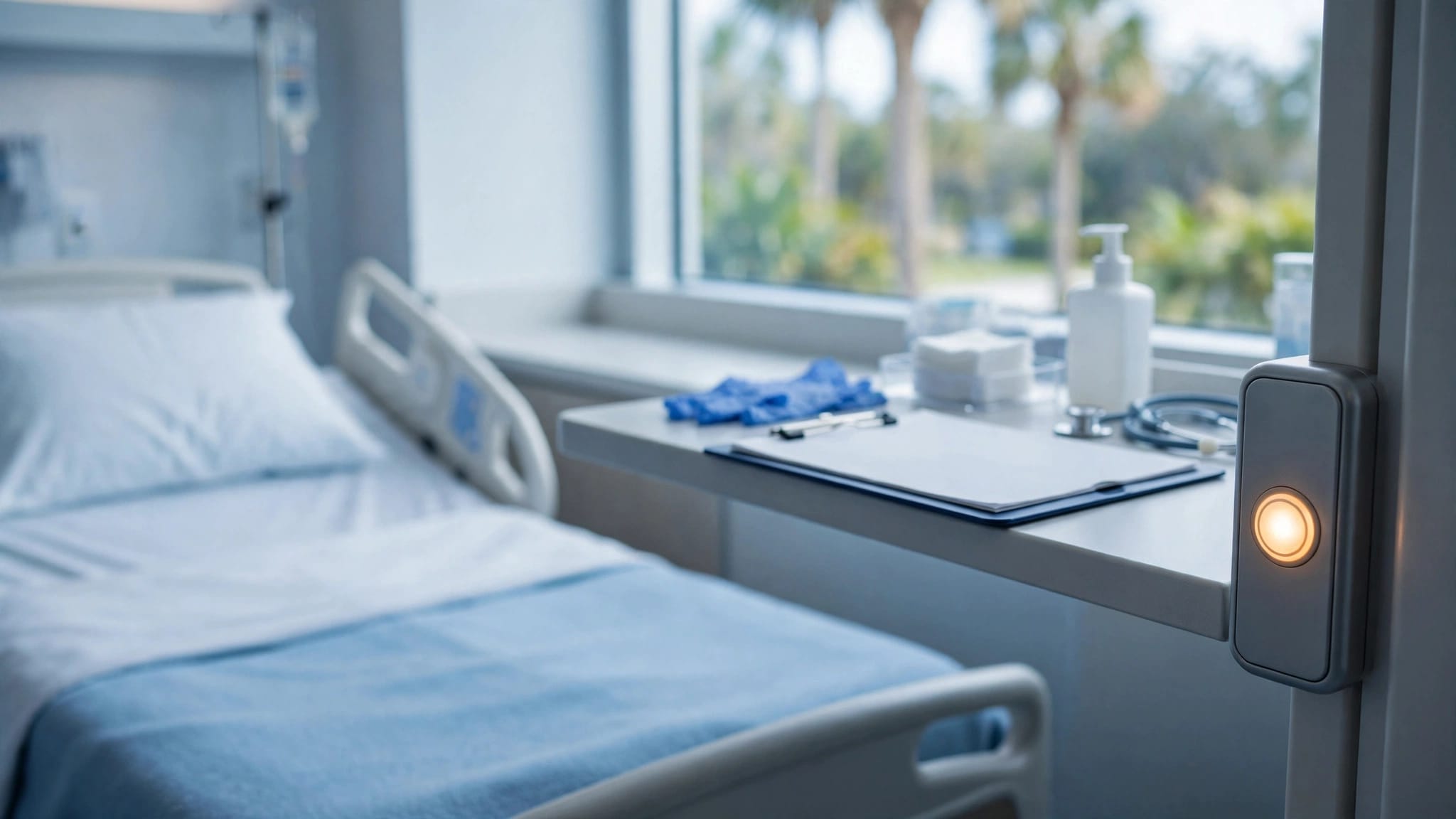
An unanswered call light can become important evidence when a hospitalized patient suffers a preventable injury. Florida hospital understaffing claims depend on connecting missed care to a particular assignment, shift, and harmful outcome.
You may suspect too few nurses were available, yet proving a claim requires more than describing a busy unit. Start with the patient’s care needs, the staff responsible for meeting them, and the records showing what happened.
Key Takeaways
- Staffing evidence matters when it explains why a required assessment, treatment, or safety measure didn’t happen.
- Patient assignments, nursing records, alarm data, and communication logs can help establish the sequence of events.
- Florida medical-negligence claims require proof of substandard care, resulting injury, and losses, along with presuit procedures.
When Florida Hospital Understaffing Creates Unsafe Assignments
Patient needs matter more than a head count
A staffing number alone rarely explains whether an assignment was safe. Reviewers must consider patient acuity, meaning the severity of each patient’s condition and the attention required.
A postoperative patient needing assisted transfers presents different demands than a stable patient awaiting discharge. Likewise, frequent neurological checks or treatment for worsening breathing can require substantial nursing attention.
The relevant question is whether the assigned team could provide the required care during that shift. Admissions, transfers, staff experience, and competing emergencies can affect that assessment.
A unit’s average staffing level may conceal a shortage during the period when the injury occurred. Therefore, the actual assignment deserves closer review than a monthly staffing summary.
Federal requirements focus on adequate nursing care
Under 42 CFR section 482.23(b), participating hospitals must have adequate nursing personnel to meet patients’ needs. They must also provide supervisory and staff personnel so a registered nurse is immediately available when needed.
The CMS hospital survey guidance addresses these nursing-services requirements. The federal provision doesn’t establish one universal nurse-to-patient ratio for every hospital unit.
Compliance questions can support an investigation. However, a regulatory concern alone doesn’t establish that staffing caused a patient’s injury.
Records That Can Reveal an Unsafe Patient Assignment
Staffing records show who was actually available
Assignment sheets can identify which nurse covered the patient and how many other patients shared that assignment. Schedules, attendance records, and reassignment documentation may show whether planned coverage matched actual coverage.
Review the relevant hours rather than assuming everyone listed on a schedule worked the entire shift. Break coverage, unexpected absences, and transfers between units can change bedside availability.
Staff qualifications also matter. A person assigned to help may lack the training or authority to perform the assessment the patient needed. Similarly, a charge nurse with management duties may have limited capacity to cover additional bedside tasks.
Hospital policies and earlier staffing warnings may help establish what management knew. However, each record must connect to the shift and care failure under investigation.
The clinical chart shows what care required
Compare staffing information with physician orders, nursing assessments, care plans, and medication administration records. These documents establish what staff needed to do and when.
Relevant evidence may include vital-sign flowsheets, oxygen readings, neurological observations, fall-risk assessments, and rapid-response documentation. Together, they can reveal missed checks, delayed medication, or an unaddressed change in condition.
A discharge summary won’t contain every bedside event. Request the underlying documentation rather than relying on its recap.
For injuries involving delayed intervention, evidence in failure-to-rescue cases can clarify how monitoring records and communications fit together. The investigation should identify both the missed task and the consequences of that omission.
Compare Timestamps, Alarms, and Shift Handoffs
The timeline can distinguish an unavoidable medical crisis from a preventable delay. Compare when symptoms appeared, when staff received notice, when someone assessed the patient, and when treatment began.
Call-light activity, available alarm logs, telemetry data, and electronic audit trails may help verify the sequence. These records don’t always exist or remain available indefinitely.
Shift changes deserve attention because a safety plan can fail when the next team doesn’t receive important information. Hospital handoff errors may involve omitted fall precautions, abnormal test results, or instructions for escalation.
Look for discrepancies between the event time and the time someone entered a note. A late entry needs review, but it doesn’t automatically establish dishonesty.
A documented check and an electronic timestamp may describe different events. Compare what each record measures before treating the difference as proof of delayed care.
Witness accounts can help fill gaps. Still, objective records and clinical interpretation are necessary to assess what the timeline means.
What a Florida Understaffing Claim Must Prove
The assignment must connect to a breach of care
Florida Statutes section 766.102 requires proof that a provider breached the prevailing professional standard of care. That standard considers what reasonably prudent similar providers would regard as acceptable under comparable circumstances.
A qualified reviewer must identify the care the patient required and explain how the team departed from that standard.
Florida hospital understaffing may support that analysis when an excessive workload prevented required monitoring or timely treatment. However, an internal staffing-policy violation doesn’t automatically establish malpractice.
Separate each alleged failure. A missed nursing assessment, delayed physician response, and unavailable respiratory therapist may involve different duties and different evidence.
The failure must have caused additional harm
The patient must also show that the breach more likely than not caused or worsened the injury. This often requires separating the original illness from preventable added harm.
A serious condition may continue to worsen despite appropriate treatment. Therefore, the reviewer must explain how timely care probably would have changed the outcome.
Compensable losses may include additional medical expenses, rehabilitation, lost earnings, disability, and pain and suffering. Bills establish costs, but they don’t establish why the injury occurred.
The strongest evidence connects assignment, missed care, and injury. A staffing shortage without resulting harm generally won’t support a patient compensation claim.
Who May Be Responsible for Staffing Failures?
A hospital may face direct liability for negligent staffing policies, supervision, training, or other system failures. It may also face responsibility for negligent acts by its employees.
The analysis becomes more complicated when physicians, nurses, or other professionals work through outside groups. Employment records, contracts, billing documents, and patient-facing materials can help identify the relationships.
A staffing company’s role also requires review if it controlled personnel, qualifications, or assignments. However, its involvement doesn’t automatically establish liability.
Avard Law Offices’ guidance on nurse negligence and hospital liability addresses these overlapping responsibilities. The investigation should examine who controlled the relevant care rather than focusing only on the person at the bedside.
Identifying potential defendants early also matters because Florida’s presuit process requires notice to prospective defendants.
Florida Presuit Requirements and Filing Deadlines
Most claims involving unsafe clinical assignments proceed under Florida’s medical-negligence rules. Calling the conduct ordinary negligence doesn’t bypass those rules when proving the claim requires professional medical judgment.
Under Florida’s presuit investigation requirements, a claimant generally needs an investigation and a verified written opinion from a qualified medical expert supporting negligence and causation.
The claimant must then provide notice of intent to prospective defendants. Florida Statutes section 766.106 generally provides a 90-day presuit investigation period before litigation proceeds, subject to applicable extensions and procedural rules.
Medical-malpractice claims generally have a two-year limitations period measured from the incident or when the injury and its possible negligent cause were discovered or should have been discovered. A four-year statute of repose also applies in many cases.
Exceptions and tolling provisions can change the calculation. An attorney should determine the deadline using the complete facts.
Don’t wait for an internal investigation to finish. A hospital complaint, ongoing treatment, or ordinary records request doesn’t automatically preserve your filing rights. Expert review and the required notices take time, so an early evaluation can protect options that might otherwise expire.
Preserve Evidence and Report Immediate Safety Concerns
If the patient remains hospitalized and needs urgent care, alert the bedside team and ask for the charge nurse or treating physician. Address the immediate medical need before focusing on a legal claim.
Afterward, preserve information while memories and electronic records remain available:
- Write a factual timeline with dates, unit locations, staff names or roles, and requests for help. Separate personal observations from information others supplied.
- Request the complete chart and relevant outside treatment records. Keep portal messages, discharge paperwork, bills, and wage-loss documentation.
- Ask in writing for preservation of relevant assignment records, alarm data, call-light logs, audit trails, communications, and available video.
An attorney can assess which additional materials require formal legal procedures. A preservation request doesn’t guarantee access or prove negligence.
You can also submit a quality-of-care concern through the AHCA facility complaint form or call 1-888-419-3456. The Agency for Health Care Administration investigates facility complaints, but that process doesn’t replace a malpractice claim or award personal compensation.
Frequently Asked Questions About Hospital Understaffing
Can I bring a claim without knowing the staffing ratio?
Yes. You don’t need an assignment sheet before seeking a legal evaluation. The chart, witness accounts, and treatment timeline may identify concerns that warrant further investigation.
However, a claim still needs evidence of a breached duty and resulting injury. An attorney can assess whether staffing records are necessary and how to seek them. Family observations are useful starting points, but qualified medical review determines what care the circumstances required.
Does a nurse’s statement prove the hospital was negligent?
A statement that the unit was short-staffed can be relevant evidence, but it doesn’t establish every required element. Record the speaker’s name or role, the approximate time, and the words you remember.
Then compare the statement with assignments, clinical records, and the patient’s needs. Florida hospital understaffing claims require a connection between inadequate care and harm, regardless of how candidly a staff member described the workload.
Protect Your Claim With a Complete Care Timeline
An unanswered call light becomes stronger evidence when records show what care was required, who was responsible, and how delayed attention caused harm.
Florida hospital understaffing claims depend on that documented connection, along with qualified medical review and timely compliance with presuit rules.
Preserve the records you can obtain and seek a Florida medical-malpractice evaluation before deadlines or missing evidence limit your options.