
Florida Workers’ Comp for Remote Work Injuries at Home
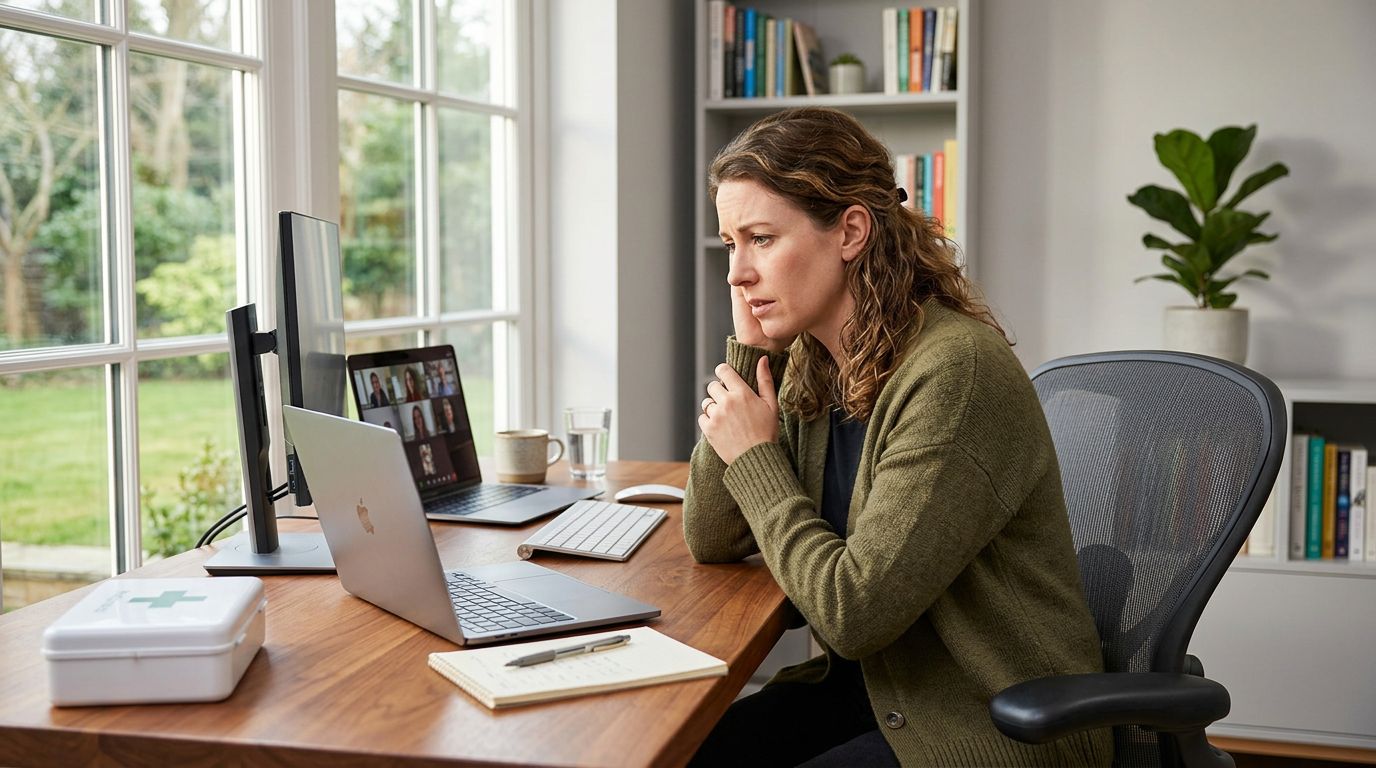
Your home can be your workplace, but an injury during your shift doesn’t automatically qualify for benefits. Florida workers’ comp can cover remote employees when the injury has the required connection to their job.
The challenge is proving what you were doing and why you were injured, especially when nobody witnessed the accident. Your work records, medical findings, and injury report can help establish that connection.
Start by separating a job-related injury from an accident that happened at home while you were logged in.
Key Takeaways for Injured Remote Employees
- Remote employees can qualify for workers’ compensation, but being home during scheduled work hours doesn’t establish coverage by itself.
- Report the injury promptly, generally within 30 days, and preserve written proof of notice along with records of your work activity.
- Seek instructions for authorized medical care, document work restrictions, and review filing deadlines even if the insurer says your claim remains under investigation.
When Florida Workers’ Comp Covers an Injury at Home
Florida’s workers’ compensation law generally requires an injury to arise out of employment and occur in the course and scope of employment. Both parts matter for remote workers.
The work activity must explain the injury
The insurer will examine the task you were performing and the risk that caused your injury. Handling work equipment or performing required physical duties can support a work connection.
However, scheduled hours alone don’t establish that connection. A fall caused by a household hazard can raise different questions than an injury caused by required job equipment.
Florida’s Workers’ Compensation System Guide explains the broader claims process. Remote employees still need evidence that their injury meets the state’s employment-related requirements.
Personal activities can complicate coverage
Household chores, pet care, and other personal activities can weaken the connection between an accident and employment. Breaks also require close attention to the activity and the source of the injury.
Neither a home address nor an employer-approved remote schedule resolves every coverage question. The circumstances of the accident remain central.
A timekeeping record can prove you were on duty without proving that your job caused the injury.
Workers’ compensation generally doesn’t require proof that your employer acted carelessly. Nevertheless, the carrier can dispute whether employment caused the accident or the diagnosed condition.
Evidence That Connects Your Home Injury to Work
Remote-work claims often lack an eyewitness. That doesn’t automatically defeat a claim, but it makes contemporaneous records especially important.
Preserve the task, timing, and physical conditions
Save your work schedule, time entries, meeting invitations, and messages about the assignment you were performing. Employer instructions about equipment or your workstation may also help explain the task.
Photograph the accident location, relevant equipment, and visible injuries before conditions change. Keep original files rather than relying only on cropped images or screenshots.
Document who learned about the injury immediately afterward, even if nobody saw it happen. Preserve relevant records you can lawfully access, but don’t remove confidential client information or unrelated company files.
Make the medical history accurate and complete
Tell the treating provider how the injury occurred, which body parts hurt, and when symptoms began. Describe prior injuries honestly because inaccurate histories can undermine otherwise useful medical evidence.
For repetitive hand, wrist, or back problems, record the actual job duties and how frequently you perform them. A diagnosis alone doesn’t establish occupational causation.
When preexisting conditions contribute, medical evidence addressing Florida’s major contributing cause standard becomes important. That standard generally requires work to account for more than 50% of the cause compared with all other causes combined.
Report the Injury Before Details Become Harder to Prove
Florida generally requires an employee to notify the employer within 30 days of an accident or the initial manifestation of an injury. Statutory exceptions exist, including certain situations requiring a medical opinion to identify the work connection.
Don’t wait for the maximum deadline. Follow the state’s injury reporting guidance and notify a supervisor, human resources representative, or another person authorized to receive reports.
Your report should identify the approximate date and time, location, work activity, affected body parts, and anyone with relevant knowledge. Describe facts you know rather than guessing about a diagnosis.
Verbal notice can count, but follow it with an email, text, or incident report. Avard Law’s guidance on work injury report details addresses information that helps create a clear record.
Keep a copy you can access if your employer later disables your work account. Also request the carrier’s name, claim number, adjuster’s contact information, and treatment instructions.
An employer generally must report the injury to its insurer within seven days after gaining actual knowledge. That separate duty doesn’t replace your own notice obligation.
Medical Treatment and Wage Benefits for Remote Workers
Working at home doesn’t create a separate benefit formula. Eligibility depends on an accepted work injury, medical findings, and the effect on your ability to earn wages.
Use authorized providers for routine care
Seek emergency care when necessary. For non-emergency treatment, the employer or workers’ compensation carrier generally directs care through authorized providers.
Ask for the doctor’s name, appointment instructions, and confirmation of authorization. Unapproved follow-up visits can create disputes over payment, even when the treatment addresses genuine symptoms.
Covered care can include medically necessary doctor visits, diagnostic testing, medication, therapy, and other authorized services. Save appointment notices and treatment requests if approval stalls.
Medical records should also describe your work restrictions. Remote duties still involve physical demands, including typing, sitting, or handling equipment.
Wage replacement depends on medical work status
Temporary total disability benefits generally pay 66 2/3% of pre-injury wages, subject to the statewide maximum, when the qualifying injury prevents work.
Temporary partial disability benefits may apply when restrictions allow some work but prevent you from earning at least 80% of your pre-injury wages. The state’s injured-worker benefits guidance explains these categories.
Disability compensation generally excludes the first seven days. If disability lasts more than 21 days, compensation can include that initial period.
Keep pay records, missed-work dates, and disability notes. Also preserve communications about whether your employer offered duties within your restrictions.
What to Do When the Employer or Carrier Disputes Coverage
A carrier may question the work connection, medical causation, or the need for requested treatment. Ask for the stated reason in writing so you can address the actual dispute.
If your employer refuses to report the injury, preserve proof of your notice and request carrier information directly. Florida’s Employee Assistance and Ombudsman Office can help with workers’ compensation questions at 1-800-342-1741.
Avard Law’s guidance on employer reporting failures explains steps to take when a manager’s inaction leaves the claim stalled.
Meanwhile, keep a dated record of calls, emails, treatment requests, and benefit payments. If an adjuster requests a recorded statement, answer truthfully and avoid speculation about diagnoses, prior records, or future recovery.
A workers’ compensation attorney can review the disputed work activity, medical evidence, and applicable deadlines. Avard Law Offices provides remote-work claim denial guidance for employees facing questions about coverage after an injury at home.
Reporting and Filing Deadlines Are Separate
Notifying your employer doesn’t replace filing a Petition for Benefits when disputed benefits require formal action. Florida’s injured-worker informational brochure identifies the general two-year filing period.
The precise calculation depends on when you knew or should have known the injury arose from employment. Authorized treatment and indemnity payments can affect the limitations period.
A one-year gap without authorized medical treatment or wage benefits can also create a limitations problem. Review the dates rather than assuming an existing claim number keeps every right open.
An insurer’s investigation, negotiation, or statement that a claim is “under review” doesn’t automatically extend filing deadlines. If treatment or payments stop, Avard Law’s guidance on Florida claim filing deadlines can help you understand why prompt review matters.
Frequently Asked Questions About Remote-Work Injuries
Can I claim benefits without anyone seeing the accident?
An eyewitness isn’t required for every compensable injury. Your testimony, prompt report, medical records, and electronic work records can help establish what happened.
However, those records must support both the accident and its connection to employment. A meeting invitation can establish timing, while medical evidence addresses the injury. Preserve both instead of relying on a single document to prove the entire claim.
Does working for an out-of-state company prevent a Florida claim?
An employer’s headquarters location doesn’t, by itself, answer whether Florida workers’ compensation applies. Employment arrangements, work location, insurance coverage, and jurisdictional rules require review.
Tell an attorney where you regularly work, where the injury occurred, and what your employer approved. Don’t assume either Florida residence or an out-of-state payroll address settles the issue.
Can repetitive typing injuries qualify?
A repetitive injury can qualify when the required evidence connects the condition to employment. Medical findings, task frequency, symptom history, and other possible causes matter.
Report symptoms promptly rather than waiting for severe impairment. Because gradual injuries can raise different notice and causation questions, obtain medical evaluation and review the reporting deadline as soon as you recognize a possible work connection.
Protect Your Claim With a Clear Work-Injury Record
An injury at home needs a clear connection to your job. Prompt notice, accurate medical histories, and preserved work records give that connection a stronger foundation.
Follow the authorization process and watch separate filing deadlines while the carrier evaluates your claim. If coverage, treatment, or wage benefits are disputed, seek legal review before missing records or expired deadlines limit your options.