
Florida Parasailing Injury Claims: Equipment Failures
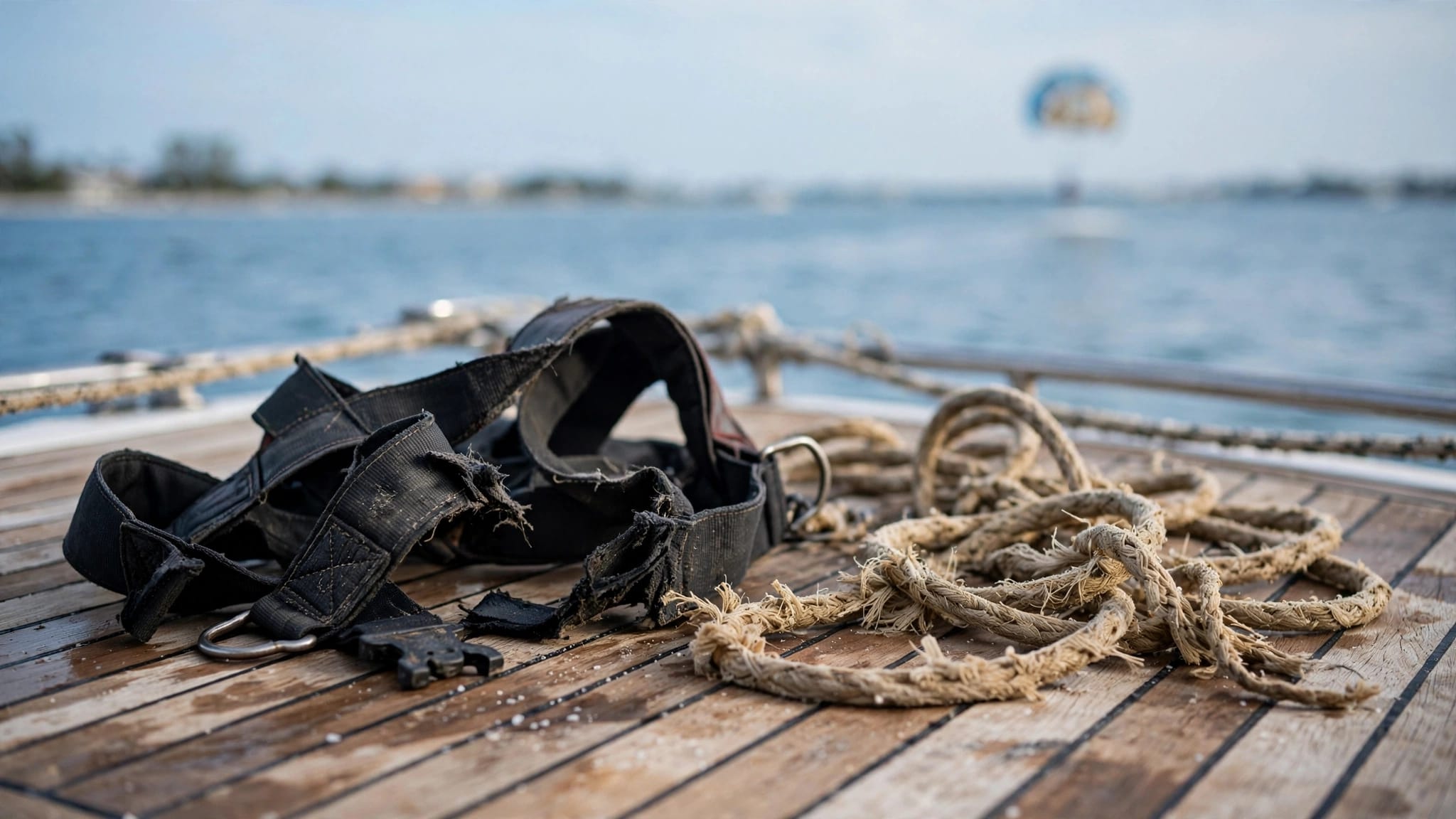
A broken towline or failed harness can turn a parasailing ride into a medical emergency within seconds. A Florida parasailing injury claim depends on identifying what failed, who controlled the equipment, and how that failure caused your injuries.
Your immediate priorities are medical care and preserving evidence, especially equipment the operator might replace before anyone examines it. Understanding the difference between unsafe operation and defective equipment helps identify who may owe compensation.
Key Takeaways
- A towline or harness failure warrants investigation, but it doesn’t automatically prove negligence or a product defect.
- Equipment, maintenance records, weather logs, witness accounts, and medical documentation can establish responsibility and losses.
- Waivers, shared-fault allegations, and maritime law require individual review; an open insurance claim doesn’t automatically extend the lawsuit deadline.
What Caused the Towline or Harness Failure?
A successful claim must connect the failure to a legally responsible party and documented harm. The investigation should distinguish equipment damage from problems with setup, maintenance, or operation.
Towline condition and operating decisions
A towline investigation may examine wear, attachment points, prior repairs, and the circumstances immediately before separation. Boat speed, winch operation, and weather conditions can also matter.
However, finding a broken line doesn’t establish why it broke. An examination should determine whether damage existed before the accident or occurred during impact or recovery.
Records can help reconstruct that history. Purchase dates, manufacturer instructions, maintenance entries, replacement records, and earlier complaints may show what the operator knew or should have known.
Investigators should also examine whether crew decisions exposed the equipment to unsafe forces. A weather-related failure can involve operational negligence even when the equipment itself wasn’t defective.
Harness setup and potential product defects
Harness claims may involve torn webbing, failed hardware, incorrect attachment, or an improper fit. The investigation should document how the crew secured the rider and whether the equipment matched its intended use.
Potential defendants can include the operating business, responsible vessel owner, maintenance contractor, manufacturer, or seller. Each party’s responsibility depends on its actual role.
A product claim requires evidence of a defect and its connection to the injury. Meanwhile, an operator claim may focus on negligent fitting, inspection, maintenance, or use.
Florida Parasailing Safety Rules That Matter
Florida’s parasailing requirements provide concrete standards for investigating crew conduct. A violation matters when it connects to the accident or resulting injuries.
Weather restrictions and passenger protection
Under Florida’s commercial parasailing rules, operations are prohibited when sustained winds exceed 20 mph or gusts exceed 25 mph. Gusts 15 mph above sustained winds also trigger a prohibition.
Other restrictions apply when rain or heavy fog reduces visibility below half a mile, or a known lightning storm is within seven miles. Operators must determine weather conditions using available means and record conditions each time passengers are taken out.
A parasail-towing vessel must carry an observer besides the operator. A wide-angle mirror doesn’t replace that person.
Riders must also wear a noninflatable U.S. Coast Guard-approved personal flotation device according to its approval label. Parasailing is prohibited between half an hour after sunset and half an hour before sunrise.
Equipment questions require more than statutory citations
Florida law prohibits manipulating a vessel, tow rope, or controlling device in a way likely to cause a parasail or rider to strike specified objects.
However, these provisions don’t establish towline replacement intervals, strength ratings, or harness inspection schedules. Those questions require equipment-specific evidence.
Manufacturer instructions and qualified technical analysis can help evaluate whether the gear was suitable and properly maintained. Compliance with weather rules alone doesn’t resolve whether the operator fitted or handled the equipment safely.
Preserve Evidence Before Equipment Disappears
Medical treatment comes first. After a fall or water impact, tell your providers about head strikes, breathing problems, and neck or back symptoms.
Then preserve information without placing yourself at risk or interfering with emergency responders.
Keep your records and witness information
Save original photographs and videos with their date information intact. Useful images may show the harness, towline ends, attachment hardware, vessel, and surrounding conditions.
Keep the booking confirmation, payment receipt, signed waiver, safety instructions, and messages exchanged with the business. Identify the operator, vessel, crew members, and witnesses when possible.
Write down what you personally observed while events remain fresh. Distinguish your observations from what someone else told you, and don’t estimate technical details you couldn’t see.
Avard Law Offices’ guidance on steps after a boat accident also addresses protecting your legal options after an on-water injury.
Request preservation of the actual equipment
An attorney can send preservation requests covering the towline, harness, connectors, winch, maintenance records, weather logs, and available video.
The request should identify the equipment involved, including serial numbers or other identifying information when available. Keeping a different harness or a replacement line won’t answer what happened during your ride.
A photograph of a broken towline cannot replace an examination of its fibers, attachments, and fracture area.
Don’t attempt your own repair or destructive testing. A coordinated inspection can preserve the equipment’s condition while allowing qualified professionals to evaluate competing explanations.
Compensation and Available Insurance
The claim must document both responsibility and the losses caused by the accident. The seriousness of an injury alone doesn’t establish its settlement value.
Medical expenses and the effect on your life
Recoverable damages may include medical expenses, rehabilitation, lost earnings, reduced earning ability, and pain and suffering, depending on applicable law.
Keep imaging results, treatment records, bills, prescriptions, and written work restrictions. Employer records can establish missed income, while medical opinions may support future treatment needs.
Describe daily limitations accurately. Difficulty sleeping, reduced mobility, and help needed at home can explain losses that bills don’t capture.
However, future care should rest on medical evidence rather than an early estimate. A settlement release may close the claim before you understand the full extent of your injuries.
Required coverage doesn’t guarantee payment
Florida commercial parasailing operators or owners must maintain qualifying liability insurance of at least $1 million per occurrence and $2 million in annual aggregate coverage. The operator must also hold a current U.S. Coast Guard license authorizing carriage of passengers for hire.
Those requirements don’t guarantee that every claim receives the policy limit. Coverage terms, available limits, disputed responsibility, and multiple injured passengers can affect recovery.
An attorney should identify the insured businesses and examine any other potentially applicable policies. The company taking your reservation may differ from the entity operating the vessel.
Waivers and Attempts to Blame the Rider
A signed waiver and an insurer’s fault allegation are separate issues. Neither should end the investigation without reviewing the supporting documents and evidence.
A waiver needs a case-specific review
Keep the complete agreement, including any electronic signature record. The wording, circumstances of signing, parties identified, and applicable law affect its enforceability.
Don’t assume every parasailing waiver eliminates a claim. Also, don’t assume an equipment failure automatically defeats the agreement.
Maritime law may affect the analysis when the activity involves navigable waters. Counsel should review the location and circumstances before deciding which liability rules apply.
That review should also distinguish claims against the operator from potential claims against an equipment manufacturer or other party.
Shared-fault allegations must connect to the injury
An insurer may allege that you ignored instructions, changed the harness position, or interfered with equipment. Those claims need evidence connecting your conduct to the failure or injury.
Under Florida’s comparative-fault statute, a claimant’s assigned fault generally reduces damages in covered negligence actions. More than 50% fault generally bars recovery; exactly 50% doesn’t cross that threshold.
An adjuster’s proposed percentage isn’t a final legal finding. Maritime claims can follow different rules, so the Florida threshold shouldn’t be assumed to govern every parasailing accident.
Be truthful in statements, but don’t guess about wind speed, attachment details, or events you couldn’t observe.
Review the Filing Deadline Before Negotiations Stall
For many Florida negligence claims accruing after March 24, 2023, the general lawsuit deadline is two years. Florida’s limitations statute contains the applicable categories, but the correct deadline depends on the claim and governing law.
A parasailing accident can require a maritime-law analysis. Product claims, wrongful-death claims, and claims involving government defendants may also require different calculations or procedures.
An open insurance file doesn’t preserve your right to sue. Settlement discussions, records requests, and a promise to investigate don’t automatically pause the clock.
The evidence deadline and lawsuit deadline are different. Video can disappear or equipment can be discarded long before the filing period expires.
Avard Law Offices’ explanation of Florida injury filing deadlines provides additional background on why the accident date and claim type matter. Obtain an individual deadline review while the investigation proceeds, rather than waiting for treatment to finish.
Frequently Asked Questions
Can I pursue a claim if the operator replaced the equipment?
Replacement doesn’t automatically eliminate a claim. Photographs, video, witness testimony, maintenance records, and purchase information may still help establish what happened. However, losing the original equipment can make technical proof harder, so preservation requests deserve prompt attention.
Does an agency report establish negligence?
An agency report can provide useful factual information, but it doesn’t automatically decide civil liability. The claim still needs evidence connecting wrongful conduct or a product defect to the injury. Witness accounts and equipment findings may also confirm or challenge the report’s description.
Can I seek legal help after returning home?
Yes. Leaving Florida doesn’t automatically prevent you from pursuing an injury claim here. Keep your travel records, booking documents, witness contacts, and treatment records from every provider. An attorney can evaluate where the case belongs and which laws and deadlines apply.
Protect Your Claim After a Parasailing Equipment Failure
A towline or harness failure deserves a prompt investigation into the equipment, crew decisions, and resulting medical losses. Preserving the original evidence gives that investigation a stronger foundation.
Avard Law Offices’ Florida boat accident attorneys offer a free consultation to discuss potential responsibility, insurance, and filing deadlines. Early review can protect your options while you focus on recovery.