
Florida PIP Coverage for Injured Car Passengers
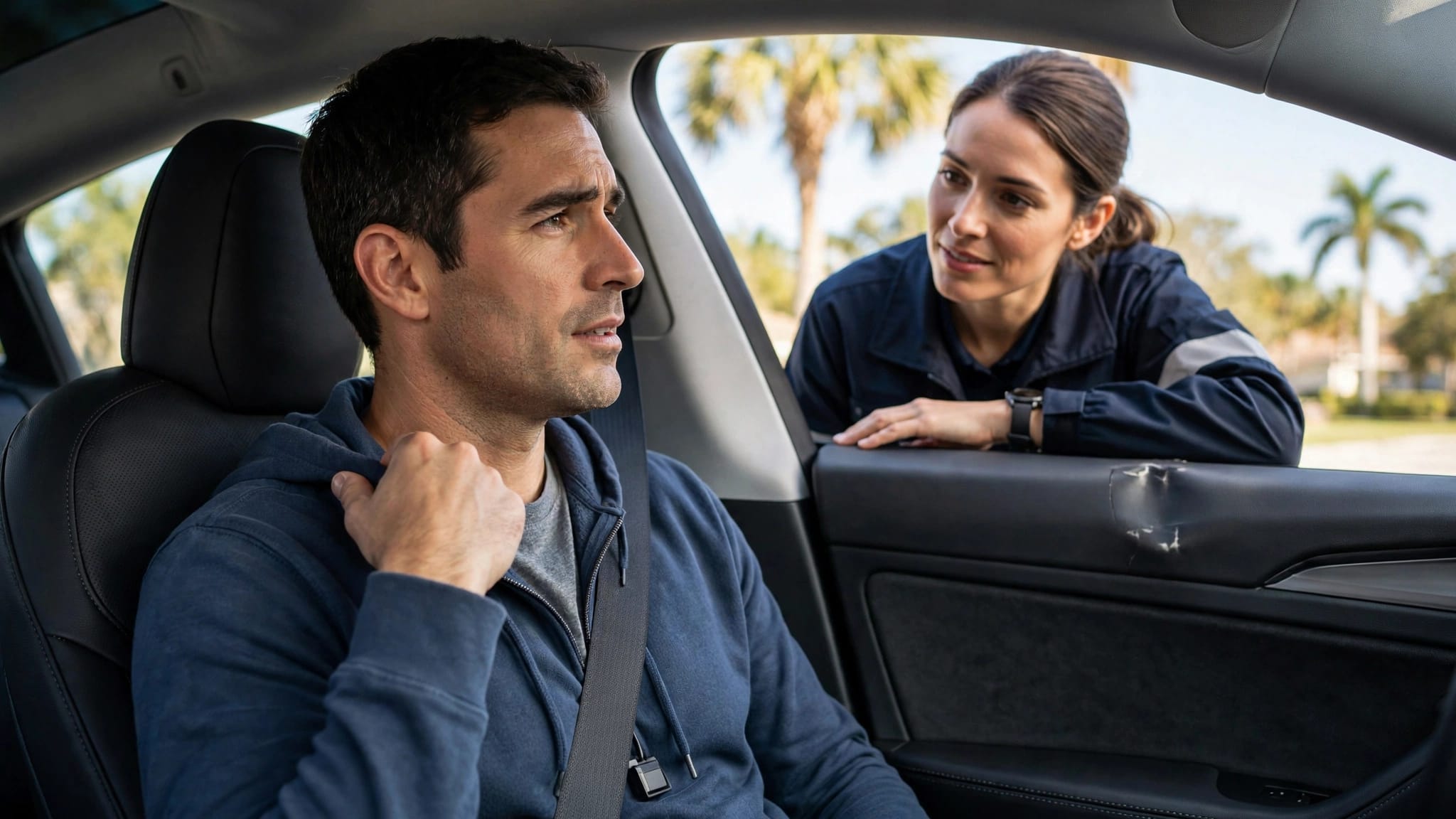
You can have insurance benefits after a crash even when you weren’t driving and don’t own the car. Florida PIP coverage may pay part of your medical bills and lost income without waiting for insurers to decide fault.
However, the driver’s insurance isn’t always the policy that pays first, and the 14-day treatment deadline can affect your benefits. Start by identifying the coverage that applies to you, then keep that claim separate from any claim against a responsible driver.
Key Takeaways for Injured Passengers
- Your own applicable PIP policy generally pays first. If you don’t have one, qualifying household coverage or the occupied vehicle’s policy may apply.
- PIP generally pays 80% of covered medical expenses and 60% of covered lost income, within a combined $10,000 medical and disability limit.
- Initial qualifying medical care must begin within 14 days. Without a qualifying emergency medical condition determination, medical benefits generally face a $2,500 cap.
These benefits don’t resolve fault or compensate you for pain and suffering. A separate injury claim may address losses that PIP leaves unpaid.
Which Florida PIP Coverage Pays First?
As of October 2026, Florida’s no-fault system remains in effect. Florida’s PIP benefits statute determines which insurer owes benefits based on your insurance, household relationships, and the vehicle involved.
Your own applicable auto policy
If you have an applicable Florida auto policy, your PIP generally pays first when you’re injured in someone else’s car. Being a passenger doesn’t automatically transfer your medical-benefits claim to the driver.
Give your insurer the crash date, vehicle information, and treatment details. Also identify any other potentially applicable policies. The coverage decision depends on the policy and statutory eligibility, rather than whose insurance card you received at the scene.
Coverage through a resident relative
If you don’t have your own applicable coverage, a resident relative’s policy may cover you. For these purposes, a qualifying relative is related by blood, marriage, or adoption and lives in the same household.
A roommate’s policy doesn’t qualify merely because you share an address. Likewise, a parent’s policy doesn’t automatically cover an adult child living elsewhere. Household residency and vehicle ownership can require careful review.
The policy covering the occupied vehicle
If neither your own nor applicable resident-relative PIP covers you, the occupied vehicle’s insurer generally becomes the next source to review.
However, that fallback isn’t guaranteed. Statutory exclusions and eligibility rules still apply. Avard Law Offices’ guidance on passenger injury insurance in Florida addresses the policies that may come into play.
Several potentially applicable policies don’t create duplicate benefits or multiple $10,000 recoveries for the same covered losses.
What PIP Pays and What You Still Owe
The usual $10,000 limit applies to combined medical and disability benefits for an eligible injured person. It isn’t a promise that the insurer will pay every bill, and medical expenses and wage benefits draw against the same available limit.
Medical expenses and unpaid balances
PIP generally pays 80% of covered medical expenses that meet statutory requirements. Those expenses can include medically necessary examinations, imaging, surgery, and rehabilitation.
Nevertheless, insurers can dispute whether treatment relates to the crash, whether it was necessary, or whether charges exceed permitted amounts. A deductible can also affect payment.
Even when the carrier accepts a bill, PIP ordinarily leaves part unpaid. Health insurance or other coverage may help, but coordination rules and reimbursement obligations require review.
Lost income and replacement services
PIP generally pays 60% of covered lost gross income and lost earning capacity attributable to the crash. It can also cover qualifying expenses for replacement services you would normally perform for your household.
Save pay statements, employer verification, and medical work restrictions. These records connect your missed work to the injury.
Because medical and disability payments share the available limit, substantial treatment expenses can leave fewer benefits for wage losses. Ask for a payment ledger before assuming coverage remains.
Why the 14-Day Medical Deadline Matters
Your insurance search shouldn’t delay medical care. The deadline for initial qualifying treatment runs after the crash, even while insurers argue about which policy applies.
Initial treatment must qualify
You generally must receive initial medical services within 14 days of the accident to qualify for PIP medical benefits. Qualifying care can include emergency services or an evaluation by an authorized medical provider.
Reporting the crash or scheduling an appointment doesn’t substitute for receiving care. Tell the provider when the collision occurred and accurately describe your symptoms, including symptoms that appeared later.
Follow-up treatment must also satisfy the statute’s requirements. Keep discharge papers, referrals, imaging results, and bills together.
An emergency medical condition affects the cap
Medical benefits generally face a $2,500 cap without a qualifying emergency medical condition determination. When the legal requirements are satisfied, medical benefits may reach the $10,000 limit, subject to available benefits and other conditions.
An emergency medical condition involves acute symptoms serious enough that delayed care could endanger health or bodily function. An authorized provider must make the determination.
An emergency-room visit alone doesn’t guarantee access to the full $10,000 limit. The qualifying medical determination and remaining benefits matter.
When Passenger Coverage Needs a Closer Look
Owning an uninsured vehicle can change the analysis. If you own a vehicle required to carry PIP, failing to insure it can prevent you from relying on the occupied car’s coverage.
Florida’s vehicle registration insurance requirements include proof of required PIP coverage. Don’t assume riding with an insured friend fixes a gap in your own required insurance.
Out-of-state visitors also need an individual review. Residency, vehicle ownership, the crash location, and applicable policy terms can affect eligibility. A visitor’s lack of a Florida policy doesn’t automatically establish that no benefits exist.
Uber and Lyft crashes introduce additional policies. Save your trip receipt and driver information because app activity can affect the available coverage. Avard’s guidance on Florida rideshare passenger injury claims addresses these separate insurance questions.
Children may also qualify through household or occupied-vehicle coverage. Their claims still require prompt medical care and a coverage review.
How to Protect Your Passenger Insurance Claim
Report the accident promptly to potentially applicable insurers and keep the claim numbers. Ask each carrier to explain its coverage position in writing rather than relying on a telephone assurance.
Build a clear medical and financial record
Tell every provider that your injuries followed a vehicle collision. Describe symptoms and prior conditions accurately, and follow treatment recommendations.
Keep medical bills, prescription receipts, work restrictions, and evidence of missed income. Also preserve the crash report number, witness details, photographs, and messages about the collision.
A benefits ledger helps identify payments, unpaid charges, and remaining coverage. It also helps distinguish an exhausted limit from a billing mistake or disputed treatment charge.
Address delays and denials promptly
When a carrier denies benefits, request the specific policy provision or statutory reason. A denial based on coverage priority raises different issues than one based on treatment timing or medical necessity.
PIP benefits are generally overdue if unpaid 30 days after the insurer receives written notice of the covered loss and amount, subject to statutory exceptions. Florida’s insurance claims practices law addresses failures to meet required PIP payment periods.
An attorney can review the explanation, supporting records, and available procedures for challenging nonpayment.
Compensation Beyond PIP Benefits
Florida PIP coverage doesn’t pay pain and suffering or repair the vehicle. It also doesn’t establish who caused the crash. Those questions involve separate claims and different evidence.
Claims against a responsible driver
A passenger may pursue a claim against the driver of the occupied car, another motorist, or multiple responsible parties. The claim can address supported economic losses beyond PIP, including additional medical expenses and reduced earning capacity.
Pain-and-suffering recovery in covered motor vehicle cases generally requires an injury meeting Florida’s serious injury threshold. Categories include qualifying permanent injury, significant permanent loss of an important bodily function, and significant permanent scarring or disfigurement.
PIP eligibility and this threshold are separate questions. Medical evidence supports the injury assessment, while crash evidence supports liability.
Other insurance and lawsuit deadlines
Uninsured or underinsured motorist coverage may help when a responsible driver lacks adequate insurance, depending on the policy and circumstances. Avard’s explanation of passenger rights after a crash addresses claims involving responsible drivers.
For many Florida negligence claims arising on or after March 24, 2023, the general lawsuit deadline is two years. Claim-specific rules and exceptions can change that calculation.
Settlement discussions don’t automatically pause the deadline. Likewise, the 14-day PIP treatment requirement doesn’t replace the separate deadline to sue.
Get Clarity Before Accepting a Settlement
The right starting point is a complete coverage review, paired with timely medical care. Being a passenger doesn’t mean you must wait for the drivers’ insurers to settle their fault dispute.
Before signing a release, understand which claims it resolves and whether it accounts for continuing treatment. Early benefits and a final injury settlement answer different questions.
Avard Law Offices offers free case evaluations for injured Floridians who need help identifying coverage and reviewing their recovery options.
Frequently Asked Questions
Can I receive PIP if my friend caused the crash?
Yes, if you qualify for coverage. PIP generally pays eligible benefits regardless of fault. Your friend’s responsibility may also support a separate liability claim, but it doesn’t automatically make their PIP policy primary.
Is the $10,000 limit shared among all passengers?
PIP’s usual medical and disability limit applies per eligible injured person, rather than as one pool for everyone in the vehicle. However, each passenger’s eligibility, medical cap, deductible, and applicable policy require review.
Can I still bring an injury claim if I missed 14 days?
Missing the initial-treatment window can jeopardize PIP medical benefits. It doesn’t automatically eliminate every claim against a negligent driver. However, delayed treatment can complicate proof that the crash caused your injuries, so obtain medical care and legal advice promptly.