
Florida Rip Current Claims: Beach Warning Records
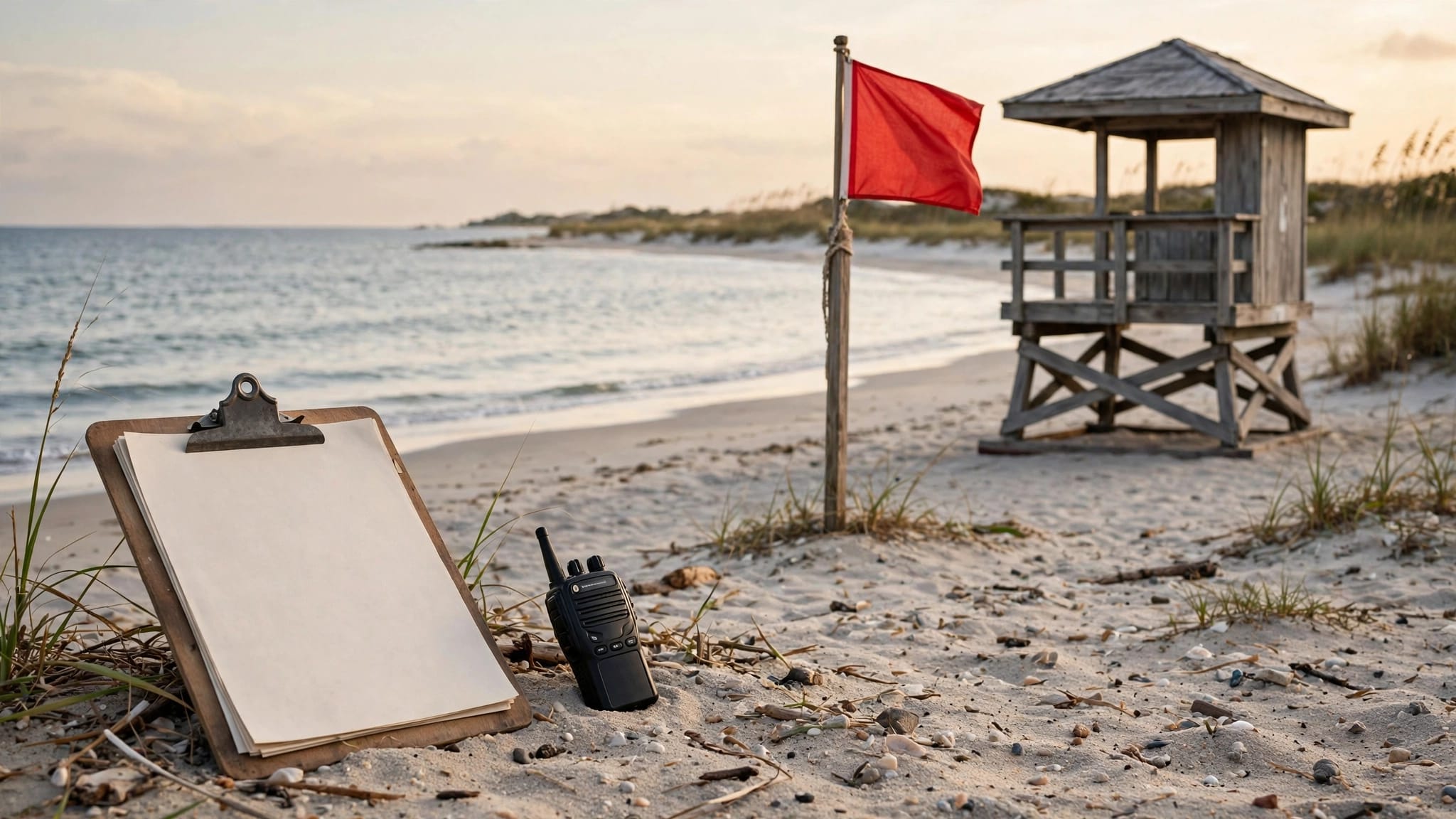
A beach warning photographed after a rescue may show a different flag than the swimmer saw before entering. Florida rip current claims depend on reconstructing that earlier moment and identifying who had responsibility for the relevant safety measures.
If you’re facing serious injuries or a family member’s death, timing matters because footage and operational records can disappear. Start with the beach location, the sequence of events, and the warnings that were actually available.
Key Takeaways
- A rip current forecast identifies regional risk, but it doesn’t prove that a particular operator received it or posted a warning.
- Preserve flag records, lifeguard logs, dispatch recordings, photographs, and witness accounts before routine deletion or changes to the scene.
- Public-records requests can help uncover government-held evidence, while private business files may require legal process.
- Ask an attorney to review responsibility and deadlines before waiting for every record to arrive.
How Florida Rip Current Claims Are Investigated
Identify the conduct under review
A rip current is a natural coastal hazard. Its presence, even alongside a tragic injury, doesn’t automatically establish legal responsibility.
An attorney must determine whether a particular party owed a legally recognized duty under the circumstances and controlling law. The investigation then examines conduct such as an inaccurate warning, a misleading statement about swimming conditions, or a failure involving an established rescue operation.
The National Weather Service’s Gulf Coast rip current information reports 227 fatalities during 2002 through 2025 across the combined Tallahassee and Mobile coverage area. That regional total includes Florida and Alabama beaches. It doesn’t establish notice or fault in an individual case.
Determine who controlled the safety services
Beach ownership and responsibility for safety operations may belong to different parties. A city, county, hotel, concession operator, or contractor could hold relevant records.
However, a business’s proximity to the beach doesn’t automatically make it responsible for ocean conditions. Counsel should examine property boundaries, contracts, staff assignments, and representations made to visitors.
Also identify the precise service at issue. Maintaining a beach access, updating warning flags, supervising a designated swimming area, and conducting rescues can involve different personnel and legal questions.
What Beach Warning Records Can Establish
Separate forecasts from on-site warnings
The National Weather Service’s Surf Zone Forecast guidance describes low, moderate, and high rip current risk categories. Low risk doesn’t mean that dangerous currents cannot occur.
For an incident investigation, preserve the forecast issued before the swimmer entered, including its publication time and geographic coverage. A current forecast webpage won’t necessarily show conditions on the injury date.
Next, determine whether the relevant operator received the forecast and what happened afterward. Emails, distribution lists, radio traffic, or shift briefings may document communications. The forecast alone doesn’t prove receipt, a posted warning, or a particular legal duty.
Reconstruct the flags and signs
Photographs should show the flag’s color, location, and visibility along the swimmer’s actual entry route. Include any nearby sign explaining the flag system.
Flag-change logs may reveal whether staff updated warnings before or after the incident. Witnesses can also describe obstructed signs, missing flags, or announcements they heard.
Distinguish official restrictions from a witness’s interpretation of a color. Obtain the local policy or ordinance that applied on that date rather than assuming every Florida beach operated identically.
A photograph taken after rescuers changed a flag cannot establish which warning was visible before the swimmer entered.
Request Public Records and Identify Private Files
Send a focused request to the custodian
Florida’s public-records framework generally permits inspection and copying of existing agency records, subject to exemptions and applicable charges. Contact the records custodian for the agency responsible for the beach or rescue services.
Identify the access name, street address, incident date, approximate time, and relevant date range. Request existing flag logs, lifeguard staffing records, incident reports, dispatch recordings, complaints, policies, and related communications.
Ask for electronic copies and a cost estimate before extensive work begins. An agency generally doesn’t have to create a new report answering your questions. Some responsive material may require redaction or qualify for an exemption.
Follow the records across operators
Fort Lauderdale’s lifeguard-supervised beach guidance states that signs identify unguarded public beach areas. In an incident there, the location of those signs and the guarded area’s boundaries would deserve investigation.
Private hotels and condominium associations aren’t automatically subject to public-records disclosure requirements. Their footage, employee messages, training files, and guest communications may require voluntary cooperation or formal litigation discovery.
Also ask the public agency for contracts and communications involving outside safety contractors. Whether contractor-held records fall within public-records obligations requires separate review.
Keep every request and response, including notices that an agency found no responsive records.
Preserve the Incident Timeline Before Evidence Changes
Seek emergency medical care first. Then, when safe, document the beach access, warning locations, lifeguard towers, and the area where the swimmer entered.
Keep original photographs and video files. Edited clips and social-media copies can lose timestamps or surrounding footage that helps explain the sequence.
Write down witness names and contact information. Ask witnesses to preserve their own recordings, but don’t suggest what they should remember.
An attorney can send preservation notices identifying surveillance footage, radio communications, staffing logs, electronic messages, and incident records. These notices should reach the parties that actually control the material. Camera systems may overwrite recordings within days or weeks.
Build a timeline using separately identified sources. Record when the swimmer entered, when someone noticed distress, when the first emergency call occurred, and when responders arrived.
However, don’t treat estimated times as exact. A phone recording, dispatch timestamp, and witness recollection may use different reference points. Resolving those differences matters when someone disputes how long a warning or rescue response took.
Address Fault Allegations and Document the Harm
Test allegations against the evidence
An insurer may argue that the swimmer ignored a warning, entered an unguarded area, or continued swimming after an instruction. Those allegations need evidence about what was visible, communicated, and understood.
Photographs from the entry route can matter more than pictures taken beside a distant warning board. Likewise, a policy requiring an announcement doesn’t prove anyone made that announcement.
Comparative-fault issues can affect compensation, so ask counsel how the applicable rules fit the claim. An adjuster’s proposed allocation of blame isn’t a final legal determination.
Be truthful in statements, but don’t guess about details you couldn’t observe.
Preserve medical and financial proof
Keep emergency transport records, hospital notes, diagnostic results, rehabilitation records, bills, and written work restrictions. These materials help document both the injury and its consequences.
For a nonfatal drowning injury, medical evidence may address respiratory complications, oxygen-deprivation injuries, or ongoing functional limitations. Future treatment needs should rest on professional assessments rather than an early estimate.
Also preserve wage records and evidence of missed work. After a death, counsel should identify the estate representative and review which survivors and losses Florida law recognizes. Family relationships and financial dependency can affect that analysis.
Review Government Restrictions and Deadlines Early
A claim involving a public beach needs more than an ordinary insurance review. Counsel must examine sovereign immunity, the nature of the challenged decision, required claim procedures, and any applicable restrictions on recovery.
Florida Statutes Chapter 768 includes section 768.28 on governmental tort claims and provisions addressing wrongful death. The controlling version and relevant court decisions must be checked against the incident and defendant.
Planning decisions and day-to-day operations can raise different immunity questions. A complaint about where a government placed lifeguard services may require a different analysis than alleged conduct during an established operation.
Don’t wait for a completed records request before obtaining a deadline review. Insurance discussions and agency investigations don’t automatically extend the time to act.
Avard Law Offices’ guidance on Florida wrongful death filing deadlines addresses why families should identify the claim, responsible parties, and timing requirements promptly.
What to Bring to an Attorney Consultation
Bring the beach access location, incident date, available photographs, witness contacts, medical records, and copies of records requests. Include booking documents and communications with any hotel, tour provider, or beach operator involved.
Also bring every letter from an insurer or public agency. Keep envelopes, email headers, and attachments because they can establish when communications occurred.
You don’t need a complete investigative file before asking for legal help. Missing records are often part of the investigation. Explain which materials you already have, who may hold the rest, and whether anyone has promised to preserve them.
A useful consultation should address the possible defendants, disputed safety responsibilities, available evidence, insurance, and procedural requirements. Ask what needs immediate preservation and which legal issues could prevent recovery even if a warning failure occurred.
Avard Law Offices offers free case evaluations for people seeking help after serious injuries or a family member’s death.
Frequently Asked Questions
Can I pursue a claim after returning home?
Leaving Florida doesn’t automatically prevent you from pursuing a claim involving an incident here. Preserve travel records, lodging confirmations, beach photographs, and treatment records from every provider, including providers in your home state.
An attorney can evaluate the appropriate court, governing law, and procedural requirements. Provide your current contact information and explain any ongoing treatment or work limitations. Don’t assume that moving or returning home changes the deadline.
What if the agency says it has no warning records?
Keep the response and identify which office conducted the search. A response from one department doesn’t necessarily establish that no other agency or contractor holds relevant material.
The request may need a clearer location, additional record categories, or a different custodian. However, an absence of records doesn’t automatically prove that staff failed to warn swimmers.
Other evidence may help reconstruct events, including witness accounts, private footage, staff communications, and dispatch records. Counsel can compare those sources and investigate gaps.
Protect the Evidence Behind Your Claim
Florida rip current claims require a careful reconstruction of the warnings, safety responsibilities, and events before the rescue. The strongest investigation connects each record to the correct beach, time, and operator.
Preserve the original evidence and seek a legal review while records remain available. A flag changed after the incident should never become the only account of what the swimmer saw beforehand.