
Florida Nursing Home Burn Claims: Water Temperature Records
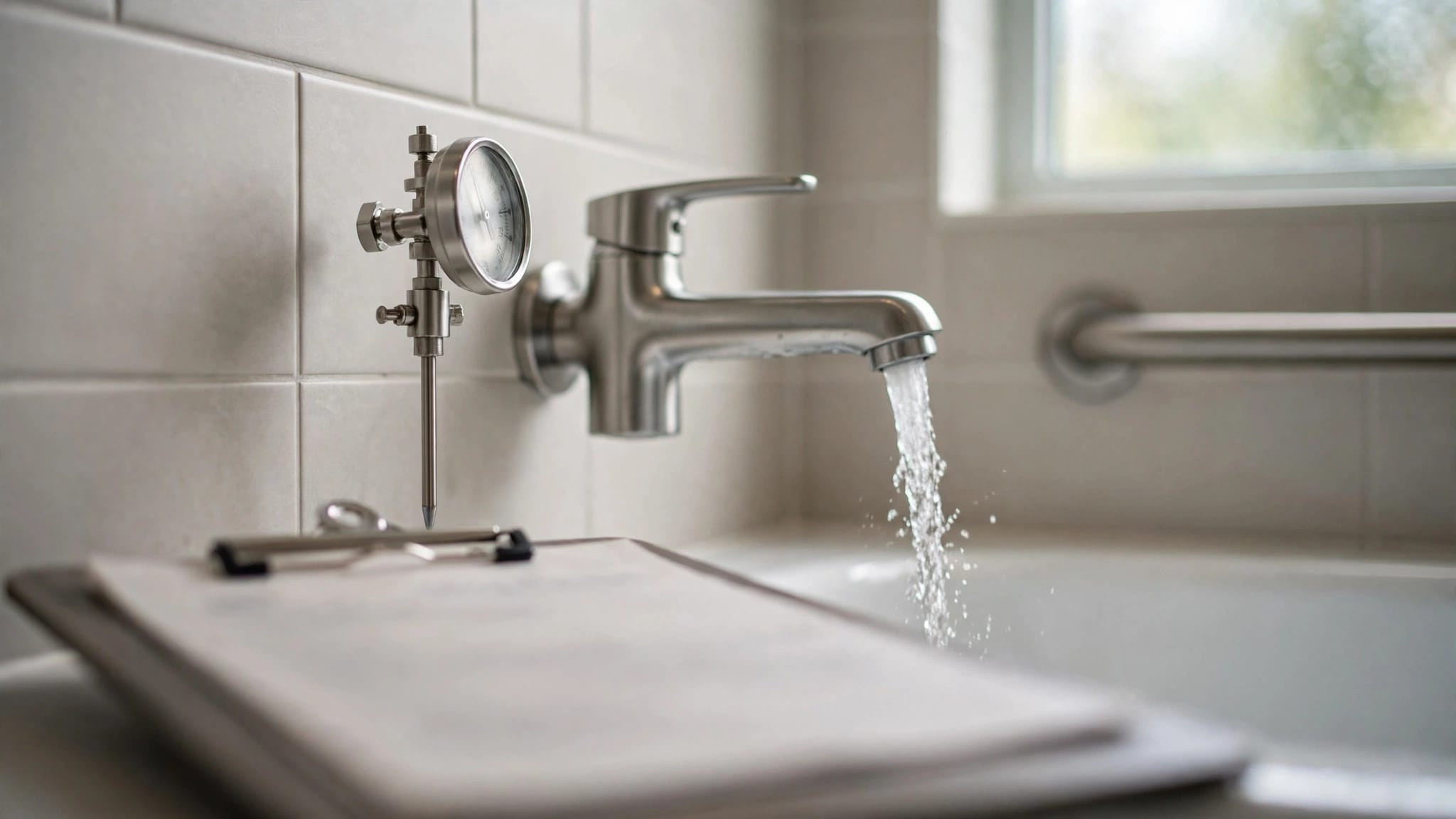
A water-temperature reading taken after a bathing burn may miss the conditions that injured your loved one. Florida nursing home burn claims require a closer look at where staff measured the water, when they measured it, and what happened during the bath.
Your loved one’s medical care comes first. Once they’re safe, preserve temperature records alongside bathing notes, maintenance reports, and independent medical evidence.
The central question is whether the facility failed to address a foreseeable hazard and whether that failure caused the injury.
Key Takeaways
- A temperature entry needs context, including the outlet, measurement time, and any intervening repair or adjustment.
- Compare temperature records with the resident’s care plan, staff assignments, witness accounts, and hospital findings.
- Request clinical records and preserve operational evidence separately because a routine chart request may not cover both.
- Reporting suspected neglect doesn’t file a lawsuit or pause a civil filing deadline.
The Safety Duties Behind a Bathing Burn Claim
Federal accident-prevention requirements
For Medicare- and Medicaid-certified nursing homes, federal nursing home care requirements address accident prevention. Section 483.25(d) requires an environment as free of accident hazards as possible, adequate supervision, and assistance devices.
In a bathing case, the investigation examines both water-system safety and hands-on care. Relevant questions include whether staff recognized a hot-water hazard, provided appropriate assistance, and responded promptly when the resident showed distress.
The Centers for Medicare & Medicaid Services addresses hazardous hot water in its nursing home survey guidance. Its F689 guidance examines hazard identification, risk reduction, supervision, and assistance devices.
The resident’s needs shape the required precautions
A resident who cannot move away from hot water needs different assistance than someone who bathes independently. Dementia, reduced sensation, weakness, and communication difficulties can affect the ability to recognize or escape danger.
Therefore, admission assessments and care plans matter. They can show what staff knew about the resident’s limitations before the bath.
A facility policy alone doesn’t establish that staff followed the necessary precautions. The records must connect the planned care with what happened during the incident.
Water Temperature Evidence in Nursing Home Burn Claims
Identify what each reading actually measures
A temperature record is useful only when its meaning is clear. A water-heater reading measures something different from water delivered through a showerhead or bathtub faucet.
The location matters because plumbing conditions and mixing equipment affect the temperature at the point of use. A building-wide log may not describe the specific fixture involved.
Useful temperature evidence includes the following:
| Record | What it can help establish |
|---|---|
| Outlet temperature log | The recorded temperature at a particular faucet or shower |
| Bathing documentation | Whether staff documented a water check before exposure |
| Mixing-valve service record | Repairs, adjustments, or reported equipment problems |
| Thermometer information | The device used and any documented accuracy checks |
| Work order | When staff reported and addressed a hot-water concern |
The strongest comparison ties each record to the incident’s location and timing.
Separate original conditions from later testing
A reading taken after staff adjusted a valve doesn’t establish the temperature before that adjustment. Likewise, a normal reading elsewhere in the building doesn’t resolve what happened at the resident’s shower.
Preserve the original log, subsequent test results, and the sequence of maintenance work. Electronic timestamps may also help distinguish the time of measurement from the time someone entered the result.
A safe reading after a repair answers a different question from a reading taken before the resident’s exposure.
Missing entries deserve investigation, but they don’t automatically prove negligence. Witness accounts and equipment records may help explain the gap.
Build a Timeline Around the Bath
Reconstruct exposure and supervision
Start with the bathing schedule and identify the room, fixture, and staff involved. Then compare assignments with the resident’s assistance requirements.
The timeline should distinguish the start of bathing, any documented water check, the first sign of discomfort, and removal from the water. Where available, use actual times rather than broad descriptions such as “during morning care.”
Also preserve the resident’s account without repeatedly pressing for details. Record their words, the date, and who heard them.
A resident’s difficulty communicating doesn’t make the concern less important. It increases the value of contemporaneous observations and independent medical documentation.
Compare the first account with later explanations
EMS and emergency department records may describe the burn before the nursing home completes its investigation. Compare those descriptions with the facility’s incident report and staff statements.
Differences can involve the location of the injury, exposure duration, or timing of treatment. They may require further investigation rather than an immediate conclusion about dishonesty.
Electronic audit information can show when an entry changed. However, an entry timestamp doesn’t necessarily establish when the documented care occurred.
Keep a separate dated record of conversations with staff. Preserve original messages and documents without adding handwritten comments to them.
Medical Records Connect the Exposure to the Injury
Temperature evidence addresses the hazard. Medical evidence addresses what the exposure did to your loved one.
Seek prompt medical assessment after a suspected bathing burn. Call 911 for an emergency, and don’t wait for a facility investigation before obtaining necessary care.
Emergency and specialist records can document burn depth, body location, pain, treatment, and functional limitations. Photographs taken during care may also establish the injury’s condition close to the event.
Continue documenting the wound as it changes. Early photographs may not show the eventual depth of the injury or lasting scarring. Keep dated images alongside treatment records rather than relying on photographs alone.
As with Florida pressure ulcer claims, serial wound documentation helps establish progression and the care provided. However, the medical review must address the cause of this particular injury.
Treatment records also help evaluate whether delayed recognition or treatment worsened the outcome. That issue is separate from whether the initial exposure resulted from negligent bathing practices.
Document related expenses and changes in daily care. These materials can support an assessment of damages, but compensation depends on the evidence and applicable law.
Request the Chart and Preserve Equipment Evidence
Make the clinical records request specific
Under Florida Statutes section 400.145, a competent resident or properly authorized representative can request medical and care-and-treatment records in the nursing home’s possession. The request must comply with applicable privacy and authorization requirements.
Ask in writing for assessments, care plans, bathing records, nursing notes, physician orders, wound records, medication records, and hospital-transfer documentation. Include the incident date and relevant period before and after it.
Our discussion of nursing home medication error records also explains why related orders and nursing notes matter alongside a single key record.
Keep the request, proof of delivery, and every response. Obtain EMS and hospital records separately because the facility’s transfer paperwork won’t contain the complete outside medical record.
Preserve material outside the resident’s chart
Temperature logs, maintenance records, equipment service reports, and staff communications may sit outside the clinical file. A routine chart request doesn’t automatically preserve or produce them.
An attorney can address preservation of the relevant fixture, mixing valve, available electronic data, and records of repairs or replacements. Necessary safety work should proceed, but documenting conditions before and during that work can protect evidence.
Preserve existing surveillance footage where relevant, without assuming cameras recorded a private bathing area. Footage elsewhere may help establish movements and response times.
Some operational records require formal legal discovery. A preservation request protects against loss; it doesn’t guarantee immediate access.
What a Florida Burn Claim Must Establish
Florida Statutes section 400.023 provides a framework for covered nursing home negligence and resident-rights claims involving injury or death. An injury alone doesn’t establish liability.
The evidence must connect a care failure with the burn and resulting losses. Potential issues include unsafe delivered water, failure to provide required bathing assistance, or delayed response to visible distress.
Responsibility also needs investigation. Depending on the facts, relevant evidence may involve facility staff, management, maintenance personnel, or an outside contractor. Their involvement alone doesn’t make each party legally responsible.
If a burn contributes to a resident’s death, nursing home wrongful death claims require medical evidence connecting the care failure to the death.
The applicable legal theory determines presuit procedures and filing requirements. Nursing home claims and claims against individual medical providers can involve different rules.
Our attorneys can review available records, identify potential responsible parties, and evaluate the procedures that apply. You don’t need a complete chart before seeking a free consultation.
Report Safety Concerns Without Delaying Legal Review
You can report suspected abuse or neglect to Florida’s Department of Children and Families through the Abuse Hotline at 1-800-962-2873. Contact law enforcement when there’s an immediate threat or suspected crime.
For concerns about a licensed facility, the Florida Agency for Health Care Administration complaint line is 1-888-419-3456. Florida’s Long-Term Care Ombudsman Program assists residents and families at 1-888-831-0404.
Describe the resident’s condition, bathing incident, known witnesses, and current safety concerns. Save confirmation numbers and copies of written submissions.
Florida Statutes section 400.147 also governs covered adverse incidents. It includes a three-business-day reporting requirement to the risk manager or designee and a 15-calendar-day AHCA reporting deadline after the incident.
Those reporting duties don’t determine civil liability. An agency complaint, facility investigation, or regulatory finding also doesn’t replace a lawsuit or automatically stop its filing deadline.
Frequently Asked Questions
Does a normal temperature log defeat a claim?
No. Its value depends on the measurement location, timing, method, and conditions. A reading from another outlet or after a repair may not describe the resident’s exposure.
Can a claim proceed without a recorded water temperature?
A missing reading doesn’t automatically prevent a claim. Medical findings, witness accounts, maintenance records, and other evidence may establish what happened. The available evidence must still support negligence and causation.
Should we wait for the nursing home’s final report?
Don’t delay medical care, evidence preservation, reporting, or legal advice. The final report can later be compared with independent records. Waiting may allow electronic data or other evidence to disappear.
Protect the Evidence That Explains the Burn
A temperature reading becomes meaningful when it’s tied to the correct outlet, time, and bathing conditions. The strongest review combines that evidence with the resident’s needs, staff actions, and medical findings.
Prioritize your loved one’s safety, then preserve the records that can explain the exposure. Early legal review can address evidence preservation and filing requirements while the incident is still recent.