
Florida MRI Burn Claims After Screening Failures
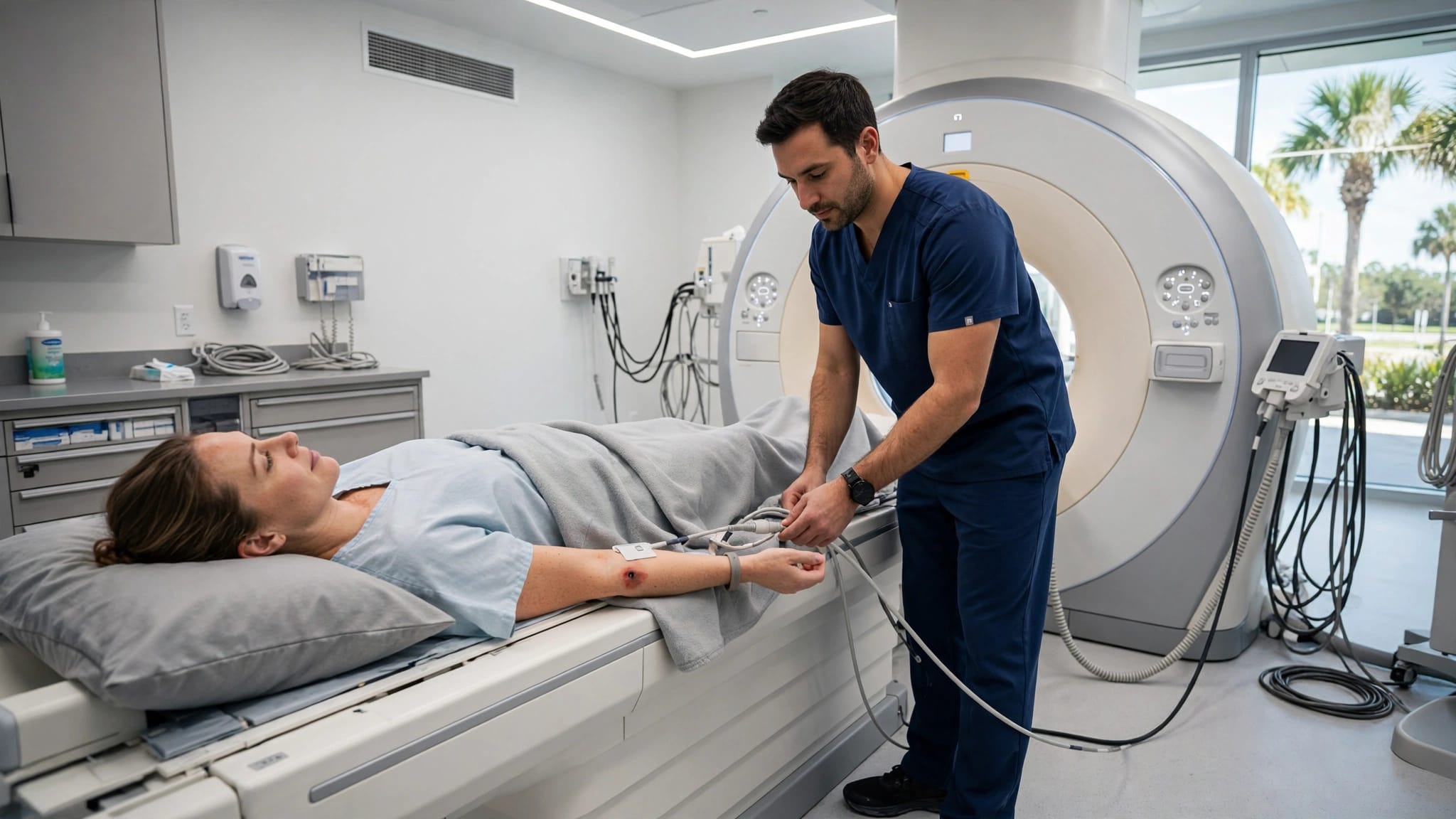
An MRI should help diagnose your condition, but a burn during the scan can leave you needing additional treatment. Florida MRI burn claims require evidence that unsafe screening, preparation, or monitoring caused preventable harm.
You may face wound care, missed work, and uncertainty about whether staff overlooked a known risk. A burn alone doesn’t prove malpractice, but prompt medical care and early legal review can protect your health and legal options.
The starting point is understanding how MRI burns happen and which safety failures may explain your injury.
Key Takeaways
- MRI burns can involve implants, conductive objects, cables, or skin contact, even without a magnetic projectile incident.
- A Florida malpractice claim requires proof that substandard care caused an injury and related losses.
- Medical records, screening forms, equipment information, and qualified expert review help establish what happened.
- Florida’s presuit procedures and filing deadlines apply while treatment or a facility investigation continues.
How MRI Burns Happen
MRI scanners use magnetic fields and radiofrequency energy to produce images. Radiofrequency energy can generate heat, which creates a burn risk under certain conditions.
Implants and conductive objects can heat tissue
Implants, medical devices, and metallic objects can heat during an MRI. The risk isn’t limited to metal that a magnet attracts. Non-ferromagnetic metal can also conduct energy and cause burns.
The FDA has published an MRI pulse oximeter burn report describing a patient’s left-thumb burn when a non-MR-safe pulse oximeter was attached during scanning. That reported event illustrates why equipment screening matters. It doesn’t establish fault, prove causation in another case, or show how often these injuries occur.
Cables and skin contact create additional risks
Equipment cables can pose risks when they form loops or touch the patient. Skin-to-skin contact can also create conductive pathways that concentrate heat.
FDA burn-prevention guidance recommends keeping cables straight and away from the patient’s skin. It also recommends preventing skin-to-skin contact. Positioning and appropriate padding therefore matter alongside the screening questionnaire.
A patient can suffer a burn despite having no implanted device. Reviewing only the patient’s implant history may miss a preparation or positioning failure.
What Proper Patient Screening Requires
MRI screening must address the person, the equipment, and the conditions of the planned examination. A completed form doesn’t establish that staff resolved every safety concern.
Device history needs more than a yes-or-no answer
Staff need information about implants, medical devices, and metallic objects before scanning. A disclosed device may require identification and review of its MRI safety conditions.
The classifications MR Safe, MR Conditional, and MR Unsafe have different meanings. MR Conditional means a device has demonstrated safety under specified conditions. It doesn’t mean the device is safe in every scanner or scanning protocol.
The FDA advises treating a device with unknown MRI safety status as MR Unsafe. A prior uneventful MRI doesn’t, by itself, establish safety for a later examination.
Preparation and communication remain part of safe care
Screening should lead to appropriate action, including removing unsafe objects and addressing equipment risks. Staff must also account for cable placement, patient positioning, and contact between skin surfaces.
Patients who are sedated or cannot reliably communicate need particular attention because they may not report developing heat or pain. If you’re awake and feel burning during a scan, tell staff immediately.
A legal review should examine what staff knew before the scan and how they responded to any reported symptoms.
When Florida MRI Burn Claims Involve Malpractice
Florida medical malpractice law focuses on the care provided and the harm it caused. An unexpected burn warrants investigation, but the injury itself doesn’t establish negligence.
The evidence must identify a departure from accepted care
Under Florida Statutes section 766.102, the applicable standard reflects care that reasonably prudent, similar healthcare providers recognize as appropriate under comparable circumstances.
Potential concerns include an ignored implant disclosure, use of incompatible monitoring equipment, or inadequate preparation to prevent conductive contact. Each allegation requires supporting evidence rather than an assumption based on the burn.
Our explanation of Florida’s medical malpractice standard addresses how provider duties and expert opinions affect these claims. Facility policies can supply useful evidence, but a policy violation alone doesn’t resolve the legal question.
The failure must have caused the injury
Medical evidence must connect the alleged failure to harm it probably caused. Reviewers should examine the burn’s location, timing, severity, and relationship to equipment or skin contact.
They must also distinguish an MRI-related thermal injury from another cause of tissue damage. A burn noticed after scanning isn’t automatically proof that a particular device caused it.
A delayed response may present a separate issue if continuing the scan caused additional injury. That theory requires evidence about symptom reports, staff actions, and whether an earlier response would probably have reduced the harm.
Who May Be Responsible for Unsafe MRI Care?
Responsibility depends on who controlled the screening, equipment selection, positioning, and monitoring. The facility’s name on an appointment notice may not identify every relevant provider.
A hospital, outpatient imaging facility, or contracted healthcare group may have different duties. Employment arrangements and agency relationships can affect which parties belong in a claim.
Our discussion of physician group malpractice claims explains why contracts, billing records, and patient-facing materials may matter.
The investigation should match each alleged failure to the party responsible for that task. It should also distinguish clinical negligence from other possible theories. Calling conduct ordinary negligence doesn’t bypass Florida’s medical-malpractice requirements when proving the claim depends on professional medical judgment.
Evidence That Can Support an MRI Burn Claim
The most useful evidence documents both the scan and the injury’s development. Records from the imaging facility and subsequent treating providers may answer different questions.
Important materials can include:
- The MRI order, screening questionnaire, implant information, and pre-scan assessment.
- Technologist notes, nursing records, scan timing, and available equipment or protocol information.
- Messages documenting when you reported heat, pain, or a visible injury.
- Dated photographs, wound-care records, diagnoses, and treatment recommendations.
- Bills, work restrictions, pay records, and documentation of daily limitations.
Write a dated account of what you remember, including whom you told and what happened next. Separate your recollection from facts recorded at the time. Preserve original messages and photographs without altering them.
Your attorney can also seek preservation of relevant facility records and available electronic information. Some internal materials may raise confidentiality or privilege issues, so access isn’t automatic.
Patients can report suspected device-related injuries through FDA’s MedWatch safety reporting program. A safety report doesn’t replace treatment, legal proof, or Florida’s required claim procedures.
Florida Presuit Requirements and Filing Deadlines
Most claims involving negligent MRI screening require preparation before a medical-malpractice lawsuit can begin. An internal complaint or insurance discussion doesn’t replace that process.
Qualified expert support comes before formal notice
Florida generally requires a reasonable presuit investigation. A qualified medical expert’s verified written opinion must corroborate grounds to believe negligence caused injury.
The expert’s qualifications must fit the care under review. Technical analysis of a scanner or device may help, but it doesn’t replace required medical expert support.
After investigation, notice must reach each prospective medical-negligence defendant. Under Florida’s medical negligence notice law, suit generally cannot be filed during the 90-day period after notice is delivered, subject to applicable procedural rules. The process also includes required health-information authorization.
The filing period needs an individual calculation
Florida generally provides two years from the incident or discovery under the statutory rule. Discovery considers when the injury and a possible negligent cause became known or reasonably should have become known.
A four-year statute of repose ordinarily creates an outside deadline measured from the incident. Limited exceptions involving young children, fraud, concealment, or intentional misrepresentation can affect the analysis.
Presuit tolling and extensions can also change the calculation. Government-connected providers may raise additional requirements.
Seek early advice about medical malpractice rather than waiting for treatment to end. A hospital investigation doesn’t automatically stop the filing clock.
Treatment Costs and Other Recoverable Losses
Compensation depends on the harm attributable to negligent care. There is no reliable settlement amount based only on the fact that an MRI burn occurred.
Economic damages may include additional medical expenses, wound treatment, rehabilitation, lost wages, and reduced earning capacity. Future losses need support through treatment recommendations, employment evidence, or other appropriate assessments.
Noneconomic damages may address pain, scarring, disfigurement, disability, and loss of enjoyment of life. The injury’s permanence and effect on everyday activities matter.
Document practical changes alongside medical treatment. Difficulty dressing, sleeping, driving, or performing your job can help explain losses that a bill doesn’t capture.
An attorney must also account for applicable liens, offsets, and other recovery rules. An early estimate should never substitute for evidence about the injury’s lasting effects.
Frequently Asked Questions
Does signing an MRI consent form prevent a claim?
A consent form doesn’t automatically defeat a negligence claim. Agreeing to a procedure’s disclosed risks doesn’t establish that staff met the applicable standard of care. The investigation still examines screening, preparation, monitoring, and causation. The form’s language may matter, but it doesn’t settle the case by itself.
Can I pursue a claim if I disclosed my implant?
Yes, a claim may be possible if staff mishandled the disclosed information and that failure caused injury. The screening form and device information can help establish what the facility knew. Disclosure alone doesn’t prove malpractice, but it may provide important evidence about an avoidable safety failure.
Should I wait until the burn heals before contacting an attorney?
No. You can seek legal advice while receiving treatment. Recovery may clarify future medical needs, but evidence preservation and deadline analysis should begin earlier. At Avard Law Offices, we offer free consultations for people seeking help after suspected medical negligence in Florida.
Protecting Your Options After an MRI Burn
A preventable MRI burn claim depends on a clear connection between unsafe care and documented harm. The strongest investigation examines screening, preparation, equipment, and the response to symptoms.
Prioritize treatment, preserve available records, and obtain prompt legal guidance. You don’t need to know every technical detail before asking our attorneys to evaluate your options.