
Florida Nursing Home Falls: Fractures and Care Records
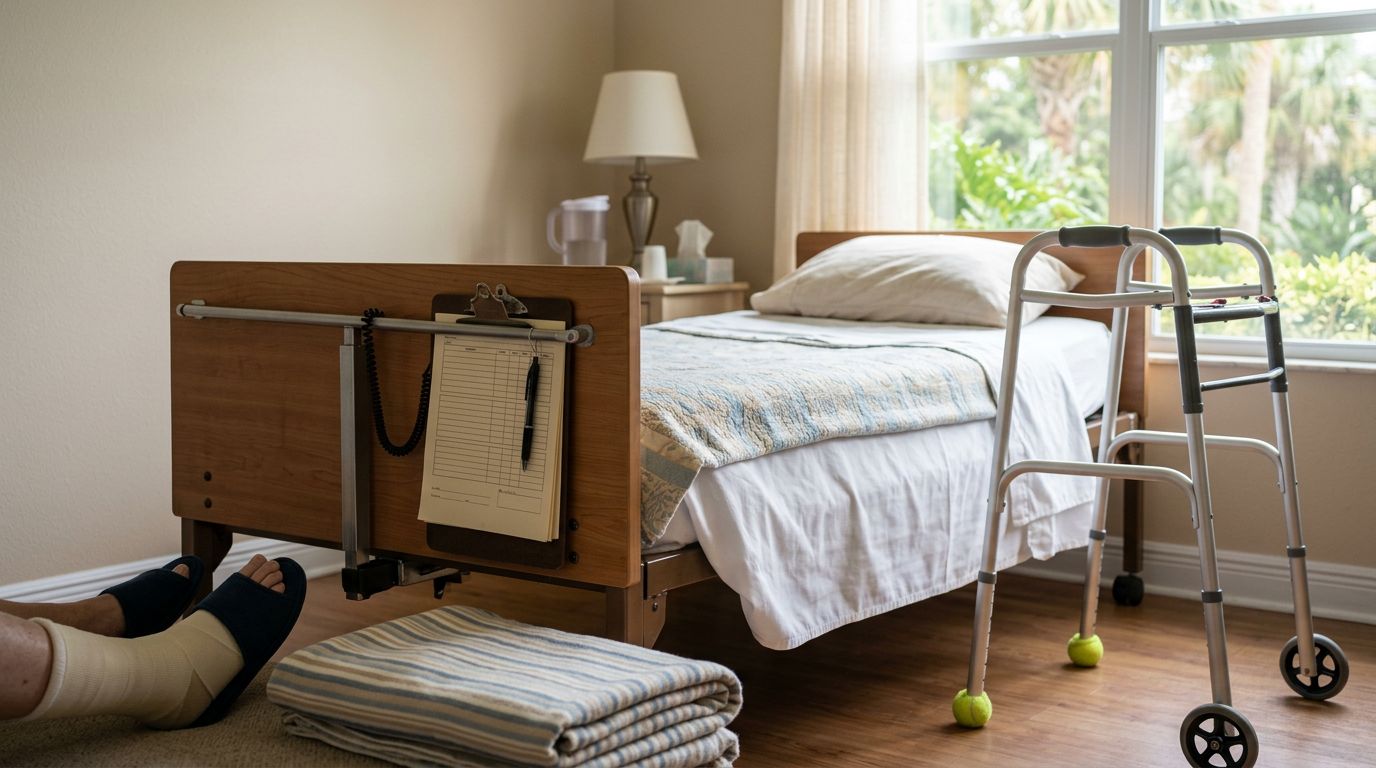
A fracture after a nursing home fall may support a negligence claim when inadequate care caused the injury. Claims involving Florida nursing home falls often turn on what staff knew before the fall and whether they followed the resident’s care plan.
Your loved one’s medical needs come first, especially with new pain, inability to bear weight, or possible head injury. Then preserve the records that connect identified risks, required assistance, and the facility’s response.
Key Takeaways
- A fracture alone doesn’t establish negligence. Evidence must connect a care failure to the resident’s injury.
- Compare fall logs and incident accounts with assessments, care plans, nursing notes, EMS records, and hospital findings.
- Preserve evidence promptly. A facility investigation or regulatory complaint doesn’t replace a legal claim or automatically pause its deadline.
When Florida Nursing Home Falls Support a Claim
The claim requires more than an injury
Under Florida’s nursing home civil enforcement statute, covered claims require proof of a duty, a breach, legal causation, and resulting harm. The law doesn’t impose automatic liability for a fall.
The investigation therefore examines whether the home recognized the resident’s needs and provided appropriate care. Relevant issues include missed transfer assistance, unsafe conditions, and failures to respond to changing mobility.
A known fall risk doesn’t guarantee that every fall was preventable. However, it makes the facility’s precautions and documented response important.
Medical evidence must connect the failure to the fracture
Hospital imaging can establish a fracture, but it doesn’t necessarily explain why the resident fell. Nursing records, witness accounts, and qualified medical review help connect the injury to an alleged care failure.
Preexisting osteoporosis or weakness matters to that analysis. Neither condition resolves whether staff provided necessary assistance.
If complications become fatal, nursing home wrongful death claims require evidence linking the alleged failure to the death. A fall followed by a death doesn’t establish that connection by itself.
What Fall Logs Can Reveal About the Timeline
Reconstruct events using actual times
Fall logs and incident reports may identify where staff found the resident, whether anyone witnessed the event, and what happened next. Their usefulness depends on the detail they contain.
Build the timeline around the last documented observation, discovery of the fall, initial assessment, clinician notification, and emergency transfer. Include earlier falls when they show warnings the facility already knew about.
Also distinguish the time care occurred from the time someone entered a note. A late entry may describe earlier treatment. Its electronic timestamp establishes when the entry was made, not necessarily when staff provided care.
Compare the facility’s account with independent records
An internal report gives the home’s account. EMS records and emergency department notes may document the resident’s condition before the facility finishes its investigation.
Compare those accounts with photographs, witness statements, call-light data, and available surveillance footage. Differences may identify unanswered questions about supervision or delayed treatment.
Missing entries and conflicting times deserve investigation, but they don’t automatically prove neglect or falsification. Records may be incomplete, and witnesses may describe different parts of the event.
A useful timeline identifies those differences without treating every discrepancy as proof of wrongdoing. It also separates confirmed facts from details that remain uncertain.
How Care Plans Show What Staff Were Expected to Do
Start with assessments and earlier warnings
The admission assessment establishes a starting point. Later records may show worsening balance, confusion, medication changes, or a new need for transfer assistance.
Under federal nursing home care requirements, facilities must develop person-centered care plans addressing assessed needs. Federal rules also require adequate supervision and assistance devices to prevent accidents.
For a fall-fracture investigation, compare those requirements with the resident’s mobility evaluations, prior incidents, physician orders, and therapy recommendations. A generic fall-risk label provides less detail than instructions explaining how staff should assist that resident.
Test whether staff carried out the plan
The written plan and the care delivered are separate questions. Compare instructions with nursing notes, staff assignments, transfer documentation, and witness observations.
For example, a requirement for assisted transfers directs attention to who helped the resident move and what equipment was available. An alarm entry raises different questions about activation, response, and whether staff could reach the resident.
An alarm may alert staff to movement, but its presence doesn’t establish that the resident received required hands-on assistance.
The CMS nursing home survey guidance addresses accident prevention, supervision, and care planning. These standards provide context, while the resident’s documented needs remain central.
Restraints require separate analysis. Our discussion of nursing home restraint monitoring records addresses the injury risks and documentation issues associated with their use.
Documenting the Fracture and Its Consequences
A fracture claim should account for the resident’s condition before the fall and the changes afterward. That comparison helps separate existing limitations from additional harm.
Imaging reports, orthopedic consultations, operative records, and rehabilitation notes can document the injury and treatment. Pain assessments and mobility evaluations may also show lost function or increased dependence.
The response after discovery deserves its own review. Records should identify when staff recognized pain, sought medical advice, and arranged transfer. A delay matters legally when evidence connects it to additional harm, rather than simply showing that time passed.
Compensation may include recoverable medical expenses and pain and suffering. Future care needs require supporting medical evidence rather than assumptions based on the fracture alone.
Retain ambulance bills, hospital statements, therapy records, and follow-up instructions. These documents help establish both the treatment provided and the losses associated with the injury. No standard settlement figure can substitute for that individualized assessment.
Request the Chart and Preserve Evidence Outside It
Make the clinical records request specific
A competent resident or properly authorized representative can request records, subject to applicable privacy and authorization requirements. Family relationship alone doesn’t automatically establish authority to receive protected information.
Request the relevant period before and after the fall. Include assessments, care-plan versions, nursing notes, physician orders, medication administration records, therapy notes, and transfer paperwork.
Keep the request, delivery confirmation, and every response. Obtain EMS and hospital records separately because the nursing home’s chart may contain only selected outside documents.
Preserve originals without writing on them. Maintain a separate dated record of conversations and observations.
Protect material a chart request may not reach
Surveillance footage, staffing assignments, equipment maintenance records, and electronic audit data may sit outside the clinical chart. A routine medical-records request doesn’t automatically preserve or produce them.
Save messages and facility letters, along with photographs of visible injuries, footwear, and the location where the resident was found when available. Record who gave each explanation and when.
Some evidence may require formal legal discovery. A preservation request can identify material that should remain available, but it doesn’t guarantee access.
Early legal review can also identify records held by ambulance services, hospitals, pharmacies, or staffing agencies. That matters when evidence may disappear under ordinary retention practices.
Keep Reporting Separate From Filing a Claim
Report current safety concerns promptly
Immediate danger requires emergency assistance. Suspected abuse or neglect can be reported to Florida’s Abuse Hotline at 1-800-962-2873.
The Agency for Health Care Administration handles complaints concerning licensed facilities at 1-888-419-3456. Florida’s Long-Term Care Ombudsman Program assists residents and families with care concerns at 1-888-831-0404.
Describe the resident’s injury, current safety concerns, and the events you can document. Keep submission copies and confirmation numbers.
These reporting routes address safety and oversight. They don’t determine compensation or replace a civil lawsuit.
Presuit requirements affect the legal timeline
Covered claims under Florida’s nursing home statutory framework can involve investigation and notice before litigation. Section 400.0233 generally prohibits filing suit for 75 days after notice is mailed to a prospective defendant.
Florida nursing home claims generally carry a two-year limitations period, but accrual and tolling rules affect the calculation. Claims involving separate medical providers may require a different legal analysis.
Don’t wait for a complete chart or a finished internal investigation before seeking legal advice. Neither automatically protects the filing deadline.
At Avard Law Offices, we offer free consultations for families concerned about nursing home abuse or negligence.
Frequently Asked Questions
Can a claim proceed if nobody witnessed the fall?
An unwitnessed fall can still warrant investigation. Assessments, earlier falls, care instructions, staff assignments, and electronic records may help explain the circumstances.
EMS observations and hospital findings can add independent evidence. However, the claim still needs proof that inadequate care caused the fracture or other compensable harm. The absence of a witness doesn’t establish either negligence or an unavoidable accident. It makes the surrounding records especially important to understanding what happened.
What if the records say the resident refused assistance?
A refusal entry requires context. Relevant questions include what assistance staff offered, the resident’s ability to understand the risk, and what staff did afterward.
Compare the entry with cognitive assessments, care instructions, repeated behavior, and documented alternatives. A resident’s refusal doesn’t automatically resolve the facility’s responsibilities. At the same time, the notation isn’t automatically evidence of poor care. The full record must explain the circumstances and support any claimed connection to the injury.
Turn Care Records Into a Clear Account
A fall-fracture claim depends on the connection between known risk, required care, and documented harm. Fall logs help establish timing; care plans identify expected precautions.
The strongest review compares those records with independent medical evidence and preserves material outside the chart. Prompt legal review can help protect evidence and address deadlines while your family focuses on the resident’s care.