
Florida Hospital Malpractice After Untreated Hyperkalemia
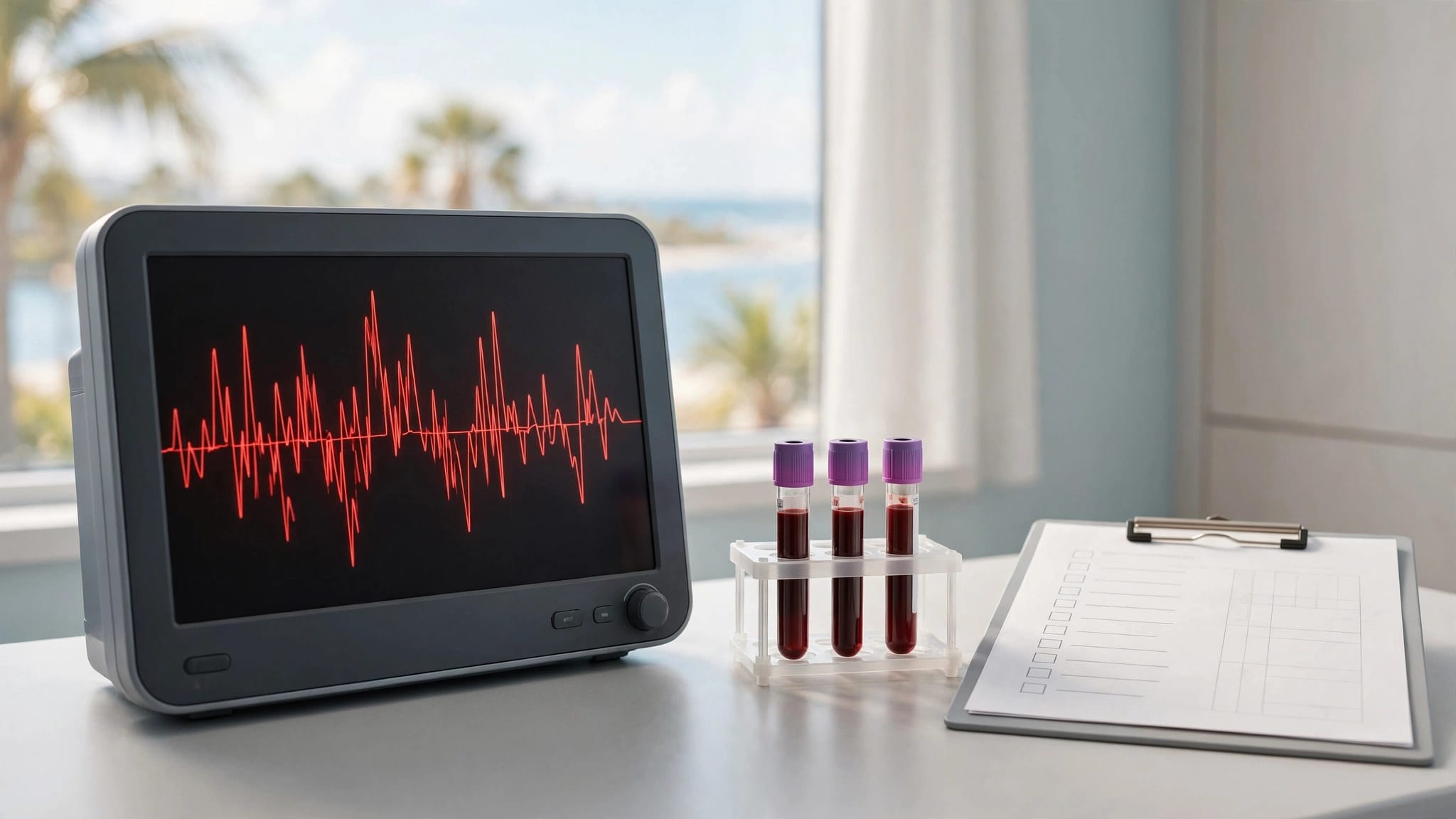
Untreated hyperkalemia can support a Florida hospital malpractice claim when substandard care causes preventable injury or death. The central issue is whether hospital staff recognized dangerous potassium levels and provided timely treatment appropriate to the patient’s condition.
A hyperkalemia malpractice investigation examines laboratory results, communications, and treatment decisions before the patient deteriorated. Understanding that timeline helps distinguish a preventable treatment failure from a medical emergency that occurred despite appropriate care.
Key Takeaways
- Dangerous potassium levels can cause fatal heart rhythms, sometimes without obvious warning symptoms.
- A claim requires evidence that substandard care probably caused injury, supported by qualified medical expert review.
- Florida requires presuit investigation and notice, while filing deadlines can expire during recovery or a hospital’s internal investigation.
Why Untreated Hyperkalemia Can Become an Emergency
High potassium can disrupt the heart
Hyperkalemia means the blood contains too much potassium. Although potassium supports normal muscle and nerve activity, an excessive level can interfere with the heart’s electrical system.
The federal government’s potassium blood test guidance identifies abnormal heart rhythms among the possible symptoms. Severe hyperkalemia can lead to cardiac arrest. However, symptoms may be mild or absent before a serious event.
Kidney failure, missed dialysis, and certain medications increase the risk. An initially normal-looking electrocardiogram (ECG) doesn’t reliably exclude clinically important hyperkalemia.
Treatment requires more than acknowledging a result
The appropriate response depends on the potassium level, kidney function, symptoms, and ECG findings. Clinicians may need cardiac monitoring, urgent medication, specialist involvement, or dialysis.
When indicated, intravenous calcium protects the heart against potassium’s electrical effects. Insulin with glucose temporarily shifts potassium into cells, while other treatments remove potassium from the body. These treatments perform different functions.
Repeat testing matters because an initial improvement may not last. Insulin treatment also requires attention to blood glucose because it can cause hypoglycemia.
If you’re currently experiencing chest pain, fainting, or severe weakness, call 911 rather than waiting for legal advice.
When Hyperkalemia Malpractice May Support a Florida Claim
The response must meet the professional standard
Florida’s medical-negligence law requires proof that a provider departed from the prevailing professional standard of care. Under Florida’s medical negligence statutes, the comparison concerns reasonably prudent similar providers treating a patient under comparable circumstances.
Potential failures include overlooking a critical laboratory result, failing to notify the treating clinician, or delaying an indicated intervention. A medication order that nobody administers raises a different question from a physician’s decision not to order treatment.
Likewise, a patient awaiting dialysis may need a different response than someone with a mildly elevated result and stable kidney function. Our explanation of the Florida malpractice standard of care addresses how that comparison works.
The failure must have caused additional harm
A treatment delay alone doesn’t establish a compensable claim. The evidence must connect that delay to an injury it probably caused.
An expert may need to determine whether earlier treatment would probably have prevented cardiac arrest or reduced its consequences. That analysis must account for other possible causes, including severe infection, underlying heart disease, or advanced kidney failure.
The legal question concerns preventable harm attributable to negligent care, rather than every consequence of the patient’s existing illness.
Which Records Reveal What Happened?
A useful timeline begins before the abnormal result reaches the chart. Specimen collection, laboratory processing, notification, assessment, and treatment each have separate timestamps.
The most important records often include:
- Laboratory results should show potassium values, collection times, reporting times, and specimen-quality comments.
- Notification records may identify who received a critical result and when staff escalated concerns.
- ECGs, telemetry, vital signs, and nursing assessments can document changes before deterioration.
- Medication-administration records, consultation notes, dialysis records, and repeat blood tests can show the actual response.
An order’s timestamp doesn’t establish that the patient received treatment then. Similarly, a note written afterward may describe an earlier event, so documentation time and event time need separate attention.
Records may also exist outside the main hospital chart. Emergency transport records, outside dialysis records, and separate physician-group documentation can supply missing details.
Preserve discharge papers, patient-portal messages, and your own dated recollections. Access to some electronic audit trails or system logs may require formal legal procedures; families shouldn’t assume a routine chart download contains everything.
Who May Be Responsible for the Hospital Failure?
Hospital staff and communication systems
A hospital may face liability for negligent care by its employees or for supported failures in its own operations. Nursing response, critical-result communication, and medication administration can all require investigation.
For example, an acknowledged laboratory alert doesn’t establish that the responsible clinician received it or acted. Shift handoffs and transfers between departments may help explain where communication broke down.
However, a policy violation doesn’t automatically prove malpractice. The evidence must establish a relevant departure from accepted care and connect it to the patient’s harm.
Physicians, practice groups, and public facilities
The treating physician may work for an independent practice rather than the hospital. Employment, agency, supervision, and contractual relationships can affect which parties bear responsibility.
Billing records, staffing documents, and contracts may help identify the proper defendants. Each proposed defendant needs an evidence-based legal theory; naming every organization involved in treatment isn’t enough.
Government status adds another layer. Our discussion of Florida public hospital malpractice claims explains additional notice requirements and recovery restrictions that may apply. A hospital’s name or university affiliation alone doesn’t settle its legal status.
Florida Requires Expert Review and Presuit Notice
Before serving formal notice, a claimant generally must conduct a reasonable investigation into whether negligent care caused injury. A qualified medical expert’s verified written opinion must corroborate reasonable grounds for the claim.
The expert’s qualifications must fit the provider and medical issues under review. Confirming that a patient experienced hyperkalemia or cardiac arrest doesn’t establish that anyone breached the standard of care.
After that investigation, the claimant serves notice of intent on each prospective defendant. Florida’s medical negligence notice law generally provides a 90-day presuit period before a lawsuit may proceed.
During that period, recipients may investigate, request information, deny responsibility, offer settlement, or admit liability and seek arbitration. Required health-information authorization and information exchange are also part of the process.
A complaint to hospital administration doesn’t replace statutory notice. Incomplete materials, an unsuitable expert opinion, or an omitted defendant can create procedural disputes, so legal advice should come before formal claim submissions or claim-related releases.
Filing Deadlines Can Expire While Treatment Continues
Under Florida’s malpractice filing deadline, an action generally must begin within two years of the incident or discovery under the statutory rule.
The discovery analysis considers when the injury and its possible connection to negligence became known, or reasonably should have become known. A later explanation from another doctor doesn’t automatically restart the clock.
Florida also generally imposes a four-year statute of repose measured from the incident. That outside limit can bar a claim even when the full consequences become clear later.
Limited exceptions address fraud, concealment, intentional misrepresentation, and certain claims involving young children. Presuit tolling rules and government-provider requirements can further affect the calculation.
Neither ongoing treatment nor a hospital’s promise to investigate automatically preserves the claim. Early legal review allows time to obtain records, secure expert support, and complete required procedures before the applicable deadlines.
What Compensation May Be Available?
Compensation depends on the harm negligent care caused and the evidence documenting its consequences. Recoverable losses may include additional hospitalization, rehabilitation, future care, lost earnings, and reduced earning capacity.
Pain, disability, and loss of independence may also matter. For someone who survives cardiac arrest with oxygen-related brain damage, future assistance and long-term care needs may become major parts of the claim.
Medical experts help establish future needs. Meanwhile, bills, employment records, and documentation of daily limitations help show the financial and practical effects.
Our guide to Florida medical malpractice damages explains how these categories differ.
If the patient dies, the estate’s personal representative generally brings any wrongful-death action. Florida law controls which survivors may recover and which damages are available, with restrictions that require individual analysis. There is no reliable standard settlement amount for an untreated-hyperkalemia case.
Frequently Asked Questions
Can a hospital treat a high result as a laboratory error?
A damaged blood specimen can produce a falsely elevated potassium reading, sometimes called pseudohyperkalemia. However, that possibility requires clinical assessment. The question is whether staff appropriately evaluated the result, obtained further testing when needed, and responded to the patient’s condition. Assuming an error without an adequate assessment may warrant investigation.
Can I pursue a claim if I already had kidney disease?
Existing kidney disease doesn’t automatically prevent recovery. It may explain why potassium increased, but providers still must deliver appropriate care. A claim must distinguish harm caused by the underlying disease from additional injury caused by negligent treatment. The medical timeline and expert analysis are central to that distinction.
Do I need every medical record before contacting an attorney?
You can seek legal advice while records are incomplete and treatment continues. Available discharge papers, hospital dates, and a description of the suspected delay can support an initial discussion. You don’t need to establish malpractice yourself before asking whether further investigation is warranted.
Protect Your Options After a Potassium Treatment Delay
A hyperkalemia malpractice claim depends on a clear connection between an avoidable treatment failure and the patient’s injury. The treatment timeline is often the strongest starting point.
Our attorneys handle Florida medical malpractice matters, and we offer free consultations. If you suspect an untreated potassium emergency caused serious harm, contact us while treatment continues rather than waiting for recovery or an internal hospital review to end.