
Florida Workers’ Comp for Achilles Tendon Ruptures
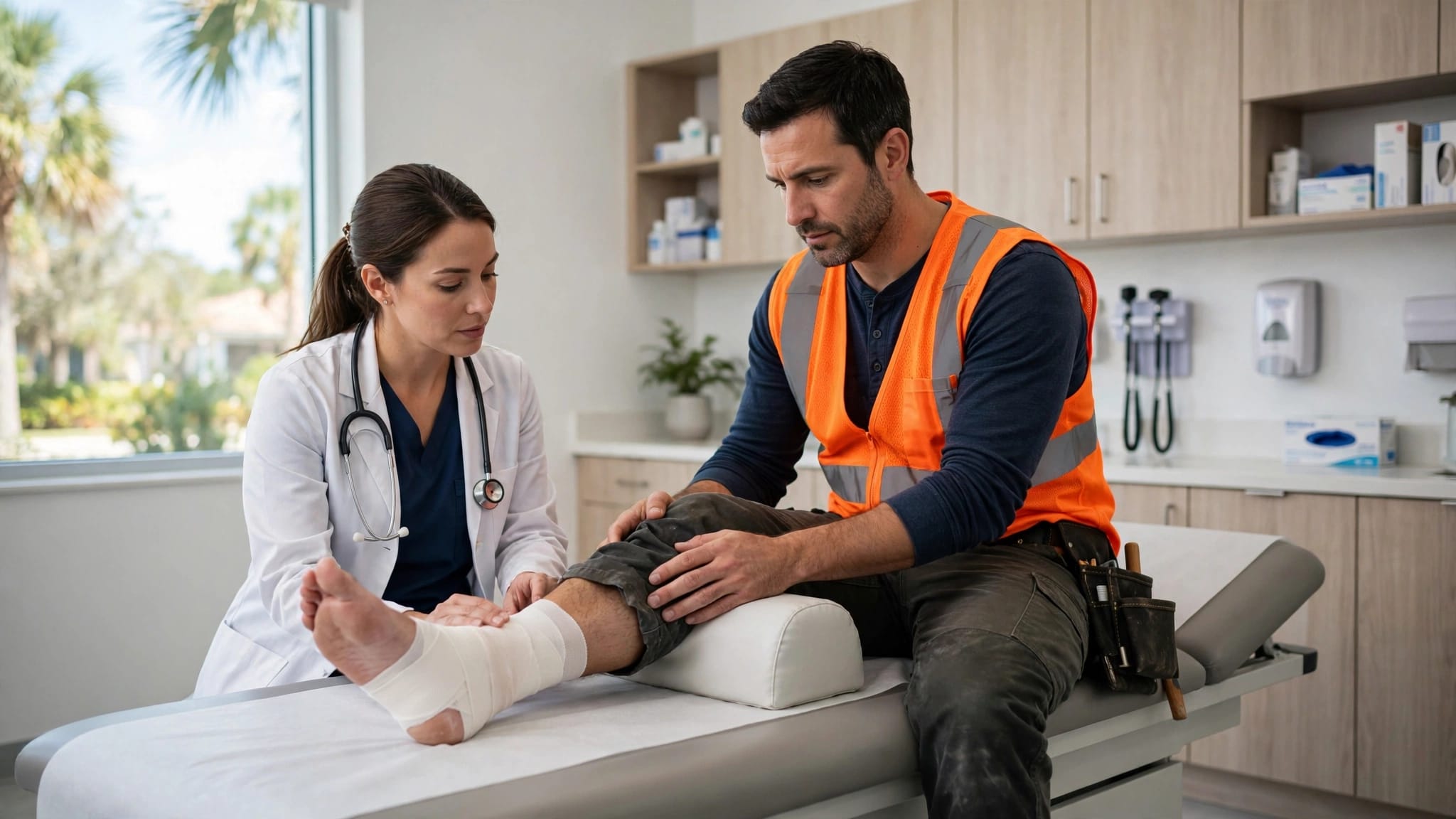
Florida workers’ compensation can cover an Achilles tendon rupture caused by your job, including authorized medical care and qualifying wage benefits. You generally don’t need to prove your employer was negligent, but you do need evidence connecting the tear to your work.
A ruptured Achilles can limit walking, climbing, and carrying, even when the injury isn’t visible. Protecting your treatment and income starts with prompt medical attention, an accurate accident report, and careful attention to separate deadlines.
Key Takeaways for Injured Florida Workers
- Report your injury promptly. Florida generally requires notice to your employer within 30 days, subject to statutory exceptions.
- Workers’ compensation may cover authorized treatment and replace part of your lost wages, but a diagnosis alone doesn’t establish every benefit.
- Preserve evidence of the work activity, medical restrictions, and earnings you lose because of the injury.
- Reporting the accident doesn’t replace filing a Petition for Benefits when treatment or payments are disputed.
When Does a Workplace Achilles Rupture Qualify?
The Achilles tendon connects your calf muscles to your heel bone. A tear can interfere with pushing off your foot and performing weight-bearing work.
Under Florida’s workers’ compensation law, the injury must arise out of and occur in the course of employment.
Sudden tears during work activities
A rupture may occur during forceful pushing, climbing, or an awkward step while performing assigned duties. However, being at the workplace when pain starts doesn’t automatically establish coverage.
The evidence should identify what you were doing and how the injury occurred. Medical records should also connect the diagnosed tear to that activity. An accident report that says only “ankle pain” may leave important questions unanswered, particularly when the carrier disputes the mechanism of injury.
Earlier tendon problems and disputed causation
Prior Achilles pain, tendinitis, or tendon degeneration can complicate a claim. Those conditions don’t automatically disqualify you, but they can make medical causation a central issue.
Tell your physician about previous symptoms and treatment. Explain what changed during the workplace event, including new weakness or difficulty bearing weight. Accurate history helps distinguish an existing condition from a new injury or work-related aggravation.
Report the Rupture and Preserve the Work Connection
Florida generally requires you to notify your employer within 30 days after the injury or its initial manifestation. Exceptions exist, but waiting can create an avoidable dispute.
Describe the accident date, location, work assignment, and affected leg. Include any popping sensation, sudden pain, or immediate difficulty walking. If you reported verbally, follow up through an email, text, or incident report, then save a copy outside your work account.
The employer generally has seven days after gaining actual knowledge to report the injury to its insurance carrier. Your employer’s reporting obligation doesn’t replace your own notice requirement.
Request the carrier’s name, claim number, adjuster’s contact information, and treatment instructions. The state’s injured-worker questions and answers address basic reporting and benefit issues.
Also preserve witness names, work schedules, photographs of the accident area, and relevant messages. Request preservation of workplace camera footage before routine deletion makes it unavailable.
If your employer withholds insurance information, Florida’s Employee Assistance Office assists injured workers at 1-800-342-1741. Meanwhile, keep a dated record of each reporting attempt and response.
Medical Care for a Torn Achilles Tendon
A sudden pop near the heel, difficulty pushing off, or marked weakness warrants prompt medical assessment. Some people can still walk after a rupture, so walking ability alone doesn’t rule one out.
Diagnosis and treatment depend on your injury
The treating clinician evaluates the tendon and determines whether imaging or specialist care is appropriate. Treatment may involve surgical or nonsurgical care, protective equipment, and rehabilitation, depending on the medical findings.
Florida’s benefits for injured workers include authorized, medically necessary treatment related to a compensable injury. A particular operation, boot, or therapy program isn’t automatically payable simply because you have an Achilles rupture.
Explain your actual job demands during appointments. A medical record should address climbing, walking distances, lifting, and other duties that affect safe performance.
Authorization and documentation matter
Emergency treatment and routine follow-up care involve different authorization rules. Seek emergency care when necessary, and tell the provider the injury happened at work.
For non-emergency care, use the workers’ compensation authorization process. Independently arranging treatment can create a billing dispute.
Keep appointment notices, referral requests, therapy records, and written restrictions. If care stalls, those documents help identify whether the problem involves a missing request, an authorization dispute, or a denial.
Wage Benefits While Your Achilles Heals
Wage benefits depend on your medical restrictions and lost earning capacity. Missing work doesn’t automatically establish eligibility, and using paid leave doesn’t resolve every compensation issue.
When you cannot work
Temporary total disability benefits generally pay 66 2/3% of your average weekly wage, subject to eligibility rules and the applicable maximum. For injuries occurring on or after January 1, 2026, Florida’s maximum weekly compensation rate is $1,358.
Florida generally doesn’t pay wage benefits for the first seven days of disability. If disability continues for more than 21 days, those first seven days become payable. Authorized medical care isn’t subject to that wage-benefit waiting period.
When you return with restrictions
An Achilles injury may allow some duties while preventing prolonged standing, ladder use, or heavy carrying. Reduced earnings may support Florida temporary partial disability benefits, depending on the restrictions and other eligibility requirements.
Give your employer the written restrictions and preserve any light-duty offer. Florida’s return-to-work guidance addresses this stage of a claim. If assigned duties exceed your restrictions, document the specific conflict and raise it promptly with the treating provider.
When permanent limitations remain
Maximum medical improvement, or MMI, means further lasting improvement isn’t reasonably expected. It doesn’t necessarily mean you’re pain-free or need no additional care.
A qualifying permanent impairment rating may support impairment income benefits. These benefits differ from temporary wage payments and don’t create a fixed payout for every Achilles tear.
Filing Deadlines and Disputed Achilles Claims
Notifying your employer and filing a Petition for Benefits are separate steps. A petition formally seeks disputed benefits through Florida’s workers’ compensation system.
Section 440.19 generally provides two years after you knew, or reasonably should have known, that the injury arose from employment. Authorized medical care and compensation payments can affect that calculation. A one-year gap after qualifying care or payments can also create a limitations problem.
Our guidance on Florida workers’ compensation filing deadlines explains why the treatment and payment timeline matters.
An adjuster’s statement that your claim is “under review” doesn’t automatically extend the deadline for pursuing benefits.
If the carrier disputes your Achilles injury, request its reason in writing. The disagreement may concern the work connection, treatment necessity, restrictions, or wage calculations. Each issue requires different supporting evidence.
Our discussion of petitions after a claim denial addresses the formal route for seeking disputed benefits. Keep denial letters alongside medical requests and payment records so the timeline remains clear.
When Legal Help Can Protect Your Benefits
An Achilles tendon workers’ comp claim deserves legal attention when the carrier disputes causation, delays recommended care, or stops wage payments despite continuing restrictions. Problems also arise when an employer offers duties that your medical limitations don’t allow.
We can review the accident history, medical evidence, earnings records, and disputed benefits. That review helps identify what the claim needs and which deadlines apply.
Before a consultation, gather your incident report, treatment records, work restrictions, pay stubs, and carrier correspondence. A short timeline is also useful. Include when the injury happened, when you reported it, and when treatment or payments stopped.
Our guidance on when to hire a workers’ comp attorney addresses common warning signs. You don’t have to wait until the filing deadline approaches or the claim is formally denied to seek advice.
Frequently Asked Questions
Can I receive benefits if I had Achilles tendinitis before the accident?
Possibly. Earlier tendon problems don’t automatically defeat a claim, but the medical evidence must establish the required work connection. Give the treating physician a complete history, including earlier symptoms and the change after the workplace event. Concealing prior treatment can damage credibility and leave the doctor with an incomplete basis for an opinion.
How long will workers’ comp pay after an Achilles rupture?
The diagnosis alone doesn’t determine payment duration. Temporary wage benefits depend on disability, earnings, medical status, and applicable legal limits. Authorized medical treatment addresses a different need and doesn’t necessarily end when temporary wage payments stop. A release to restricted work also doesn’t automatically mean every wage benefit ends.
Is there a standard settlement for a torn Achilles tendon?
No fixed settlement amount applies to every rupture. The value depends on future medical needs, wage-benefit exposure, permanent impairment, and disputed issues. Florida workers’ compensation doesn’t provide a separate pain-and-suffering award. Before resolving a claim, understand whether the agreement closes future medical rights and how remaining treatment needs affect the proposed amount.
Protect Your Recovery and Your Right to Benefits
A workplace Achilles rupture can affect your income long after the initial injury. Clear medical evidence, timely reporting, and documented restrictions help protect access to the benefits you qualify for.
We offer a free initial consultation for Florida workers’ compensation matters. If treatment is delayed or payments are disputed, we can review your options before a deadline puts those benefits at risk.