
Florida Company Vehicle Crash Claims After Employer Denial
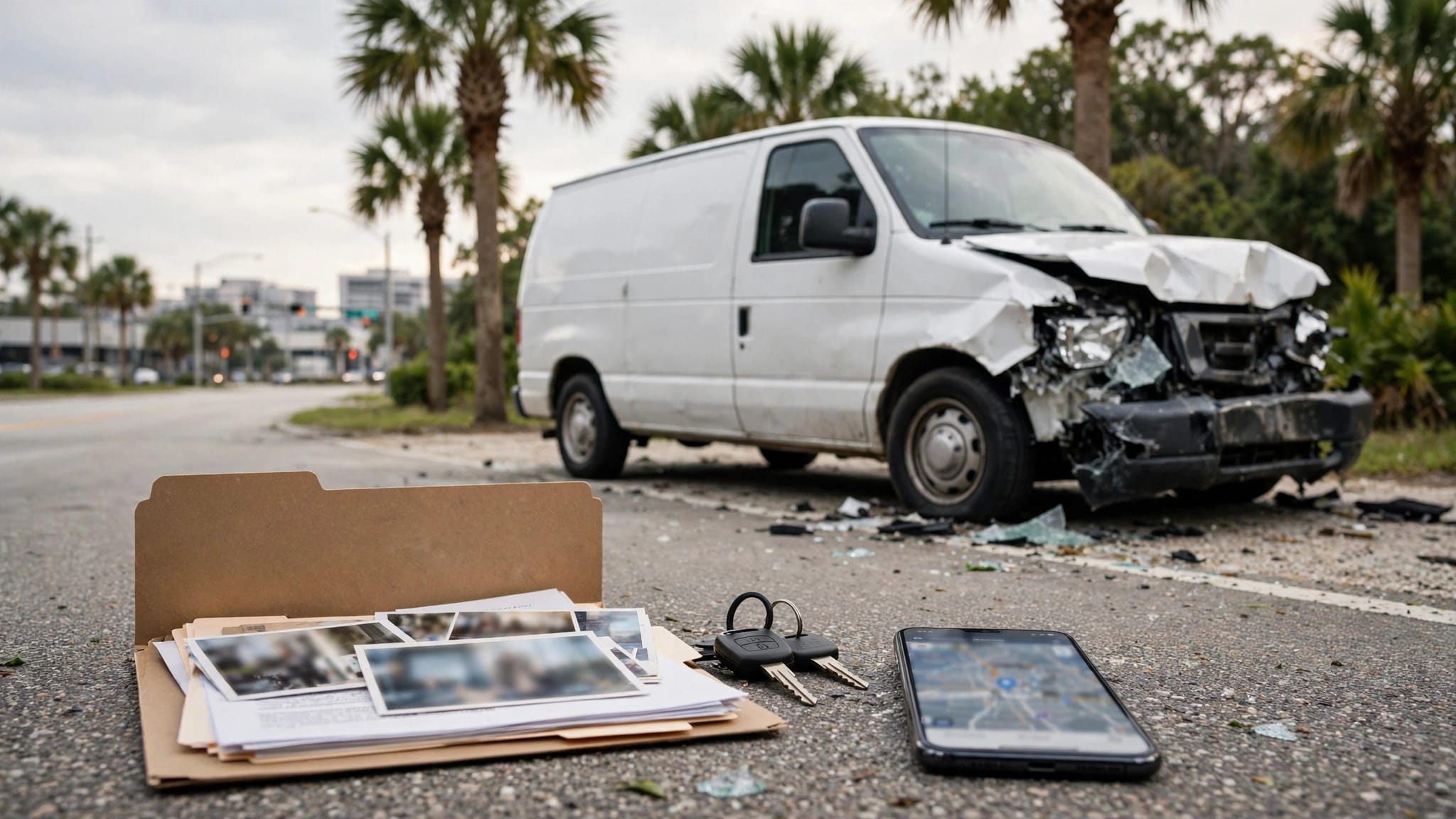
An employer’s denial doesn’t end your right to pursue a Florida company vehicle accident claim. Responsibility depends on the driver’s work, the trip’s purpose, the available insurance, and the evidence.
A company may call the trip personal or argue that the driver violated instructions. Those statements require investigation, not automatic acceptance. Start by separating employer responsibility from insurance coverage and the driver’s own liability.
Key Takeaways
- A company logo or work vehicle doesn’t automatically establish employer liability.
- Work assignments, dispatch messages, GPS data, and delivery records can challenge an employer’s account.
- Claims involving the driver’s negligence, the employer’s own conduct, and insurance coverage raise different questions.
- Injured employees may have workers’ compensation benefits and a separate claim against a responsible outside party.
What an Employer’s Denial Does and Doesn’t Settle
A denial is a position taken by the business or its insurer. It isn’t a court decision about responsibility.
First, identify what the company disputes. Saying the driver wasn’t working raises a different issue than claiming the commercial policy doesn’t cover the collision. Likewise, blaming you for the crash differs from denying that the driver was an employee.
These defenses require different evidence. Employment records address the driver’s relationship with the business. Dispatch communications address the trip’s purpose. Policy language addresses coverage.
Keep denial letters, emails, claim numbers, and notes of conversations. Preserve the company’s exact explanation because its position may change as records emerge.
Even if one theory against the employer fails, the driver’s liability or another supported claim may remain available.
When a Florida Company Vehicle Accident Involves Work Duties
Florida recognizes employer responsibility for certain employee negligence through respondeat superior. This means an employer can answer for an employee’s negligent conduct within the course and scope of employment.
Work Purpose, Authorized Time, and Location
The analysis generally asks whether the driver performed the kind of work they were hired to do. It also considers authorized time and location, plus whether the conduct served the employer at least partly.
Deliveries, customer visits, equipment transport, and supervisor-directed errands can support that connection. However, a uniform, vehicle logo, or timecard doesn’t establish every element.
The investigation should connect the actual trip to the driver’s duties. A delivery schedule may explain why the employee used that road, while a supervisor’s message may establish the destination.
Personal Detours and Mixed-Purpose Trips
A personal stop doesn’t automatically resolve employer responsibility. Florida law distinguishes minor deviations from substantial departures for personal reasons.
The details matter: the stop’s purpose, distance from the work route, duration, and whether the employee had resumed work duties. A trip can also serve both business and personal purposes.
An employer’s rule against personal stops is relevant, but the rule alone doesn’t settle the issue. The driver’s conduct and connection to assigned work still require examination.
Other Grounds for Holding a Business Responsible
An employer’s own negligence can present a separate theory from responsibility for its employee’s driving. Depending on the evidence, claims may involve negligent hiring, retention, training, supervision, or entrustment.
For negligent entrustment, the investigation examines whether someone supplied a vehicle to a driver they knew, or should have known, was incompetent or unfit. Relevant proof might include driving-history records, documented safety complaints, or known licensing problems.
Each theory requires facts connecting the business’s conduct to the collision. A crash alone doesn’t prove negligent hiring or inadequate training.
Also identify the actual employer and vehicle owner. The company name on a van may differ from the business that hired, dispatched, or supervised the driver.
Those relationships can affect whom a claim should name. However, ownership and employment shouldn’t be treated as interchangeable facts.
Evidence That Can Challenge the Employer’s Account
Commercial vehicle cases often involve records beyond photographs and a crash report. Some records can disappear through routine deletion or vehicle repairs.
Employment, Dispatch, and Route Records
Work schedules, delivery tickets, customer appointments, dispatch messages, GPS histories, and vehicle-use policies can establish why the driver was traveling.
Time records matter, but they aren’t the whole inquiry. An employee may complete an assigned errand outside a scheduled shift. Conversely, being clocked in doesn’t prove every trip served the business.
An attorney can request preservation of relevant electronic and paper records. For larger commercial vehicles, truck driver qualification records may also help examine the driver’s history and the company’s safety decisions.
Collision Evidence and Original Communications
Save photographs, witness contact information, original dashcam files, and messages exchanged after the crash. Vehicle data may help establish speed, braking, or other conditions near impact, depending on the vehicle and available systems.
Record where damaged vehicles are stored before repairs or disposal affect potential evidence. Nearby businesses may also have footage that recording systems routinely overwrite.
A missing police report creates an additional evidence problem, but it doesn’t automatically defeat a claim. Our guidance on claims without a police report explains other ways to document the collision.
Insurance Benefits and Shared Fault Are Separate Issues
A business can dispute liability while an insurer separately disputes coverage. Identifying every potentially applicable policy helps keep those questions distinct.
PIP and Commercial Liability Coverage
Florida’s PIP benefit statute governs qualifying no-fault benefits. PIP generally covers 80% of qualifying medical expenses and 60% of lost income, subject to statutory conditions and limits.
Initial qualifying treatment generally must begin within 14 days. Don’t postpone care while waiting for the company to accept responsibility.
Commercial liability coverage, the driver’s coverage, and applicable uninsured or underinsured motorist coverage require separate analysis. The vehicle’s business use doesn’t guarantee that every policy covers the loss.
Allegations That You Caused the Crash
An employer or insurer may argue that you were speeding, distracted, or able to avoid the collision. Those allegations need evidence.
Under Florida’s comparative-fault statute, shared responsibility affects recoverable damages. In applicable negligence actions, a claimant found more than 50% responsible generally cannot recover. At 50% or less, the claimant’s percentage reduces damages.
An adjuster’s proposed percentage isn’t a court ruling. Our explanation of Florida comparative negligence rules addresses how disputed blame can affect a claim.
Medical and Financial Records Establish Your Losses
Proving that a business is responsible doesn’t establish the full value of an injury claim. Your medical and financial evidence must also connect the crash to the losses claimed.
Keep discharge papers, imaging results, therapy notes, prescriptions, bills, and written work restrictions. Pay records and employer documentation help establish missed income.
Future treatment needs require medical support. Reduced earning capacity may require evidence showing how lasting restrictions affect your ability to work.
Also describe changes in daily activities accurately. Difficulty driving, sleeping, lifting, or completing household tasks can document the injury’s practical effects.
Pain-and-suffering recovery in covered motor vehicle cases generally requires meeting Florida’s motor vehicle injury threshold. Qualifying categories include permanent injury, significant permanent loss of an important bodily function, and significant permanent scarring or disfigurement.
Don’t treat an early offer as a reliable measure of losses that remain medically uncertain.
If You Were the Employee Injured in the Vehicle
An employee injured during work-related driving faces a different claim structure than another motorist struck by a company vehicle.
Workers’ compensation may provide authorized medical care and qualifying disability benefits without proof that the employer negligently caused the crash. However, disputes can arise over whether the trip was work-related or whether the collision caused the diagnosed injury.
Keep written notice to the employer, treatment records, work restrictions, and communications about benefits. The state’s injured-worker guidance explains assistance available when an employer won’t cooperate with reporting an injury.
Workers’ compensation doesn’t provide a separate pain-and-suffering award. If an outside driver or another responsible third party caused the collision, a separate injury claim may also exist.
Those claims require coordination because benefit payments and reimbursement rights can affect the eventual recovery.
Frequently Asked Questions
Does Breaking a Company Rule Eliminate Employer Liability?
Not automatically. A prohibited stop or driving-policy violation may matter, but the analysis still examines the employee’s duties and the trip’s purpose. A substantial personal departure differs from an employee performing assigned work in an unauthorized way. The relevant records help establish which situation occurred.
Can I Pursue the Driver if the Employer Denies Responsibility?
An employer’s denial doesn’t erase a driver’s potential liability for negligent driving. However, fault, injury causation, damages, and available coverage still require proof. Claims against the driver and business may involve overlapping evidence but different legal grounds.
Should I Sign a Release While the Company Investigates?
A release can end claims before the investigation identifies all responsible parties or your future medical needs become clear. Legal review is appropriate before signing. The document’s wording matters, including which people, businesses, insurers, and claims it releases.
Protect Your Claim Beyond the Employer’s Denial
An employer’s refusal to accept responsibility is the beginning of a factual dispute, not necessarily the end of your claim. Preserved evidence can establish the trip’s purpose, challenge unsupported blame, and document your losses.
At Avard Law Offices, we offer a free initial consultation for Florida injury and workers’ compensation matters. Bring the company’s denial, available crash evidence, insurance correspondence, and medical records so we can discuss your options.