
Postoperative Respiratory Depression: Florida Evidence
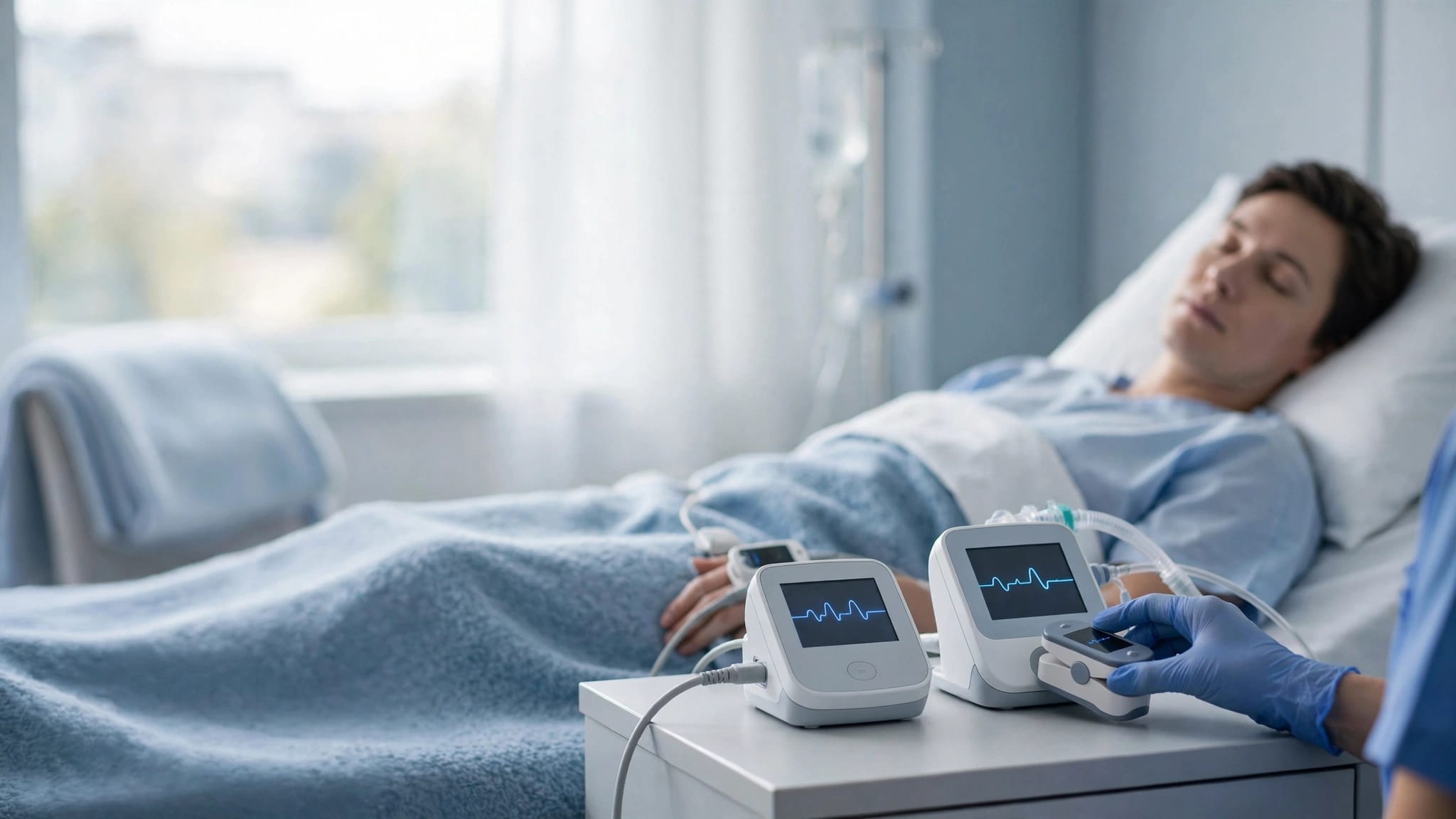
Postoperative respiratory depression can support a Florida malpractice claim when inadequate monitoring or delayed treatment causes preventable harm. Monitoring records can show when breathing worsened, what warnings staff received, and how they responded.
For patients and families, the central issue is preventable injury, rather than the complication alone. Understanding what happened requires comparing medication doses, breathing assessments, alarms, and treatment decisions on one timeline. That timeline helps distinguish an unavoidable crisis from a failure to recognize and treat deterioration.
Key Takeaways
- Monitoring records should be reviewed alongside medication records, sedation assessments, and staff communications.
- Oxygen saturation, breathing measurements, and alertness reveal different information about a patient’s condition.
- A Florida claim requires evidence that substandard care probably caused or worsened an injury.
- Complete records and qualified expert review help explain whether earlier intervention would likely have changed the outcome.
Understanding Postoperative Respiratory Depression
Why breathing can worsen after surgery
Respiratory depression means breathing becomes inadequate to support the body’s needs. After surgery, opioids and residual anesthetic effects can reduce breathing drive. Upper-airway obstruction can also interfere with ventilation, especially during sleep or heavy sedation.
Morphine, hydromorphone, and fentanyl can suppress breathing, although their use alone doesn’t establish improper care. The dose, route, timing, other medications, and patient’s condition all matter.
The FDA’s opioid prescribing guidance addresses life-threatening respiratory depression and risks associated with other central nervous system depressants. Therefore, reviewing only the last pain medication dose can miss the combined effects of several drugs.
Which patient risks matter
Sleep apnea, advanced age, impaired kidney function, and other sedating medications can affect postoperative risk. Kidney impairment can prolong the effects of certain opioids or their active metabolites.
The pre-anesthesia evaluation should help explain what clinicians knew before treatment. Later records show whether the recovery plan addressed those risks during transfers and medication changes.
If someone is difficult to awaken or has slow, shallow, or interrupted breathing, alert hospital staff immediately. Outside a medical facility, call 911.
What Monitoring Records Actually Show
Oxygen saturation and ventilation measure different things
Pulse oximetry estimates oxygen saturation, usually documented as SpO₂. However, it doesn’t directly measure whether the patient is moving enough air or clearing carbon dioxide.
Supplemental oxygen can delay a fall in saturation while ventilation deteriorates. As a result, a reassuring saturation reading doesn’t fully answer whether breathing was adequate.
Capnography measures exhaled carbon dioxide and can provide information about breathing patterns. When available, its waveform and recorded values may help clarify pauses, obstruction, or declining ventilation. Reviewers must also consider disconnected equipment, poor signals, and other artifacts before treating an abnormal reading as reliable evidence.
Sedation assessments add essential context
Respiratory rate documents breathing frequency, but frequency alone doesn’t describe breath depth, airway obstruction, or responsiveness. Nursing observations about alertness can therefore add information that a vital-sign entry lacks.
AHRQ’s Patient Safety Network identifies oversedation, airway obstruction, respiratory changes, and naloxone administration among findings relevant to opioid-related respiratory depression.
The review should compare those observations with medication administration times. Increasing difficulty awakening a patient after repeated opioid doses deserves a different assessment than ordinary, easily interrupted sleep.
Monitoring needs depend on the patient’s condition, medication effects, and treatment setting. A recovery-room assessment also needs context when the patient later moves to a less closely monitored unit.
Reconstructing the Response to Deterioration
Follow the sequence from warning to treatment
The investigation should connect the first reliable warning with the actions that followed. Relevant events include bedside reassessment, provider notification, medication changes, airway support, rapid-response activation, and transfer to higher-level care.
Naloxone can reverse opioid effects, but its administration doesn’t resolve every question. Records should show the patient’s response and subsequent surveillance because breathing suppression can recur.
Patient-controlled analgesia, or PCA, adds another evidence source. Pump settings and available delivery histories may distinguish requested doses from medication actually delivered. Any background infusion, lockout setting, and programming changes also belong in the medication timeline.
Separate an alarm from a clinical response
An alarm log can establish that a device generated a warning. It doesn’t necessarily establish when someone heard it, assessed the patient, or began treatment.
An alarm timestamp and a bedside treatment timestamp answer different questions. The interval between them needs clinical context.
Electronic records may also distinguish when an event occurred from when someone entered the note. Similarly, device clocks and hospital chart clocks may differ.
These details matter when evaluating a possible delay. A late entry doesn’t automatically prove delayed care, and a missing entry doesn’t establish that no assessment occurred.
How Florida Malpractice Law Applies
The standard depends on comparable care
Under section 766.102 of Florida’s medical negligence statutes, providers must meet the prevailing professional standard of care. That comparison considers what reasonably prudent, similar providers would recognize as appropriate under comparable circumstances.
The review focuses on information available during treatment. A later respiratory arrest doesn’t, by itself, establish what staff should have recognized earlier.
Potential failures include ignoring documented sedation, administering medication without appropriate reassessment, or failing to respond to deterioration. Hospital protocols can help explain expected practices, but a protocol violation alone doesn’t establish every element of malpractice.
Our explanation of the Florida medical malpractice standard addresses how these comparisons guide expert review.
The failure must probably cause additional harm
A claim must connect the alleged failure with an injury it more likely than not caused or worsened. Showing that closer monitoring might have helped isn’t enough.
An expert may examine whether timely airway support, medication adjustment, or escalation would probably have prevented injury. The analysis must also account for other causes, including aspiration, underlying lung disease, or another postoperative emergency.
Documented losses can include additional treatment, rehabilitation, lost earnings, and lasting limitations. The medical evidence must distinguish preventable added harm from consequences that appropriate care wouldn’t have avoided.
Building a Complete Monitoring Record
Request more than the discharge summary
A discharge summary often describes the final diagnosis without preserving the minute-by-minute recovery timeline. The underlying chart provides the detail needed to evaluate decisions.
Important materials include the pre-anesthesia assessment, anesthesia record, recovery-room flow sheets, medication administration record, nursing notes, respiratory therapy records, and rapid-response documentation. Transfer orders and handoff notes may explain who assumed monitoring responsibility.
Our guide to requesting Florida medical records explains how to organize a request and track missing materials. Outpatient procedures also raise questions about recovery assessment and discharge, addressed in our discussion of Florida outpatient surgery malpractice.
Preserve electronic data and family observations
Continuous monitor data, alarm histories, PCA logs, and electronic audit trails may exist separately from the ordinary chart. Some materials require separate requests or formal legal discovery, and retention practices vary.
An attorney can address preservation before potentially relevant electronic information disappears. A routine records request may not reach every device or system.
Family members should also preserve contemporaneous messages and write down what they remember about symptoms and conversations. These observations can help identify gaps, but they don’t replace clinical evidence. Keep original documents unchanged and distinguish personal recollection from information learned afterward.
Florida’s Presuit Investigation and Notice Requirements
Florida medical-negligence claims generally require investigation before a lawsuit begins. Under section 766.203, a qualified medical expert’s verified written opinion must support reasonable grounds to believe negligence caused injury.
The expert’s qualifications must fit the provider and care under review. A medication decision, nursing assessment, and hospital alarm-system failure can involve different responsibilities.
The Chapter 766 presuit framework also requires notice to each prospective defendant. It generally provides a 90-day investigation period after notice before suit may proceed.
Identifying defendants requires more than listing everyone involved in treatment. Records must connect each proposed party to a supported allegation, whether involving anesthesia care, bedside monitoring, prescribing, or institutional practices.
Prompt legal review helps address evidence preservation, responsible parties, and procedural requirements while the medical investigation develops. Continuing treatment doesn’t eliminate the need to protect legal rights.
Frequently Asked Questions
Does receiving naloxone prove malpractice?
Naloxone administration shows that clinicians treated suspected or established opioid effects. Appropriate care can include recognizing respiratory depression and promptly reversing it. A malpractice assessment examines why the problem developed, whether staff responded appropriately, and whether a preventable failure caused injury. Rescue treatment alone doesn’t establish negligence.
Can normal oxygen readings rule out respiratory depression?
Normal saturation readings don’t rule out inadequate ventilation, especially when a patient receives supplemental oxygen. Reviewers also consider respiratory pattern, alertness, carbon dioxide measurements when available, and the timing of observations. A reading taken after staff awaken or assist the patient may not describe the preceding period.
What if the hospital chart has gaps?
A gap requires further investigation rather than an automatic conclusion. Other records may clarify the sequence, including medication timestamps, device logs, respiratory therapy notes, and rapid-response records. Witness accounts may also help. An attorney and medical expert can assess whether the missing information affects proof of the alleged failure or its consequences.
Who may be responsible for a monitoring failure?
Responsibility depends on who controlled the relevant care. An anesthesia provider, prescribing clinician, nurse, hospital, or practice group may have distinct duties. Employment relationships and institutional conduct can also matter. Each proposed defendant needs an evidence-supported basis for liability; involvement in the admission alone isn’t enough.
Clear Records Help Explain Preventable Harm
Postoperative respiratory depression claims depend on a reliable treatment timeline. Medication exposure, changing alertness, breathing measurements, and response records must be evaluated together.
The strongest evidence connects a departure from accepted care with harm that timely treatment probably would have prevented. At Avard Law Offices, we offer free case evaluations to help Florida patients and families understand their legal options after suspected medical malpractice.