
Florida Claims When an At-Fault Driver Borrowed a Car
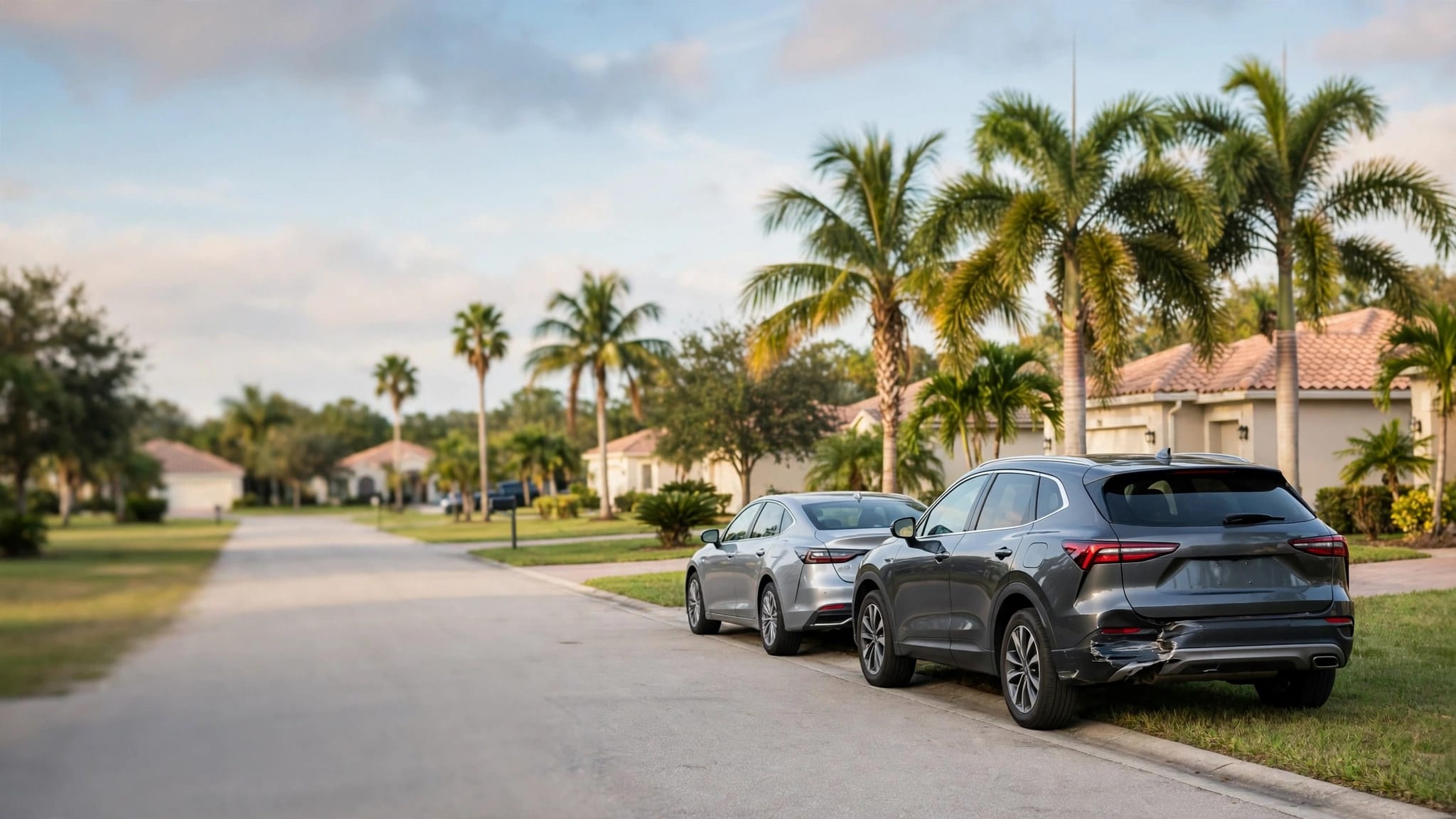
If a driver causes a Florida crash in a borrowed car, you may have a claim against the driver, the vehicle owner, or both. The answer depends on permission, the cause of the crash, and the insurance policies that apply.
Borrowing a car doesn’t excuse careless driving. But it can make it harder to identify who is legally responsible and which insurer may pay.
Start by separating the driver’s responsibility from the owner’s potential liability.
Who Is Responsible for a Borrowed Car Crash?
The driver and owner can face different legal claims. Establishing who owned the car is important, but ownership alone doesn’t settle the case.
The driver’s responsibility
A driver must use reasonable care, even when someone else owns the vehicle. Speeding, texting, running a red light, or failing to yield can support a negligence claim if that conduct caused the collision and your injuries.
You can pursue a claim against the driver without proving that the owner did anything wrong. The driver’s insurance may be relevant, although having an auto policy doesn’t automatically mean it covers every borrowed vehicle.
A police report can identify the driver and describe the crash. It doesn’t replace the evidence needed to establish fault and losses.
The owner’s potential liability
Florida’s dangerous-instrumentality doctrine can make a vehicle owner responsible for a permissive driver’s negligent operation. In a private loan, permission might be express, such as handing over the keys, or implied by the circumstances.
The owner may dispute permission, particularly if the driver took the car without authorization. Text messages, prior use, witness accounts, and the circumstances surrounding the keys can matter.
An owner can also face a separate claim based on their own negligence. For example, a negligent-entrustment claim may arise if an owner lends a car to someone the owner knew or should have known was unfit to drive, and that decision contributes to the crash.
Florida’s Limits on an Owner’s Liability
Florida Statute Section 324.021 sets limits on certain claims against a natural-person owner who lends a vehicle to a permissive user. The general limits for that owner’s liability are:
- $100,000 per person for bodily injury.
- $300,000 per incident for bodily injury.
- $50,000 for property damage.
The statute also provides for up to an additional $500,000 in economic damages if the borrower is uninsured or has less than $500,000 in combined bodily injury and property damage liability limits. That additional amount is reduced by qualifying amounts recovered from the borrower and applicable insurance or self-insurance.
These figures are liability limits, not required insurance limits. They don’t mean a policy contains $100,000 in bodily injury coverage or that an insurer will pay that amount.
The statutory cap provision also doesn’t limit liability for the owner’s own negligence. A claim based on negligent entrustment therefore requires a separate analysis from a claim based solely on the owner’s responsibility for a permissive driver.
The rules can differ for businesses, rentals, and leased vehicles. Identify the actual owner rather than assuming the name on an insurance card tells the whole story.
Which Insurance May Cover a Borrowed Car Accident?
Several policies may be relevant after a crash involving a borrowed vehicle. Each policy has its own coverage terms, exclusions, and limits.
The owner’s and driver’s liability policies
The vehicle owner’s liability policy may cover a permissive driver. The driver’s own policy may also provide coverage for a borrowed vehicle. However, permission to drive and insurance coverage are separate questions.
Policy language, the driver’s relationship to the owner, exclusions, and the circumstances of the loan can affect coverage. An insurer may also dispute whether its policy applies or how it coordinates with another policy.
Bodily injury liability coverage addresses covered injury claims against an insured person. Property damage liability coverage addresses covered damage to someone else’s property. Florida doesn’t require every private driver to carry bodily injury liability coverage in every situation, so an insurance card doesn’t guarantee that coverage exists.
Other coverage may help
Your own uninsured or underinsured motorist coverage may apply to qualifying injury losses if the responsible party lacks sufficient liability insurance. Your collision coverage may pay for damage to your vehicle, subject to its terms and deductible.
Don’t assume that the first policy identified is the only one available. Our discussion of coverage when liability limits are insufficient explains why a serious crash can require a wider review.
Even when multiple policies apply, you can’t collect duplicate payment for the same loss. Policy priority and any reimbursement rights also affect how a claim resolves.
How PIP Fits Into Your Injury Claim
Florida Personal Injury Protection, or PIP, can provide benefits without a decision about who caused the crash. For many injured motorists, their own applicable policy is an initial source of payment.
Under Florida’s PIP statute, coverage generally pays 80% of qualifying reasonable medical expenses, subject to statutory conditions and limits. Medical and disability benefits generally share a $10,000 limit. A deductible and other statutory restrictions can affect payment.
Initial qualifying medical services generally must occur within 14 days after the crash. Don’t wait for the owner, driver, and insurers to resolve a permission dispute before seeking care.
PIP also doesn’t decide who caused the collision. It doesn’t pay for vehicle repairs or pain and suffering, and it may leave part of your medical expenses unpaid. A separate liability claim can address eligible losses beyond available no-fault benefits.
For passengers, the applicable PIP insurer depends on the person’s coverage, household relationships, and circumstances. Our guide to Florida PIP coverage for injured passengers explains how those rules differ from a claim against a responsible driver.
What Can You Recover After the Crash?
The value of a claim depends on the losses you can document, who is responsible, and the coverage available. An insurance payment isn’t automatic simply because the other driver received a citation.
Injury-related losses
A supported injury claim may include unpaid medical expenses, future treatment, lost earnings, and reduced earning capacity. Medical records help connect the collision to your injuries, while pay records and work restrictions can document income losses.
In covered motor vehicle cases, pain-and-suffering damages generally require an injury that meets Florida’s serious injury threshold. Qualifying categories include certain permanent injuries, significant permanent loss of an important bodily function, and significant permanent scarring or disfigurement.
If you were riding in the borrowed vehicle, you may still have a claim against its driver or another responsible party. Our guide to Florida passenger injury claims addresses claims involving a driver the passenger knows.
Vehicle damage and transportation
A property damage claim can include supported repair costs and related losses, subject to fault and available coverage. Save towing bills, repair estimates, photographs, and records showing how long the vehicle was unavailable.
For a repairable car, Florida decisions recognize loss-of-use damages even when the owner didn’t rent a replacement. Evidence of a reasonable repair period and comparable rental value still matters. Our explanation of Florida loss-of-use claims covers this distinction.
Fault and Deadlines Can Change the Claim
A borrowed car doesn’t change the need to prove negligence. It also doesn’t extend the time allowed to file a lawsuit.
When an insurer says you share fault
An insurer may argue that you were speeding, distracted, or able to avoid the crash. Those allegations should be tested against the evidence, including witness accounts, vehicle positions, and any available video.
Under Florida’s comparative-fault statute, your share of fault generally reduces damages in an applicable negligence action. If you’re found more than 50% responsible for your own harm, you generally cannot recover in that action.
For example, if recoverable damages are $100,000 and you’re found 20% at fault, the fault reduction would generally leave $80,000 before other applicable adjustments. An adjuster’s proposed percentage isn’t a court finding. Our guide to shared fault in Florida injury claims explains how these disputes affect recovery.
The lawsuit filing period
Florida Statute Section 95.11 provides a two-year period for an action founded on negligence. For many negligence claims arising on or after March 24, 2023, that is the general filing period.
The applicable deadline can differ based on the accident date, claim, and parties. An open insurance claim or ongoing settlement discussion doesn’t extend the filing deadline by itself.
Evidence to Preserve After a Borrowed Vehicle Crash
Evidence should address three questions: how the collision happened, who had authority to use the car, and what losses followed.
If it’s safe to do so, photograph the vehicles, road markings, signs, and visible damage. Obtain the driver’s name, contact information, license details, insurance information, and the vehicle’s plate number. Ask for the owner’s information if it differs from the driver’s.
Keep the crash report number and contact information for witnesses. Save original dash-camera recordings and photographs rather than relying only on copies sent through messaging apps. Nearby business or traffic-camera footage may be overwritten, so early preservation can matter.
For the permission dispute, save any messages or statements you receive about who owned the car and why the driver had it. Don’t assume an owner’s statement at the scene resolves the issue. An attorney can seek additional records from the parties and insurers.
Keep medical records, bills, prescriptions, work restrictions, and pay information together. Report the crash to potentially applicable insurers and retain claim numbers and correspondence. Give accurate information, but don’t guess about speed, distance, or an injury you haven’t had evaluated.
When to Speak With a Florida Car Accident Attorney
A borrowed vehicle can add an owner-liability question to an already difficult insurance claim. Legal help can be useful when permission is disputed, an insurer denies coverage, or the available policy limits may not cover the losses.
At Avard Law Offices, we offer free consultations for Florida personal injury matters. Bring the information you have, including the crash report number and insurance correspondence. You don’t need to wait for every record or an insurer’s final decision before discussing the claim.
Protect Your Claim by Identifying Every Responsible Party
A driver’s use of a borrowed car may create claims against both the driver and the owner. Coverage depends on separate policy and legal questions, while PIP provides qualifying benefits without resolving fault.
Prompt medical care and a complete record give you a stronger basis to address those questions. An early review can also help protect evidence and the applicable filing deadline.