
Florida Car Accident Claims After a Driver Dies
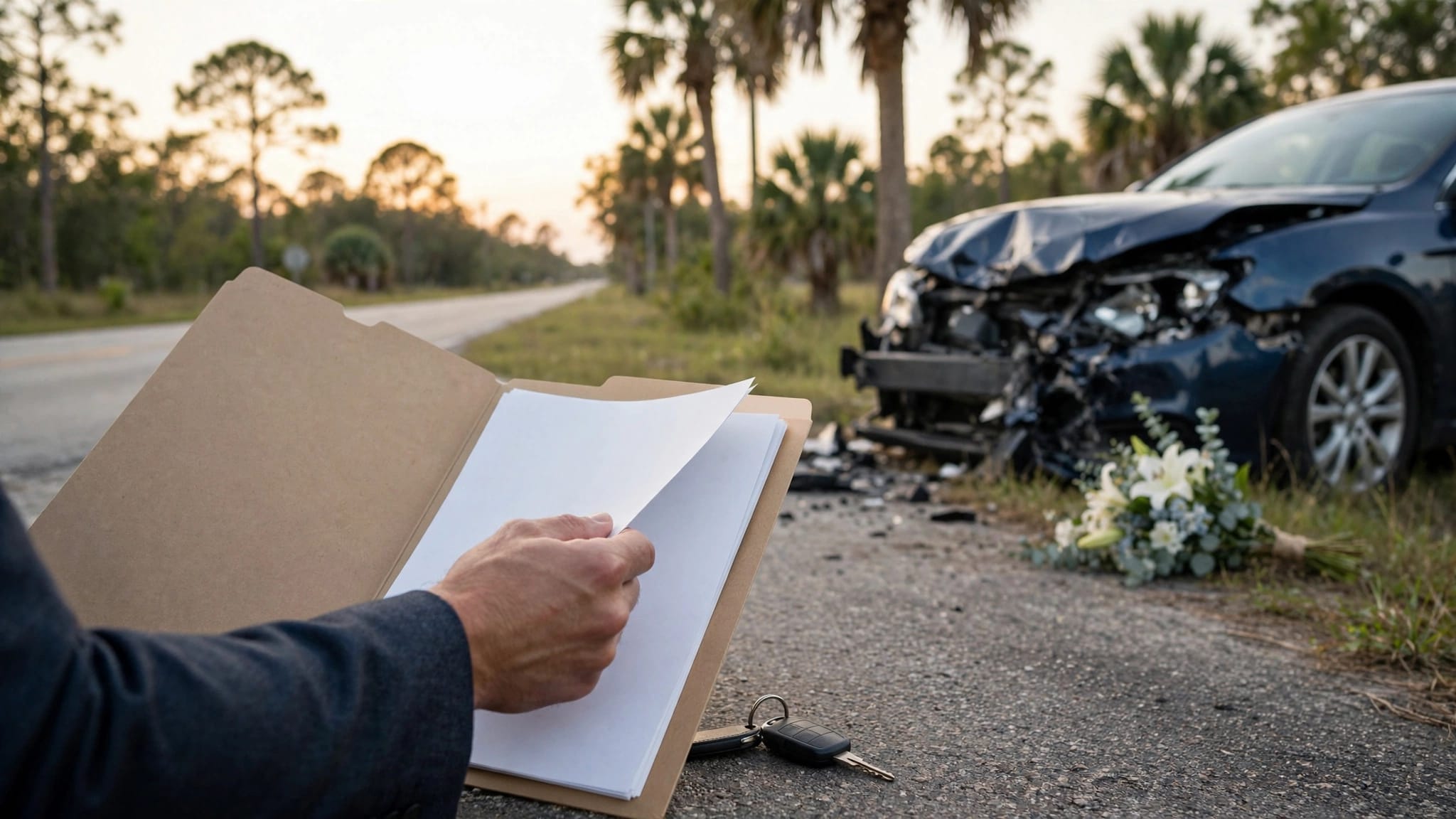
You can pursue a Florida car accident claim even if the driver who caused the crash died. The driver’s death doesn’t erase civil responsibility, but it can change who must be named if a lawsuit becomes necessary.
For an injured person, the claim may involve the driver’s insurer, the driver’s estate, and other available coverage. The process becomes more complicated if a person injured by the driver also dies.
Understanding those differences can help you protect your claim while the insurance investigation moves forward.
Key Takeaways
The at-fault driver’s death doesn’t automatically end an injury claim. A personal representative may need to act on behalf of the driver’s estate if litigation becomes necessary.
Insurance coverage remains a potential source of compensation, although the insurer can still dispute fault or damages. Florida’s lawsuit deadline and any applicable probate deadlines require separate attention.
If the injured person dies because of the crash, Florida’s wrongful death rules may apply. That is a different issue from the death of the at-fault driver.
Does a Florida Car Accident Claim Survive the Driver’s Death?
Yes. You can still seek compensation for injuries caused by a deceased driver’s negligence. A liability insurance claim may proceed, and a lawsuit may be possible if the insurer doesn’t offer a fair settlement.
You still need evidence that the driver caused the collision and that the crash caused your losses. The driver’s death alone doesn’t establish fault, and the insurer may raise defenses on the driver’s behalf.
The driver’s family members don’t automatically become personally responsible for the claim because of their relationship to the driver. Someone else may have separate legal responsibility, however, if the facts support it. For example, the vehicle’s owner or an employer may be involved.
The right approach depends on the available evidence, insurance policies, and parties. An attorney can identify the claims worth pursuing without treating a relative’s role in the estate as personal fault for the crash.
Who Handles a Claim Against a Deceased Driver?
A deceased person cannot participate in a lawsuit. When legal action is needed, a personal representative can act for the estate. The necessary procedure depends on the type of claim and the status of the estate.
The personal representative’s role
The personal representative is the person authorized to administer the deceased person’s estate. That role is separate from being a surviving spouse, child, or other relative.
In a wrongful death action, Florida Statutes section 768.20 states that the wrongdoer’s personal representative is the defendant if the wrongdoer dies before or during the action. Injury claims against a deceased driver also require attention to the proper party and procedure.
Estate issues can take time to resolve. They are a reason to seek legal advice early, especially if no personal representative has been identified.
The insurer’s role
The driver’s liability insurer may investigate and negotiate the claim, subject to the policy. That doesn’t mean the insurer automatically becomes the defendant in an injury lawsuit.
A lawyer can identify the appropriate party and address the relationship between the insurance claim and any action involving the estate. Meanwhile, keep copies of correspondence and avoid assuming that an adjuster’s review has resolved the legal filing requirements.
What Insurance May Pay After the Driver Dies?
The driver’s death doesn’t, by itself, answer how much insurance is available or whether a policy covers the crash. Coverage depends on the policy and the facts.
The driver’s liability coverage
Bodily injury liability insurance can provide a source of payment for an injured person’s covered losses. The available amount depends on policy limits, coverage terms, and any other claims against the policy.
The insurer may request medical records or investigate whether its insured caused the collision. Multiple injured people can also seek payment under the same coverage, making the available limits an important part of the discussion.
Coverage for another responsible party
If the driver used someone else’s vehicle or was working at the time, another person or business may have applicable coverage. Ownership, permission, employment duties, and policy language all matter.
Our discussion of Florida claims involving a borrowed car explains why the driver’s policy isn’t always the only one worth examining.
Your uninsured or underinsured motorist coverage
Your own uninsured or underinsured motorist coverage may apply when the responsible driver’s available coverage is absent or insufficient. Whether it pays depends on your policy and the facts of the claim.
Before signing a release, consider how a settlement could affect claims under other policies. A lawyer can review the proposed terms and help identify unresolved coverage issues.
PIP Benefits and Other Recoverable Losses
Florida’s personal injury protection, often called PIP, is separate from a claim against the at-fault driver. Available PIP benefits can help pay certain expenses while fault remains under investigation.
What PIP may cover
Under Florida’s PIP statute, qualifying benefits generally include 80% of covered, reasonable medical expenses and 60% of covered lost income. The combined medical and disability benefit is generally limited to $10,000.
Medical benefits may be limited to $2,500 without a qualifying determination of an emergency medical condition. Eligibility, deductibles, policy terms, and other statutory requirements also affect payment.
PIP doesn’t pay for vehicle repairs or pain and suffering. Receiving it doesn’t establish that either driver caused the crash.
Losses beyond PIP
A claim against a responsible party may include medical expenses, lost earnings, and property damage when supported by evidence. Future care or reduced earning capacity may also be part of the claim when the evidence supports those losses.
Florida places restrictions on recovering pain-and-suffering damages in motor vehicle cases. Whether an injury meets the applicable serious-injury threshold requires attention to the medical evidence and the circumstances of the claim.
Keep bills and records of work missed. Describe your symptoms and limitations accurately to your medical providers, including any changes as treatment continues.
How Do You Prove Fault When the Driver Has Died?
The driver’s death can make the investigation harder because the driver can’t provide an account. Other evidence may still establish how the crash happened.
Preserve evidence of the collision
Save original photographs and video, including files with their date information. Witness names and contact details, vehicle damage photos, and the crash report can help establish the vehicles’ movements.
Nearby businesses or drivers may have recorded the collision. Those recordings can disappear, so requesting preservation promptly matters. If a damaged vehicle is still in storage, access to it may also be important before repairs or disposal.
A crash report is useful, but its diagram or narrative may contain errors. Compare it with the photographs and other available evidence rather than treating every entry as conclusive.
Address shared-fault allegations
An insurer may argue that you contributed to the crash. Under Florida’s comparative fault law, an injured person’s assigned share of fault generally reduces damages in covered negligence actions.
A person found more than 50% responsible for their own harm generally cannot recover in those actions. An adjuster’s proposed percentage isn’t a court finding. Video, witness accounts, and roadway evidence may support or challenge it.
What If the Injured Person Also Died?
The at-fault driver’s death and the injured person’s death raise different legal questions. When crash injuries cause the injured person’s death, Florida’s wrongful death law may apply.
Who brings the wrongful death action?
The injured person’s personal representative brings the action for eligible survivors and the estate. If the at-fault driver also died, the driver’s personal representative may be the defendant.
These can be two different people acting for two different estates. The driver’s relatives don’t bring the injured person’s wrongful death action simply because the driver died in the collision.
What losses can survivors claim?
Florida law permits certain survivors to seek lost support and services. Depending on their relationship to the person who died and other statutory conditions, survivors may also recover certain companionship or mental pain and suffering damages.
The estate may have separate claims for losses permitted by law. Our guide to Florida wrongful death damages explains how survivor losses differ from estate losses.
Eligibility and available damages depend on the family relationship and the facts. Funeral bills, medical expenses, and records of financial support can be important evidence.
Filing Deadlines Still Apply
An insurance claim and a lawsuit have different timelines. The driver’s death doesn’t give you unlimited time to decide whether to sue.
The general negligence deadline
For many Florida negligence claims accruing on or after March 24, 2023, the general lawsuit filing period is two years. In an ordinary injury case, the claim usually accrues on the crash date.
Earlier claims, different legal theories, government defendants, and applicable exceptions can require a different analysis. Wrongful death actions generally have a two-year period measured from the date of death.
Our explanation of Florida’s car accident lawsuit deadline addresses why the claim type and dates matter.
Negotiations don’t automatically stop the clock
An adjuster may keep a claim open while requesting records or discussing settlement. Those steps don’t automatically extend the lawsuit deadline.
Estate-related issues may involve additional deadlines and procedures. Early legal review leaves time to identify the proper parties, preserve evidence, and prepare a lawsuit if negotiations don’t resolve the claim.
Frequently Asked Questions
Can I file an insurance claim if the driver died at the scene?
Yes. The driver’s death doesn’t prevent you from seeking payment under applicable liability coverage. You must still establish fault, document your losses, and address any coverage disputes.
Do I have to wait until treatment ends to contact a lawyer?
No. A lawyer can begin evaluating coverage, evidence, and deadlines while you continue treatment. Waiting for a final medical bill can leave too little time to prepare a claim.
Can the driver’s family inherit responsibility for the crash?
Family members don’t become personally liable solely because they are related to the driver. A relative could have a separate legal role, such as serving as personal representative, or separate responsibility based on the facts.
Protecting Your Claim After a Fatal Crash
The at-fault driver’s death doesn’t erase your right to pursue a claim. The key is identifying the proper parties and coverage while preserving the evidence needed to prove your losses.
At Avard Law Offices, we offer free consultations for personal injury matters. Bring the crash report, insurance information, medical records, and correspondence you have. You don’t need a complete file before speaking with us.