
Florida Dialysis Errors That Can Cause Patient Injuries
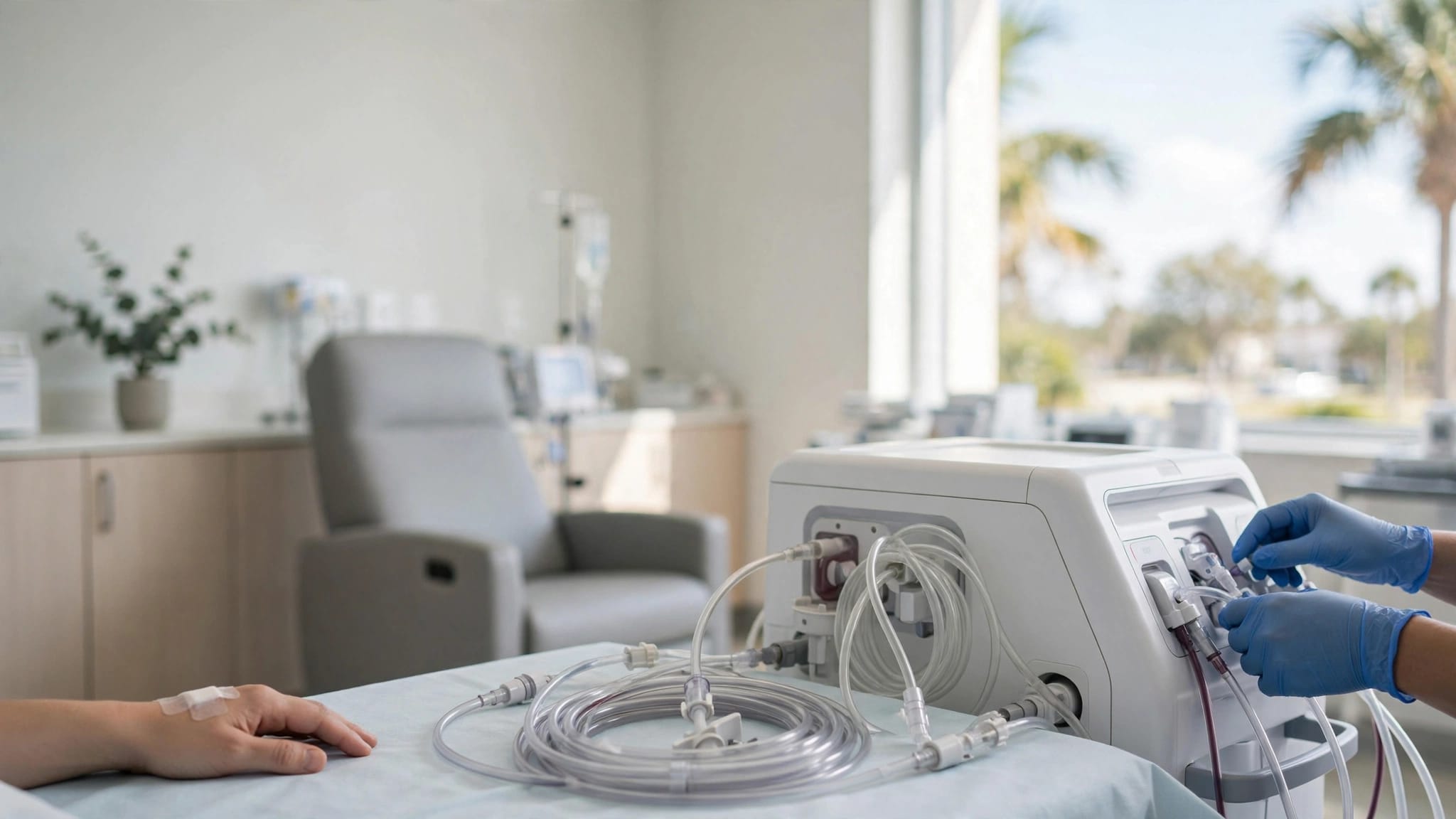
When end-stage renal disease prevents the kidneys from removing enough waste and fluid, patients may need dialysis. Florida dialysis errors can cause serious injuries through infection, excessive fluid removal, medication complications, or inadequate treatment. A medical malpractice claim depends on evidence that care fell below the applicable standard and caused preventable harm.
If you or a loved one was injured, treatment records can help establish what happened. Inspection reports also show the safety failures regulators have identified at dialysis facilities.
Key Takeaways
- A dialysis facility must follow federal safety standards, including infection-control requirements and individualized care planning developed by an interdisciplinary team.
- Surveyors cited an Orlando facility in 2024 for deficiencies involving infection control, supplies, and patient care planning.
- A citation or complication alone doesn’t establish malpractice. Medical evidence must connect a departure from accepted care to an injury.
- Florida malpractice claims require presuit investigation, so an early legal review can help protect your options.
What Dialysis Treatment Involves
Dialysis removes waste and excess fluid when the kidneys can no longer do enough of that work. Some patients receive it while waiting for a kidney transplant.
During hemodialysis, blood travels through a filter and returns to the body. A short-term dialysis catheter may enter a large vein in the neck, chest, or leg near the groin. For longer-term access, a surgeon may join an artery to a vein, creating a fistula that staff can use for needle placement.
The National Institute of Diabetes and Digestive and Kidney Diseases explains that in-center hemodialysis usually takes place three times a week. Sessions often last about three to four hours.
Some home sessions last about two to three hours, although home schedules vary. Home dialysis patients need training on equipment, supplies, and signs that require medical attention.
Infection Control Errors at Dialysis Facilities
Dialysis equipment and treatment surfaces can become contaminated with blood. When staff move between patients without proper precautions, germs can spread through shared equipment or hands.
Under federal dialysis facility standards, facilities must follow infection-control requirements. Survey findings show how a lapse in routine precautions can create a safety concern.
Gloves and hand hygiene
An unannounced recertification survey of Central Florida Kidney Centers in Orlando took place September 10 through 12, 2024. Surveyors found the facility out of compliance with federal Conditions for Coverage under 42 CFR Part 494.
The report cited staff carrying heparin syringes across the treatment floor without changing gloves or performing hand hygiene. Surveyors also observed a staff member using a glove wrapped around a finger to silence machine alarms.
As part of staff members’ personal protective equipment, disposable gloves must be worn when they touch a dialysis machine or patient equipment. Staff must remove gloves and wash their hands between patients or stations. An alcohol-based hand disinfectant containing at least 60% alcohol may be used when hands aren’t visibly soiled.
Shared stethoscopes and clipboards
Surveyors also documented stethoscopes and clipboards used with multiple patients without cleaning between uses. These objects can transfer contamination even when they don’t appear dirty.
The policy cited in the Orlando report treated any item taken to a dialysis station, including one placed on a machine, as contaminated. Before it returns to a common clean area, the item must be discarded, dedicated to one patient, or cleaned and disinfected.
The cited facility guidance calls for disinfection between uses with an approved product or 1:100 bleach, when appropriate for the equipment. These findings describe observed practices; they don’t establish that a particular patient developed an infection.
Expired Medication and Home Dialysis Supplies
Staff should check medication labels and remove expired medications from use. Drugs such as heparin may reduce clotting in the dialysis circuit, while an incorrect dose can raise bleeding or clotting concerns.
The medication policy cited in the Orlando survey allowed a preserved multi-dose vial to be used for up to 29 days after opening, but never beyond its expiration date. This was the facility’s cited policy, not a rule that every opened vial remains safe for that period. The report did not establish that staff administered medication past its expiration date.
Surveyors also found expired supplies in two peritoneal dialysis home-training rooms. They identified 17 sealed packs of surgical gloves that expired in May 2022 and 12 sealed packs of CAPD Y-sets that expired in January 2024. Inventory checks in a home dialysis training room can help keep expired items out of patient training or use.
CAPD means continuous ambulatory peritoneal dialysis, a treatment that uses the lining of the abdomen to help filter waste. During training, staff taught patients to check supplies using SEAL: Strength, Expiration, Amount, and Leaks.
Finding an expired supply in a room doesn’t prove it was used on a patient. It does raise questions about inventory controls and which supplies patients received for home treatment.
Care Plan and Treatment Delivery Failures
A dialysis plan should translate a patient’s medical needs into instructions the care team can follow. It addresses treatment adequacy, fluid management, and follow-up.
Missing or incomplete care plans
Federal rules require an individualized written plan of care developed by an interdisciplinary team. Team members sign it, including the patient if they wish. At the Orlando facility, surveyors found incomplete care plans for all 10 sampled patients.
The interdisciplinary team should review and update the plan when the patient’s needs or treatment results change. A missing plan can make it harder to determine whether staff addressed those needs. The legal and medical consequences depend on the care provided and the patient’s condition.
Blood flow, dialysis dose, and dry weight
The cited treatment targets included a Kt/V of at least 1.2 for hemodialysis and a weekly Kt/V of at least 1.7 for peritoneal dialysis, or an accepted equivalent standard. Kt/V measures dialysis adequacy.
Surveyors reported that one patient’s blood flow rate never reached the ordered 400 milliliters per minute. They also identified a post-dialysis weight that missed the estimated dry weight target. The facility policy called for a weight within 1 kilogram of estimated dry weight, with a corrective plan documented if the target wasn’t met.
Facilities can use QAPI, or quality assessment and performance improvement, to review missed treatment targets and recurring problems.
Estimated dry weight is the weight a patient is expected to reach after excess fluid removal. It can change, and each reading needs clinical context. The 1-kilogram target was part of the cited facility policy, not a numerical target set by federal regulation.
How to Find and Read Inspection Reports
A Statement of Deficiencies records survey findings and identifies the standards involved. It can help families understand what surveyors observed, but it isn’t a complete medical record or a decision about liability.
CMS makes inspection reports available through its QCOR inspection database. Search by facility and location, then review the survey date, deficiency tags, cited requirements, and observations.
Some findings concern a dialysis facility’s quality assessment and performance improvement program, called QAPI. The program tracks care and addresses recurring problems. CMS also publishes dialysis quality measures, including measures of treatment adequacy.
Patients and families can report concerns about a Florida facility through the Florida Agency for Health Care Administration’s official complaint process. They can also raise concerns about a Medicare-certified facility that provides dialysis with CMS or Florida’s state survey agency. Keep relevant records and save any report or case number.
A report describes conditions surveyors identified at a particular time. It doesn’t establish whether every patient was harmed or whether the facility later corrected a problem. For a potential claim, the patient’s own treatment records remain central.
What to Do After a Dialysis Complication
Call your doctor right away for swelling, redness, fever, a drop in blood pressure, or bleeding. These symptoms can signal infection or another complication that needs prompt assessment.
If you’re having severe symptoms, such as chest pain, fainting, serious trouble breathing, or uncontrolled bleeding, call 911. During a treatment, tell staff immediately when you feel dizzy, weak, or unwell.
Removing too much fluid or removing it too quickly can contribute to low blood pressure and cramping. Fatigue after treatment can also occur, but a new or worsening symptom deserves attention rather than an assumption that it’s routine.
Once urgent care is underway, preserve discharge papers and write down when symptoms began, whom you notified, and what response you received. Keep photographs of visible injuries and save relevant bills. These details can help establish a timeline without delaying treatment.
When a Dialysis Error May Support a Florida Claim
A Florida medical malpractice claim generally requires evidence of a duty, a breach of the professional standard of care, an injury caused by that breach, and resulting losses.
Our explanation of Florida’s medical malpractice standard of care describes the comparison: what reasonably prudent similar providers would have done under comparable circumstances.
Connecting the care to an injury
An expert may need to distinguish an avoidable injury from complications caused by kidney failure or another existing condition. For example, a review might compare the ordered treatment with what staff delivered, then examine whether a shortfall probably caused additional harm.
The same issue arises when dangerous potassium levels go untreated. Our discussion of untreated hyperkalemia malpractice explains why the timing of test results and treatment matters.
A survey citation can provide useful context, but it doesn’t by itself prove negligence caused your injury.
Records and legal deadlines
A review may include dialysis orders, treatment flow sheets, blood pressure readings, weights, laboratory results, medication records, care plans, and hospital records. Those documents can show what staff knew, what they did, and when the patient’s condition changed.
Florida generally requires a presuit investigation and notice before a medical negligence lawsuit. Filing deadlines can run while treatment continues or a facility conducts its own review. A prompt consultation gives an attorney time to assess the applicable deadlines and identify needed evidence.
Frequently Asked Questions
What happens if someone misses dialysis for a week?
Missing treatments can allow dangerous levels of fluid, potassium, acid, and waste to build up. The effects depend on the person. Contact the dialysis team immediately if a treatment is missed rather than waiting for the next scheduled session.
Does an infection after dialysis prove malpractice?
No. An infection warrants medical treatment and may warrant an investigation, but a claim requires evidence that substandard care probably caused it. Records can help identify the likely source and the response to symptoms.
Can a family member ask about a potential claim?
Yes. A family member can seek legal guidance when concerned about a patient’s care. An attorney can explain who has authority to obtain records and act on the patient’s behalf.
Protecting Your Options After an Injury
Dialysis treatment errors deserve careful review when they may have caused preventable harm. The treatment timeline and medical records help distinguish a complication from a failure that supports a claim.
Our attorneys handle Florida medical malpractice matters and offer free consultations. If you suspect a dialysis error injured you or a loved one, seek medical care first and contact us for a review of your options.