
Florida Government Vehicle Accidents: Notice and Claims
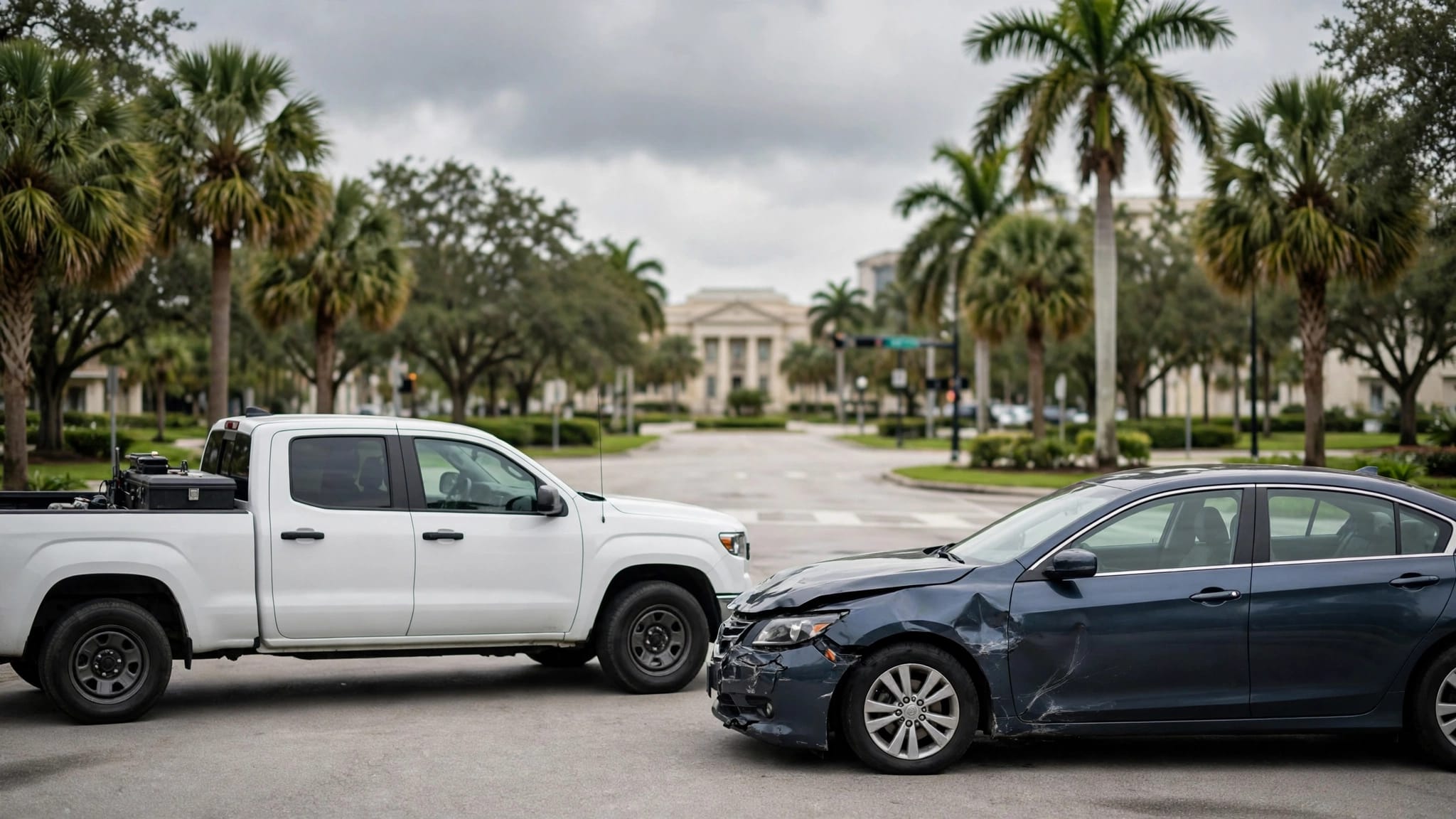
A Florida government vehicle accident can lead to an injury claim, but special notice requirements apply when a public agency is responsible. You may also face a lawsuit deadline that arrives before the general deadline for giving notice.
A city truck, county bus or state-owned vehicle doesn’t make the government automatically liable. You still need evidence of negligence and proof of your losses.
Acting early gives you time to identify the right agency and protect your claim.
What Makes a Government Vehicle Claim Different?
Florida law allows certain injury claims against state and local government agencies. A claim may arise when a government employee negligently causes a crash while acting within the scope of employment.
The rules come from Florida’s limited waiver of sovereign immunity. That waiver lets some claims proceed, but it also sets conditions for notice, lawsuits and payment. Florida Statutes section 768.28 describes the waiver and its limits.
Identify Who Was Responsible
The markings on a vehicle are a starting point, not a complete answer. A crash could involve a city sanitation truck, a county vehicle, a school district bus or a vehicle operated for a state agency. The proper agency depends on the facts.
A privately owned contractor’s vehicle may also be working on a public project. In that situation, ownership, the driver’s employer and the work being performed can affect who receives a claim.
Show How Negligence Caused the Crash
You must generally show that someone failed to use reasonable care and that the failure caused your injuries. Evidence might include a driver’s failure to yield, unsafe lane change or distraction.
Government ownership alone doesn’t establish fault. A crash report can help identify the parties and witnesses, but it doesn’t necessarily settle the liability dispute.
Who Must Receive Written Notice?
For an ordinary injury claim, Florida generally requires written notice to the appropriate agency or subdivision within three years after the claim accrues. The notice requirement is separate from the deadline to file a lawsuit.
Send notice early. As discussed below, many negligence lawsuits have a shorter filing period, and the agency generally has time to investigate before suit can begin.
Notice to the Agency and DFS
The responsible agency or subdivision must receive notice. In many cases, notice must also go to the Florida Department of Financial Services (DFS).
The statute provides an exception to the additional DFS notice for claims against a municipality, county or the Florida Space Authority. The exception doesn’t eliminate the requirement to notify the appropriate agency. If more than one public entity may be responsible, each potential claim needs attention.
Telling a government employee about the crash or opening an insurance file doesn’t necessarily satisfy formal notice requirements. Keep a copy of the notice and proof of delivery.
Notice When a Crash Causes a Death
Wrongful-death claims have a shorter general notice period. The statute requires notice within two years after the claim accrues, subject to its rules about the recipients.
A death claim also involves different legal questions about who may bring the action and which losses may be recovered. Families should seek legal advice promptly rather than assume the injured person’s deadlines apply unchanged.
The Notice Deadline and Lawsuit Deadline Are Different
The three-year notice period doesn’t mean you can wait three years to take legal action. The deadline to sue may arrive first, and the notice process generally must occur before the lawsuit.
The General Negligence Filing Period
For many Florida negligence claims accruing after March 24, 2023, the general lawsuit filing period is two years. An injury claim ordinarily accrues on the crash date, although the correct calculation depends on the claim and its facts.
Earlier negligence claims generally fall under the former four-year rule. Other claims and exceptions can require a different analysis. Our guide to Florida car accident lawsuit deadlines explains why the date and type of claim matter.
An open insurance file doesn’t automatically preserve your right to sue. Settlement discussions and requests for records don’t automatically stop the filing clock either.
Allow Time for the Agency’s Response
A lawsuit generally cannot begin until the agency denies the claim in writing or the claim is deemed denied under the statute. For an ordinary claim, the general deemed-denial period is six months. For a wrongful-death action, the statute provides a 90-day period.
The timing of notice and denial can affect the deadline calculation under the statutory rules. An attorney can evaluate those dates together and determine when suit may proceed.
What Compensation Can You Seek?
A government vehicle claim can include losses supported by the evidence. Depending on the case, those losses may include medical expenses, lost earnings, property damage and future financial harm.
Pain and suffering may also be recoverable when Florida law permits it. In motor vehicle cases, the nature of the injury and Florida’s serious-injury threshold can affect that part of the claim. Medical records are important when assessing whether the threshold is met.
Government Payment Limits
Florida’s sovereign-immunity statute generally limits government payment to $200,000 for one person’s claim or judgment and $300,000 in total for claims or judgments arising from one incident.
The total limit matters when a crash injures several people. A family’s combined losses may exceed the amount available under the statutory limit, so each claim requires careful evaluation.
Losses Above the Limit
A person may have losses greater than the statutory payment limit. A legislative claims bill is one possible route for payment above that limit, but additional payment isn’t automatic.
The statute also excludes punitive damages and prejudgment interest against the government under its waiver. Other potentially responsible parties and available coverage require separate review.
Preserve Evidence Before It Disappears
A government vehicle claim depends on what happened at the scene and how the collision affected you. Start preserving records as soon as your health and safety allow.
Photograph the vehicles, visible damage, road markings and the surrounding area. Keep the original files, including any date information. If witnesses stopped, save their names and contact details.
A public vehicle may have camera footage or operating records. Nearby businesses and other drivers may also have video. Those recordings can be overwritten, so an attorney can help make preservation requests before footage disappears.
Keep medical bills, treatment records, work restrictions, pay information, repair estimates and correspondence about the crash. These records help connect your losses to the collision. Our discussion of supporting a Florida crash claim addresses evidence that can help even when a police report is unavailable.
If a vehicle is in storage, document its condition before repairs or disposal. Vehicle damage can help explain the direction and force of an impact when the drivers disagree.
Insurance and Medical Care Have Separate Rules
Report the crash to your own insurer promptly and follow your policy’s notice and cooperation requirements. Your insurance claim is separate from the formal notice required for a government claim.
Florida personal injury protection, often called PIP, may provide benefits for qualifying medical expenses and lost income. Initial treatment generally must begin within 14 days after the crash for PIP medical benefits. Coverage and payment depend on the policy and applicable law.
Seek medical care based on your symptoms rather than waiting for an adjuster to decide fault. Describe your symptoms and limitations accurately to your providers. If a condition worsens or affects your work, include that information in your treatment discussions.
Before giving a detailed recorded statement to another party’s insurer, consider legal advice. Be truthful, but don’t guess about a vehicle’s speed, a distance or an injury you haven’t had evaluated.
How an Attorney Can Help
A lawyer can identify potential defendants, investigate vehicle ownership and employment, prepare the required notice and assess the deadlines. Legal help can be especially useful when the agency disputes fault, several people were injured or the available footage may soon be erased.
An attorney can also review a proposed settlement and release. A release may end claims against one or more parties, so its terms matter before you sign.
At Avard Law Offices, we offer free consultations for personal injury matters. Bring the crash report, insurance information, photographs, medical records and correspondence you have. You don’t need a complete file before contacting us.
Frequently Asked Questions
Does a Police Report Count as Government Claim Notice?
Not necessarily. A report documents the crash, but formal notice under the government claims statute has its own requirements and recipients.
Can I Recover if I Was Partly at Fault?
Florida’s comparative-fault rules can reduce damages based on a claimant’s share of responsibility. In most covered negligence cases, a claimant found more than 50% at fault cannot recover. An adjuster’s proposed percentage isn’t a court finding.
Should I Wait Until Treatment Ends to Make a Claim?
You don’t need to wait for treatment to end before seeking legal advice or addressing notice requirements. Continued care can help document your condition, but deadlines and evidence preservation need attention during recovery.
Does a Federal Government Vehicle Follow These Rules?
Federal vehicle claims follow different procedures. Don’t assume the Florida state and local government notice rules apply to a federal agency or employee.
Protect Your Claim Early
A claim involving a Florida government vehicle requires attention to the responsible agency, formal notice and the separate deadline to sue. The three-year notice period alone doesn’t tell you how much time you have.
Prompt action also gives you a better chance to preserve video and other evidence. With the relevant dates and records in hand, you can make informed decisions about your claim.