
Florida Power Tool Injury Claims After Guard Failure
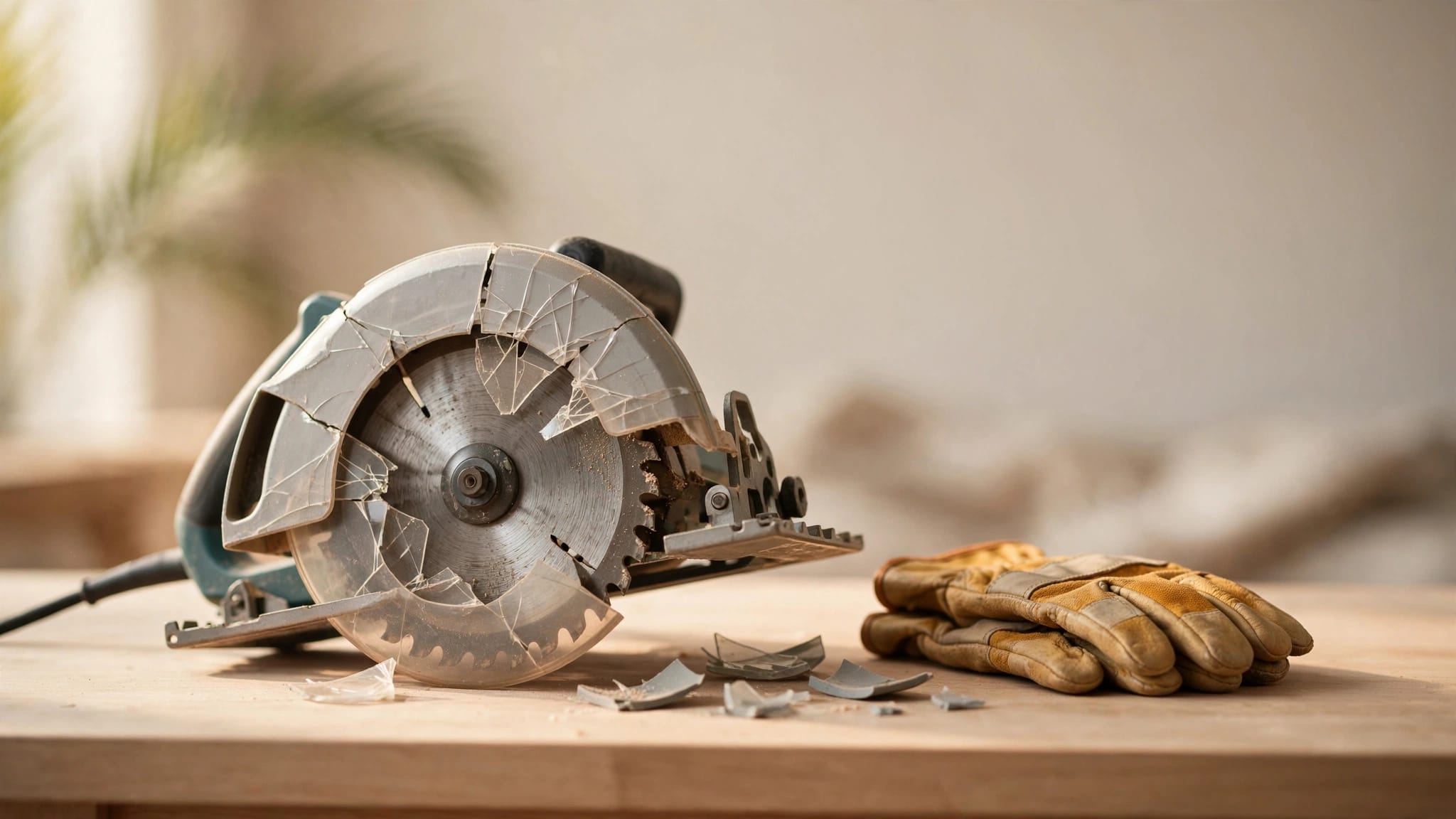
A failed safety guard can support a Florida power tool injury claim when a product defect or another party’s negligence caused your injuries. The investigation must establish why the guard failed and how that failure contributed to the harm.
A broken guard alone doesn’t establish liability. Your medical records, the tool’s condition, and its repair history can help identify who bears responsibility.
Start with medical care and preserving the tool, because repairs, returns, or disposal can erase evidence before an attorney or engineer examines it.
Key Takeaways
- A claim may involve defective design, a manufacturing error, inadequate warnings, or negligent repairs.
- Keep the tool, guard, blade, and related parts in their post-incident condition. Don’t operate the tool to reproduce the failure.
- Workplace injuries may support both workers’ compensation benefits and a claim against a responsible third party. Filing deadlines and potential reimbursement obligations require separate attention.
How a Failed Guard Can Support an Injury Claim
Power tool guards reduce exposure to blades, rotating components, and flying debris. However, an injury involving a guard requires evidence about the failure’s cause.
Identify the defect or negligent act
A manufacturing defect concerns a departure from the intended design. For example, an investigation may examine whether a spring, hinge, or fastener met manufacturing specifications.
A design claim addresses whether the guard’s design made the product unreasonably dangerous. A warning claim concerns inadequate instructions or warnings about a relevant hazard. These theories require different proof.
A guard that jams because of poor maintenance raises different questions than one that left the factory with a defective component. Therefore, the investigation should address the tool’s entire service history.
Connect the failure to the injury
The claim must connect the alleged defect to your injuries. Relevant questions include whether the guard retracted, failed to return, detached, or contacted a moving component.
The Consumer Product Safety Commission’s 2005 Bosch circular-saw recall notice reported three lower-guard malfunctions, including one amputation. That notice illustrates the potential consequences of guard failure, but it doesn’t establish a defect in a different saw.
An engineer may need to compare the damaged tool with its design specifications and examine whether wear, modification, or impact explains its condition.
Who May Be Responsible for a Guard Failure?
Potential defendants include the tool manufacturer, a component manufacturer, and businesses involved in distributing or selling a defective product. Depending on the evidence, a repair shop or rental company may also bear responsibility.
The original manufacturer isn’t automatically responsible for every later guard problem. A replacement part, incorrect installation, or negligent repair may change which parties belong in the case.
Ownership also doesn’t settle responsibility. A borrowed saw or rented grinder can still involve a product defect. Conversely, owning an injured person’s tool doesn’t, by itself, establish liability.
Purchase records, rental agreements, service invoices, and replacement-part packaging help trace the tool’s history. They can also identify businesses whose records should be preserved.
For a Florida power tool injury claim, identifying the correct defendants matters as much as identifying the failed component. Each claim needs evidence connecting that party’s conduct or product to the injury.
Preserve the Tool Before Anyone Alters It
After emergency care, protecting physical evidence is an immediate priority. A well-intended repair can remove the condition an investigator needs to examine.
Keep the equipment in its post-incident condition
Stop using the tool. Don’t clean, disassemble, adjust, or test it. Keep detached pieces, including broken guard fragments, fasteners, and the blade or accessory involved.
Photograph the tool where it rests, if doing so is safe. Include the guard, model and serial numbers, warning labels, work surface, and surrounding area. Don’t recreate the incident.
A warranty return can place the most important evidence outside your control. Arrange preservation before sending the tool or guard back.
If an employer or rental business owns the equipment, request its preservation promptly. An attorney can send preservation notices and arrange an inspection that protects the evidence.
Save records that explain what happened
Keep receipts, manuals, maintenance records, and communications about earlier guard problems. Photographs taken before the incident may also show the tool’s prior condition.
Write down witness names and what you remember while the details remain clear. Distinguish what you observed from what you later learned.
Medical records should accurately describe the injury mechanism and symptoms. Also preserve incident reports and available video. Surveillance systems can overwrite footage long before a lawsuit deadline approaches.
When the Power Tool Injury Happens at Work
A workplace accident can involve two separate legal paths. They have different purposes, benefits, and proof requirements.
Workers’ compensation addresses the employment injury
Workers’ compensation generally provides covered medical treatment and wage benefits for qualifying work injuries without requiring proof that a manufacturer caused the accident.
Report the injury to your employer promptly and describe what happened accurately. Workers’ compensation has its own notice and filing requirements, so a product investigation shouldn’t delay reporting.
These benefits don’t ordinarily include compensation for pain and suffering. Also, an employer’s workers’ compensation immunity can limit an employee’s ability to sue the employer.
A third-party claim addresses outside responsibility
A defective tool may support a separate claim against a manufacturer or another responsible party outside the employment relationship.
Our discussion of third-party workplace injury claims explains how these claims can proceed alongside workers’ compensation.
The claims must be coordinated. An employer or insurer may have reimbursement or subrogation rights against a third-party recovery. Before accepting a settlement, the analysis should address those rights and any release affecting other defendants.
What Compensation Can Cover
A successful injury claim may include medical expenses, lost income, and reduced future earning capacity. Depending on the evidence, compensation may also address pain, disability, disfigurement, and loss of enjoyment of life.
Hand injuries can require surgery, rehabilitation, or lasting work restrictions. However, a settlement value can’t be calculated from the fact that a guard failed. The injury’s severity, proof of responsibility, available coverage, and supported future losses all matter.
Keep bills, wage records, work restrictions, and treating-provider recommendations. Notes about difficulty dressing, preparing meals, or performing job duties can document limitations that don’t appear on an invoice.
Future expenses require support. A recommendation for additional surgery carries different evidentiary weight than a personal concern that surgery might become necessary.
Before signing a release, obtain legal advice about its scope. The wording may affect claims against parties beyond the business offering payment.
Florida Filing Deadlines and Shared Fault
The investigation, insurance claim, and lawsuit deadline run on separate tracks. Progress on one doesn’t automatically preserve another.
Product claims require their own deadline analysis
Florida’s filing-deadline statute distinguishes product-liability actions from general negligence actions. Product-liability actions generally fall within a four-year category. Many separate negligence claims accruing on or after March 24, 2023, generally have a two-year period.
A negligence allegation involving a product still requires analysis under the applicable product-liability provisions. The label alone doesn’t determine the deadline.
Florida’s product-liability repose provisions add an outside limit. For products with an expected useful life of 10 years or less, a 12-year restriction tied to first qualifying delivery may apply. Statutory qualifications and exceptions matter.
An open insurance claim or settlement discussion doesn’t automatically pause these deadlines.
Shared fault requires supporting evidence
Under Florida’s comparative-fault statute, an injured person’s responsibility can affect recovery. The applicable rules depend on the claim and its dates.
A defendant may argue that guard removal, an incompatible accessory, or disregard of instructions contributed to the injury. Those allegations require evidence; an adjuster’s proposed allocation isn’t a final legal finding.
Preserving the equipment helps address both the alleged defect and any claim of misuse.
Frequently Asked Questions
Can I bring a claim if the tool wasn’t recalled?
Yes. A recall isn’t a requirement for a product-liability claim. The case depends on evidence of a defect, causation, and resulting injuries. Similarly, a recall doesn’t automatically prove that the recalled condition caused a particular person’s injury. The model, component, and failure mechanism must connect to the incident.
What if someone replaced the original guard?
A replacement guard requires investigation into its manufacturer, compatibility, and installation. The CPSC’s 2023 replacement blade-guard recall involved lower guards for Chicago Electric Power Tools 12-inch miter saws. A replacement component may raise separate responsibility questions. Preserve its packaging, receipt, and installation records if available.
Can I pursue a claim without the original receipt?
A missing receipt doesn’t automatically prevent a claim. Model and serial numbers, payment records, photographs, rental documents, or an employer’s equipment records may help establish identity and history. However, the tool’s age and delivery history can affect the investigation and applicable time limits.
Protect Your Claim While You Recover
A failed guard deserves a prompt investigation, but a successful claim requires proof of the failure’s cause. Preserving the equipment and documenting your injuries protects the evidence needed to assess responsibility.
Workplace benefits, third-party claims, and filing deadlines require coordinated attention. You don’t need to wait until treatment ends to seek legal advice.
At Avard Law Offices, we offer a free consultation for Florida personal injury matters. We can discuss the incident, available evidence, and potential claims while you focus on recovery.