
Florida Surgical Fires: Preventable Operating-Room Burns
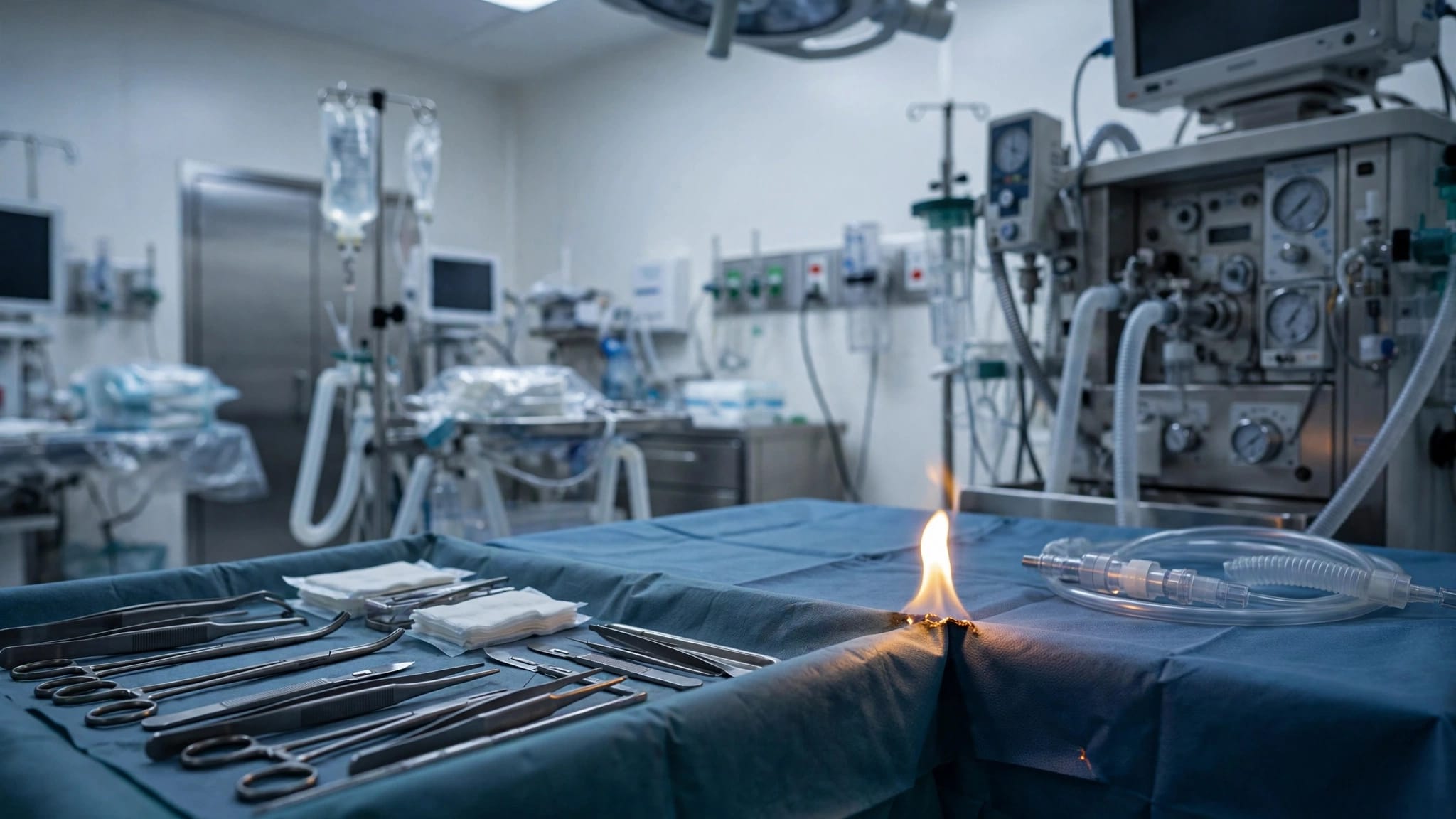
Florida surgical fires can occur when an ignition source reaches flammable material in an oxygen-rich surgical field. If a provider’s failure to follow accepted safety practices causes burns, the patient may have a medical malpractice claim.
You may face unexpected wound care, scarring, or additional surgery after a procedure meant to improve your health. Understanding the cause of the fire helps identify whether preventable operating-room errors contributed to your injury.
Key Takeaways
- Surgical fires require an ignition source, fuel, and an oxidizer, such as supplemental oxygen.
- A Florida malpractice claim must connect a departure from accepted medical care to the patient’s injury.
- Medical records, equipment information, and qualified expert review can help establish responsibility. Florida’s presuit requirements and filing deadlines make early legal guidance important.
How Surgical Fires Start in the Operating Room
The FDA’s surgical fire safety communication addresses hazards that arise when three elements meet near a patient. Understanding those elements helps explain why preparation and communication matter.
Ignition sources and combustible materials
Electrosurgical units, lasers, and fiber-optic light sources can produce enough heat to start a fire. Surgical drapes, gauze, alcohol-based skin preparations, and patient tissue can supply fuel.
An inactive instrument can also remain hot. Placing it on a drape or against the patient may create danger even after staff stop using it.
The review should identify the device involved and where staff placed it before and after activation. Equipment handling matters alongside the decision to use it.
Oxygen near the surgical field
Oxygen supports combustion; it isn’t itself the fuel. Supplemental oxygen can collect beneath drapes and allow materials to ignite more readily.
Procedures involving the head, neck, or upper chest deserve particular attention when an ignition source operates near oxygen delivery. A patient may need supplemental oxygen, so the safety analysis must account for that medical need.
The question is whether the team managed oxygen delivery and ignition hazards appropriately under the circumstances.
Operating-Room Errors That Can Increase Fire Risk
Fire prevention involves several members of the surgical team. Anesthesia personnel, surgeons, and nursing staff must coordinate because each may control a different part of the hazard.
Inadequate preparation or oxygen management
Alcohol-based preparation can remain hazardous when staff allow it to pool or cover the area before it dries. Teams should follow the product’s drying instructions rather than assume the preparation is safe because the surface looks dry.
Draping also matters because it can trap oxygen near the operative site. The FDA’s recommendations for healthcare professionals address oxygen delivery, skin preparation, and coordination before activating an ignition source.
A review should examine the actual preparation product, application method, drying interval, and oxygen conditions. None of those details should be reconstructed solely from routine practice.
Communication and response failures
The surgeon needs relevant information about oxygen delivery before using an ignition source. Meanwhile, anesthesia staff need warning when the procedure creates a new ignition risk.
A missed discussion, unclear responsibility, or failure to reassess changing conditions can undermine an otherwise adequate safety plan.
Facilities also need trained staff and practiced fire-response procedures. After ignition, delays in recognizing the fire, stopping its sources, or protecting the patient may worsen the injury. Investigators should therefore examine both how the fire started and how the team responded.
Burn Injuries Can Require Care Beyond the Original Surgery
A surgical fire can injure skin and underlying tissue. Depending on its location, it may also affect the face or airway.
Treatment may include wound care, removal of damaged tissue, skin grafting, or reconstructive procedures. Scars can restrict movement, while pain and altered sensation can interfere with sleep and daily activities. Psychological effects may also complicate recovery.
Breathing difficulty after a suspected surgical fire requires emergency medical attention. Worsening pain, spreading redness, drainage, fever, or other concerning changes also warrant prompt medical assessment.
Some operating-room burns occur without an actual fire. Direct contact with a hot instrument or an electrosurgical injury may require a different investigation. Records should establish the mechanism instead of treating every postoperative burn as the same event.
When Florida Surgical Fires Support Malpractice Claims
A burn establishes an injury, but the legal review must also address the care that caused it. Florida evaluates providers against the prevailing professional standard of care.
Connecting a safety failure to the injury
The standard considers what reasonably prudent, similar healthcare providers would recognize as acceptable under comparable circumstances. Our explanation of the Florida medical malpractice standard discusses how that comparison works.
A qualified medical expert may evaluate preparation, oxygen management, equipment use, and the response to ignition. The expert must also address causation: whether a departure from accepted care probably caused or worsened the injury.
Facility policies can supply useful evidence. However, a policy violation alone doesn’t resolve whether the legal standard was breached or whether that breach caused harm.
Identifying the responsible parties
Responsibility may involve a surgeon, anesthesia provider, nurse, hospital, or surgery center. Each party’s role needs separate analysis.
For example, the facility may control staff training and equipment maintenance, while a physician group controls anesthesia services. Employment relationships and contracts can affect institutional responsibility.
Working in the same operating room doesn’t automatically make every participant liable. The investigation must connect each proposed defendant to a relevant duty and failure. An alleged equipment defect also requires analysis separate from negligent device use.
Evidence That Helps Explain What Happened
Patients under anesthesia usually can’t describe the event. As a result, the medical timeline and technical records become especially important.
Useful material can include:
- Operative reports, anesthesia charts, nursing notes, and recovery-room records showing the sequence of care.
- Skin-preparation documentation, oxygen-delivery records, and any completed fire-risk assessment.
- Equipment identifiers, maintenance records, and available photographs or recordings related to the incident.
- Follow-up records, wound photographs, bills, and employment documents showing the injury’s effects.
An attorney can seek preservation of relevant equipment and records before they become unavailable. Whether a particular document is obtainable depends on the document and applicable law.
Keep your own dated notes about symptoms, conversations, and treatment. Separate what you observed from what someone later told you.
Also retain written communications and original documents without altering them. Continue appropriate medical care rather than postponing treatment to gather evidence. Your health comes first, and treatment records can help document how the injury develops.
Florida’s Presuit Requirements and Filing Deadlines
Medical malpractice claims require preparation before a lawsuit begins. That work takes time, even when the injury appears to follow an obvious safety failure.
Investigation, expert support, and notice
Under Florida Statutes section 766.203, a claimant generally must conduct a reasonable investigation and obtain a qualified medical expert’s verified written opinion supporting reasonable grounds for the claim.
Formal notice must then reach each prospective medical-negligence defendant. Florida’s presuit process generally includes a 90-day investigation period before suit may proceed.
Identifying the correct providers early matters. An incomplete list can create notice disputes and leave important conduct outside the investigation.
The deadline can run during recovery
Florida Statutes section 95.11 generally requires a medical malpractice action within two years of the incident or its discovery under the statutory rule. The discovery analysis includes what reasonable diligence should have revealed.
That summary doesn’t resolve every patient’s filing deadline. Presuit procedures and other applicable timing rules require a case-specific calculation.
A records request, complaint, or hospital investigation doesn’t automatically preserve your right to sue.
Seek legal advice while treatment continues. Waiting for a final scar assessment or the facility’s explanation can consume time needed for records review and expert consultation.
Compensation for Losses Caused by a Surgical Fire
A successful claim may recover losses attributable to negligent care. Economic damages can include additional medical bills, lost earnings, and supported future treatment or caregiving costs.
Non-economic damages may address pain, disfigurement, disability, and other legally recognized effects on daily life. Our guide to Florida medical malpractice damages explains these categories in greater detail.
Future losses need evidence. Treatment recommendations, rehabilitation assessments, and employment records can help show how a burn will affect the patient’s needs and ability to work.
There is no reliable settlement amount based solely on the diagnosis or photographs. The injury’s permanence, medical evidence, and applicable law affect recovery. If the patient dies, a potential wrongful death claim requires separate analysis of eligible survivors and recoverable losses.
Frequently Asked Questions
Can I bring a claim after signing a surgical consent form?
Potentially, yes. A consent form may describe known risks, but signing it doesn’t generally authorize negligent care.
The review still asks whether the providers met the applicable standard and whether a failure caused harm. The consent discussion and documents may matter, but they don’t replace the medical analysis.
An attorney should review the actual form rather than assume its wording resolves the case.
Does a fire at an outpatient surgery center qualify?
A surgical fire at an outpatient facility can support a malpractice claim when substandard care causes injury. Same-day discharge doesn’t remove the duty to provide competent treatment.
The review may involve individual clinicians, a medical group, and the facility’s own practices. Records should address preparation, anesthesia, equipment use, and the response to the event.
The location alone doesn’t establish which party is responsible.
Protect Your Health and Preserve Your Legal Options
A surgical fire claim depends on connecting a preventable safety failure to documented harm. Early investigation can preserve the records and equipment information needed to understand that connection.
Continue appropriate medical care and seek legal guidance before Florida’s filing deadlines become a barrier.
At Avard Law Offices, we offer a free consultation to discuss your injury and potential medical malpractice claim.