
Florida Sidewalk Claims After Tree Roots Lift Concrete
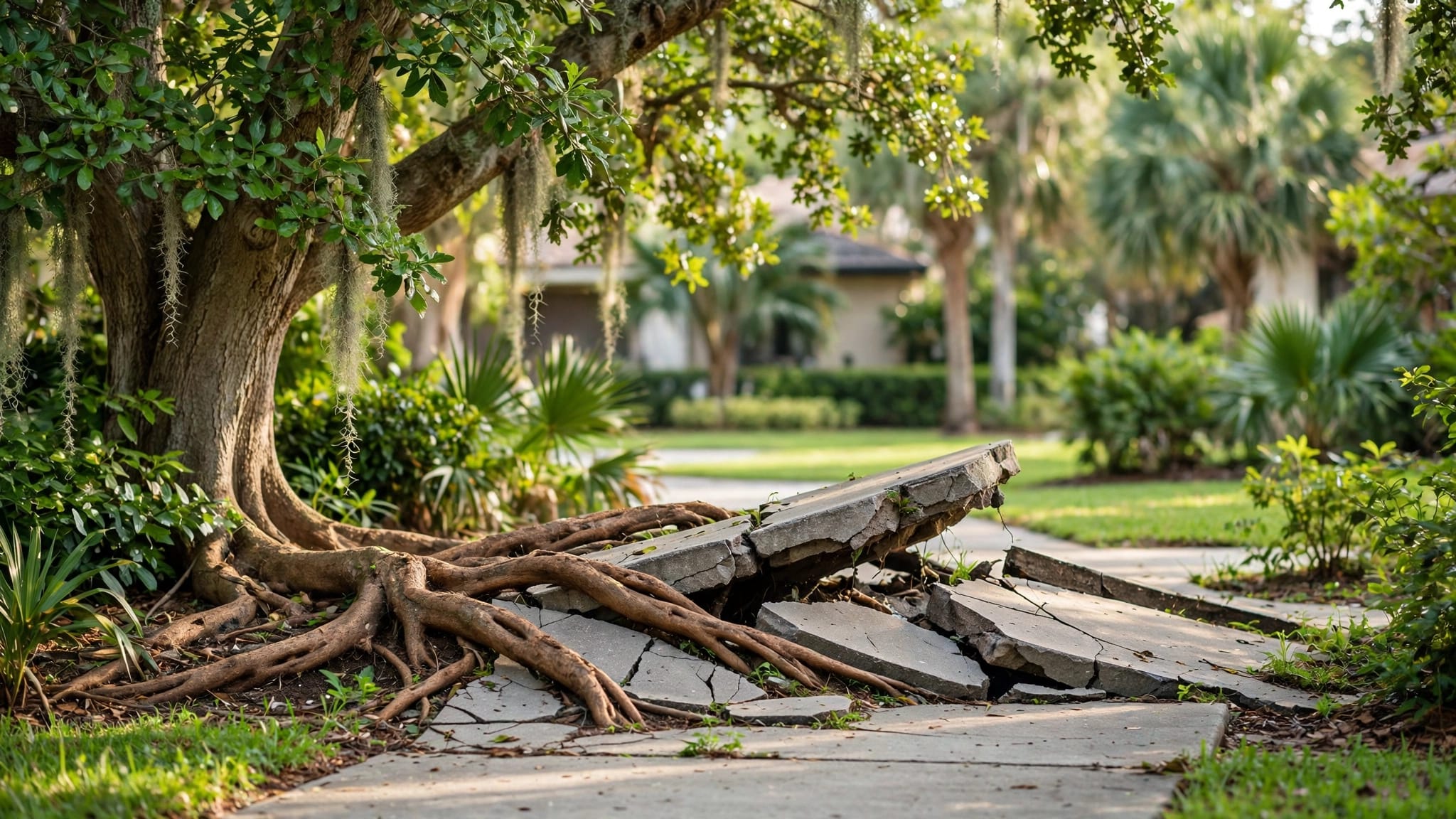
You may have a Florida sidewalk injury claim when tree roots lift concrete and cause a fall, but liability requires more than proof of uneven pavement. The central questions are who controlled the sidewalk, what that party knew, and whether unreasonable maintenance caused your injuries.
Florida sidewalk claims can involve a city, county, private property owner, or maintenance contractor. Start by separating the source of the root growth from responsibility for the walking surface.
Key Takeaways
- A nearby tree owner’s responsibility isn’t automatic simply because its roots raised a public sidewalk.
- Complaints, inspections, photographs, and repair records can help establish notice of the dangerous condition.
- Government claims involve special procedures, while many private-party negligence claims have a two-year filing deadline.
- Preserve scene evidence promptly, document your medical losses, and don’t assume insurance negotiations pause a deadline.
Who May Be Responsible for a Root-Raised Sidewalk?
A sidewalk beside a business doesn’t necessarily belong to that business. Likewise, public access doesn’t establish government ownership or maintenance responsibility.
Public Sidewalks Require a Government Responsibility Analysis
A municipality or county may maintain the sidewalk, even when the tree grows on adjoining private land. Right-of-way records, maintenance agreements, inspection files, and work orders can identify the responsible entity.
However, government ownership alone doesn’t establish negligence. A claim must connect an actionable failure to maintain or address the condition with your fall. Notice, reasonable response time, and governmental immunity issues can affect that analysis. The precise slab matters, particularly where public pavement meets a driveway or private walkway.
Private Walkways Can Involve Several Parties
Shopping centers, apartment complexes, and condominium communities may have privately maintained sidewalks. Depending on control and contractual duties, responsibility may involve an owner, association, tenant, or contractor.
Leases and service contracts help explain who handled inspections and repairs, a central issue in Florida walkway injury claims. A landscaping contract doesn’t automatically make the landscaper responsible for concrete replacement. The work assigned, work performed, and connection to the hazard all matter.
What Florida’s Tree-Root Cases Establish
Florida courts have addressed the distinction between owning a tree and owing a duty to maintain an adjoining public sidewalk. Those decisions help identify the proper defendant without automatically establishing anyone’s liability.
Sullivan Limits Automatic Claims Against Adjacent Owners
In Sullivan v. Silver Palm Properties, Inc., the Florida Supreme Court rejected a general duty requiring an adjoining property owner to control underground root growth in anticipation of future public-sidewalk damage.
The decision matters because the tree’s location doesn’t settle the claim. Identifying roots beneath a slab doesn’t, by itself, establish a maintenance duty for the tree owner. Separate evidence of control, affirmative conduct, or another legally recognized duty still requires analysis.
Deerwood Shows Why Ordinance Language Matters
In Miami-Dade County v. Deerwood Homeowners Association, a pedestrian alleged that roots caused a vertical separation in a county sidewalk. The Third District concluded that the cited ordinance didn’t require the association or its lawn contractor, Techlawn, Inc., to trim roots beneath the sidewalk or repair it.
The ordinance also didn’t create the asserted private cause of action against those parties. The decision didn’t resolve the county’s notice or ultimate liability. Therefore, a local maintenance rule cannot simply substitute for a complete negligence analysis.
How to Prove Notice of Raised Concrete
Florida sidewalk claims often depend on what the responsible party knew before the fall. A root system may take years to grow, but that fact alone doesn’t establish how long the concrete presented a dangerous height difference.
Actual Notice Comes From Identifiable Information
Earlier service requests, emails, inspection findings, or incident reports may show that someone reported the same defect. The record should identify the location closely enough to connect it to your fall.
For a public sidewalk, useful records may include public works complaints, sidewalk repair inventories, tree-maintenance files, and contractor communications. Dates matter because a complaint submitted after your injury doesn’t establish earlier knowledge. A repair request about another block may offer little help.
Constructive Notice Requires Evidence About Duration
Constructive notice concerns what reasonable care should have revealed. Earlier photographs, witness observations, and inspection history may help establish that the raised condition existed long enough to warrant attention.
However, discoloration or an old tree doesn’t supply an automatic timeline. The evidence must address the walking surface itself.
Proof that roots caused the uplift answers a different question from proof that the responsible party had time to discover and address it.
Preserve Evidence Before the Sidewalk Changes
Medical care comes first, especially after a head injury, severe pain, or difficulty bearing weight. If you cannot document the scene safely, ask a companion to help.
These steps preserve details that a repair may erase:
- Photograph the exact slab, adjoining tree, surrounding walkway, and your direction of travel.
- Capture lighting, shadows, leaves, warning paint, cones, and available walking routes.
- Record the address and nearby landmarks, and obtain willing witnesses’ contact information.
- Report the fall accurately and retain a copy or reference number.
- Request preservation of relevant video, inspection records, complaints, and repair documents.
If it’s safe, a photograph with a ruler can show the vertical difference between slabs. Keep wider views too, because a close-up alone may hide the approach conditions. Don’t enter traffic or disturb the sidewalk to obtain a measurement.
As with parking lot pothole claims, original photographs and prompt preservation requests can matter when repairs change the scene. Save unedited files and proof that written requests reached their recipients.
Also retain your shoes, damaged clothing, medical paperwork, and insurer correspondence. Describe what happened without guessing about who planted the tree or when the slab first moved. Those questions require records, not assumptions in an incident statement.
How Fault and Injury Losses Affect Recovery
The defense may dispute both responsibility for the sidewalk and your conduct while walking. Medical and financial evidence must also establish the consequences of the fall.
A Visible Defect Doesn’t Resolve Every Duty Question
An insurer may argue that you should have seen the raised slab. Lighting, shadows, pedestrian traffic, and the available route help evaluate that position. An open-and-obvious argument doesn’t resolve every maintenance-duty question.
Under Florida’s comparative fault statute, shared fault generally reduces damages in covered negligence actions. A claimant found more than 50% responsible generally cannot recover. An adjuster’s proposed percentage isn’t a court ruling, and evidence should support any allocation of fault.
Document the Injury’s Financial and Daily Effects
Recoverable losses may include medical expenses, lost income, reduced earning ability, and pain and suffering, depending on the evidence and applicable law.
Keep imaging results, therapy notes, treatment bills, work restrictions, and wage records. Describe how the fall happened and report symptoms accurately to medical providers. These records help connect the incident with the injuries claimed.
Also document missed shifts and assistance needed with household tasks. Supported future care and lasting limitations matter when evaluating a settlement before signing a release.
Filing Deadlines and Government Claim Procedures
Reporting a dangerous slab, opening an insurance claim, and filing a lawsuit are separate actions. None should be treated as a substitute for the others.
Many Private-Party Negligence Claims Have Two Years
For many Florida negligence claims accruing on or after March 24, 2023, the general lawsuit filing period is two years. The Florida Statutes’ limitations provisions govern filing periods, but the claim type, accrual date, defendant, and exceptions affect the calculation.
Older claims can require a different analysis. A child’s age also doesn’t automatically preserve every claim until adulthood. Because identifying the correct owner or contractor takes time, deadline review should begin before the maintenance investigation is complete.
Government Claims Have Additional Requirements
Claims against public entities involve special rules under Florida’s sovereign-immunity statute. Written claim notice, agency response procedures, immunity defenses, and recovery limits can affect the case.
Notice must reach the proper agency, and certain claims also require notice to the Florida Department of Financial Services. A routine public works complaint doesn’t necessarily satisfy formal claim requirements.
The applicable injury date and defendant determine the deadline analysis. Don’t assume the ordinary private-party timetable controls. Records requests, settlement discussions, and an open insurance file don’t automatically pause the filing clock.
Frequently Asked Questions
Does the Raised Concrete Need to Reach a Certain Height?
A measurement helps explain the defect, but height alone doesn’t resolve liability. The surrounding conditions matter, including visibility, the walking route, and evidence that the condition caused your fall.
Photograph both the vertical difference and the wider setting. A tightly framed image may show the gap while leaving out shadows or obstructions that affected your ability to see it.
Can I Pursue a Claim After the Sidewalk Is Repaired?
Yes. A later repair doesn’t automatically eliminate a claim. Pre-repair photographs, witness accounts, earlier complaints, and maintenance records may establish the condition that existed when you fell.
However, the repair alone doesn’t prove negligence. Preserving evidence before the surface changes makes it easier to identify the original hazard and connect it with your injuries. Keep original images even if the responsible party supplies its own photographs.
Do I Need to Finish Treatment Before Seeking Legal Help?
No. Legal review can begin while treatment continues. Early attention allows time to identify the responsible parties, preserve records, and assess deadlines without waiting for a final medical prognosis.
You don’t need a complete file to discuss the fall. Bring the photographs, medical paperwork, incident information, and correspondence you already have.
Get the Responsibility and Evidence Right Early
A tree-root sidewalk claim depends on control, notice, and causation. The tree’s location alone won’t establish responsibility, and a raised slab alone won’t prove the full case.
Preserve the scene evidence and document your injuries while the responsible parties are identified. Address deadlines during that investigation rather than waiting for every record or the end of treatment.
At Avard Law Offices, we offer free consultations for personal injury claims. We can discuss your fall and the evidence you already have.