
Florida Medical Malpractice vs. Ordinary Negligence in a Hospital
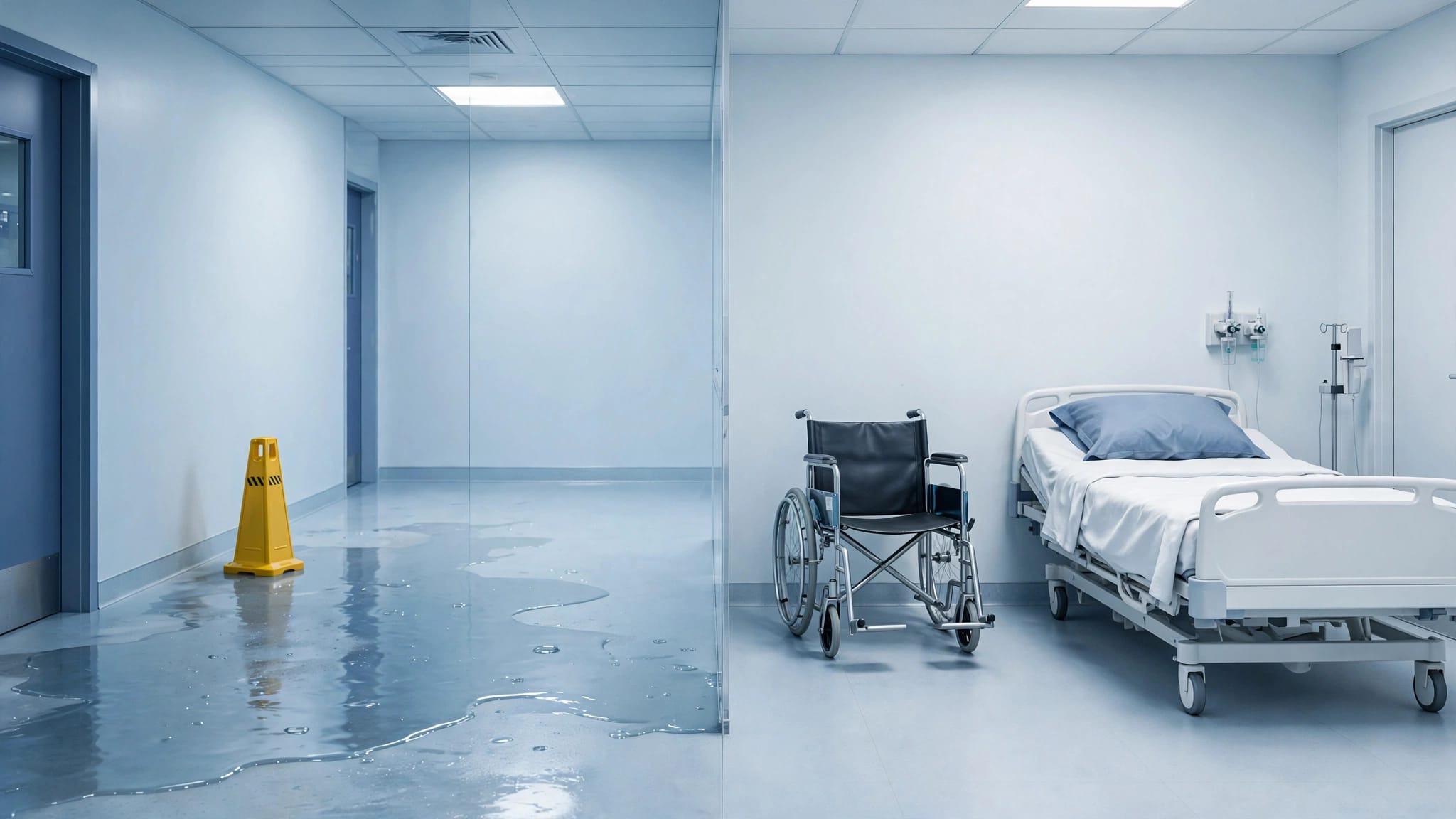
A fall in a hospital hallway and a fall during a patient transfer can cause the same injury. Yet the legal claims may follow different rules. If you’re trying to understand a hospital injury, what went wrong matters more than where it happened.
Florida medical malpractice claims generally involve medical care or professional judgment. Ordinary negligence claims may involve hazards that require no medical expertise to identify. The distinction affects the evidence, procedures, and deadlines an injured person may face.
Florida medical malpractice or ordinary negligence: what separates them?
Florida law defines a medical-negligence claim by its connection to the rendering of, or failure to render, medical care or services. A hospital address alone doesn’t turn an injury into malpractice. The question is whether evaluating the alleged mistake requires an assessment of medical care.
Medical care and professional judgment
Diagnosis, treatment, medication decisions, and patient monitoring commonly involve clinical judgment. A nurse’s response to a changing condition may require review against the care expected of a reasonably prudent similar provider.
Florida’s prevailing professional standard of care asks what similar health care providers would consider acceptable under comparable circumstances. An unfavorable outcome doesn’t prove that someone breached that standard. The claimant must also connect the departure from accepted care to an injury. Avard Law Offices’ explanation of Florida’s medical malpractice standard of care addresses that comparison.
Hazards unrelated to treatment
Ordinary negligence concerns a failure to use reasonable care that doesn’t depend on medical expertise. A wet public hallway, a broken stair, or unsecured equipment in a visitor area may raise premises-safety questions.
Hospital staff and patients use the same building, but they don’t encounter every hazard in the same way. A patient’s injury may involve a clinical decision even when the immediate event looks familiar. That’s why the precise act or omission matters more than a label such as “hospital fall.”
How common hospital injuries can fall on either side
Two people may both suffer fractures inside a hospital and have different types of claims. The circumstances leading to each injury determine what must be proved.
Falls, transfers, and restraints
A slip on a wet floor in a public corridor may call for evidence about inspections, cleaning, and warning signs. Those are ordinary safety issues. A fall while staff move a patient from a bed to a wheelchair may raise different questions: What assistance did the patient need? What did the care plan require? Did staff use appropriate equipment?
Restraint-related injuries also demand a close look at the alleged failure. A decision about a patient’s clinical needs may require medical review. A claim focused on conduct unrelated to medical services may not. No single category of hospital fall or restraint injury automatically decides the classification.
Medication and discharge mistakes
Giving the wrong medication, missing a dangerous drug interaction, or discharging a patient despite concerning symptoms usually calls for a professional-care assessment. Records may show what the clinician knew, when the information became available, and whether a different response would likely have prevented harm.
The injury itself isn’t enough. A person who becomes ill after treatment still needs evidence of a negligent decision and a causal link to the added harm. For a closer look at those proof questions, see how to establish hospital negligence in Florida.
Why the legal label changes the claim
Classification determines more than the wording on a complaint. It can affect the investigation needed before filing and whether Florida’s medical-negligence presuit rules apply.
Look at the conduct, not the job title
A nurse can make a medical decision and also encounter an ordinary maintenance hazard. Likewise, an injury involving a hospital employee doesn’t automatically become a malpractice claim. Describe the specific conduct first: a missed assessment, an unsafe floor, an incorrect dose, or a failure to follow a transfer plan.
Florida’s medical-negligence notice statute ties that category of claim to medical care or services. If proving the alleged failure requires evaluating the professional standard of care, Chapter 766 may apply.
Separate distinct failures
An incident can involve more than one potential failure. A patient transfer might prompt questions about clinical instructions, staff training, and the condition of the equipment. Each allegation needs its own evidence and a clear connection to the injury.
Calling an injury “ordinary negligence” doesn’t remove medical-negligence requirements if the claim depends on proving that a provider made an improper clinical decision.
An attorney can examine the records and identify which legal theory fits each alleged act. That review matters early because treating a medical claim as a simple premises case can leave too little time for the required expert review and notice.
Who may be responsible for an injury inside a hospital?
The name on the building doesn’t identify every responsible party. The treating clinician, hospital, physician group, or another entity may have different duties. Responsibility depends on the conduct and the relationships involved.
Direct hospital fault
A hospital may face a claim based on its own actions, such as unsafe facility maintenance or a failure tied to its staffing, supervision, or policies. The proof must connect that failure to the patient’s harm. Showing that an injury occurred on hospital property isn’t enough.
Records about staff assignments, incident reports, equipment, and relevant policies may help clarify what the hospital controlled. For clinical injuries, the full chart can show who received an alert, documented a change, or made a treatment decision.
A clinician’s relationship with the hospital
Hospitals aren’t automatically liable for every physician who treats a patient there. Some doctors work for separate groups or practice as independent contractors. An employee’s actions, a physician’s relationship with the facility, and the hospital’s own conduct may call for different liability analyses.
Patient-facing materials and provider agreements can matter when that relationship is disputed. Avard Law Offices explains when Florida hospitals can be held liable, including circumstances involving hospital conduct and doctors who aren’t employees.
Medical-malpractice claims require steps before a lawsuit
Florida’s presuit process takes time, so a patient shouldn’t wait for a hospital grievance response before seeking legal advice. A complaint to the facility isn’t a substitute for the statutory steps.
Investigation and expert support come first
Before filing a medical-negligence action, the claimant must conduct a reasonable investigation. That work must support reasonable grounds to believe a prospective defendant was negligent and caused injury. Florida also requires a verified written opinion from a qualified medical expert to corroborate the claim.
The state’s reasonable-investigation requirement makes an early review important. Counsel may need records from more than one provider to understand the care and identify whom to notify. A poor result, without evidence of a negligent act and resulting harm, won’t satisfy those requirements.
Notice starts a screening period
After the investigation, a claimant must serve a notice of intent on each prospective defendant. The notice package includes required authorization for relevant health information. Generally, the recipient has 90 days to investigate before the claimant may file suit.
During that period, a provider or insurer may request information, deny the claim, offer settlement, or admit liability and seek arbitration. Formal notice can affect the limitations clock under statutory rules, but defective notice or a missed recipient can create procedural disputes. Review Florida’s medical malpractice presuit notice process before sending formal materials or signing a release.
Deadlines depend on the claim and the dates
Medical records and expert review can take weeks or longer. Meanwhile, the filing clock may already be running. The date of a later diagnosis doesn’t automatically become the starting date.
The two-year period and outside limit
Florida generally gives a claimant two years from the incident or from when the injury and a possible connection to malpractice were discovered, or should have been discovered with due diligence. Determining that discovery date can be disputed.
A four-year statute of repose generally runs from the negligent act or omission, even when the full medical explanation emerges later. Limited exceptions may apply, including fraud, concealment, intentional misrepresentation, and certain claims involving young children. Fraud-related circumstances may permit an outside period of up to seven years; that isn’t a general extension. The Florida medical malpractice filing timeline provides more detail on these deadlines.
Don’t assume another process stops the clock
A hospital investigation, an insurance discussion, and a records request don’t automatically preserve a lawsuit. Proper presuit notice may toll time during the statutory screening process, but its effect depends on compliance with the law.
Ordinary negligence claims have different procedural and timing questions. A death or a claim involving a public hospital can add further issues. An attorney should calculate the applicable dates from the actual events rather than assume every hospital injury follows one deadline.
What to gather after a suspected hospital injury
Getting medical care comes first. Once it’s safe to do so, preserve the information that shows what happened and how the injury affected you.
Build a complete treatment record
Request more than a discharge summary. Depending on the incident, the relevant record may include nursing notes, medication administration times, imaging, physician orders, and follow-up care. Photos of a visible hazard or injury can also help document conditions that may change.
A thorough Florida hospital records request can help reveal missing chart pages or images. Keep copies of bills and records of missed work as well. Those materials may help establish losses, but they don’t replace evidence that negligence caused them.
Write down what you know
Record the date, location, people present, and what you observed while the details are fresh. Separate what you personally saw from what someone later told you. Save messages from the hospital and any paperwork you received.
Avoid guessing about the medical cause. A qualified reviewer can assess whether care fell below the professional standard and whether that failure probably changed the outcome. If a floor hazard or equipment problem was involved, counsel can also examine the nonmedical safety evidence.
Key Takeaways
- A hospital injury isn’t automatically medical malpractice. The alleged act and the evidence needed to assess it control the distinction.
- Clinical decisions may trigger Chapter 766’s expert-review and presuit-notice requirements. Ordinary safety hazards may involve a different claim.
- Early review matters because identifying defendants, obtaining records, and meeting notice requirements all take time.
Frequently Asked Questions
Is every patient fall medical malpractice?
No. A fall may involve an ordinary premises hazard, a clinical assessment, or both. A slippery public hallway presents different proof questions than a transfer performed under a patient care plan. The cause of the fall and the alleged failure determine which rules may apply.
Can I sue the hospital if an independent doctor made the mistake?
A doctor’s independent status doesn’t, by itself, settle the hospital’s responsibility. The hospital may have its own duties, and the relationship presented to the patient may also matter. An attorney can review contracts, records, and patient-facing information before identifying the proper defendants.
Should I wait for the hospital to finish investigating?
No. An internal investigation doesn’t automatically stop a legal deadline or satisfy Florida’s presuit notice requirements. Seek a case review while records and witness details are available. Don’t send a formal notice of intent or sign a broad records release without understanding its effect.
The distinction starts with what went wrong
The same hospital can be the site of a routine safety hazard or a failure in medical care. The strongest claim identifies the particular act, the responsible party, and the injury it caused.
If you’re unsure which rules apply, get the incident reviewed promptly. The answer shapes what evidence you need and how much time you have to pursue it.