
Florida Robotic Surgery Malpractice After Device Failures
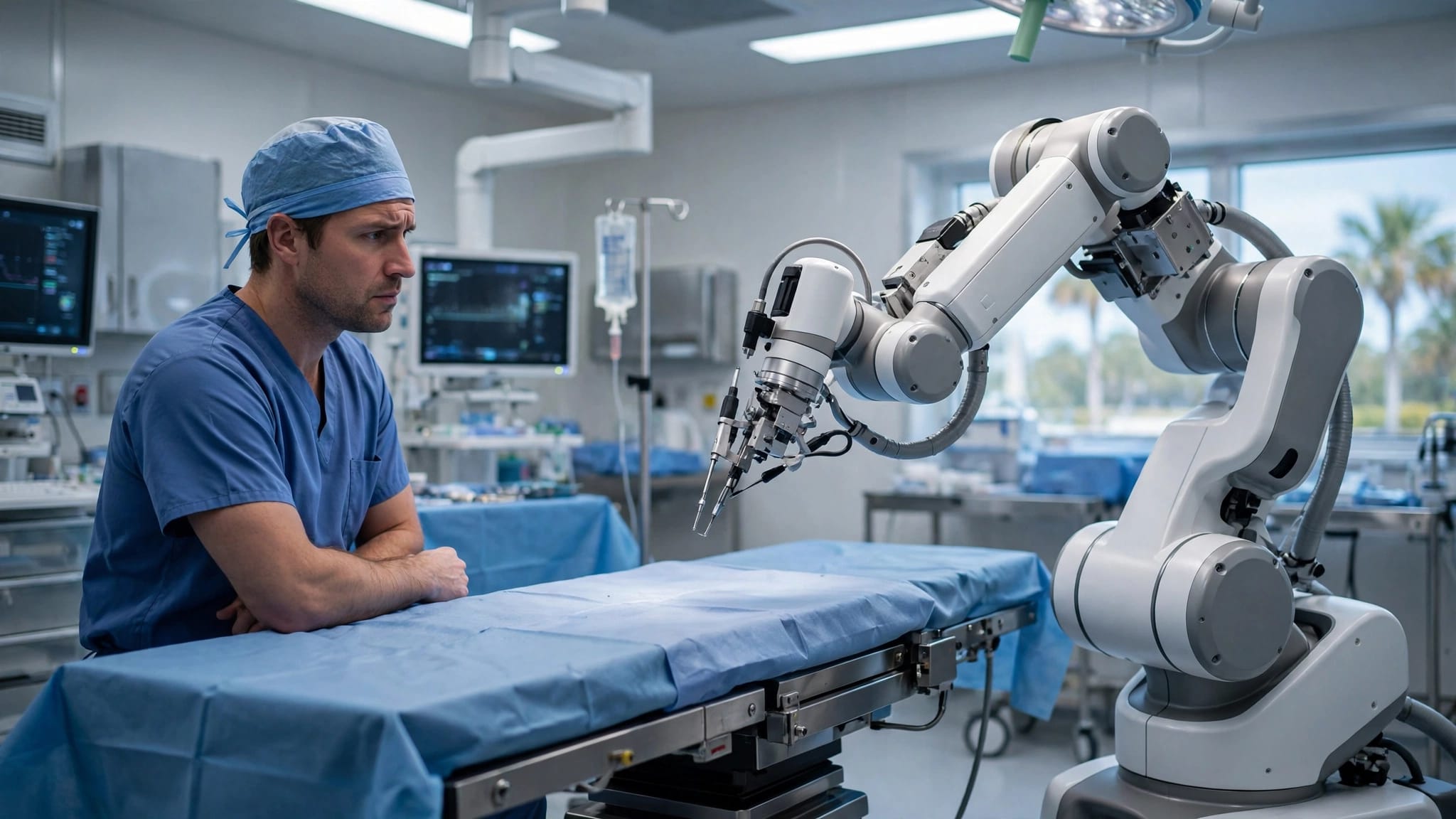
A robotic surgery malfunction can leave you facing another operation and unanswered questions about responsibility. Florida robotic surgery malpractice claims require proof that substandard medical care caused harm, while a separate device-defect claim may also deserve investigation.
Your first priority is medical care, followed by preserving evidence before records or technical data become harder to obtain. A hospital’s explanation of an equipment problem rarely answers every legal question.
Start by separating the device failure from the surgical team’s decisions and response.
Key Takeaways
- A malfunction or surgical complication alone doesn’t prove malpractice. The evidence must connect negligent care or a legally actionable defect to an injury.
- Responsibility may involve the surgeon, hospital, physician group, or manufacturer, but each party’s conduct and legal relationship require separate review.
- Florida medical-negligence claims generally require expert-supported presuit investigation and formal notice. A hospital complaint or FDA report doesn’t replace those steps or automatically stop a filing deadline.
Early legal review also helps identify evidence outside your medical chart, including equipment service records and available device logs.
When Florida robotic surgery malpractice applies
Robotic assistance changes how a surgeon operates, but it doesn’t remove the duty to provide competent care.
Distinguishing equipment failure from surgical decisions
Intuitive Surgical’s da Vinci systems allow surgeons to operate instruments through computer-assisted controls. The FDA’s explanation of surgical systems describes how these devices translate the surgeon’s control movements into instrument movements.
Therefore, an injury during robotic surgery requires more than an assumption that the machine acted independently. Investigators should examine the instrument involved, the system’s condition, and the surgeon’s actions.
A control problem may concern software, instrument movement, or the console. However, the team’s response also matters. Whether continuing surgery, replacing an instrument, or converting to another approach met accepted practice requires medical analysis.
Proving a departure from accepted care
A malpractice claim must establish a duty, a departure from the prevailing professional standard of care, causation, and compensable losses. That standard depends on what reasonably prudent similar providers would consider acceptable under comparable circumstances.
Signing a consent form doesn’t excuse negligent treatment. Still, a disclosed complication can occur despite appropriate care.
The investigation must determine whether the alleged failure probably caused or worsened your injury. Avard Law Offices’ Florida medical malpractice guide explains these claim requirements.
Who may be responsible for a robotic surgery injury
Several participants may influence surgical safety. Their involvement alone doesn’t establish liability.
Surgeons, hospitals, and physician groups
A surgeon’s technique, equipment use, and response to warnings may require review. Meanwhile, a hospital or surgery center may control maintenance procedures, staff training, and equipment availability.
Hospitals aren’t automatically responsible for every physician practicing there. Some surgeons work for independent groups or as contractors. Employee liability, actual agency, apparent agency, and the facility’s own negligence involve different legal questions.
Provider agreements matter, but patient-facing materials can also affect the analysis. Billing records, scheduling documents, and communications may help establish how the facility presented the physician’s role.
An independent physician group may also require investigation if its staffing, supervision, or other conduct contributed to the injury.
Manufacturers and device defects
A manufacturer claim may involve an alleged design defect, manufacturing defect, or inadequate warning. It requires a separate analysis from negligent medical treatment.
For example, the FDA’s da Vinci Xi recall record describes a P5 software anomaly involving unexpected master movement. That record identifies a particular safety issue, not proof that your operation involved it.
The investigation must connect the relevant model, software version, component, and failure to your injury. Federal medical-device rules may affect available product claims. Counsel must also assess the procedural requirements for each defendant and theory separately.
Preserve medical records and technical evidence
Your chart describes treatment, but it may not explain why a robotic component failed.
Clinical records establish the injury timeline
Request the operative report, anesthesia record, nursing notes, consent documents, discharge instructions, imaging, and follow-up records. Records from a later emergency visit or corrective operation can be especially important.
Those documents help establish when symptoms appeared and what clinicians found. They may also clarify whether the injury occurred during surgery or developed afterward.
Keep your own factual timeline of symptoms, calls, appointments, and explanations. Save portal messages and original documents without altering them.
Avard Law Offices’ surgical error evidence checklist provides a record-by-record reference for organizing this material.
Technical records explain the suspected malfunction
Ask your attorney about preserving available system logs, error codes, instrument identifiers, maintenance records, software information, and manufacturer service communications. Recorded video may also matter if the facility created and retained it.
Not every system produces or retains the same information. Some evidence may sit with a hospital, vendor, or manufacturer rather than in your patient chart.
A console error log may establish when a fault occurred, but it doesn’t establish which tissue was injured or why.
The FDA’s MAUDE database guidance explains that adverse-event reports have limitations. A report alone doesn’t establish causation, and report counts cannot establish injury rates.
Florida presuit requirements and filing deadlines
Florida robotic surgery malpractice claims require preparation before a medical-negligence lawsuit begins.
Expert review and formal notice come first
A claimant generally must conduct a reasonable investigation and obtain a verified written opinion from a qualified medical expert. That opinion must corroborate reasonable grounds to believe medical negligence caused injury.
The expert should address the care at issue and meet Florida’s qualification requirements. A technical reviewer may help analyze equipment, but that work doesn’t replace required medical support.
Formal notice must reach each prospective medical-negligence defendant. Under Florida’s presuit notice statute, the claimant generally cannot file suit during the 90-day period after notice is delivered.
Identifying the correct doctors, groups, and facilities early helps avoid procedural problems.
Hospital investigations don’t preserve filing rights
Don’t wait for a grievance response before obtaining legal advice. A facility investigation, settlement conversation, or device report doesn’t automatically pause your filing deadline.
Florida’s medical malpractice limitations statute includes discovery-based timing rules and an outside limit. Exceptions and statutory tolling require a case-specific calculation.
Product claims, wrongful death, and care involving government-connected facilities may raise additional timing or notice issues. Your attorney should evaluate the surgery date, discovery timeline, and every potential claim promptly.
Continuing treatment or waiting for records doesn’t automatically keep a claim alive.
Compensation depends on the harm caused
A successful claim focuses on losses caused by the legally actionable failure. It doesn’t automatically include every expense associated with your original condition.
Depending on the evidence, recoverable losses may include additional surgery, hospitalization, rehabilitation, future treatment, lost earnings, and reduced earning ability. Pain, disability, and other qualifying effects may also support damages.
However, the medical evidence must distinguish the added injury from the illness that required surgery. That distinction can affect both liability and compensation.
Keep bills, insurance statements, pay records, and documentation of assistance with daily activities. Medical records establish the injury, while practical records help show its financial and personal effects.
If the patient died, a wrongful death claim may involve separate rules about eligible survivors and recoverable losses. No reliable case value follows merely from the name of the robotic system or the existence of a recall.
Choosing an attorney for a device-failure case
An attorney evaluating this injury should examine both medical decisions and equipment evidence. Ask how the investigation will identify potential defendants, preserve technical records, and obtain qualified expert review.
Experience with medical negligence matters because Florida’s presuit requirements demand more than a general injury investigation. A suspected product defect also requires attention to different legal theories and technical proof.
Avard Law Offices’ discussion of malpractice evidence and expert opinions explains how expert support fits into a claim.
Bring the surgery date, provider names, bills, available records, and any written explanation of the malfunction. You don’t need to identify every responsible company before seeking advice. However, be cautious about signing broad releases or accepting a settlement before the injury and potential claims receive review.
Frequently Asked Questions
Can I have a claim if the surgeon says the robot malfunctioned?
Possibly, but that explanation doesn’t establish liability. The investigation must determine what failed, whether medical care met accepted standards, and whether a defect or negligent response caused injury. A provider may respond appropriately to a device failure. Conversely, negligent care can occur even when the system functions as designed.
Does a recall prove that my robotic surgery injury was caused by a defect?
A recall identifies a safety concern involving particular products or components. It doesn’t prove that your device was affected or that the concern caused your injury. Model information, software details, service records, and medical findings must connect the recalled issue to the operation. A claim may also warrant review without a recall.
Should I wait until I have every record before contacting an attorney?
Contact an attorney while requesting records and continuing necessary treatment. An attorney can identify missing material, evaluate deadlines, and seek preservation of technical evidence. Bring what you have, including discharge paperwork and bills. Waiting for the hospital’s full explanation can consume time needed for expert review and Florida’s presuit process.
Protect Your Options After a Robotic Surgery Injury
A device failure deserves a careful investigation of both the equipment and the medical care. The strongest evaluation connects technical evidence, clinical findings, and each party’s responsibilities.
For Florida robotic surgery malpractice claims, early review protects the opportunity to preserve evidence and address presuit requirements. Continue necessary care, keep factual records, and obtain advice before relying on a hospital investigation to resolve questions of responsibility.