
Acute Limb Ischemia Misdiagnosis in Florida: When Delays Cause Harm
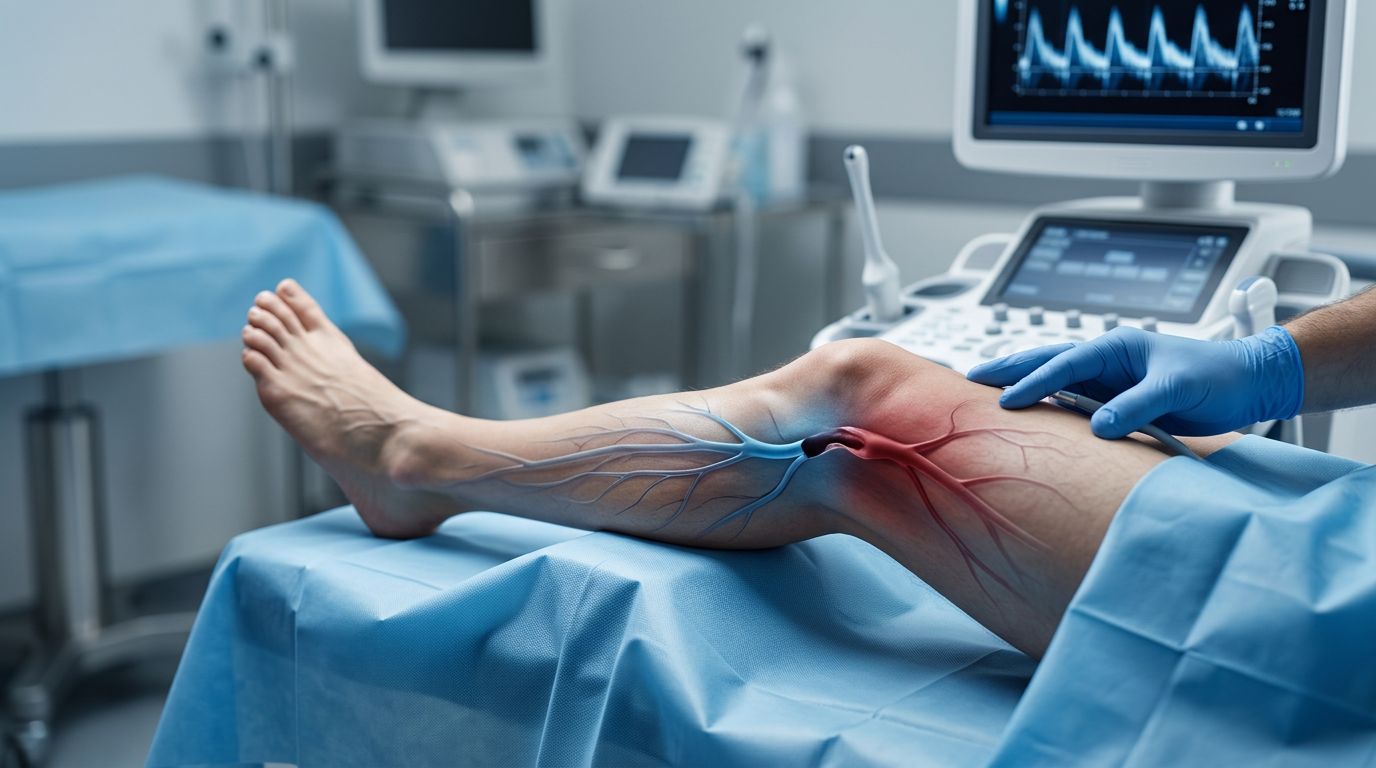
An acute limb ischemia misdiagnosis can turn a treatable blood-flow problem into permanent nerve damage, tissue death, amputation, or death. The condition develops when an artery suddenly becomes blocked and the leg or arm no longer receives enough oxygen.
A delayed vascular ultrasound may matter in a legal claim, but the central question is broader: Did the healthcare team recognize the warning signs, order appropriate testing, obtain vascular consultation, and begin treatment quickly enough? The answer often depends on the medical records and the timing of each decision.
Why acute limb ischemia requires emergency action
Acute limb ischemia is a sudden reduction in arterial blood flow that threatens the survival of an arm or leg. A clot, embolus, blocked stent, bypass graft failure, trauma, or advanced peripheral artery disease can cause the obstruction.
The classic warning signs are often called the 5 Ps:
- Pain that may be sudden or out of proportion to the examination
- Pallor or unusual skin color
- Pulselessness
- Paresthesia, numbness, or tingling
- Poikilothermia, meaning the limb feels unusually cold
Weakness or paralysis can indicate more advanced ischemia. A cold foot with absent pulses and new numbness requires urgent evaluation. Providers should compare both limbs, check pulses, assess sensation and movement, and use a Doppler device when pulses are difficult to feel.
The symptoms don’t always appear together. Some patients have a history of chronic circulation problems, diabetes, neuropathy, recent surgery, or trauma. Those conditions can make a new arterial blockage look like a familiar problem.
A case report on critical lower-limb ischemia describes why a complete vascular assessment matters when a patient has signs of severe arterial disease. A clinician who focuses only on pain location or a prior diagnosis may miss the loss of blood flow.
Treatment depends on the limb’s condition. A viable limb may allow time for diagnostic imaging. An immediately threatened limb requires rapid vascular evaluation and revascularization. In that situation, waiting for a test that isn’t needed to begin consultation or treatment can cost irreplaceable tissue.
How acute limb ischemia misdiagnosis happens
The first healthcare professional may not be a vascular specialist. A patient may initially visit an emergency department, urgent care center, primary care office, orthopedic practice, or neurology clinic. Symptoms can be attributed to sciatica, spinal stenosis, arthritis, a muscle injury, neuropathy, cellulitis, or deep vein thrombosis.
A 2025 study of 280 patients with acute limb ischemia identified 14 patients who received an initial misdiagnosis. The median time from the first symptoms to a definite diagnosis was 38.8 days. The reported delays ranged from 1.5 days to one year. Orthopedic surgeons, neurologists, and general practitioners appeared among the clinicians involved in the initial evaluations.
That delay can have a direct medical effect. Arterial tissue cannot tolerate prolonged oxygen loss. As ischemia continues, muscles and nerves may suffer permanent injury. Infection, tissue death, emergency amputation, kidney complications, and death can follow.
Several details can increase the risk of a missed diagnosis:
- The patient reports leg pain without describing coldness or numbness.
- A prior diagnosis of back pain or neuropathy distracts from new circulation symptoms.
- The provider checks for a venous clot but doesn’t evaluate arterial flow.
- A weak pulse is documented without comparing the opposite limb.
- The patient is discharged without clear instructions or follow-up.
- A vascular consultation is requested but not completed promptly.
A negative venous ultrasound doesn’t rule out an arterial blockage. The tests examine different circulation problems. If the patient has a cold, pale, painful limb with diminished pulses, a DVT evaluation alone may leave the main emergency unresolved.
When vascular ultrasound delays become dangerous
Duplex vascular ultrasound, also called arterial Doppler ultrasound, can show blood flow, the location of an obstruction, and the severity of the blockage. It is noninvasive and often available more quickly than other imaging. In a stable patient with a viable or marginally threatened limb, it may help guide treatment.
The problem arises when the test becomes a barrier to action. A provider may wait for a formal ultrasound before calling a vascular surgeon, even though the physical examination already indicates an emergency. A hospital may also fail to arrange an after-hours study, delay the radiologist’s interpretation, or overlook an abnormal result.
Clinical assessment should drive the response. If the limb is immediately threatened, imaging shouldn’t postpone definitive treatment. A vascular surgeon may recommend anticoagulation, catheter-based treatment, surgical embolectomy, bypass, or another urgent procedure based on the patient’s condition.
Computed tomography angiography may provide a detailed map before intervention when the patient can safely undergo it. However, the need for imaging must be weighed against the time the limb can tolerate reduced blood flow. A test can help identify the blockage while still being harmful if staff delay consultation, transfer, anticoagulation, or revascularization to obtain it.
A delay may also occur after an ultrasound is completed. The report could identify absent flow or an occlusion, yet no one acts on the result. The record may show that the study was ordered at one time, performed later, interpreted after another delay, and followed by a vascular consultation only after the patient’s condition worsened.
A formal ultrasound is important in many cases, but it shouldn’t replace a careful pulse examination or postpone emergency vascular consultation when the limb is threatened.
When an acute limb ischemia misdiagnosis may support a malpractice claim
A bad outcome alone doesn’t prove medical malpractice. A legal claim generally requires evidence that a healthcare provider failed to meet the applicable professional standard and that the failure caused additional harm.
In a Florida case, the review may focus on questions such as:
- Did the patient’s symptoms require an arterial assessment?
- Did the provider perform and document a meaningful vascular examination?
- Was duplex ultrasound ordered at the right urgency?
- Did staff distinguish an arterial problem from a venous clot or musculoskeletal condition?
- Did the provider request vascular consultation or transfer the patient when needed?
- Did anyone delay treatment while waiting for imaging?
- Would earlier diagnosis probably have prevented the injury?
The answer depends on the patient’s presentation, medical history, available hospital resources, and the sequence of care. A provider isn’t automatically negligent because ultrasound wasn’t ordered immediately. However, failing to investigate an abnormal pulse, ignoring a cold limb, or relying on a prior diagnosis without reassessment can raise serious concerns.
Causation is often the hardest issue. A medical expert may need to determine whether earlier recognition would probably have preserved the limb or reduced the harm. If the artery was already irreversibly blocked before the patient arrived, a delay may not have changed the result. If the records show viable tissue at the first visit and extensive necrosis later, the timing may support a different conclusion.
A Florida medical malpractice attorney can review the timeline, identify the responsible providers, and determine whether expert evaluation is appropriate. These cases may involve an emergency department, hospital, radiology service, urgent care provider, or specialist.
Evidence that can reveal a dangerous delay
Medical records often tell the story through timestamps. A family member may remember that a patient’s foot became cold in the morning, but the chart may show when triage occurred, when a pulse examination was recorded, when ultrasound was ordered, and when the final report reached the treating provider.
Important records can include:
- Emergency department triage and nursing notes
- Pulse, sensation, movement, and skin-temperature findings
- Handheld Doppler documentation
- Arterial and venous ultrasound orders and reports
- Medication records, including anticoagulants and pain medication
- Vascular surgery consultation notes
- Transfer requests and ambulance records
- Operative reports, amputation records, and rehabilitation plans
- Prior vascular studies and relevant medical history
The patient or family should request a complete copy of the chart, not only the discharge summary. Radiology images, audit trails, nursing flowsheets, telephone notes, and transfer records may show delays that aren’t obvious in the physician’s narrative.
The NCBI review of emergency department diagnostic errors discusses how overlapping symptoms and incomplete workups can contribute to missed diagnoses. In an ischemia case, the question isn’t only what the provider eventually learned. It is what the provider knew, or should have recognized, at each point in the patient’s care.
What Florida patients should do after a delayed diagnosis
After an ischemic injury, preserve every discharge paper, bill, prescription, imaging report, and referral. Write down the symptoms, dates, facilities, names of providers, and changes in the limb while the events are still fresh.
Don’t assume the hospital’s explanation answers the legal question. A second medical opinion may clarify whether the artery was blocked when the patient first sought care, whether the limb remained salvageable, and whether a faster response could have changed the outcome.
Florida medical negligence claims involve strict procedural requirements and time limits. Prompt advice from a lawyer can help protect records and identify the correct medical experts. Avard Law’s guidance on making a medical malpractice claim explains the types of care failures that may support a negligence case, including errors in diagnosis and treatment.
A lawyer can also examine whether the injury caused ongoing disability, lost income, future medical costs, prosthetic needs, reduced independence, or emotional harm. Those losses should be documented rather than left to memory.
The key issue in a Florida ischemia case
Acute limb ischemia can resemble other conditions, but a sudden cold, painful, numb, or pulseless limb demands urgent vascular attention. Duplex ultrasound may assist diagnosis, yet waiting for the study shouldn’t delay consultation or revascularization when the limb is threatened.
An acute limb ischemia misdiagnosis case turns on timing, clinical findings, decisions, and medical causation. Promptly obtaining the complete records and seeking a fact-specific legal review can help a Florida patient determine whether a preventable delay caused further loss.