
Florida Apartment Fire Wrongful Death Claims: Exit and Alarm Proof
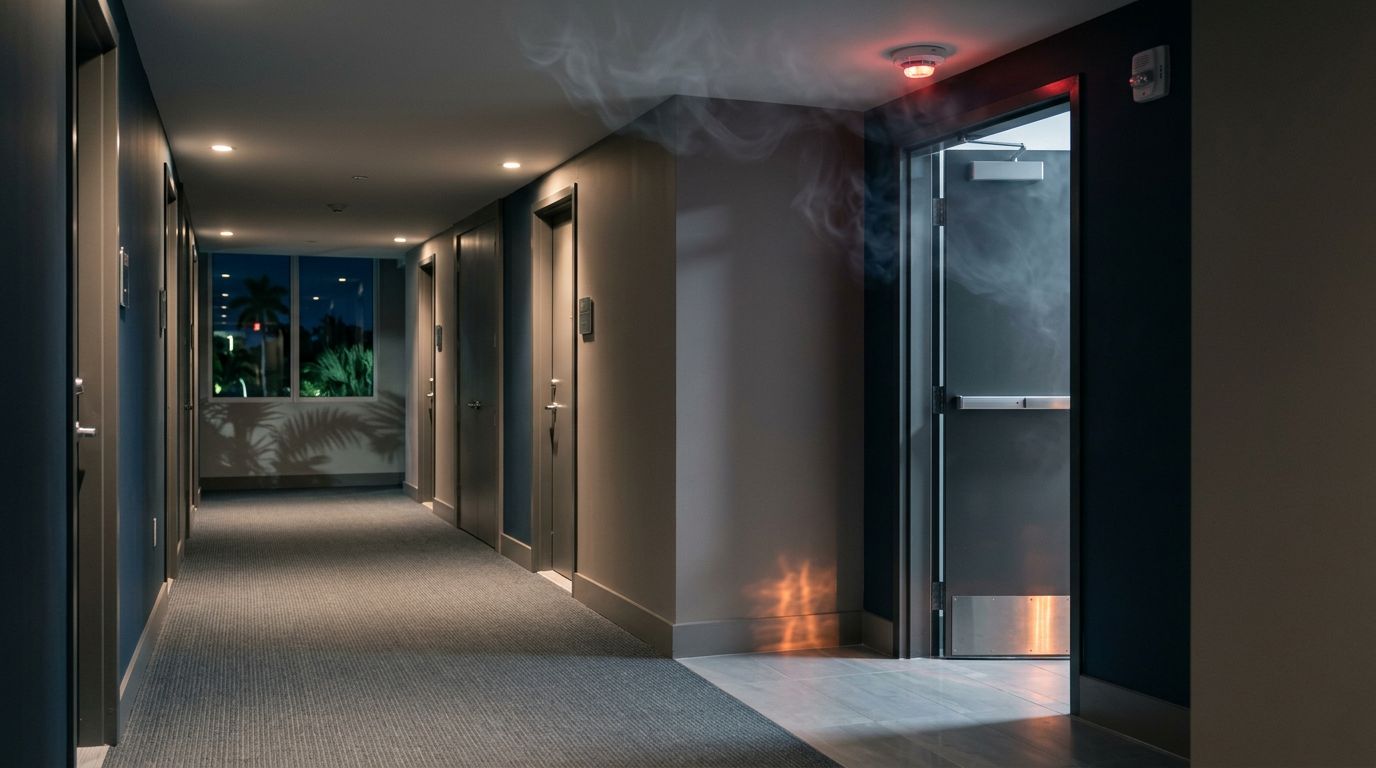
An apartment fire can turn into a wrongful death claim in a matter of minutes. When someone dies, the first question is often simple, did the building give people a real way out, and did the alarms warn them in time?
In Florida, those questions matter because exits and alarms are basic safety tools, not extras. When they fail, the case often turns on proof that fades fast, like damaged doors, silent detectors, and missed repair logs.
Recent Florida apartment fire cases have shown how much can ride on those early records. The difference between a strong claim and a weak one often comes down to what can still be documented.
Why exit and alarm proof matters in Florida apartment fire wrongful death claims
Florida’s fire rules for exits, alarms, and evacuation routes appear in the Florida Fire Prevention Code. That code gives investigators a baseline for what apartments should provide, including safe exit paths and working fire alarm systems.
That does not end the analysis. A wrongful death claim still needs proof that a landlord, manager, or contractor failed to do what the law and lease required. A case can grow stronger when the scene shows locked gates, dead smoke detectors, bad maintenance records, or ignored tenant complaints. A closer look at apartment smoke alarm negligence shows how alarm failures often become the center of the case.
A fire scene can be misleading within hours, because cleanup starts fast and memory fades faster.
A fatal fire scene changes fast. Charred doors get removed. Panels get reset. Residents move out. That is why the first photos and reports matter so much.
What exit evidence looks like after a fatal apartment fire
Exit proof asks a simple question, could people leave fast enough to survive? In a fire, a narrow hallway or blocked stairwell can become a trap.
Helpful proof often includes these items:
- photos of locked gates, chained doors, or cluttered hallways
- fire marshal, police, or 911 records that mention blocked paths
- building plans that show where exits were supposed to be
- witness statements from tenants, guests, or first responders
- maintenance logs that show broken lights, door closers, or exit signs
Small details can matter. A stairwell light that was out before the fire may explain why people could not find the way down. A gate that stayed locked may show that the building cut off the only safe route. Even a missing exit sign can help show that the property did not give tenants a clear path out.
Those facts fit the bigger duty that Florida property owners and managers owe to people on the property. Florida premises liability duty explains why control and notice matter so much in these claims. If the building knew, or should have known, about a dangerous exit condition, that failure can support liability.
What alarm proof looks like when smoke detectors fail
When a detector works, it buys time. When it fails, minutes disappear.
Alarm proof can include:
- tenant complaints about dead or chirping alarms
- inspection records showing no testing
- missing batteries or disconnected units
- fire department notes about silence inside the unit
- body camera video or 911 audio that shows no warning sound
Recent Florida apartment fire cases have followed this pattern. One lawsuit after a child’s death in an apartment fire pointed to nonworking smoke alarms. Another deadly apartment explosion case involved years of complaints about gas smells. The facts were different, but the lesson was the same, warning systems only help when someone keeps them ready.
A dead alarm can do more than violate a rule. It can change the entire escape window. If a tenant had no warning, or a weak warning, the building’s failure may be tied directly to the death. That link is what lawyers and investigators look for first.
Who may be responsible when exits or alarms fail
Responsibility in an apartment fire claim usually follows control. The party that owned, managed, repaired, or serviced the building may share fault if it knew, or should have known, about the danger.
The duty question often turns on who controlled the area and who handled the repairs. Florida premises liability duty is useful because it explains why notice and control are so important.
A quick comparison helps show how fault can spread across more than one party:
| Possible responsible party | Proof that matters |
|---|---|
| Property owner | Inspection logs, code violations, repair delays |
| Property manager | Tenant complaints, work orders, staffing records |
| Maintenance vendor | Service reports, missed fixes, follow-up notes |
| Alarm or electrical contractor | Test results, installation records, code compliance |
A claim can include more than one defendant. That matters because a fire is often a chain of missed steps, not one mistake. The owner may have ignored complaints. The manager may have failed to inspect. A contractor may have left alarms or doors in poor shape. Each link matters when a family needs answers.
What damages families can pursue after a fatal fire
A Florida wrongful death case is not only about blame. It is also about what the family lost.
Under Florida’s Wrongful Death Act, the personal representative files the case for the estate and eligible survivors. The claim may seek funeral costs, medical bills, lost support, lost services, and the loss of companionship. In some cases, the estate also has claims tied to the person’s pain and suffering before death.
When a fire causes severe burns before death, Florida burn injury attorneys often review the same proof, because medical records can show pain, treatment, and how fast the fire spread.
Florida’s deadline is short, usually two years from the date of death. That makes early record collection important. A family that waits too long may lose photos, repair files, or witness contact information before anyone asks for them.
What families should save before the scene changes
If you are helping with a claim, keep anything that shows how the fire started, how people escaped, and what the building knew.
Save these items if you can:
- photos and videos from the scene, including exits, alarms, and hallways
- the lease, notices, and repair requests
- names and numbers of witnesses
- fire marshal, police, and EMS reports
- any smoke alarm, battery, or broken hardware taken from the unit
- texts or emails with management
Do not assume the apartment will keep the scene untouched. Cleanup, repairs, and reopenings can erase important details. The earlier someone asks for records, the harder they are to lose.
A preservation letter can also help. It tells the owner and manager to keep records, repair files, inspection notes, and surveillance footage. That step is simple, but it can protect evidence that may later decide the case.
Conclusion
A fatal apartment fire leaves families with grief first and questions second. Exit and alarm proof helps answer those questions with facts, not guesswork.
If the doors were blocked, the lights failed, or the alarms never sounded, the case may point to negligence long before a courtroom does. The strongest claims usually start with the earliest photos, reports, and code records.
When a life is lost in an apartment fire, the proof matters.