
Florida Jet Ski Accident Claims: Who Is Liable?
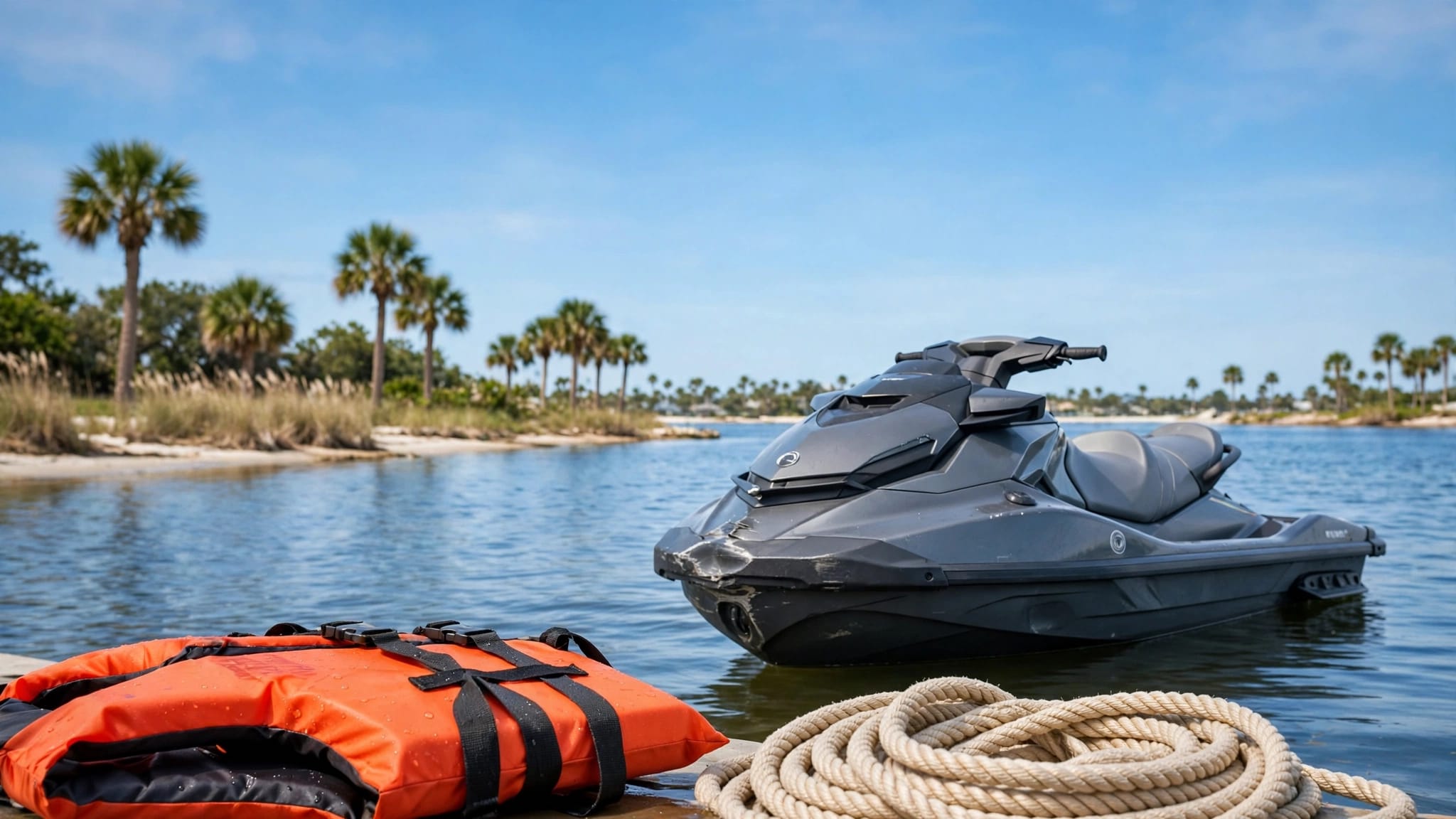
A Florida jet ski accident claim depends on evidence of how the collision happened, who contributed to it, and what injuries resulted. The operator may be responsible, but a rental company, owner, or another party may also share liability.
Prompt medical care and evidence preservation can protect both your health and your ability to explain what happened. Understanding the rules that apply to operators is a useful place to start.
Key Takeaways
- An injured passenger, operator, swimmer, or bystander may have a claim when another party’s conduct caused the collision.
- Florida sets specific safety rules for personal watercraft, including minimum operating age and flotation-device requirements.
- An operator may need to notify authorities without delay and submit a separate written accident report.
- Florida’s comparative-fault rule can reduce or bar recovery in covered negligence cases, while maritime rules may differ.
- Medical records, witness accounts, rental documents, and evidence from the watercraft can help establish a claim.
Who Can Be Liable for a Jet Ski Collision?
Liability starts with identifying the conduct that caused the injury. A collision can involve more than one responsible party, and serious injuries alone don’t establish that someone else was negligent.
The operator and other boaters
A jet ski operator may be liable for failing to keep a proper lookout, traveling too fast for the conditions, or turning into another vessel’s path. In crowded water, the distance between vessels and the time available to react can be central to the case.
Another boater may also share responsibility. For example, a collision investigation may need to account for the movements of both vessels, nearby swimmers, wake conditions, and any obstructed views. A passenger’s ability to see or control those movements can differ substantially from the operator’s.
The owner, rental company, or manufacturer
An owner’s responsibility depends on the facts, including what the owner knew and how the operator obtained the watercraft. Ownership alone doesn’t answer every liability question.
A rental company may face a claim if its own conduct contributed to the injury. Relevant evidence can include maintenance records, instructions given before departure, and the condition of safety equipment. A manufacturer or seller may also be involved if a defect caused or worsened the injury. Those claims require evidence connecting the alleged defect to the harm.
Florida Jet Ski Safety Rules That May Matter
Florida law calls personal watercraft PWC. The Florida boating statutes set rules that can help establish what an operator should have done.
Under section 327.39, no one under 14 may operate a PWC in Florida waters. People riding on or being towed behind one must wear a U.S. Coast Guard-approved flotation device, other than an inflatable device, according to its approval label.
If the watercraft has a lanyard-type engine cutoff switch, the operator must attach the lanyard to their person, clothing, or flotation device as appropriate for the craft. Florida also prohibits PWC operation beginning one-half hour after sunset and ending one-half hour before sunrise.
Section 327.33 addresses careless and reckless operation. Conduct listed as reckless includes weaving through congested vessel traffic, jumping another vessel’s wake unreasonably close, and swerving at the last possible moment to avoid a collision.
A rule violation can be important evidence, but it doesn’t automatically resolve a civil claim. The evidence must also show how the conduct contributed to the injury.
What to Do After a Florida Jet Ski Accident
Get to safety and call for emergency medical help when needed. Some injuries become more apparent after the initial shock, so tell medical providers about the impact and any symptoms you notice.
Report the collision and exchange information
Florida generally requires an involved vessel operator to provide practicable assistance when doing so won’t seriously endanger their vessel, crew, or passengers. The operator must also provide their name, address, and vessel identification in writing to an injured person and the owner of damaged property.
An operator must notify an authorized agency without delay when an accident involves death, a qualifying disappearance, an injury requiring treatment beyond immediate first aid, or apparent total property damage of at least $2,000. The Florida Fish and Wildlife Conservation Commission, county sheriff, or applicable municipal police department can receive notice.
Understand the separate written report
Florida also has a written-report requirement for vessel accidents involving bodily injury, death, a qualifying disappearance, or apparent aggregate property damage of at least $2,000. The reporting duty and timing depend on the applicable rules. Giving prompt notice and submitting a written report are separate steps.
Keep the agency name and report number when available. The report may identify witnesses and describe the scene, although it won’t necessarily settle every question about liability.
Evidence That Can Explain the Collision
Water conditions change quickly, and a damaged rental craft may return to service after repairs. Preserve what you can safely obtain without delaying treatment.
Scene and watercraft evidence
Photographs and original video can show vessel damage, the surrounding area, weather, visibility, and nearby markers. Record the names and contact details of witnesses, including people on other boats or at a nearby dock.
Keep the rental agreement, booking confirmation, safety instructions, and any photographs taken before departure. An attorney can request preservation of the watercraft, available camera footage, maintenance records, and other evidence held by a rental business or insurer.
Damage patterns can help reconstruct an impact, but they rarely tell the full story on their own. Witness observations and the vessels’ movements before contact matter too.
Medical and financial records
Save emergency records, imaging results, treatment plans, bills, and work restrictions. Follow-up records can show whether symptoms persisted and what care your providers recommended.
Keep pay records and a record of time missed from work. Notes about activities you can’t perform can also help describe the injury’s daily effects. Our discussion of Florida boating injury claims after a propeller strike explains why preserving vessel evidence matters in other serious water-related injuries.
How Shared Fault Can Affect Your Claim
An insurer may argue that you contributed to a collision by operating too quickly, ignoring instructions, or moving into another vessel’s path. Those allegations need evidence connecting your conduct to the accident or injury.
Under Florida’s comparative-fault statute, an injured person’s share of fault generally reduces damages in a covered negligence action. A person found more than 50% responsible for their own harm generally cannot recover under that rule.
For example, a 20% fault finding would generally reduce $100,000 in proven damages to $80,000, before other claim issues. At exactly 50%, the statutory bar doesn’t apply, but the damages reduction remains substantial.
An adjuster’s proposed percentage isn’t a court finding. Photographs, witness accounts, instructions, and the collision timeline may support or challenge it. Be accurate when describing what you remember, and don’t guess about speed, distance, or events you couldn’t see.
Maritime comparative-fault principles can differ. Florida’s threshold shouldn’t be assumed to govern every accident on Florida waters.
Compensation and Insurance After a Collision
A claim may seek payment for medical expenses, lost earnings, property damage, and pain and suffering when the governing law permits it. Serious injuries may also support claims for future treatment or reduced earning capacity. Medical and financial evidence should support those projected losses.
Available payment sources depend on the facts and the relevant policies. A vessel owner’s or operator’s liability coverage may apply, and a rental business may have coverage for claims against it. Policy exclusions, limits, and the identity of the responsible party can all affect payment.
Don’t assume that an automobile insurance policy will cover a jet ski injury. An attorney can review the available policies and the relationship between the people and businesses involved.
If a collision causes a death, eligible family members may have a wrongful-death claim. Available damages depend on the governing law, the survivor’s relationship to the deceased, and the applicable statutory requirements.
Deadlines for Filing an Injury Lawsuit
For many Florida negligence claims accruing after March 24, 2023, the general lawsuit filing period is two years under Florida’s limitations statute. The correct deadline depends on the claim, the defendant, and the law that applies.
A collision on the water can require a federal maritime-law analysis. Its location and connection to maritime activity matter, and different legal rules may affect the case. Product claims and claims against government entities can also involve different procedures or deadline calculations.
An open insurance claim doesn’t automatically pause the filing period. Settlement discussions and requests for medical records don’t automatically stop it either. Seek legal advice while the investigation is underway rather than waiting for treatment or negotiations to end.
Frequently Asked Questions
Can a passenger file a claim against the jet ski operator?
Yes. A passenger may have a claim if the operator’s conduct caused the injury. The investigation should address what the operator did, what the passenger could observe, and whether another party also contributed.
Does signing a rental waiver prevent a claim?
A waiver can affect a claim, but its language and legal effect require review. The agreement doesn’t eliminate the need to investigate the collision, the equipment, or the rental company’s conduct.
Can I pursue a claim after returning home from Florida?
Yes. Leaving Florida doesn’t automatically prevent a claim. Keep your travel and booking records, witness contacts, and treatment records from providers at home. The accident’s circumstances and governing law affect where the case belongs.
Does an accident report prove who was at fault?
No. A report can contain useful observations and identify witnesses, but it doesn’t automatically decide civil liability. Other evidence may clarify or challenge its account.
Protect Your Claim After a Jet Ski Collision
A strong claim connects the collision evidence to the conduct that caused your injury and the losses that followed. Medical care comes first, followed by prompt efforts to preserve records and identify the responsible parties.
At Avard Law Offices, we offer a free consultation for people seeking help with personal injury claims. You can speak with us before an insurer’s investigation or settlement discussions are complete.