
Florida Boat Propeller Injury Claims and Negligence Evidence
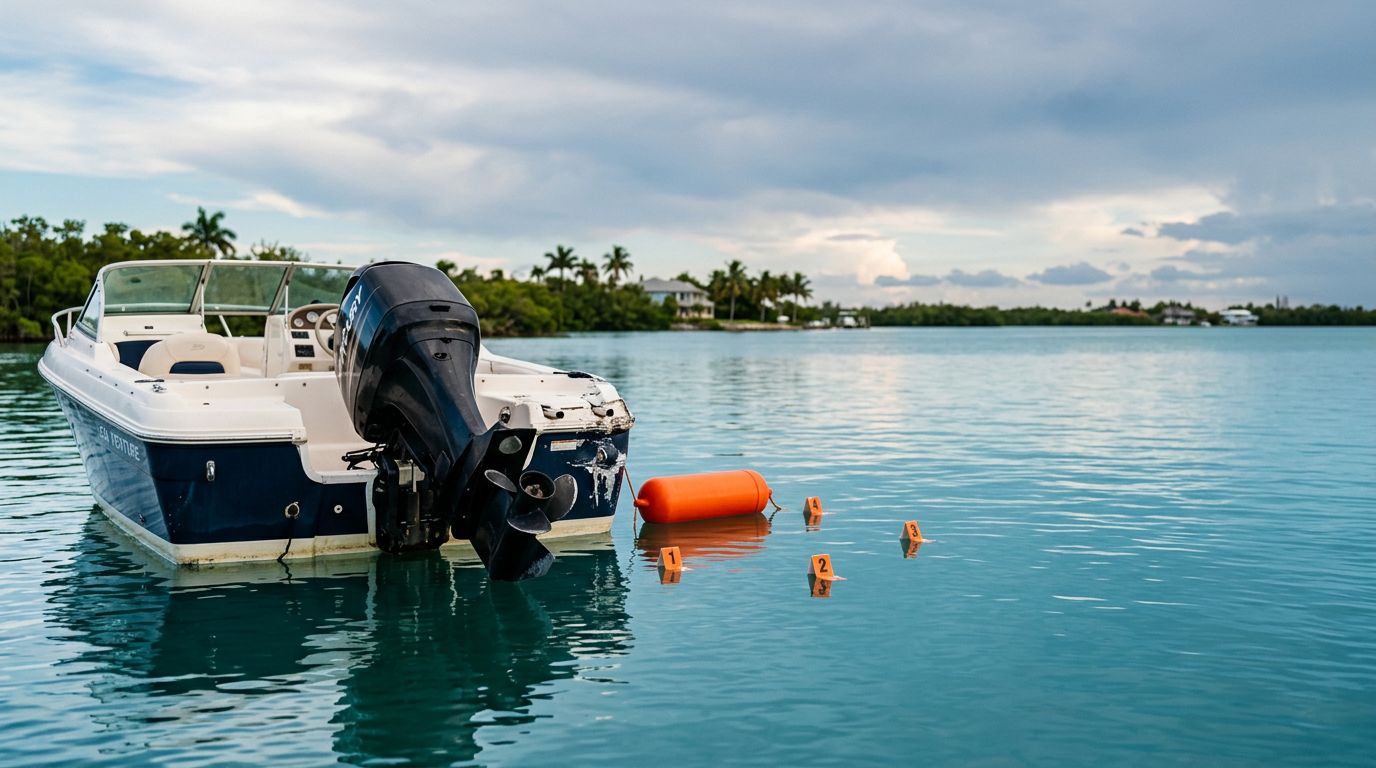
A spinning propeller can cause catastrophic injuries in seconds, but the legal case often turns on what the operator saw, knew, and did before the blades moved. Boat propeller injury claims often depend on evidence that the driver failed to keep a proper lookout, shut down the engine, or follow safe operating rules.
The first days after a boating accident matter. Witnesses may leave, video can disappear, and the boat may be repaired before anyone documents its condition. Understanding the evidence can help an injured person protect a claim and identify who may be responsible.
Why Propeller Injuries Often Point to Operator Negligence
A propeller injury does not automatically prove negligence. The injured person must generally show that the operator owed a duty of reasonable care, breached that duty, and caused an injury that produced measurable damages.
Boat operators control several decisions that can prevent a propeller strike. They decide when to start the engine, whether to shift into gear, how fast to travel, where to turn, and whether anyone is in the water near the vessel. They also must pay attention to passengers, swimmers, divers, water skiers, and nearby boats.
The danger increases when an operator treats the engine as harmless while the boat is stationary. A propeller can remain dangerous even when the vessel is moving slowly. A person who falls overboard may be difficult to see, especially in rough water, at night, or when glare blocks the operator’s view.
Florida boat propeller injury claims may involve injuries caused by:
- Starting or restarting the engine while a passenger or swimmer is near the stern.
- Failing to turn off the engine before allowing someone to enter or exit the boat.
- Reversing without checking the water behind the vessel.
- Turning toward a person in the water.
- Operating too fast for the number of passengers, water conditions, visibility, or traffic.
- Failing to maintain a proper lookout.
- Operating while impaired by alcohol, drugs, fatigue, or medication.
- Allowing an inexperienced or unauthorized person to control the boat.
- Ignoring a passenger’s warning that someone had fallen overboard.
A case may also involve negligent supervision, unsafe instructions, poor maintenance, or a defect in the boat’s controls. The right theory depends on how the accident happened and who controlled the vessel.
Who may be responsible for the injury?
The operator is often the first person investigators examine. However, the operator may not be the only potential defendant. A boat owner could face a claim if the owner negligently entrusted the vessel to an unsafe driver, ignored known mechanical problems, or failed to maintain essential equipment.
A rental company may face separate questions about the renter’s qualifications, safety briefing, records, and use of the boat. If an employee operated the vessel during work, the employer may also become part of the claim.
Propeller manufacturers and repair businesses can face different allegations when a defective part, faulty repair, or dangerous design contributed to the injury. The absence of a propeller guard does not, by itself, establish negligence. A lawyer must examine the vessel’s design, intended use, warnings, maintenance history, and applicable safety standards.
Florida Rules That Shape Boat Propeller Injury Claims
Florida law prohibits reckless vessel operation. Section 327.33 of the Florida Statutes defines reckless operation as operating a vessel in willful or wanton disregard for the safety of people or property in a way likely to endanger life, limb, or property.
That criminal standard is not the same as every civil negligence claim. A person may bring a civil case based on careless operation even when prosecutors do not file charges. A citation, arrest, or conviction can support the civil case, but the injured person still needs evidence connecting the operator’s conduct to the injury.
Florida’s boating rules also require operators to use reasonable care and follow applicable navigation and safety requirements. The facts may show negligence through speed, lookout failures, unsafe turns, alcohol use, or the decision to engage the propeller while someone was nearby.
The Florida Fish and Wildlife Conservation Commission publishes annual boating accident reports. These records help show the state’s boating accident patterns, but a statewide statistic cannot prove fault in an individual case.
Reporting duties after a Florida boating accident
Florida requires notice by the quickest available means when a boating accident involves death, a person who disappears under circumstances suggesting injury or death, an injury beyond immediate first aid, or property damage of at least $2,000.
The operator may need to report the accident to the FWC, the county sheriff, or the local police chief. The operator must also provide reasonable assistance to injured people when doing so doesn’t create serious danger to the operator, passengers, or vessel.
Leaving without giving aid or reporting the accident can create separate legal problems. A failure to report may also affect the credibility of the operator’s later explanation. It does not automatically prove civil liability, but it can become an important part of the evidence.
The FWC’s 2024 boating safety release reported 685 reportable boating accidents, 81 boating deaths, and 394 injured people in Florida. Those numbers show why prompt investigation matters, especially when an accident involves a severe propeller injury.
Evidence That Can Prove Operator Negligence
Strong boat propeller injury claims are built around evidence that answers four questions:
- Where was the injured person?
- What was the operator doing?
- What should the operator have done differently?
- How did that conduct cause the injuries?
The evidence should tell a clear timeline. For example, a passenger may testify that a swimmer entered the water, warned the driver, and then suffered injuries after the operator restarted the engine. A medical record may confirm that the wounds match a rotating propeller. Together, those facts can be more persuasive than a general statement that the boat was unsafe.
Physical and scene evidence
The boat itself may contain important evidence. Investigators may examine the propeller, lower unit, throttle, gear selector, kill switch, warning labels, propeller guard, engine controls, and damage to the hull. Photographs should document the vessel before repairs or cleaning when possible.
A damaged blade may help establish contact, but it doesn’t answer every legal question. The examination should also consider whether the engine was running, whether the boat was in gear, the vessel’s direction, and the operator’s visibility at the time.
Evidence from the waterway can also matter. The location of the accident, current, tide, weather, lighting, channel markers, traffic, and nearby obstructions may affect what a reasonable operator could see and do.
Important physical records can include:
- Photographs and video of the boat, propeller, waterway, and clothing.
- The injured person’s life jacket, swimwear, footwear, or other gear.
- The vessel’s registration, maintenance records, and repair invoices.
- Rental documents and pre-rental safety instructions.
- Charts, photographs, and measurements of the accident location.
- Emergency medical records and the first responders’ observations.
Do not throw away damaged clothing or allow the boat to be repaired without preserving photographs and records. Necessary repairs may be unavoidable, but the condition should be documented first whenever practical.
Witness, electronic, and official records
Witnesses often provide the only direct account of what happened. Passengers may remember whether the operator was drinking, looking away, arguing, using a phone, or giving instructions. People on nearby docks or boats may have seen the vessel’s speed, direction, or movement immediately before the strike.
Statements made after an accident can carry weight. An operator who says, “I didn’t see anyone in the water,” or admits restarting the engine can create evidence about lookout and engine-control issues. Witnesses should record what they personally saw, rather than guess about facts they could not observe.
Electronic evidence can fill gaps in the timeline. Depending on the vessel and circumstances, lawyers may seek:
- Phone records and available location data.
- GPS or chartplotter information.
- Engine or vessel monitoring records.
- Marina camera footage.
- Boat-mounted video.
- Passenger or bystander recordings.
- Emergency dispatch recordings and 911 calls.
- Social media photographs or posts showing the boat, operator, or trip.
Many recreational boats lack a data recorder, so no one should assume that electronic records exist. A preservation request can still prevent a marina, rental business, phone owner, or other custodian from deleting relevant material.
Official records may include the FWC or law enforcement report, photographs, diagrams, witness statements, boating citations, alcohol testing, and criminal case documents. A civil attorney can compare those records with medical evidence and later statements to identify inconsistencies.
An accident report is helpful, but it is not the final word. Officers may arrive after the boat has moved, witnesses may disagree, and an operator may give an incomplete account. The report should be tested against photographs, physical evidence, medical findings, and testimony.
A propeller case often turns on the seconds before contact, not only the injuries afterward. Evidence that fixes the operator’s timing, position, and actions can decide whether negligence is provable.
Medical Proof and the Value of a Propeller Injury Claim
Propeller strikes often produce deep lacerations, fractures, nerve damage, tendon injuries, spinal injuries, amputations, and traumatic brain injuries. A person may also suffer drowning complications or serious infection after an open-water injury.
Medical treatment should begin immediately. Emergency records can document the condition at the scene and identify the likely mechanism of injury. Later records may show surgeries, wound care, physical therapy, rehabilitation, pain treatment, prosthetic needs, and permanent restrictions.
A claim should connect each medical expense to the accident. Keep hospital bills, ambulance charges, medication records, therapy invoices, travel costs, and insurance statements. Future care may require opinions from physicians, life-care planners, or other qualified professionals.
The injury may affect more than medical costs. Recoverable damages can include lost wages, reduced earning capacity, pain and suffering, scarring, disfigurement, disability, emotional distress, and loss of normal activities. An amputation, for example, may affect employment, mobility, household tasks, recreation, and future medical needs.
Family members may have separate rights when a spouse dies or suffers a serious permanent injury. Wrongful death claims can involve funeral expenses, lost support, loss of companionship, and other damages allowed by Florida law.
The best medical record explains what happened, what treatment was required, what limitations remain, and what care is likely in the future. A diagnosis alone may not show the full effect of a propeller strike.
Comparative Fault and Defenses in a Florida Boating Case
Boat operators and insurers may argue that the injured person caused or increased the risk. Common defenses include claims that the person entered the water without permission, ignored safety instructions, failed to wear a life jacket, moved behind the boat unexpectedly, or consumed alcohol.
Those arguments must be examined against the full timeline. A passenger may have entered the water only after the operator gave permission. A swimmer may have been visible to the driver. A person who fell overboard may have had no meaningful chance to avoid the propeller.
Florida uses modified comparative negligence in many negligence cases. If the injured person is found 50 percent or less at fault, damages are generally reduced by that percentage. If the person is found more than 50 percent at fault, recovery is barred under the current rule.
The operator’s conduct still matters even when the injured person made a mistake. Fault depends on what each person did, what each person could reasonably see, and whether the operator had the final ability to stop the engine or change course.
Other defenses may involve a sudden emergency, an unavoidable accident, a mechanical failure, assumption of risk, or lack of causation. A mechanical problem does not end the inquiry. The case may ask whether the operator knew about the problem, maintained the boat, responded properly, or continued operating despite a warning.
A lawyer will also determine whether Florida law, federal maritime law, a rental agreement, or another state’s law affects the case. Location matters when the accident occurred on navigable waters or involved a commercial vessel.
What to Do After a Propeller Accident
If you or a family member suffered a propeller injury, focus first on medical care and immediate safety. Then protect the evidence before the boat, scene, and witness accounts change.
Take these steps when possible:
- Report the accident and obtain the incident number. Ask which agency is handling the investigation.
- Photograph injuries, clothing, the boat, the propeller, the waterway, and visible damage.
- Write down the names and contact information of passengers, witnesses, marina personnel, and first responders.
- Preserve medical records, bills, prescriptions, employment records, and insurance correspondence.
- Avoid giving a recorded statement to an insurer before understanding the claim.
- Do not post photographs, opinions, or accusations about the accident online.
- Speak with a Florida injury attorney before signing a release or accepting a settlement.
Do not wait for the operator to receive a citation or for the FWC investigation to end. A civil claim may proceed separately from any criminal investigation. Important evidence can disappear while the parties wait.
Many Florida negligence personal injury actions have a two-year filing deadline, although the correct deadline depends on the accident date, the type of claim, the defendant, and the applicable law. Wrongful death cases, claims involving a government entity, minors, and accidents affected by federal maritime law may involve different requirements.
Early legal review can also identify all possible sources of compensation. If a rental company, employer, boat owner, manufacturer, or insurer has relevant records, a lawyer can request that those materials be preserved. People injured in boating accidents can contact Florida personal injury attorneys for help evaluating liability, evidence, and deadlines.
Conclusion
Boat propeller injury claims depend on more than the severity of the wounds. The strongest cases connect the injury to a clear act or omission, such as restarting the engine near a swimmer, failing to keep watch, or operating without proper control.
Preserve the boat, clothing, photographs, witness accounts, official reports, and medical records as soon as possible. When the evidence shows what the operator could see and what the operator chose to do, it becomes easier to determine whether negligence caused the injury.