
Florida Golf Cart Accident Claims After a Car Hits You
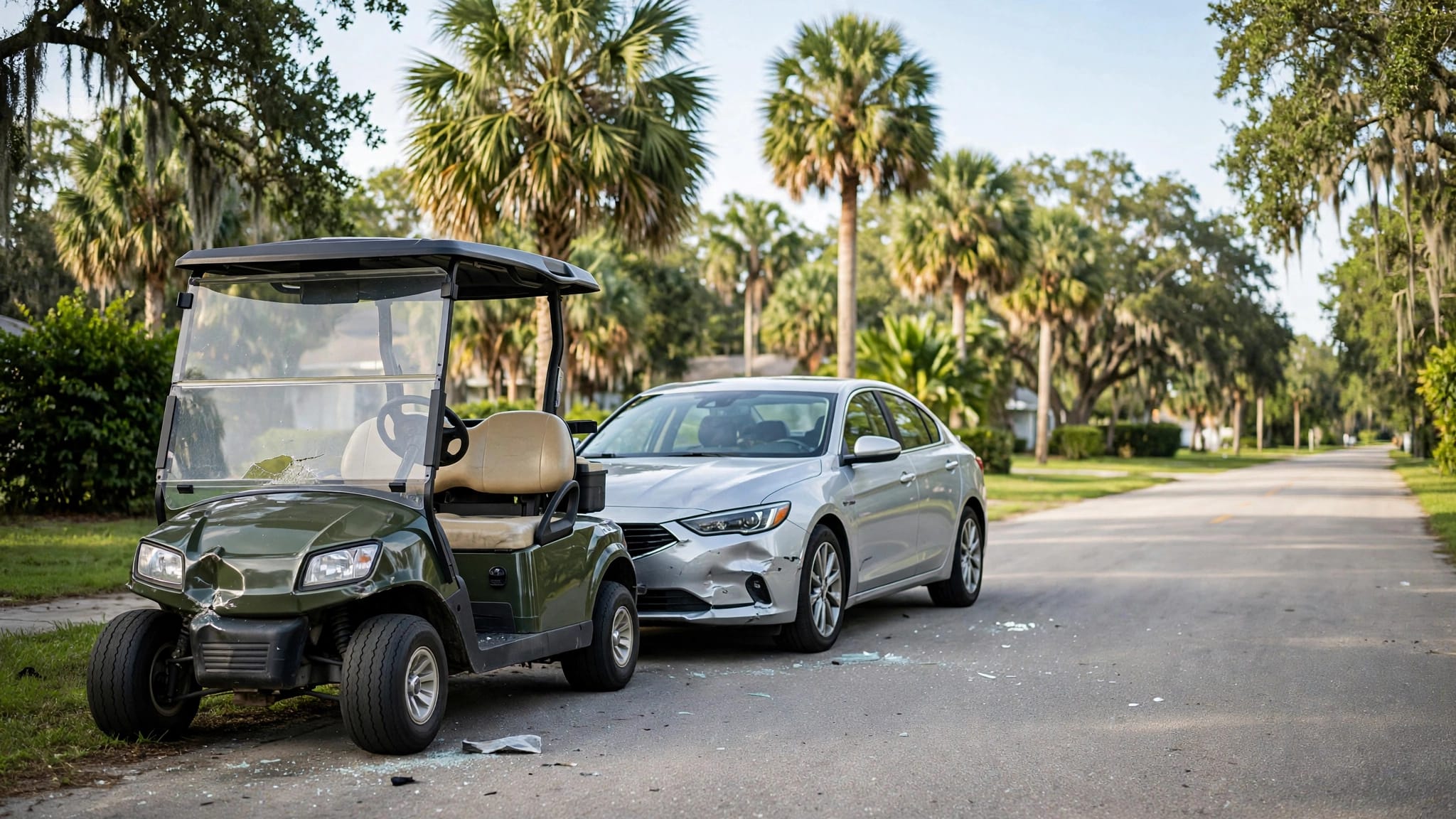
You may pursue compensation when a negligent driver hits your golf cart on a Florida public road. A Florida golf cart accident claim depends on the driver’s conduct, your injuries, available insurance, and any fault assigned to you.
However, road legality and insurance coverage are separate questions, and neither automatically decides who caused the collision. Start by separating the cart’s legal classification from the evidence showing how the crash happened.
Key Takeaways
- A golf cart and a low-speed vehicle have different legal classifications and road-use requirements.
- An unauthorized road or equipment violation doesn’t automatically eliminate an injury claim.
- PIP benefits aren’t automatic for golf-cart occupants, even when a car strikes them.
- Preserve the cart, recordings, medical records, and witness information before evidence disappears.
- Florida generally provides two years to file a negligence lawsuit, subject to the claim’s circumstances.
Florida’s Public-Road Rules for Golf Carts
Designated roads and operating conditions
Florida generally restricts golf carts on public roads unless a statutory exception permits their use. Under Florida’s golf-cart roadway rules, designated county and municipal roads are among the permitted routes. Local authorities must determine that cart operation is safe and post signs.
Operation generally runs from sunrise to sunset. Authorized nighttime use requires additional equipment, including headlights, brake lights, turn signals, and a windshield. Operators younger than 18 need a valid learner’s license or driver’s license.
These details matter because insurers may question the route, lighting, operator qualifications, or equipment. Each allegation still needs a connection to the collision or injuries.
Golf carts and low-speed vehicles differ
Florida defines a golf cart as a vehicle designed for golf-course recreational use that cannot exceed 20 mph. A low-speed vehicle, or LSV, has four wheels and a top speed above 20 mph but no higher than 25 mph.
The FLHSMV low-speed vehicle guidance describes this separate category. LSVs have their own registration, equipment, insurance, and road-use requirements.
A cart’s appearance alone doesn’t settle its classification. Manufacturer information, modifications, registration records, and speed capability can affect the legal analysis.
Proving Fault in a Florida Golf Cart Accident
Establish what the car driver did
The claim must connect negligent driving to the crash and your resulting losses. Useful evidence may show that the driver failed to yield, turned across your path, passed unsafely, or drifted into your lane.
For example, damage location and video can help distinguish a rear impact from a collision during a cart’s entry onto the roadway. Witnesses who saw the approach may provide more information than witnesses who arrived afterward.
A crash report can identify vehicles and document observations. However, a citation or an officer’s initial assessment doesn’t decide civil liability.
Address shared fault with evidence
The insurer may argue that you entered traffic unsafely, traveled without required lighting, or used an unauthorized road. Those assertions deserve factual analysis rather than an automatic acceptance of blame.
Under Florida’s comparative-fault statute, a claimant’s percentage of fault generally reduces damages. In covered negligence cases, being more than 50% responsible for your own harm bars recovery.
Our explanation of Florida comparative negligence addresses how disputed percentages affect injury claims. An adjuster’s proposed allocation isn’t a final legal finding.
Which Insurance May Cover Your Injuries?
Liability insurance and other potential sources
The car driver’s bodily injury liability coverage, if available, is one potential payment source. Depending on ownership and the driver’s work duties, a vehicle owner or employer may also bear responsibility.
Your uninsured or underinsured motorist coverage may matter, but policy definitions and exclusions affect coverage. A golf-cart policy may provide additional benefits, depending on its terms.
Also, several injured occupants may compete for limited insurance. Our discussion of Florida insurance policy limits explains why available coverage can differ from the full value of a claim.
PIP isn’t automatic for cart occupants
Florida’s no-fault system doesn’t mean every golf-cart rider receives Personal Injury Protection benefits. The Florida PIP statute limits one category for people struck by cars to people who aren’t occupants of a self-propelled vehicle.
That language creates an important distinction for golf-cart occupants. Neither being struck by an insured car nor having your own auto policy automatically resolves eligibility.
The statute lists a $10,000 limit for medical and disability benefits. That limit is a cap, not a promise of payment. Vehicle classification, insured status, and applicable policy language determine the available route.
Preserve Roadway and Vehicle Evidence Early
Seek medical attention and call 911 after an injury crash. Don’t step into traffic or approach unstable wreckage to collect evidence.
When safe, photograph the impact area, vehicle positions, lane markings, signs, debris, and damage. Include wide views showing where the cart traveled and close views of contact points. For nighttime crashes, document street lighting and the cart’s lighting equipment.
Keep witness contact information and original recordings. Nearby homes, businesses, or vehicles may have captured the approach even when no camera recorded the impact.
Preserve the cart before repairs or disposal change its condition. Steering components, lights, tires, seating, and damage patterns may help explain the collision and injuries. The striking car may also contain useful electronic data.
Keep the crash report number, towing records, storage location, insurance correspondence, and photographs together. Compare the report’s diagram and travel directions with your records. An attorney can send preservation requests before footage is overwritten or a vehicle enters salvage.
Document Medical Harm and Financial Losses
Build a clear treatment record
Golf-cart collisions can cause head injuries, fractures, spinal injuries, and injuries from ejection. Prompt care protects your health and documents the connection between the impact and symptoms.
Tell providers how the crash occurred and describe symptoms accurately, including dizziness, numbness, headaches, or reduced movement. Also disclose previous injuries so medical records distinguish an existing condition from crash-related changes.
Follow recommended treatment and retain discharge instructions, imaging results, prescriptions, and therapy records. If symptoms change, report those changes rather than relying only on the first emergency-room record.
Support the compensation requested
A claim may include medical expenses, lost earnings, reduced earning capacity, and supported future care costs. Property damage involves separate documentation, such as repair estimates and records of the cart’s condition.
Save pay records, work restrictions, receipts, and evidence of help needed with daily tasks. Future losses require support rather than an estimate based only on current bills.
Pain-and-suffering recovery may also involve Florida’s motor-vehicle serious-injury rules. Where that threshold applies, a qualifying injury, such as permanent injury, is necessary. PIP eligibility and the right to pursue these damages remain separate issues.
Filing Deadlines Continue During Insurance Negotiations
Florida’s statute of limitations for negligence generally provides two years to file suit. The shortened period generally applies to negligence claims accruing on or after March 24, 2023.
The correct deadline depends on the claim, accrual date, defendant, and applicable exceptions. Claims involving government vehicles can also involve special notice procedures. A child’s age doesn’t automatically extend every filing period until adulthood.
An open insurance file doesn’t preserve your right to sue. Settlement discussions, requests for additional records, and an insurer’s promise to investigate don’t automatically stop the clock.
Legal review should begin before negotiations consume the available time. You don’t need every medical record or a completed investigation before seeking help, particularly when video or damaged vehicles may disappear.
Frequently Asked Questions
Can I recover if the cart wasn’t allowed on that road?
Possibly. Unauthorized road use can become part of a comparative-fault argument, but it doesn’t establish that you caused the crash. The evidence must address how the violation affected the collision or harm. Your percentage of fault can reduce recovery or, when it exceeds 50% in a covered negligence case, bar it.
Can a golf-cart passenger bring a claim?
Yes, an injured passenger may pursue a claim against a responsible driver or other liable party. Depending on the evidence, that could include the car driver, cart operator, or both. The cart operator’s conduct isn’t automatically the passenger’s own fault. Each person’s actions and available insurance require separate analysis.
Should I accept an early settlement offer?
A settlement should account for documented injuries, likely future care, lost income, fault disputes, and available coverage. An early offer may arrive before doctors can describe your recovery. Signing a release can end claims covered by that agreement, even if expenses later increase. Legal review can identify what the proposed release would surrender.
Protect Your Claim With Evidence, Not Assumptions
A car striking your golf cart doesn’t make fault, insurance, or compensation automatic. Preserved evidence connects the driver’s actions to your injuries and helps address arguments about road use or shared responsibility.
At Avard Law Offices, we represent people injured in Florida accidents and offer a free initial consultation. Bring the records you have so we can evaluate the claim, available coverage, and deadlines before evidence disappears.