
Florida Concert Crowd Surge Claims and Venue Safety
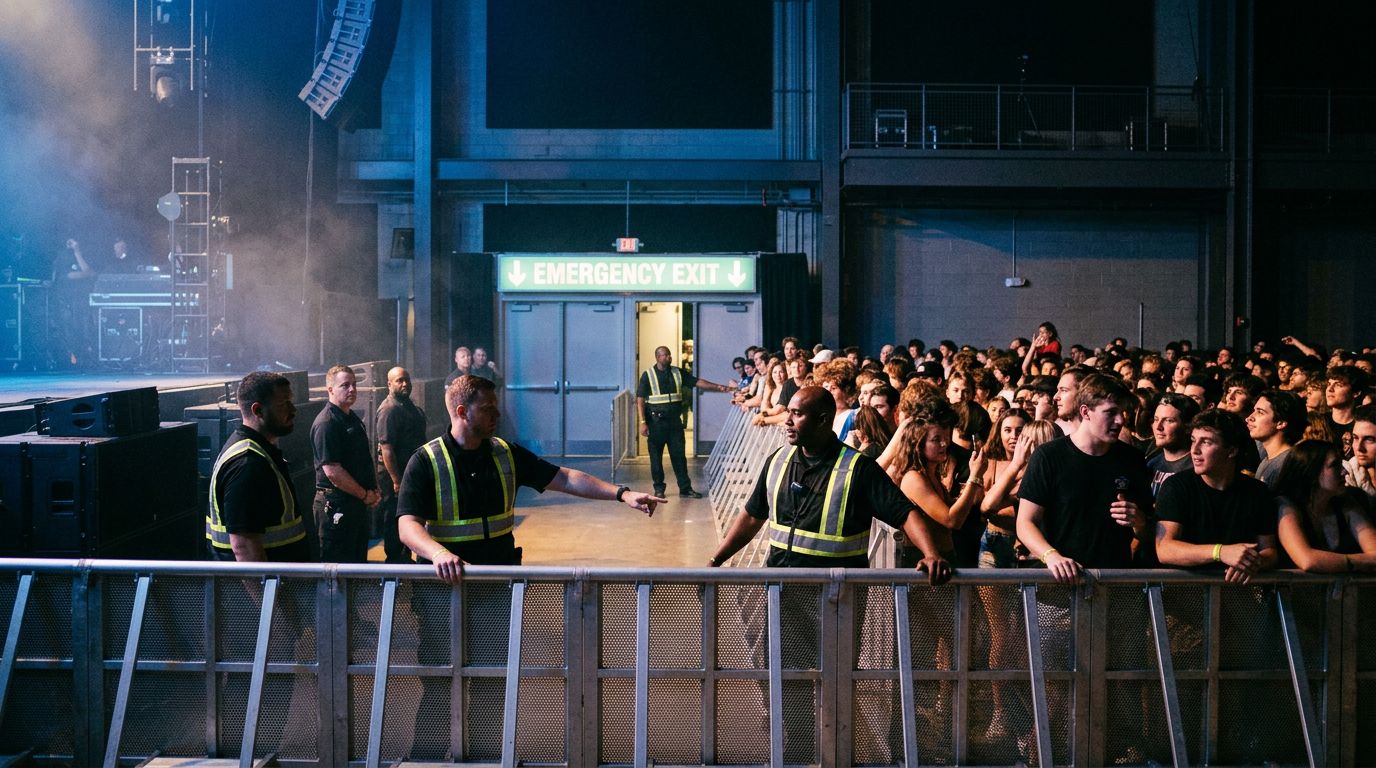
A concert can shift from excitement to danger within seconds when people press toward a stage, gate, barricade, or narrow exit. Concert crowd surge claims may arise when poor planning, overcrowding, blocked exits, weak security, or delayed emergency action causes serious injury.
Florida law may allow an injured guest to pursue compensation under premises liability, negligent security, or other negligence theories. The outcome depends on what the venue knew, what safety measures it used, and whether those failures caused your injuries.
Key Takeaways
- A venue safety plan should address capacity, entry points, crowd density, exits, barriers, staff training, and emergency response.
- Liability may involve the venue owner, operator, promoter, security company, or another party that controlled the event.
- Photos, videos, witness accounts, medical records, and ticket information can help prove what happened.
- Florida’s filing deadlines and comparative fault rules can affect your right to recover damages.
- Prompt legal advice can help preserve evidence before surveillance footage and event records disappear.
When a Crowd Surge Becomes a Florida Injury Claim
A crowd surge happens when a large group moves suddenly or compresses into a limited space. The force can throw people to the ground, pin them against a barricade, or prevent them from breathing. Some injuries happen during the initial movement, while others occur when people fall and cannot get back up.
A Florida injury claim usually requires proof of four basic points: someone owed you a duty, that party failed to act reasonably, the failure caused your injury, and you suffered damages. Concert guests who purchase tickets or enter with permission are generally lawful visitors. Venue operators must take reasonable steps to keep the property safe and respond to known or foreseeable dangers.
The danger doesn’t need to involve a broken floor or defective seat. A dangerous condition may involve an overcrowded standing area, a poorly designed barricade, an uncontrolled entrance, or an exit blocked by equipment. A promoter may also face questions if it sold more tickets than the venue could safely accommodate or continued admission after crowd conditions became unstable.
Foreseeability often becomes a central issue. A venue may have had warning signs before the surge, such as fans pushing through gates, repeated falls, a blocked passage, rising density near the stage, or security staff losing control of a line. Prior incidents at the same venue or event can also matter.
The 2024 Copa America final at Hard Rock Stadium shows how entry control can become a major safety issue at a large Florida event. Chaos reportedly involved fans attempting to enter without proper access, and lawsuits alleged failures involving security, ticket verification, and crowd control. The facts of each case differ, but the same questions arise after a concert injury: who controlled admission, who monitored the crowd, and who had authority to stop the event?
Concert Crowd Surge Claims and Venue Safety Plans
A strong venue safety plan must do more than assign guards to the doors. It should identify predictable crowd risks and give staff clear instructions for preventing and responding to them.
The plan should account for the venue’s maximum occupancy, the event layout, the location of the stage, the placement of barricades, and the number of available entrances and exits. Standing-room areas require special attention because guests can move as one mass when pressure builds. Staff should monitor those areas instead of waiting for a visible emergency.
Controlled entry is another important part of the plan. Ticket scanning, bag checks, access points, and guest screening must work without forcing thousands of people into a confined space. If unauthorized entry is likely, the venue should use enough staff and barriers to prevent a sudden rush at the gates.
Emergency procedures should identify specific conditions that require action. Those conditions may include dangerous density, blocked exits, a medical emergency, a failed barrier, or a crowd moving against the intended flow. Staff need authority to pause admission, stop a performance, open additional routes, and contact emergency responders.
A useful safety plan identifies the point at which staff must stop admitting guests or halt the show. Waiting until people are already falling can be evidence that the response came too late.
Federal emergency-management guidance discusses crowd planning, communication, staffing, and evacuation procedures in its crowd management safety guide. Event planners may also review the official event safety guide for practical considerations involving alcohol, staff response, medical needs, and guest movement.
A plan also needs trained personnel. Security workers should know their assigned zones, communication channels, emergency signals, and evacuation routes. Supervisors should be able to see crowd conditions and coordinate with police, fire personnel, medical teams, performers, and venue management.
Who May Be Responsible for a Concert Injury?
The responsible party depends on who created the risk and who had control over the relevant safety decision. Potential defendants may include the property owner, venue operator, concert promoter, security contractor, event-management company, or another business involved in admission and crowd control.
The venue owner may face a premises liability claim if unsafe conditions existed on the property. The operator may face separate allegations if it failed to maintain safe access routes, monitor capacity, or respond to a dangerous crowd. A promoter may be involved when it controlled ticket sales, event timing, staffing, or the performance area.
Security companies can face claims when their workers fail to follow required procedures, ignore pleas for help, remove barriers improperly, or fail to call for medical assistance. Still, liability isn’t automatic. The evidence must connect a specific failure to the injury.
Other facts may matter as well. Did the venue permit more people into an area than the layout could safely handle? Were exits visible and open? Did workers receive warnings about a growing crush? Did staff have working radios? Did the event continue after someone was injured?
A ticket or posted waiver may affect a case, but it doesn’t automatically erase every legal claim. Florida courts may examine the language, the type of injury, the conduct involved, and whether the venue acted negligently. A waiver also may not protect a business from conduct that violates public policy or from every form of reckless behavior.
Evidence That Can Support Concert Crowd Surge Claims
Crowd incidents often produce confusing accounts. People may remember only flashes of what happened, and the venue may control much of the evidence. Take reasonable steps to preserve your own records as soon as possible.
Start with medical care. Tell the provider that the injury occurred at a concert or event, and describe the mechanism clearly. Keep discharge papers, prescriptions, diagnostic results, physical therapy records, and bills. Follow-up care can show the lasting effect of the injury.
Save your ticket, wristband, parking receipt, text messages, and purchase confirmations. These records may establish that you were lawfully present and identify the event operator or ticketing arrangement. Write down the approximate time, location, crowd movement, warnings you heard, and actions taken by staff.
Photos and videos can be especially valuable. Preserve original files rather than editing or reposting them. Footage may show crowd density, blocked exits, damaged barriers, staff positions, or conditions before and after the surge. Ask witnesses for their contact information if you can do so safely.
A lawyer may seek additional records, including surveillance video, incident reports, radio communications, staffing schedules, training files, capacity records, venue maps, contracts, and prior complaints. Prompt action matters because businesses may have short retention periods for video and electronic data.
Avoid giving a recorded statement to an insurer before you understand the claim. Don’t sign a release or accept a quick payment without knowing whether your treatment is complete. An early settlement may prevent you from seeking additional compensation for continuing pain, lost income, or future care.
Florida Deadlines, Fault, and Recoverable Damages
Florida’s filing deadline depends on the facts and legal theory. Many negligence-based injury lawsuits now face a two-year deadline, but exceptions may apply. The date of injury, the identity of the defendant, a government connection, and the type of claim can change the analysis. Review the Florida statute of limitations for injury claims promptly.
Shared fault can also affect the result. Under Florida’s modified comparative negligence rule, a person found more than 50% responsible generally cannot recover damages. If the injured person is 50% or less at fault, the award can be reduced by that percentage. Claims involving crowd movement may lead to arguments that the guest pushed forward, ignored instructions, or entered an unsafe area, so evidence about the venue’s conduct matters.
Damages may include emergency treatment, hospital bills, medication, rehabilitation, lost wages, reduced earning ability, pain, emotional distress, disfigurement, and loss of normal activities. A family may have additional rights if a crowd incident causes a death.
A Florida modified comparative negligence rule review can help explain how fault allegations may affect compensation. The facts should still be evaluated by a Florida personal injury attorney.
Conclusion
A concert crowd injury isn’t defined only by the moment people began pushing. The surrounding decisions matter, including ticket sales, entry control, crowd monitoring, barrier placement, emergency communication, and the decision to continue the event.
If you were hurt, protect your health and preserve evidence before memories fade or records disappear. Concert crowd surge claims require a careful review of who controlled the venue, what warning signs existed, and whether reasonable safety measures could have prevented the injury.