
Florida Loose Floor Tile Fall Claims in Retail Stores
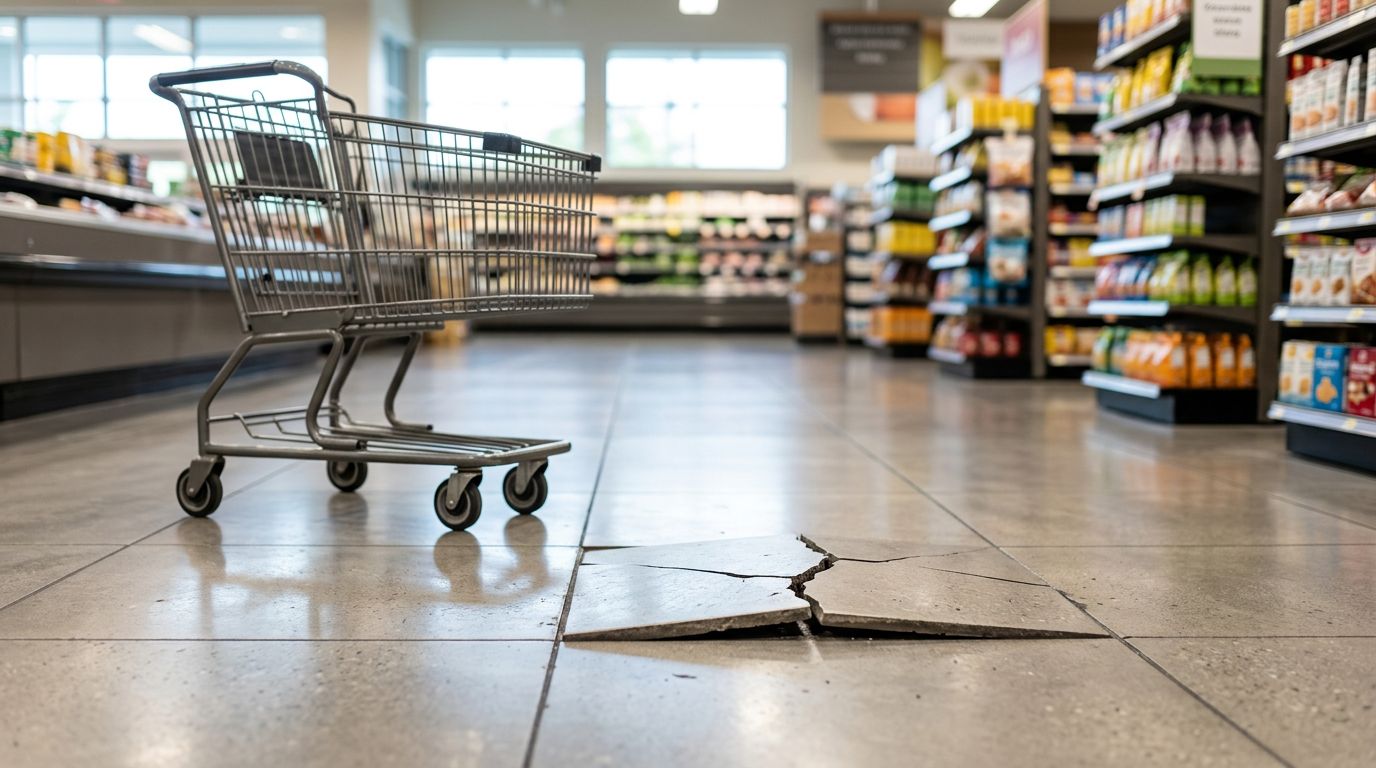
A retail floor can look safe while one loose tile creates a sudden drop, twist, or trip. The resulting injury may include a broken wrist, torn ligament, back injury, or head trauma.
Florida loose floor tile fall claims usually fall under premises liability law. To recover compensation, you generally must connect the dangerous tile to the store’s knowledge, failure to correct or warn, your fall, and your damages. The evidence often decides whether the claim moves forward.
How Florida loose floor tile fall claims work
Retail customers are usually business invitees. A store owes invitees a duty to maintain reasonably safe premises and to address hazards that could cause injury. That duty can include inspecting floors, repairing damaged areas, and warning customers when a repair cannot happen immediately.
A loose tile is usually a fixed premises defect rather than a spill. The legal analysis may focus on whether the business knew, or should have known, that the tile had become unsafe.
Florida Statute section 768.0755 addresses transitory foreign substances in business establishments, such as liquid or debris. It requires an injured person to prove that the business had actual or constructive knowledge of the condition and should have taken action to correct it. A loose tile may instead involve a dangerous flooring condition under common-law premises liability. The statute also says it doesn’t eliminate duties that already exist under common law.
A successful claim generally requires proof that:
- A dangerous condition existed on the store’s floor.
- The store knew about the condition or should have discovered it through reasonable care.
- The business failed to repair the tile or provide an adequate warning.
- The loose tile caused your fall.
- You suffered financial or personal harm because of the fall.
The store may dispute any one of these points. For example, management may claim the tile was intact during the last inspection or that another customer damaged it shortly before the accident. Photos, reports, employee statements, and store records can help answer those arguments.
Evidence that can prove a loose tile caused your fall
Strong Florida loose floor tile fall claims depend on evidence that preserves the scene and explains what happened. A floor may look different within hours if employees replace the tile, block the area, or clean up surrounding materials.
Take photographs as soon as possible, if your condition allows. Capture the loose tile from several angles, including close images that show its height or movement and wider images that show its location in the aisle. Include nearby shelves, signs, displays, entrances, and other landmarks. Those details can establish where the fall happened.
Report the accident to a manager before leaving the store. Ask for the incident report process and write down the manager’s name, the time of the report, and the names of employees who came to the scene. A report that omits the tile or describes the event inaccurately can create problems later, so preserve your own account while the details remain fresh.
Witnesses may have seen the tile before you fell. They may also know whether shoppers had complained, employees had placed a cone near the area, or carts repeatedly struck the floor. Get names and contact information when possible.
Surveillance video can show the condition, your path, the fall, and employee activity before the incident. Retail stores often control that footage, so a lawyer may need to send a preservation request quickly. Maintenance logs, inspection schedules, repair orders, employee communications, and prior incident reports can also reveal whether the store had notice.
A loose tile’s visibility doesn’t answer the notice question by itself. The key issue is whether the store knew, or should have known, that the flooring had become dangerous.
Keep the shoes and clothing you wore during the fall. Avoid altering or discarding them until the case is reviewed. Also save medical records, bills, work absence documentation, photographs of your injuries, and correspondence from insurers.
What to do after a retail store tile fall
Your actions after the accident can protect both your health and your legal claim.
At the store
Tell a manager that you fell because of the loose tile. Don’t minimize the event or guess about facts you didn’t observe. If pain or shock affects your memory, say only what you know.
If possible, photograph the tile and the surrounding area. Ask witnesses for their contact information. Note whether employees inspected the floor, moved the tile, placed warning signs, or spoke about earlier complaints.
Don’t argue with employees or sign a release. The store may ask for a statement or offer payment for immediate expenses. That offer may not account for follow-up care, missed work, or a serious diagnosis.
After leaving the store
Get medical attention promptly, even if the pain seems manageable. Some injuries become more apparent after swelling develops or adrenaline wears off. Tell the provider how the fall occurred and identify the body parts affected. Follow treatment instructions and attend scheduled appointments.
Keep a simple record of symptoms, medication, medical visits, missed work, and daily activities you can no longer perform. These details can support damages that do not appear on a medical bill.
You can also contact a Florida slip and fall attorney before giving a recorded statement to an insurer. Early legal review may help preserve video and identify the business or contractor responsible for the floor.
Notice, fault, and common defenses
Notice is often the central issue in a retail flooring case. Actual notice may exist when a manager saw the loose tile, an employee received a complaint, or a repair request identified the problem. The store may also have created the defect through installation, remodeling, stocking, or maintenance work.
Constructive notice means the condition existed long enough that reasonable inspections should have found it. A tile with worn grout, visible cracking, repeated movement, dirt around the edges, or other signs of aging may support an argument that the problem developed over time. A recurring condition can also show that the store should have anticipated the hazard.
Retailers may argue that the tile appeared suddenly or that no employee had reason to know about it. They may also claim that the condition was open and obvious. That defense depends on the facts, including the lighting, aisle traffic, tile height, floor pattern, shopper’s view, and whether the hazard could be avoided safely.
The store may claim that you were distracted, moving too quickly, wearing unsafe footwear, or failed to watch where you were going. Florida follows a modified comparative fault rule. If a jury assigns you 20 percent of the responsibility, your damages may be reduced by 20 percent. If your share of fault is more than 50 percent, you generally can’t recover damages under the current rule in Florida’s Chapter 768 liability statutes.
Responsibility may also involve more than the retail brand. The property owner, tenant, shopping center operator, flooring contractor, or maintenance company may have controlled different parts of the premises. Determining who had possession, control, and repair duties requires reviewing the location and relevant contracts.
Deadlines and compensation after a tile fall
Florida negligence claims generally have a two-year filing deadline under the current version of Florida Statutes section 95.11. The period usually runs from the date of injury, but the correct deadline can depend on the injury date, the parties involved, and the type of claim. Waiting can also make video, witnesses, and repair records harder to obtain.
Potential damages may include past and future medical expenses, rehabilitation, prescription costs, lost wages, reduced earning capacity, and pain and suffering. A serious fracture or spinal injury may require care long after the store’s insurer closes its initial investigation.
Your medical history can affect the value and proof of a claim. A store or insurer may argue that symptoms came from an earlier condition rather than the fall. Complete medical records and a consistent treatment history can help establish what changed after the accident.
You should also account for practical losses, such as transportation to appointments, help with household tasks, and time away from family responsibilities. Keep receipts and written records when those losses arise. For a broader explanation of available compensation, review Florida slip and fall damages.
When legal help may matter
A lawyer’s review can be especially useful when the store denies that the tile was dangerous, refuses to identify its insurer, or repairs the floor before you can document it. Legal help may also be important when you suffered a head injury, surgery, extended lost income, or a permanent limitation.
An attorney can investigate notice, request preservation of surveillance footage, identify all parties with control over the premises, and assess comparative fault arguments. The lawyer can also compare medical evidence with the store’s version of events before you consider a settlement.
Bring photographs, medical records, bills, wage information, witness contacts, and every message from the store or insurer to the consultation. Those materials give the attorney a clearer starting point.
Protecting your rights after a loose tile fall
A loose floor tile can create more than a painful accident. It can raise questions about inspections, repairs, notice, control of the property, and the store’s response after the fall.
For Florida loose floor tile fall claims, early evidence matters. Report the hazard, document the scene, seek medical care, preserve records, and pay attention to the two-year filing deadline. The strongest case usually begins with a clear record of what the floor looked like, who knew about it, and how the injury changed your life.