
Florida Amazon Delivery Accident Claims and Insurance
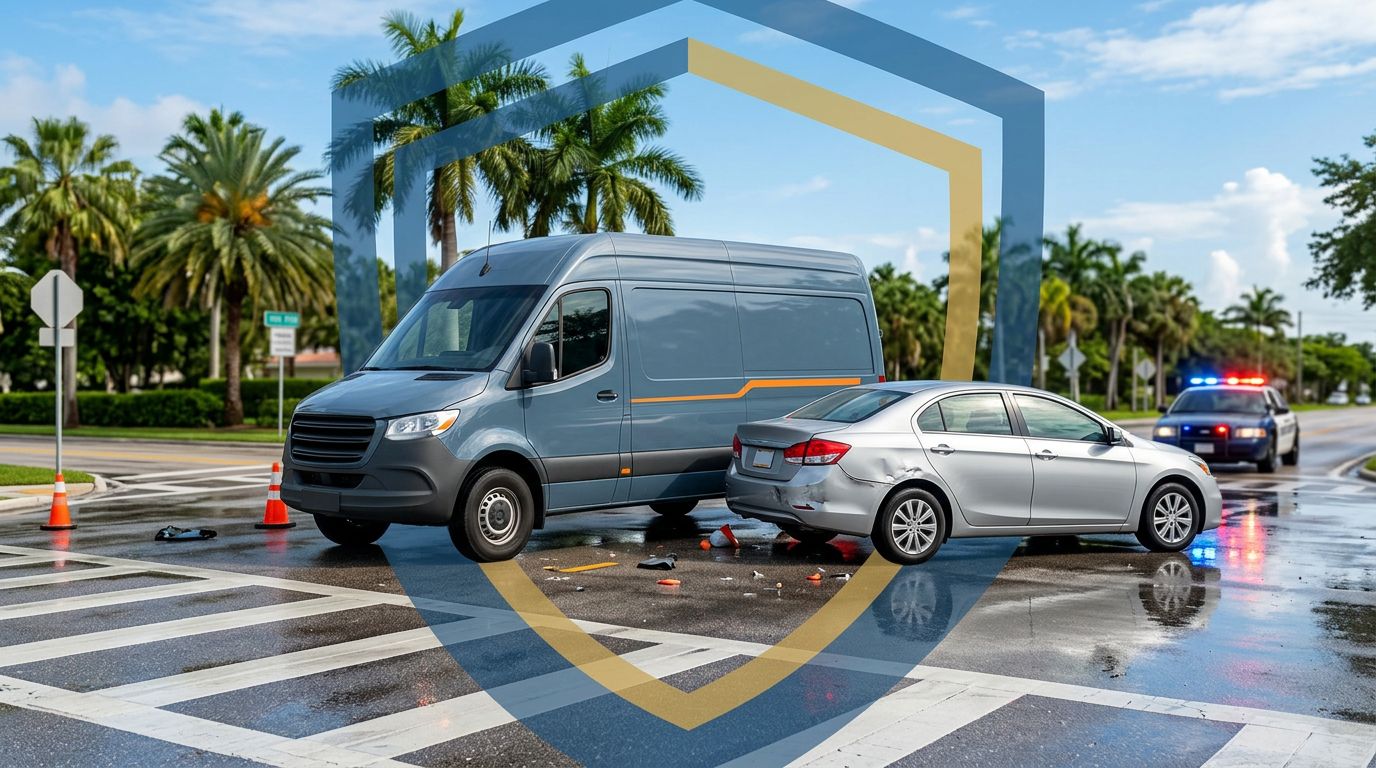
A Florida Amazon delivery accident can leave you facing medical bills, missed work, and an insurance company that refuses to explain who should pay. The answer often depends on whether the driver worked for Amazon Flex, an Amazon Delivery Service Partner (DSP), or another delivery company.
Amazon-branded vans are usually operated by independent DSP businesses. That structure can make a claim more complicated than a standard car crash. The driver, delivery company, Amazon, and one or more insurers may have different legal responsibilities. Understanding the vehicle’s delivery status and available coverage is the first step.
Key Takeaways
- Amazon Flex drivers and DSP van drivers may have different insurance coverage.
- The driver, DSP, Amazon, or multiple parties may be responsible for your injuries.
- Amazon-related commercial coverage can reach $1 million or more, but the applicable policy depends on the driver’s status and activity.
- Florida’s PIP system may cover initial medical expenses, but serious injuries can support a claim for pain and suffering.
- Evidence disappears quickly, so report the crash, obtain medical care, and preserve records immediately.
Why Amazon Delivery Van Claims Are Different
A crash involving a private vehicle usually begins with the other driver’s auto policy. Delivery van claims require more investigation because the driver may have been working under a contractor arrangement.
Amazon commonly uses two delivery models:
Amazon Flex allows individuals to deliver packages using their own vehicles. Flex drivers are generally treated as independent contractors. Their personal auto policy may exclude commercial delivery work, so Amazon’s contingent coverage can become important.
Delivery Service Partners are independent businesses that operate Amazon-branded vans. The DSP hires and supervises its drivers, handles vehicle operations, and typically carries commercial auto insurance. Amazon may provide additional insurance layers through its contractor program, but the exact policy structure depends on the facts and the applicable contracts.
The driver’s work status matters because insurance coverage may apply only during certain periods. For example, Flex coverage may be available while a driver is actively making deliveries or returning packages during an assigned delivery block. It may not apply when the driver is using the vehicle for personal reasons.
The central question is often not whether the van had an Amazon logo. It is who operated the vehicle, what the driver was doing, and which policy covered that activity.
A police report may identify the driver and vehicle, but it rarely answers every insurance question. An attorney may need delivery records, employment information, vehicle ownership documents, dispatch data, and policy details.
Who May Be Liable After a Florida Amazon Delivery Accident?
Liability depends on negligence and the driver’s relationship with the companies involved. Potential defendants can include the following:
The delivery driver
A driver may be personally liable for speeding, distracted driving, unsafe lane changes, following too closely, failing to yield, or driving while impaired. Delivery pressure does not excuse a traffic violation.
The driver’s conduct may also show negligent backing, unsafe parking, or failure to watch for pedestrians. These crashes often occur in driveways, apartment complexes, parking lots, and residential streets where delivery vehicles stop frequently.
The DSP or delivery company
A DSP may be responsible for negligent hiring, poor training, unsafe scheduling, inadequate vehicle maintenance, or supervision failures. If the driver is an employee, the company may also face vicarious liability for conduct within the scope of employment.
The company may argue that the driver was an independent contractor. That argument does not automatically end the claim. The legal relationship requires examination of the contract, the company’s control over the driver, and the facts surrounding the crash.
Amazon
Amazon is not automatically liable for every crash involving a branded vehicle. However, the company may become part of a claim when evidence supports direct negligence, control over delivery systems, unsafe policies, or another legal theory recognized under Florida law.
Because Amazon often works through separate businesses, identifying every potentially responsible party early can prevent an injured person from accepting a settlement that fails to account for other available insurance.
How Contractor Insurance May Cover Your Injuries
Insurance coverage in an Amazon delivery claim can involve several layers. The applicable policy may depend on whether the driver used an Amazon Flex vehicle or a DSP-operated van.
| Delivery arrangement | Coverage issues to investigate |
|---|---|
| Amazon Flex driver | Amazon-related liability coverage may apply during an active delivery period, subject to policy terms |
| DSP-operated Amazon van | The DSP’s commercial auto policy is often primary |
| Serious DSP crash | Excess or umbrella coverage may become relevant |
| Driver off duty | Amazon-related coverage may not apply |
| Uninsured or hit-and-run driver | Your uninsured motorist coverage may provide a source of recovery |
Florida-facing legal sources commonly describe Amazon Flex liability coverage as up to $1 million per accident, along with possible uninsured or underinsured motorist protection. Coverage terms can change, and a policy limit does not guarantee payment. The insurer can still dispute whether the driver was working, whether the crash caused the injury, or whether another policy applies.
DSP claims may involve a primary commercial auto policy and additional coverage connected to Amazon’s contractor program. Some reports describe several million dollars in combined coverage for severe crashes, but the actual limits and policy layers are not public in every case.
A personal auto policy may exclude commercial delivery use. Still, your own policy could provide medical payments or uninsured motorist benefits, depending on its language. Review all household policies, including coverage for vehicles not involved in the crash.
The takeaway is practical: do not assume Amazon will pay, and do not assume the driver has no insurance. Request the correct insurance information and have the policy reviewed before giving a recorded statement or signing a release.
Florida PIP Coverage and Injury Compensation
Florida is a no-fault auto insurance state. Your personal injury protection, or PIP, may provide initial benefits after a crash, regardless of who caused it. Florida PIP generally covers a portion of medical expenses and lost income, subject to policy limits and statutory requirements.
You should seek medical care promptly. Florida law has strict rules involving the timing of treatment and eligibility for PIP benefits. Delayed treatment can also give an insurer an argument that the crash did not cause your symptoms.
PIP does not cover every loss. If your injuries meet Florida’s serious-injury threshold, you may pursue a negligence claim for damages such as:
- Medical expenses not paid by insurance
- Future medical treatment
- Lost wages and reduced earning ability
- Pain and suffering
- Scarring or permanent impairment
- Loss of enjoyment of life
- Property damage
A serious injury can include a significant and permanent loss of an important bodily function, permanent injury within a reasonable degree of medical probability, or substantial and permanent scarring or disfigurement. Medical records and physician opinions often determine whether the threshold is met.
Florida also follows a modified comparative fault rule under Florida Statute section 768.81. If you are more than 50% responsible for your own harm, you generally cannot recover damages. If you are 50% or less at fault, your award can be reduced by your percentage of responsibility.
For example, a $100,000 award could become $70,000 if a jury assigns you 30% of the fault. The insurer may raise disputed claims about speed, phone use, lane position, or failure to avoid the van, so evidence matters.
Evidence That Can Strengthen Your Claim
The first days after a crash can affect the outcome. If you can do so safely, gather:
- Photos of the vehicles, road, traffic signs, package area, and visible injuries
- Video from nearby homes, businesses, traffic cameras, or dashcams
- The driver’s name, license information, employer, and vehicle number
- Witness names and contact information
- The police report or incident number
- Medical records, bills, prescriptions, and transportation costs
- Proof of missed work and lost income
- Insurance declarations pages for every potentially relevant policy
Call 911 after the collision, even when the driver or delivery company asks you to handle the matter privately. A formal report can document the location, statements, vehicle damage, and apparent injuries.
Do not repair or dispose of damaged property before photographing it and speaking with an attorney. Also, avoid posting crash details or injury updates on social media. Insurers may use those statements against you.
Keep a short symptom journal. Record pain levels, sleep problems, mobility limits, medication effects, and tasks you cannot perform. These details can help connect your daily losses to the medical evidence.
What to Do When the Insurer Calls
An insurance adjuster may contact you quickly after a Florida Amazon delivery accident. The adjuster may sound helpful, but the insurer’s goal is to evaluate and limit its financial exposure.
You should provide basic facts needed to identify the crash. However, do not guess about speed, distance, fault, or your future medical condition. Avoid recorded statements until you understand which companies and policies are involved.
Do not sign a broad medical authorization or settlement release without legal advice. A release can end your claim even if doctors later discover a more serious condition.
A lawyer can also protect communications with the delivery company. The company may possess electronic delivery records, driver messages, vehicle camera footage, inspection reports, and route information. Those records can be lost or overwritten if nobody requests them promptly.
If you need representation after a delivery van crash, you can review Florida personal injury attorneys who handle accident-related claims and injury damages.
Filing Deadlines for Florida Injury Claims
Florida’s deadline depends on the type of claim and the date of the incident. For many negligence claims involving accidents that occurred on or after March 24, 2023, the statute of limitations is two years. Different deadlines may apply to wrongful death, claims involving government vehicles, insurance actions, or other legal theories.
The deadline is not a reason to wait. Evidence becomes harder to locate, witnesses forget details, and insurers may use delays to challenge causation. A lawyer can identify the proper defendants, investigate coverage, and calculate deadlines before negotiations begin.
You may also have PIP notice and treatment requirements that operate much sooner than the lawsuit deadline. Missing one of those requirements can reduce or eliminate available benefits.
When to Speak With a Florida Injury Attorney
Legal advice is especially important when:
- The van had an Amazon logo but the driver refused to identify the employer
- The insurer claims the driver was off duty
- Your injuries require surgery, long-term care, or rehabilitation
- You missed work or cannot return to your prior job
- The crash involved a pedestrian, cyclist, or fatal injury
- The driver left the scene
- Multiple vehicles or insurers dispute fault
- You received a settlement offer before completing treatment
An attorney can investigate the contractor relationship and pursue the insurance layer that fits the evidence. The lawyer can also coordinate the injury claim with health insurance, Medicare, Medicaid, workers’ compensation, or disability benefits when those issues overlap.
Conclusion
A Florida Amazon delivery accident is rarely a simple claim against a single insurer. The driver’s work status, the DSP’s role, Amazon’s policies, and the timing of the delivery can all affect liability and coverage.
Report the crash, obtain medical care, preserve evidence, and avoid signing documents before you understand the full claim. When the insurance structure is unclear or your injuries are serious, a Florida injury attorney can help protect your right to pursue fair compensation.