
Can You Sue After a Florida Apartment Ceiling Collapse?
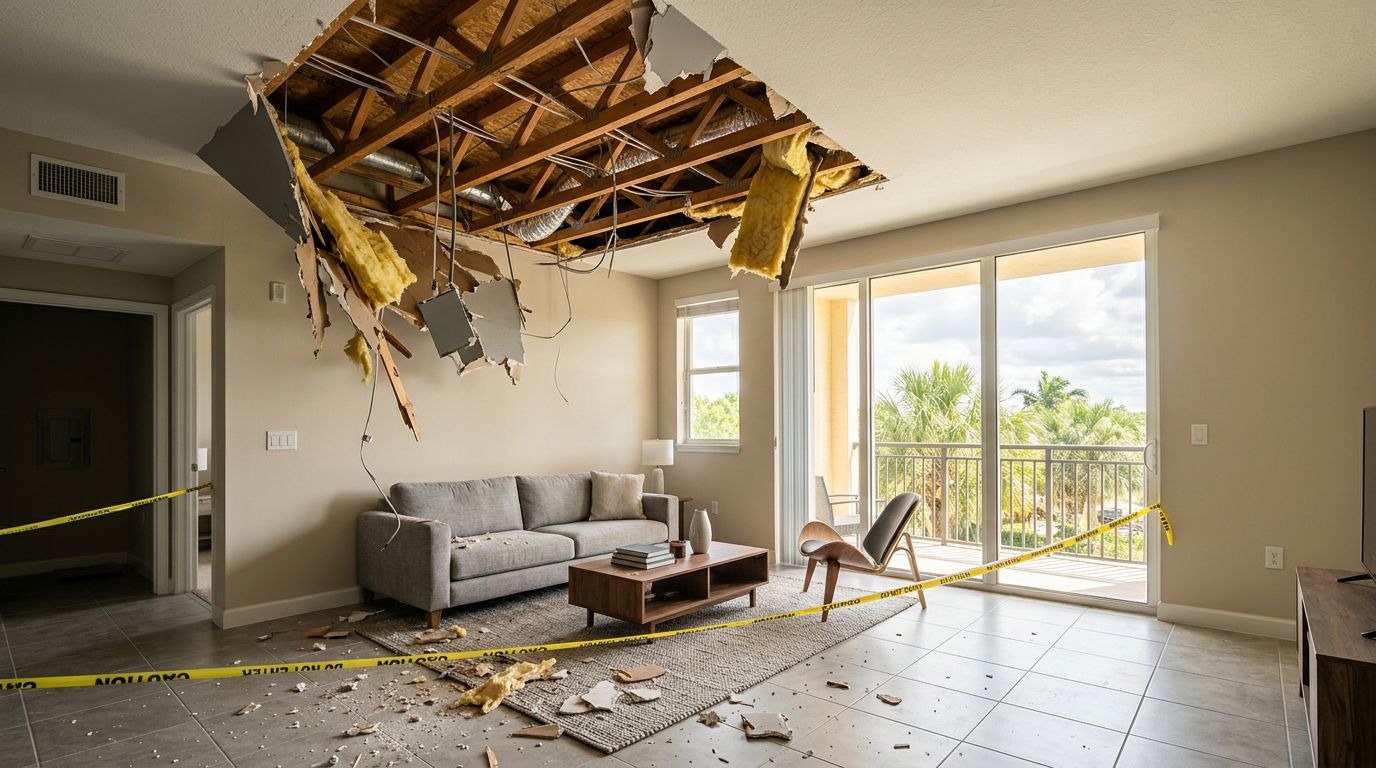
A falling ceiling can cause far more than property damage. Debris may strike your head, trap you beneath drywall, expose electrical wiring, or force your family out of the apartment.
You may have a Florida apartment ceiling collapse claim if the landlord, property manager, owner, or another responsible party knew about a dangerous condition and failed to correct it. However, a collapse alone doesn’t automatically prove negligence. The evidence must connect the unsafe condition to your injuries and losses.
Key Takeaways
- Florida landlords generally must maintain roofs, ceilings, and other structural components in good repair.
- A successful lawsuit usually requires proof of notice, control, negligence, causation, and actual damages.
- Written complaints, photographs, maintenance records, and medical documentation can make or break the claim.
- Florida generally gives you two years to file a personal injury lawsuit.
- If the apartment is substantially damaged, you may have rights to terminate the lease or obtain a rent reduction.
When Is a Landlord Responsible for a Ceiling Collapse?
Florida Statute 83.51 generally requires landlords to comply with applicable building, housing, and health codes. When no specific code applies, landlords must maintain roofs, windows, doors, floors, steps, porches, exterior walls, foundations, and other structural components in good repair.
A ceiling is normally part of the building’s structural system. Therefore, a landlord usually remains responsible for defects involving the roof, framing, water intrusion, ceiling materials, or other conditions the tenant didn’t create.
Still, the legal question isn’t simply whether the landlord owned the building. A personal injury claim typically requires proof of negligence. That means showing the landlord or property manager had a duty to maintain the premises, breached that duty, and caused your injuries.
Notice is often the central issue. You may establish actual notice with evidence that you directly reported a roof leak, sagging ceiling, water stain, cracking, or falling material. Text messages, emails, maintenance requests, certified letters, and recorded work orders can all help.
You may also establish constructive notice. This applies when the condition existed long enough, or appeared serious enough, that a reasonably careful landlord should have discovered it. A large ceiling stain, recurring leak, peeling drywall, or visible sagging may support this argument, especially if management performed regular inspections.
Florida courts have recognized the importance of notice in landlord liability cases. In Firth v. Marhoefer, 406 So. 2d 521 (Fla. 4th DCA 1981), the court addressed whether a landlord knew, or should have known, about a dangerous condition and had enough time to fix it.
The lease may also matter. Some rental agreements assign limited maintenance duties to tenants, but tenants generally aren’t responsible for repairing major structural defects. A lease provision doesn’t automatically protect a landlord from negligence or violations of statutory duties.
Who Can Be Sued After an Apartment Ceiling Falls?
The responsible defendant depends on who controlled the dangerous condition and who had authority to repair it. Potential defendants may include:
- The apartment owner
- The landlord named in the lease
- A property management company
- A maintenance or roofing contractor
- A construction company
- An entity responsible for negligent inspections or repairs
Property management companies often handle maintenance requests, inspections, and emergency repairs. If the management company received complaints but failed to respond, it may share responsibility with the owner.
A contractor could also face liability if poor workmanship caused the collapse. For example, defective roof repairs, improper installation, missing fasteners, or negligent alterations may have weakened the ceiling. Determining that fault often requires photographs, maintenance records, inspection reports, and opinions from qualified building professionals.
The location of the collapse also matters. Landlords generally control common areas, such as hallways, stairwells, laundry rooms, and shared ceilings. They also usually retain responsibility for structural elements inside a rented unit, including the roof and ceiling system.
However, a tenant may face questions if their own actions caused or worsened the collapse. Unauthorized construction, attaching heavy items to a ceiling, ignoring an immediate warning, or refusing access for necessary repairs could affect the case. Florida follows a modified comparative negligence rule for many negligence claims. If you are found more than 50% responsible, you may recover nothing. If you are 50% or less responsible, your award may be reduced according to your share of fault.
The facts matter more than the label placed on the defendant. A careful investigation should identify who knew about the problem, who controlled the property, and who had the power to correct it.
What Evidence Supports a Florida Ceiling Collapse Claim?
After a collapse, the damaged ceiling may be removed within hours. Management may bring in contractors, cover the area, or discard debris. Quick documentation protects evidence that may later explain why the ceiling failed.
Take photographs and videos only if the area is safe. Capture the entire room, close views of cracks or water damage, broken fixtures, exposed wires, insulation, roof materials, and any debris that struck you. Keep the original files and preserve their dates.
Save every communication with the landlord or management company. Earlier complaints may show that the landlord had time to investigate and repair the condition. Ask for copies of maintenance records, inspection reports, work orders, incident reports, and communications about leaks or structural problems.
Witnesses can provide important details. Neighbors may have heard prior complaints, seen water entering the building, or observed workers patching the ceiling. Ask witnesses for their names and contact information while the events remain fresh.
Medical records are equally important. Seek medical care promptly, even if your injuries appear minor. A ceiling collapse can cause concussions, neck and back injuries, shoulder damage, fractures, cuts, breathing problems, and emotional distress. Some symptoms become worse over the following days.
Your medical provider should know that the injury occurred during a ceiling collapse. Follow recommended treatment and keep records of appointments, prescriptions, mileage, bills, and missed work.
For a related discussion of documentation and proof, review Florida ceiling collapse claims. Apartment injury cases often depend on the connection between the physical condition, the landlord’s notice, and the medical evidence.
Don’t give a recorded statement to the landlord’s insurance company before understanding your rights. An adjuster may ask questions that appear routine but later use your answers to dispute the severity or cause of your injuries.
What Compensation Can You Recover?
A lawsuit may seek compensation for losses caused by the collapse and the landlord’s negligence. Depending on the evidence, damages may include:
- Emergency treatment, hospital bills, medication, and future medical care
- Lost wages and reduced earning ability
- Physical pain and limitations
- Emotional distress related to the event and resulting injuries
- Damage to furniture, electronics, clothing, and other personal property
- Reasonable relocation or temporary housing expenses in some situations
The value of a claim depends on the injury, treatment, recovery time, medical prognosis, lost income, and proof of fault. A serious head injury or spinal injury usually creates different damages than a minor bruise, but every claim requires supporting evidence.
A ceiling collapse that causes no physical injury may still create a landlord-tenant dispute or property damage claim. Personal injury damages generally require proof of actual bodily harm. If your family must leave an unsafe apartment, Florida’s casualty-damage law may provide separate rental remedies.
Under Florida Statute 83.63, a tenant may be able to terminate the rental agreement after a casualty substantially impairs enjoyment of the premises. If only part of the unit is unusable, the rent may be reduced by the fair rental value of that portion. The facts and lease terms affect how this rule applies.
Don’t stop paying rent or move out without addressing the legal requirements. Florida Statutes 83.56 and 83.201 may provide remedies for serious landlord noncompliance, but improper rent withholding can expose a tenant to an eviction claim. Put repair requests and notices in writing, and obtain legal advice before taking action that affects the lease.
A Florida ceiling collapse has also led to substantial reported litigation outside the apartment context. In one Florida case, a woman sued a restaurant after saying a ceiling collapsed and injured her. The reported ceiling-collapse lawsuit was reportedly settled for $2 million before trial. A news report isn’t a measure of what any apartment claim is worth, but it shows how the injury evidence and facts surrounding a collapse can matter.
What Should You Do Immediately After the Collapse?
Your first priority is safety. Leave the damaged area if another collapse, fire, electrical hazard, or gas leak may occur. Call 911 for serious injuries or immediate danger. Don’t re-enter until authorities or qualified professionals say it is safe.
Then take these steps:
- Get medical care. Tell the provider exactly what happened and report symptoms even when they seem manageable.
- Notify management in writing. Describe the collapse, injuries, visible damage, and any earlier complaints. Keep a copy.
- Preserve evidence. Photograph the scene, save messages, and avoid moving debris unless necessary for safety.
- Identify witnesses. Record names, phone numbers, and what each person observed.
- Report serious code concerns. Contact your city or county building inspection or code compliance office when the property remains unsafe.
- Avoid recorded insurance statements. Speak with a Florida personal injury attorney before discussing fault or settlement.
- Track losses. Keep medical bills, wage records, repair estimates, hotel receipts, and notes about pain or limitations.
You can also review guidance on proving apartment injury claims, including the importance of control, notice, and prompt medical documentation.
Florida generally imposes a two-year statute of limitations for personal injury claims under section 95.11(5)(a), as amended by the 2023 tort reforms. Waiting can cause evidence to disappear and may permanently bar your lawsuit.
Conclusion
You may sue after a Florida apartment ceiling collapse when a landlord, manager, owner, or contractor failed to address a dangerous condition and that failure caused your injuries or losses. The strongest cases usually include prior notice, proof of control, photographs of the condition, reliable witnesses, and consistent medical records.
A damaged apartment can be repaired quickly, but the evidence may not survive the cleanup. Document what happened, protect your health, and speak with a Florida attorney before signing an insurance release or accepting a settlement.