
Florida Bicycle Crash Claims After a Three-Foot Pass
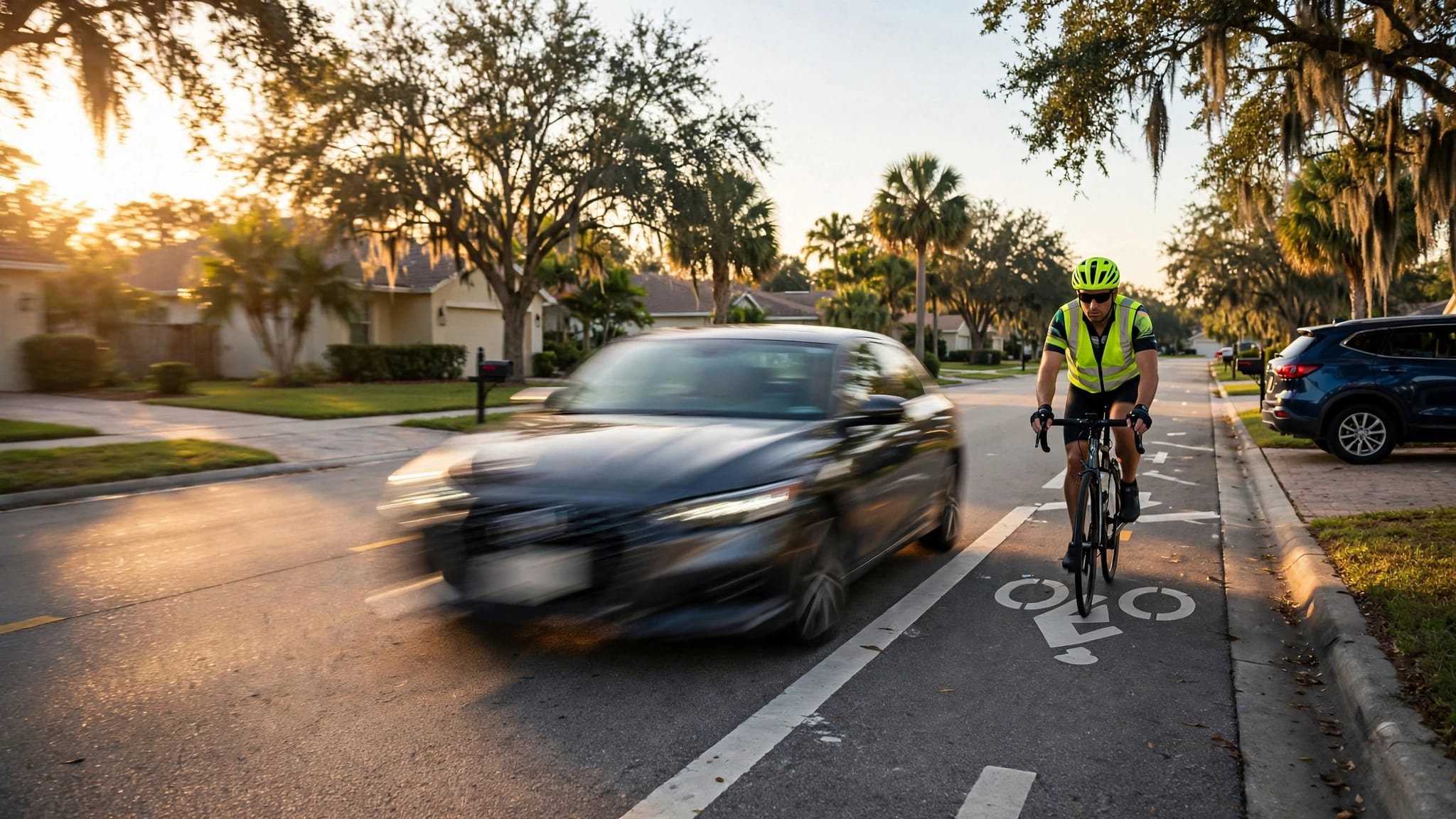
A close pass can force a cyclist into a curb, parked car, debris, or moving traffic within seconds. Florida bicycle crash claims may arise when a driver leaves less than the required three feet and that unsafe pass causes an injury.
The driver may deny getting too close, while an insurer may question lane position, speed, or the severity of your injuries. Prompt medical care and well-preserved evidence can make the difference.
Florida Bicycle Crash Claims and the Three-Foot Rule
Florida law gives cyclists a clear minimum-distance rule when a motor vehicle passes them. The rule applies even when a cyclist is riding lawfully in a marked bicycle lane.
What Florida law requires of passing drivers
Under Florida’s three-foot passing rule, a driver overtaking a bicycle, nonmotorized vehicle, or electric bicycle must leave at least three feet of clearance. The driver must also wait to return to the right side of the road until safely clear of the cyclist.
This requirement matters on narrow roads, during heavy traffic, and beside parked cars. A driver cannot crowd a rider merely because traffic is moving quickly or the road feels too tight to pass safely.
Bicycle lanes do not erase the passing duty
The three-foot requirement also applies when a cyclist uses a bicycle lane. Painted lines offer a designated space, yet they don’t protect a rider from a vehicle that drifts or passes too closely.
Florida cyclists have roadway duties as well. For example, riders generally must follow applicable traffic-control devices and may not ride more than two abreast on a roadway or bicycle lane, subject to the rules in Florida’s bicycle operation statute. Still, a cyclist’s duties don’t excuse a driver who makes an unsafe pass.
For a fuller review of lane use and right-of-way rules, see these Florida bicycle traffic laws.
When an Unsafe Pass Can Support a Claim
A traffic violation can provide strong evidence, but it doesn’t decide every injury case by itself. A successful claim must connect the driver’s conduct to the crash and your documented losses.
Proving negligence after a close pass
Most Florida bicycle crash claims rest on negligence. The injured cyclist must show that the driver had a duty to use reasonable care, breached that duty, caused the collision or fall, and caused compensable harm.
A breach might involve passing within three feet, clipping a handlebar, forcing a rider off the pavement, or creating a sudden hazard that leaves no safe escape route. Even if the vehicle never makes contact, the driver’s actions can still matter when the cyclist crashes while trying to avoid being struck.
The facts should show the driver was overtaking rather than merely traveling nearby. The road width, bike lane markings, vehicle path, impact point, and witness accounts can help establish that sequence.
A citation is useful, not conclusive
A ticket for an unsafe pass may support the cyclist’s account. However, an officer might not witness the crash, and a driver can receive no citation despite causing the collision.
Likewise, a police report can identify the parties, roadway, weather, and early observations, but it may contain errors or omit important details. If its diagram puts you in the wrong lane, preserve photographs, video, and witness information before an insurer treats that account as final.
The clearest close-pass cases show both the missing three feet and the direct chain between the driver’s movement, the cyclist’s crash, and the resulting injury.
What to Do After a Florida Bicycle Collision
Your health comes first. Adrenaline can hide pain after a fall, so don’t wait for bruising, headache, dizziness, neck pain, numbness, or limited movement to become worse before seeking care.
Get care and report the crash
Call 911 when injuries, vehicle damage, or unsafe conditions require law enforcement or emergency help. Give medical providers an accurate description of how the driver passed and how you fell or were hit.
Follow-up treatment also matters. Emergency records document the first report of pain, while later appointments can show whether symptoms persist, worsen, or limit work and daily activities.
Report the collision to your own insurer promptly and follow policy requirements. Florida’s no-fault system may provide early benefits in some situations, but it doesn’t settle fault for serious injuries or determine the full value of a liability claim.
Keep your first account factual
At the scene, exchange information if you can do so safely. Obtain the driver’s name, insurance details, license plate, vehicle description, and any employer or company information displayed on the vehicle.
Be truthful when an insurer asks about the collision. Yet don’t estimate speed, distance, or fault if you don’t know. A guess about whether the car was “two feet away” can conflict with later footage, roadway measurements, or damage evidence.
The other driver’s insurer may ask for a recorded statement. Before giving a detailed one, consider speaking with counsel, especially when the driver disputes the pass or you have significant injuries.
Evidence That Can Prove a Close-Pass Crash
Close-pass cases often turn on what happened in the seconds before impact. Evidence can disappear quickly, so preserve it before vehicles are repaired and video systems overwrite their files.
Photograph the roadway, bike, and vehicle
Take wide photographs of the road, bicycle lane, shoulder, parked vehicles, traffic signs, nearby businesses, and sight conditions. Then take close images of the bicycle, helmet, torn clothing, debris, paint transfer, and damaged sections of the vehicle.
Keep original image and video files instead of relying on screenshots or edited social media posts. Don’t repair or discard the bicycle until it has been thoroughly photographed and, when needed, inspected.
A damaged left handlebar, bent wheel, or marks on the vehicle’s passenger side may help explain the angle of contact. Physical damage can’t tell the whole story alone, but it can test a driver’s claim that the cyclist suddenly swerved.
Find video and independent witnesses
Ask nearby homes, businesses, transit facilities, or property managers to preserve video as soon as possible. Doorbell cameras, dashcams, traffic cameras, and security systems may capture the vehicle’s position before the crash.
Get names and contact details for witnesses, even if they only saw the vehicle pass closely or saw you immediately afterward. An independent account can carry weight when the driver says you “came out of nowhere.”
Intersections add another layer of proof because signal phases, crosswalk markings, and turning movements may affect fault. Review evidence in Florida bicycle crosswalk cases if the collision occurred while a driver turned across your path.
Shared Fault, Insurance, and Filing Deadlines
Insurers often argue that a cyclist rode outside the lane, failed to use lights, moved unexpectedly, or could have avoided the crash. Those allegations require evidence, not assumptions.
Comparative fault can reduce recovery
Florida uses modified comparative negligence in most injury cases. If a fact finder assigns you 20% of the fault, your recoverable damages are generally reduced by 20%.
A person found more than 50% responsible generally cannot recover damages in a covered negligence action. That makes facts about lane position, visibility, braking, and the driver’s passing distance important from the start.
An insurer’s fault decision isn’t the final word. Photos, video, witnesses, medical records, and a careful analysis of the roadway can challenge an unsupported blame claim. Learn more about how fault affects a Florida bicycle injury claim.
Don’t let an open claim file control the deadline
For many negligence claims involving injuries after March 24, 2023, Florida generally provides a two-year period to file suit. The correct deadline can differ based on the crash date, claim type, defendant, and other facts.
Settlement talks, an insurer’s request for more records, or an open claim file don’t automatically pause the filing deadline. Review the deadline early, because waiting can cost both legal rights and hard-to-replace evidence.
Claims involving government entities, commercial vehicles, or a fatal crash may require additional review. Don’t assume the ordinary deadline applies without checking the facts.
Losses That May Be Part of a Bicycle Injury Claim
The value of a claim depends on provable losses, the severity of injury, available insurance, and each party’s share of fault. There is no standard settlement amount for an unsafe passing crash.
Potential damages may include medical bills, rehabilitation, prescriptions, future medical care, lost wages, reduced earning capacity, bicycle replacement or repair, and pain and suffering. Permanent impairment and the loss of activities you once enjoyed may also be part of the analysis.
Keep discharge papers, imaging reports, prescriptions, therapy notes, invoices, mileage records, work restrictions, and pay stubs. Write down practical changes as they occur, such as trouble sleeping, driving, lifting, typing, caring for family, or completing job duties.
An early offer may pay for a damaged bicycle while overlooking future treatment or time away from work. A signed release can end the claim, so its terms deserve careful review.
When a Bicycle Accident Lawyer Can Help
Legal help is often useful when the driver denies passing too closely, the crash report has a material mistake, or an insurer places blame on the rider. It can also matter when injuries are serious, treatment continues, or more than one party may share responsibility.
A lawyer can request available footage, contact witnesses, preserve physical evidence, review insurance coverage, and organize medical and financial records. When a company vehicle is involved, prompt action may also help protect records held by the employer.
Cyclists seeking personal guidance can speak with Florida bicycle accident attorneys about the facts, available coverage, and next steps. A careful case review addresses real weaknesses in the evidence without accepting an insurer’s version of the crash.
Key Takeaways
- Florida drivers must leave at least three feet when overtaking a bicycle or electric bicycle.
- A close pass can support a claim when the driver’s conduct caused a collision, forced a fall, and resulted in documented injuries.
- Preserve roadway photographs, original video, witness contacts, bicycle damage, and medical records early.
- Shared fault can reduce compensation, and fault above 50% generally bars recovery in applicable negligence cases.
- An open insurance claim doesn’t automatically extend the deadline to file suit.
Frequently Asked Questions
Does a driver have to hit my bicycle to be liable?
No. A driver may cause a crash without direct contact if an unsafe pass forces you into a curb, obstacle, parked vehicle, or traffic. The claim still needs evidence that the driver’s movement caused your fall and injuries.
Video, witness testimony, damage patterns, roadway photographs, and prompt medical records can help establish that connection. Your account should stay focused on facts you personally saw and experienced.
What if the driver says I was too far into the lane?
The driver may raise that argument, but it doesn’t automatically defeat the claim. Florida’s comparative-fault rules require a fact-based assessment of whether your conduct contributed to the crash.
Photographs of the lane, shoulder conditions, parked cars, debris, and bicycle position may explain why you rode where you did. A bicycle lane’s condition and width can also matter.
Should I accept the insurer’s first settlement offer?
Don’t accept a settlement until you understand what it covers and whether your condition has stabilized enough to assess future care and lost income. A release may prevent you from seeking additional compensation later.
If the offer arrives before you finish treatment or before the evidence is collected, a legal review can help you assess whether it reflects the documented losses and disputed fault.
A Clear Record Protects Your Claim
A driver who fails to give three feet can cause a serious bicycle crash in a moment. Yet the strongest Florida bicycle crash claims don’t rely on the rule alone. They connect the unsafe pass to reliable evidence, medical treatment, and the losses the rider has suffered.
Seek care promptly, preserve what the scene can show, and don’t let an insurer’s early account replace the facts. Clear evidence gives you the strongest foundation for pursuing fair compensation.