
Florida Car Accident Lawsuit Deadline After a Crash
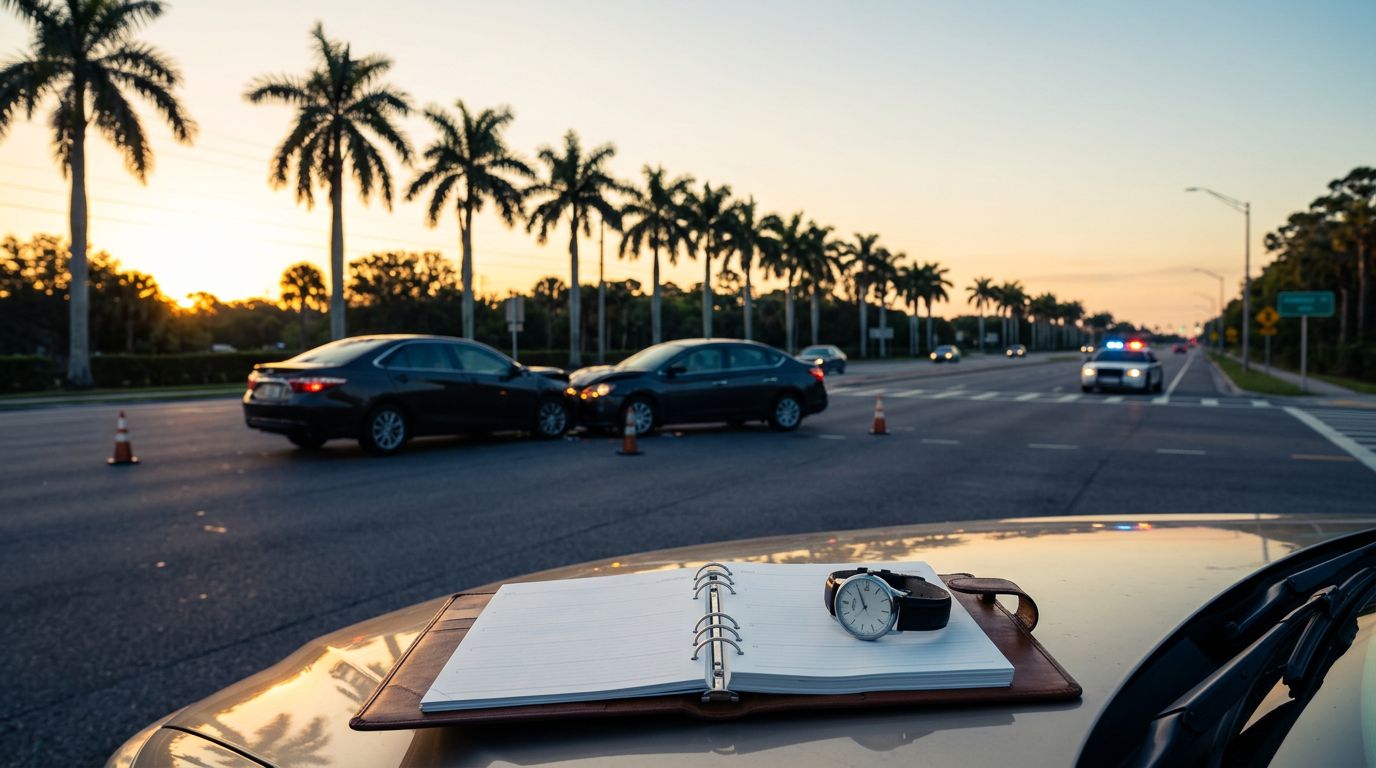
Two years can pass quickly after a serious collision. Medical treatment, insurance disputes, and lost income may consume your attention while the legal deadline moves closer.
The Florida car accident lawsuit deadline is generally two years for negligence claims arising from crashes on or after March 24, 2023. Older crashes may follow a four-year deadline. Missing the correct date can prevent you from recovering compensation, even when another driver caused the wreck.
The date of your crash, the type of claim, and the identity of the defendant all matter.
What Is the Florida Car Accident Lawsuit Deadline in 2026?
As of August 2026, Florida’s general deadline for filing a personal injury lawsuit based on negligence is two years from the date of the accident when the claim accrued on or after March 24, 2023. Florida’s tort reform legislation, House Bill 837, shortened the prior four-year period for many negligence actions.
The law appears in Florida Statutes section 95.11(5)(a). Older sources may cite section 95.11(4)(a), because Florida renumbered parts of the statute after the law changed. The Florida Senate’s HB 837 bill page identifies the effective date as March 24, 2023.
The deadline usually begins on the date of the crash or injury. It does not normally start when your medical treatment ends, when an insurer denies your claim, or when you first learn how much the injury will cost.
For a broader explanation of Florida deadlines, review these Florida injury lawsuit time limits. However, a general summary cannot account for every fact that may affect your case.
Crashes Before March 24, 2023
If your accident occurred before March 24, 2023, the former four-year limitations period often applies to a negligence injury claim. For example, a crash on January 15, 2023, would generally have a filing deadline of January 15, 2027.
This rule is not based on when you discovered the new law. It depends mainly on when your claim accrued. The two-year change generally does not apply retroactively to claims that accrued before the effective date.
Crashes on or After March 24, 2023
For most injury claims arising from a crash on or after March 24, 2023, the deadline is two years. A collision on June 1, 2024, would usually have a lawsuit deadline of June 1, 2026.
The shorter period makes early legal review more important. Even when the deadline appears to be months away, a lawyer may need time to obtain records, identify witnesses, investigate fault, calculate damages, and prepare a complaint.
How to Calculate Your Filing Deadline
Start with the date of the collision and determine whether the two-year or four-year rule applies. Then identify every possible claim, because one accident can create several different deadlines.
A demand letter, an insurance claim, or ongoing settlement talks usually does not replace filing a lawsuit. If negotiations fail after the limitations period expires, you may lose the right to bring a court action.
The lawsuit must also meet procedural requirements. Filing a complaint before the deadline is important, but service of process, the correct defendant, and proper court procedures also matter. Waiting until the final days creates risks that a timely investigation could avoid.
These examples show how the deadline commonly works:
- A crash on February 10, 2023, generally falls under the older four-year negligence period, making the typical deadline February 10, 2027.
- A crash on April 20, 2023, generally falls under the two-year period, making the typical deadline April 20, 2025.
- A crash on August 5, 2025, generally has a deadline of August 5, 2027.
The second example shows why a person who delays until 2026 could already have an expired claim. The Florida car accident lawsuit deadline is based on the calendar, not on how long the insurance company takes to respond.
If you are unsure which rule applies, record the accident date and speak with a Florida personal injury attorney promptly. Do not rely on an online calculator alone when the crash occurred near March 24, 2023, or involves multiple claims.
Insurance Deadlines Are Different From Lawsuit Deadlines
Florida’s no-fault insurance system adds another layer to an accident claim. Your personal injury protection, or PIP, coverage may pay certain medical expenses and lost income regardless of who caused the collision. PIP commonly pays 80 percent of covered medical expenses and 60 percent of lost wages, subject to policy limits and legal requirements.
A PIP claim is not the same as a negligence lawsuit against the at-fault driver. You may need to report the crash, obtain medical care promptly, submit records, and follow your policy’s notice rules. Delays can create an insurance dispute even when the lawsuit deadline has not expired.
Florida law also limits when an injured person can recover pain and suffering damages from another driver. The injury generally must meet a serious-injury threshold, such as a permanent injury, significant permanent scarring or disfigurement, or the loss of an important bodily function. Medical records must support the claimed condition.
Property damage follows a different time limit. A claim based on damage to a vehicle or other property may have a four-year limitations period under Florida Statutes section 95.11(3)(g). A first-party insurance contract claim, such as some PIP or uninsured motorist disputes, may involve a five-year period under section 95.11(2)(b), but policy terms and notice requirements still apply.
The deadline for a personal injury lawsuit can also differ from the time allowed to make an insurance claim. These Florida car accident claim rules explain why fault disputes, PIP benefits, and the injury threshold must be evaluated separately.
An open insurance claim does not preserve a negligence lawsuit. Settlement discussions can continue while the court deadline expires.
Exceptions Can Change the Florida Car Accident Lawsuit Deadline
The two-year rule covers many ordinary injury claims, but it does not answer every deadline question. Certain facts can change the time limit, the starting date, or the steps required before filing.
Wrongful Death Claims
When a crash causes death, the personal representative of the estate may bring a wrongful death action. Florida generally allows two years from the date of death, rather than two years from the date of the collision.
A wrongful death case can involve different damages, beneficiaries, evidence, and filing procedures. Family members should seek legal advice quickly because estate administration may also require time.
Crashes Involving Government Vehicles
A claim against a city, county, state agency, or other government entity can involve special notice rules and damage limits. A government vehicle may include a public bus, police car, county truck, or state-owned vehicle.
These claims require prompt investigation. Accident reports, vehicle records, body-camera footage, and agency documents may not remain available indefinitely. A person should not assume that the ordinary two-year deadline applies without reviewing the defendant’s legal status.
Delayed Symptoms and Tolling Issues
Some injuries appear gradually. Neck pain, nerve symptoms, traumatic brain injuries, and psychological effects may become clearer after the crash. In an ordinary negligence case, delayed diagnosis usually does not restart the limitations period.
Florida has limited tolling rules for certain circumstances, including some situations involving a defendant’s absence, concealment, or other facts recognized by statute. Tolling is narrow and fact-specific. Continuing medical treatment alone usually does not pause the clock.
Minors, incapacitated people, multiple defendants, and claims involving a deceased driver can raise additional issues. Those facts require a case-specific review rather than an assumption that the deadline automatically extends.
What to Do When the Deadline Is Approaching
If you may have a Florida car accident lawsuit deadline within the next year, gather the information a lawyer will need:
- Write down the exact crash date, location, and the names of every involved driver.
- Collect the crash report, insurance information, photographs, medical records, bills, and wage-loss documents.
- Keep copies of every insurer letter, recorded statement request, settlement offer, and medical authorization.
- Ask a personal injury attorney to review the deadline, potential defendants, insurance coverage, and injury evidence.
Avoid giving a recorded statement or signing a broad release before you understand the full value of your claim. A settlement may resolve your case permanently, including claims for future medical care that you have not yet calculated.
A lawyer may also need to preserve video footage, inspect damaged vehicles, locate witnesses, consult medical professionals, or obtain employment records. Those tasks become harder when the case begins shortly before the filing deadline.
The Florida car accident lawsuit deadline is only one part of the analysis. You also must show that another party caused the crash, prove the extent of your losses, and satisfy Florida’s rules for recovering damages. Since HB 837 also changed comparative negligence, a person’s share of fault can affect recovery. A plaintiff who is more than 50 percent at fault generally cannot recover damages under Florida’s modified comparative negligence system.
Conclusion
The Florida car accident lawsuit deadline is generally two years for negligence injury claims arising from crashes on or after March 24, 2023. Older claims may receive the former four-year period, while wrongful death, property damage, insurance, and government claims can follow different rules.
Do not wait for an insurer to finish negotiations before checking the court deadline. A prompt review can identify the correct filing date, preserve evidence, and protect your ability to seek compensation for the harm caused by the crash.