
Florida CT Scan Errors: When a Misread Causes Harm
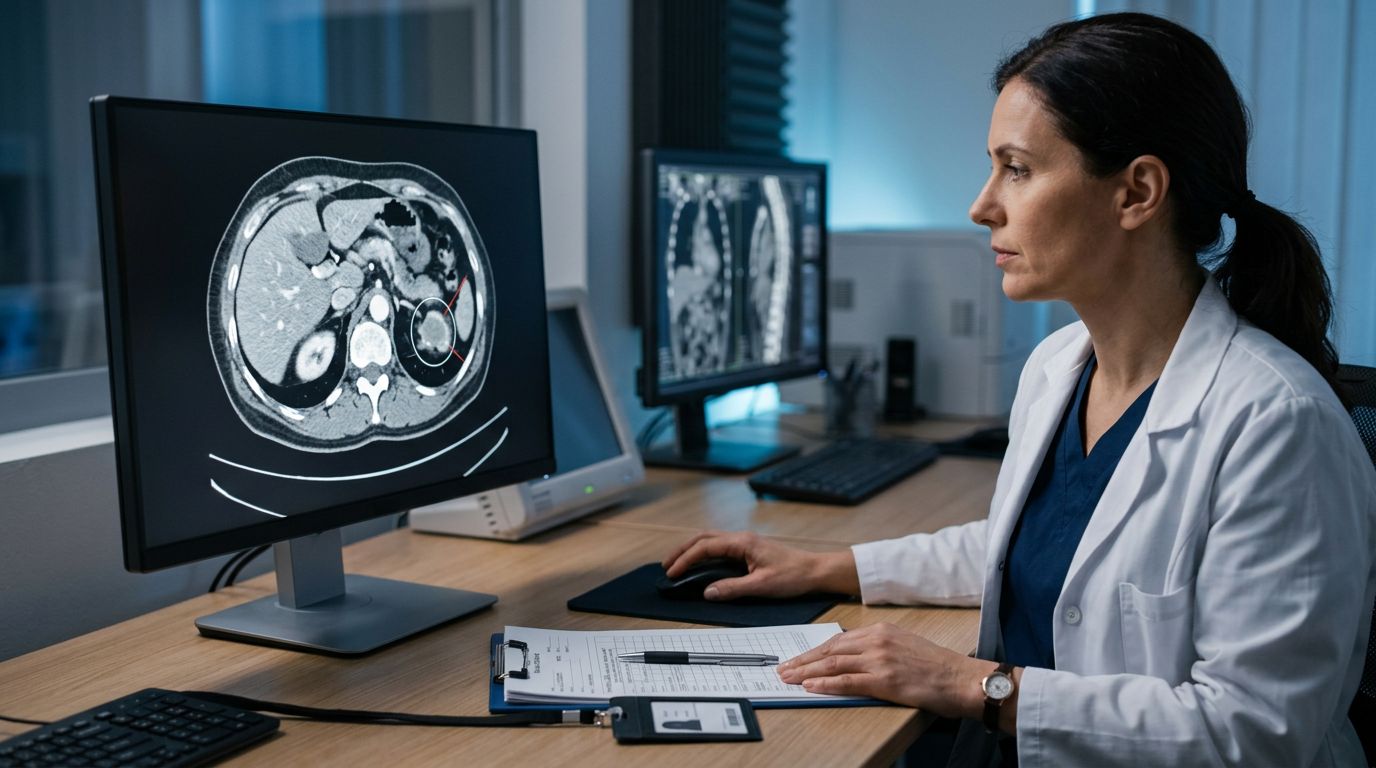
A CT scan can reveal a serious condition, but only if someone recognizes the finding and communicates it in time. When a radiologist misses a visible abnormality or a doctor fails to act on a dangerous report, treatment may be delayed while the condition worsens.
Florida CT scan errors can lead to medical malpractice claims, but a poor outcome alone doesn’t prove negligence. The case usually depends on medical records, the original images, expert review, and a clear connection between the error and the harm. Florida law also imposes strict deadlines and pre-suit requirements.
Key Takeaways
- A missed lesion, incorrect interpretation, incomplete report, or communication failure may support a claim.
- A radiology mistake becomes malpractice only when it falls below Florida’s professional standard of care and causes injury.
- Expert testimony usually is necessary to prove what a reasonably prudent radiologist should have recognized.
- Patients should preserve scan images, report versions, treatment records, and evidence of the resulting harm.
- Florida medical malpractice deadlines can limit a claim, so early legal review matters.
How CT Scan Errors Happen in Florida
A CT scan error can occur before, during, or after the radiologist reviews the images. The radiologist may fail to identify a mass, fracture, blood clot, internal bleeding, bowel obstruction, or other condition that appears on the study. Sometimes the finding appears in the report but gets described incorrectly or assigned the wrong level of urgency.
Research on radiology mistakes often separates errors into two broad categories. Perceptual errors happen when an abnormality is present but the reader doesn’t see it. Cognitive errors occur when the reader sees a finding but misunderstands its meaning or attributes it to another condition. Reviews of diagnostic errors have found that perceptual mistakes account for a large share of radiology misses. See this research review of radiology diagnostic errors for background on how these failures occur.
Common examples include:
- Missing a lung nodule, pulmonary embolism, or early cancer.
- Failing to identify pancreatic, bowel, liver, or kidney abnormalities.
- Overlooking a bone lesion or fracture near the edge of the images.
- Stopping the search after finding one problem, while missing a second condition.
- Misreading a vascular abnormality or internal bleeding.
- Comparing the current scan improperly with an older study.
- Issuing a report that doesn’t mention an important visible finding.
A radiologist may also make an error when reviewing a multi-region CT scan. A study covering the chest, abdomen, and pelvis contains more images and more organs to assess. That workload doesn’t excuse negligence, but it can help explain how a report missed a serious condition.
The error may involve more than the radiologist. An emergency physician, primary care doctor, hospital, imaging facility, or specialist may have a separate duty to review results and arrange follow-up. A dangerous finding that sits in a chart without reaching the right provider can cause the same delay as a misread image.
When a Radiology Report Error Becomes Malpractice
Florida Statute section 766.102 generally requires proof that a health care provider failed to meet the prevailing professional standard of care. In a CT case, the question is whether a reasonably prudent radiologist with similar training, experience, and information would have identified or properly reported the finding.
A radiologist doesn’t commit malpractice every time a diagnosis is difficult. CT images can be unclear because of motion, poor contrast, limited coverage, artifacts, unusual anatomy, or the condition’s early stage. A reasonable disagreement between qualified doctors also may not establish negligence.
The facts become stronger when the abnormality was visible, significant, and reasonably identifiable under the circumstances. Expert radiologists often review the original images without relying only on the written report. They may assess the size and location of the lesion, image quality, prior studies, clinical history, and the applicable reporting expectations.
A claim may involve one or more of these theories:
- Failure to detect: The radiologist overlooked an abnormality that should have been seen.
- Incorrect interpretation: The finding was visible but classified as benign or unrelated.
- Incomplete reporting: The report omitted a condition or failed to recommend appropriate follow-up.
- Failure to communicate: A critical result wasn’t promptly conveyed to the treating provider.
- Failure to act: A doctor received the report but didn’t order the next reasonable test or treatment.
The report’s wording can matter. Radiology reports often describe whether a finding is suspicious, urgent, indeterminate, or likely benign. A vague statement may create a problem if it fails to communicate the need for follow-up. However, liability depends on the complete medical record, not one sentence taken out of context.
Patients who want a broader discussion of these issues can review this guide to Florida radiology malpractice claims. A CT case may involve multiple providers, and each person’s role requires separate analysis.
Proving the CT Error Caused Additional Injury
Finding a mistake is only one part of a Florida medical malpractice claim. The patient must also show that the mistake caused a specific injury. That connection is often the most disputed issue in a misread CT case.
For example, suppose a CT scan shows a suspicious lung nodule, but the report calls it scar tissue. Months later, another scan reveals advanced lung cancer. The claim may depend on whether earlier diagnosis would more likely than not have allowed treatment that would have improved the outcome. The case needs medical evidence about the disease’s progression, available treatment, prognosis, and the effect of the delay.
A lawyer and medical experts may compare two paths:
- What happened after the inaccurate or incomplete report.
- What likely would have happened if the condition had been identified and treated on time.
That comparison can involve survival time, cancer stage, surgical options, permanent impairment, hospitalization, pain, lost income, and future medical needs. A delayed diagnosis doesn’t automatically prove that an earlier diagnosis would have prevented all harm. The evidence must show a reasonable medical probability that the delay caused additional damage.
Causation can also arise in emergency cases. A missed pulmonary embolism, internal bleed, bowel perforation, or spinal injury may cause rapid deterioration. In those cases, emergency records, vital signs, medication timing, consultations, and repeat imaging can help establish when the condition became apparent and whether earlier action could have changed the result.
The original condition matters. A patient may already have a serious illness before the scan error occurs. The legal question is whether the radiology or communication failure made the outcome worse, caused a new injury, increased treatment burdens, or reduced the chance of recovery.
A radiology malpractice claim may involve economic and noneconomic damages, depending on the proof. Potential losses can include medical bills, rehabilitation, lost wages, reduced earning ability, additional treatment, pain, disability, and loss of enjoyment of life. In a fatal case, surviving family members may have separate rights under Florida law.
Records That Matter in a Florida CT Scan Claim
A written report is important, but it rarely tells the whole story. CT evidence includes the actual image files, metadata, orders, clinical notes, and later interpretations. A lawyer needs to preserve the record before systems overwrite or update it.
Request copies of the following when possible:
- The complete CT images in DICOM format.
- The original radiology report and every amended version.
- The imaging order and clinical reason for the scan.
- Prior and later scans for comparison.
- Emergency department, hospital, primary care, and specialist records.
- Notes showing when providers received or reviewed the report.
- Messages, calls, alerts, and documented follow-up instructions.
- Bills, wage records, disability records, and treatment expenses.
An amended report can be especially important. A radiologist may add an addendum after another doctor questions the original reading. The timing, reason for the change, and communication of the new information may affect the case.
Patients should also write down what they remember while events remain fresh. Include the date of the scan, the symptoms that led to it, what doctors told you, when treatment changed, and when you learned about the possible error. Keep a calendar of appointments and treatment, but don’t alter medical records or contact providers in a way that could interfere with care.
Communication failures deserve close review. A dangerous CT finding may be correctly identified but never reach the physician responsible for follow-up. A patient may have a strong claim even when the radiologist’s interpretation was accurate if the health care system failed to communicate or act on the result. Learn more about claims involving uncommunicated test results when a report was not delivered or followed up.
Independent image review is often necessary. A qualified radiologist can determine whether the abnormality was visible at the time, whether the report accurately described it, and whether the delay affected treatment. Legal counsel can also identify which entities possessed the images and records, then seek them through the appropriate process.
Florida Deadlines and the Medical Malpractice Process
Florida medical malpractice cases generally require more preparation than ordinary injury claims. Before filing suit, a claimant usually must conduct a reasonable investigation and obtain corroboration from a medical expert that reasonable grounds exist for the claim. The pre-suit process also includes formal notice to potential defendants and a period for investigation and response.
The deadline is another concern. Florida medical malpractice claims often involve a two-year limitations period tied to when the incident occurred or when the injury was discovered, subject to the statute’s requirements. A four-year statute of repose can bar many claims even if the patient discovers the problem later. Exceptions may apply in situations involving fraud, concealment, or misrepresentation, but patients shouldn’t assume an exception will protect them.
The exact deadline can depend on the dates, the patient’s knowledge, the provider’s conduct, and the nature of the injury. A lawyer may need to review the complete timeline before giving a reliable answer. Waiting for treatment to finish, hoping a hospital will explain the error, or delaying until symptoms become severe can reduce the available options.
A strong review usually begins with these questions:
- Who ordered the CT scan?
- Who performed and interpreted it?
- What did the images show at that time?
- What did the report say?
- Who received the report, and when?
- What treatment would likely have occurred with a correct and timely interpretation?
- What additional injury resulted from the delay?
The potential defendants may include a radiologist, radiology group, hospital, imaging center, treating physician, or another provider. Their legal responsibility depends on the evidence and their individual duties. An attorney can also assess whether the claim involves medical negligence, wrongful death, disability, or another related legal issue.
Protecting Your Rights After a Suspected Misread
Your first priority is medical care. Ask your current physician to review the scan and explain what treatment or testing you need now. A legal case can’t replace urgent care, and seeking treatment creates records that may clarify the medical timeline.
Next, preserve information. Obtain your records and imaging discs or electronic files, save bills and work documentation, and keep written communications. Don’t rely on a portal indefinitely, because access can change after a provider or facility updates its system.
Then, seek a Florida medical malpractice evaluation promptly. Bring the scan reports, later diagnostic records, treatment history, and a timeline of events. The attorney may recommend an independent expert review before deciding whether the evidence supports pre-suit notice.
A claim’s value isn’t determined by the fact that a radiologist made an error. The important issues are whether the error violated the professional standard, whether it caused a measurable delay or injury, and whether the claim was brought on time. Research on CT and MRI diagnostic errors describes why image review and clinical context both matter when evaluating a missed diagnosis.
Conclusion
A misread CT scan can delay cancer treatment, emergency intervention, surgery, or care for a serious injury. Still, Florida CT scan errors become actionable only when qualified evidence shows a breach of the professional standard and a resulting injury.
Preserve the images and reports, document the treatment timeline, and get legal advice before the deadline passes. The sooner the record is reviewed, the easier it is to determine whether a radiology report error caused harm that timely care could have prevented.