
Florida Daycare Injury Claims After Poor Supervision
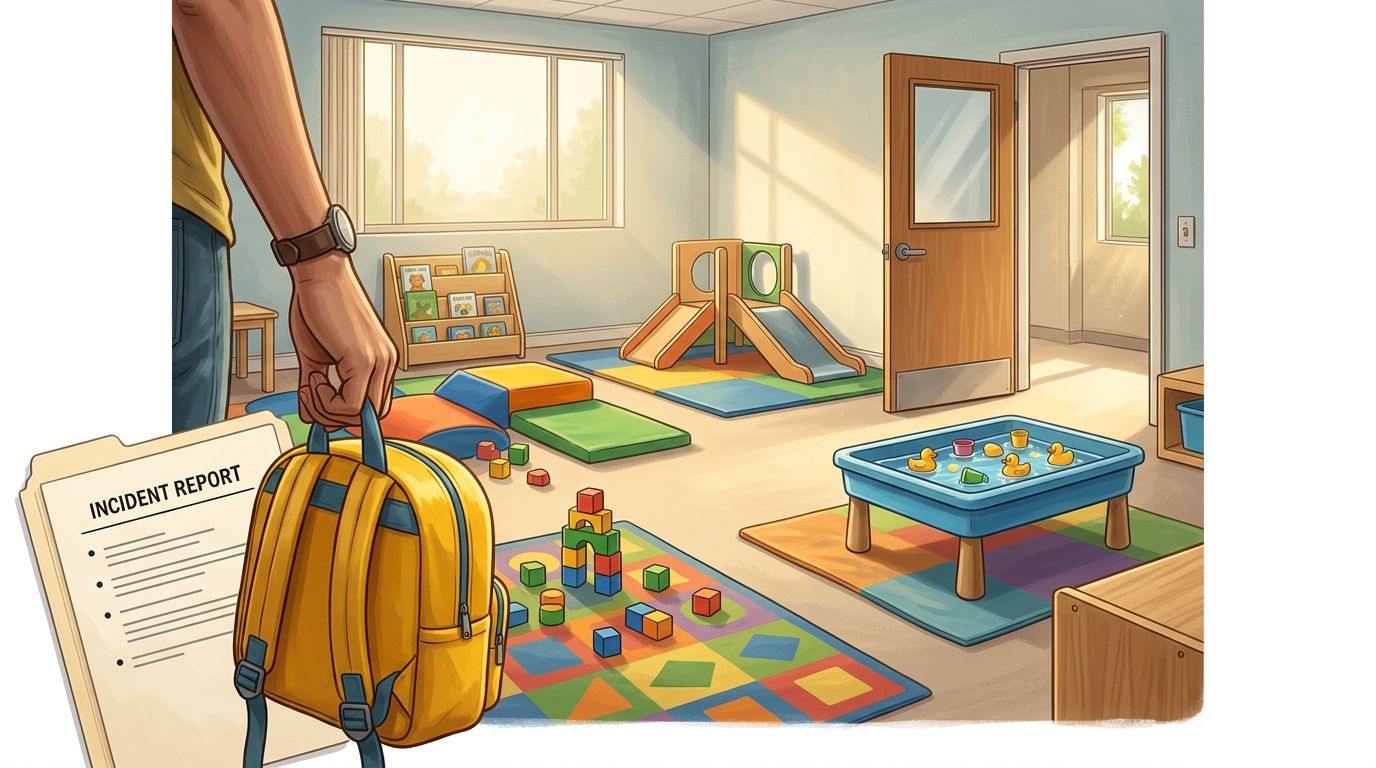
A child can suffer a serious injury during the few minutes staff stop watching. Florida daycare injury claims often arise when a childcare provider leaves children unattended, assigns too few workers to a group, or allows daycare negligence to put kids at risk.
Florida childcare rules require active supervision, not a quick glance across the room, because providers owe a legal duty of care to every child enrolled. When inadequate supervision causes harm, parents may file a daycare negligence claim against the facility, its employees, or another responsible party. The evidence can disappear quickly, so early documentation matters.
Key Takeaways
- Florida daycare injury claims often stem from inadequate supervision, such as missed child counts, broken staff-to-child ratios, or unattended water sources.
- Parents must prove four legal elements: that the daycare owed a duty of care, breached that duty, directly caused the injury, and resulted in actual damages.
- Immediate actions—like seeking prompt medical care, securing written incident reports, preserving surveillance video, and documenting symptoms—are vital for protecting a claim.
- Florida’s statute of limitations and complex rules regarding child injury lawsuits mean families should consult a personal injury attorney quickly to avoid losing their right to compensation.
What Inadequate Supervision Looks Like
Florida law requires childcare personnel to remain responsible for children in their care. Staff must know which children belong to their assigned group and stay with that group during activities, transitions, meals, outdoor play, and other routine periods, which forms the core of daycare liability when ignored.
The Florida Department of Children and Families childcare requirements identifies Florida Statutes Chapter 402 and related administrative rules as sources for licensing and operational standards. These rules help establish what reasonable supervision should look like in a licensed facility and define the basic duty of care expected from every childcare provider.
Direct supervision generally means actively watching and directing children in the same room or designated outdoor area. Staff must respond to each child’s needs and remain able to act when a child faces an immediate danger, preventing instances of inadequate supervision.
Common supervision failures and signs of daycare negligence include:
- Leaving a classroom, bathroom, playground, or nap area without another qualified adult present.
- Failing to count children during transitions between rooms or outdoor areas.
- Allowing an adult to supervise more children than staff-to-child ratios permit, making it impossible to safely manage the group.
- Missing a child who wanders away from the assigned group.
- Failing to watch children around pools, water tables, bathtubs, or other water sources.
- Ignoring aggressive conduct between children after earlier incidents, which can sometimes mirror child abuse and neglect in severe cases of oversight.
- Leaving small objects, unsafe toys, hot food, cleaning products, or other dangerous conditions within reach.
- Failing to monitor children during feeding, diaper changes, or sleep periods.
Infants and toddlers require particular care, and strict staff-to-child ratios help ensure they receive it. Florida materials require direct supervision for children up to 24 months, including during nap and sleep time. For other children, nap supervision generally requires staff to remain within sight and hearing and close enough to respond.
Water activities also carry strict supervision expectations. A worker who watches several children from a distance may not be able to react quickly enough to a fall, submersion, or choking event. The question is whether staff were positioned and attentive enough to prevent or respond to the danger, especially when evaluating daycare negligence.
A short supervision lapse can matter when the child needed constant or close supervision under Florida’s childcare standards.
Florida Daycare Injury Claims: What Parents Must Prove
Most Florida daycare injury claims are grounded in daycare negligence. The parent must connect the facility’s conduct to the child’s injury rather than relying only on the fact that an accident occurred.
A claim typically requires proof of four points:
- The daycare owed the child a duty of reasonable care. A provider that accepts a child for care must uphold a strict duty of care regarding supervision, safety, and appropriate response.
- The daycare breached that duty. Such daycare negligence may involve inattention, inadequate staffing, failure to follow licensing rules, or failure to address a known hazard.
- The breach caused the injury. To successfully file a child injury lawsuit, the evidence must show that better supervision probably would have prevented the incident or reduced its severity.
- The child suffered damages. Medical treatment, future care, pain, disability, and other losses can support compensation.
A licensing violation can provide useful evidence, but it doesn’t automatically decide the lawsuit. The facts still must show that the violation related to the injury. For example, a missing staff member may support a claim when a child leaves a playground unnoticed and falls. The same violation may have little connection to an injury caused by a sudden medical event that no reasonable caregiver could have predicted.
Parents should also consider whether daycare liability involves more than one party. The daycare owner may have ignored staffing shortages. A manager may have assigned an untrained worker to a high-risk group. A property owner maintaining unsafe premises or an equipment company may share responsibility for a dangerous condition. When determining how to prove these elements in a child injury lawsuit, consulting an experienced personal injury attorney can provide vital guidance.
For a closer look at the elements and evidence involved, see Avard Law’s guidance on Florida daycare injury claims.
Injuries and Compensation in a Daycare Case
Inadequate supervision can cause physical injuries that appear minor at first. A child may develop symptoms hours later after a head impact, while inadequate supervision can also lead to severe physical injuries like fractures, concussions, or lasting pain. Choking, burns, cuts, and injuries caused by another child may also support a claim when staff failed to supervise properly.
The type and value of a claim depend on the medical evidence and the child’s long-term needs. Potential compensatory damages may include:
- Emergency treatment, physician visits, medical expenses, medication, and rehabilitation.
- Future medical care, therapy, assistive equipment, or specialist treatment.
- Pain and suffering, physical limitations, emotional distress, and reduced quality of life.
- Permanent scarring, disfigurement, brain injury, or disability.
- Lost income or caregiving costs when a parent must miss work to care for the child, alongside related pain and suffering.
- Additional medical expenses for ongoing therapy and recovery.
Parents should avoid estimating the child’s recovery based only on the first medical visit. Some injuries require follow-up care, testing, or observation before a doctor can assess the full effect.
A daycare incident report may describe the event as an accident, but that label does not answer whether staff acted reasonably or if daycare negligence occurred. An official incident report that says a child fell while playing often masks a deeper breach of the legal duty of care in a potential child injury lawsuit. Who was watching the area? How many children were present? Had the child shown signs of distress? Did staff inspect the equipment? Were cameras operating?
Steps to Take After a Supervision-Related Injury
Your actions after the incident can protect your child’s health and preserve evidence. Take these steps as soon as possible:
- Get medical care. Follow the doctor’s instructions and attend recommended appointments. Tell the provider when, where, and how the injury occurred.
- Report the incident in writing. Ask the daycare for a written incident report, then submit your own detailed account of what staff told you.
- Record your child’s symptoms. Keep notes about pain, sleep changes, behavior, missed school, medication, and limits on normal activities.
- Save every document. Keep enrollment agreements, emails, text messages, medical records, bills, photographs, and daycare communications.
- Request preservation of video and records. Security video surveillance footage, attendance sheets, staff schedules, training records, and child-count logs may be overwritten or discarded.
- Identify witnesses. Write down the names of workers, parents, children, or visitors who may have seen the event or its aftermath.
- Avoid signing a release too soon. A daycare or insurance company may ask you to accept payment before doctors know whether the child has a lasting injury, making it wise to consult someone who provides legal representation first.
Photographs should show the child’s injuries over time, not only on the first day. Take clear pictures with dates when possible, and keep the original files. Also preserve damaged clothing, broken items, or photographs of the location.
If the injury occurred on a daycare playground, evidence about inspection records, repairs, staff presence, and earlier complaints may matter. Parents dealing with playground accidents and unsafe premises can review guidance on preserving evidence after a child’s accident when the incident involves outdoor hazards.
Parents may also report suspected licensing violations to the Florida Department of Children and Families. That report can help regulators investigate, but it does not replace a civil claim for compensation or formal legal action. A licensing investigation and a personal injury case have different purposes.
Deadlines and Potentially Responsible Parties
Florida’s statute of limitations for many negligence lawsuits changed to two years for causes of action that accrued after March 24, 2023. However, claims involving children, public entities, government-run programs, or a negligent childcare provider may follow different rules and shorter timelines.
A child’s age doesn’t make the statute of limitations simple. Tolling rules and statutory exceptions can affect when a personal injury attorney must file a claim. Parents should not assume that the deadline waits until the child turns 18. The date of injury, the identity of the defendant, and the type of claim all matter.
The provider’s business structure also affects daycare liability and the scope of the case. A claim may involve:
- The daycare company or owner.
- A parent corporation or management company.
- Individual employees whose conduct caused the injury.
- A landlord or property owner responsible for dangerous conditions.
- An equipment manufacturer or maintenance contractor.
- A public school or government agency operating the childcare program.
Public entities often require additional notice before a personal injury attorney can initiate legal action. Insurance policies may also contain reporting requirements. For these reasons, speaking with counsel soon after the injury helps protect evidence and identify every possible defendant.
The Florida statute defining childcare and screening requirements outlines oversight standards established alongside the Florida Department of Children and Families, though licensing compliance isn’t a substitute for legal advice about a particular injury.
How an Attorney Evaluates the Case
A personal injury attorney will examine more than the daycare’s description of the event. To uncover evidence of daycare negligence, the investigation may compare the official incident report with medical records, surveillance footage, attendance logs, staffing schedules, employee statements, and prior complaints.
The central issue is often timing. A child may have been injured during a transition, while staff changed diapers, during lunch, or when one worker left to assist another child. Those details can show whether the staff upheld their legal duty of care for the child’s age and the activity’s risks.
A personal injury attorney may also check whether negligent daycare facilities had earlier notice of similar problems. Repeated reports of fighting, unsafe playground equipment, missing staff, or poor counting procedures can support an argument that management failed in their duty of care.
When dealing with negligent daycare facilities, parents should secure trusted legal representation. Bringing all available records to an initial consultation, including the daycare contract, photographs, medical bills, insurance communications, and names of witnesses, is essential. A free consultation with a personal injury attorney can help clarify whether the facts support a claim and what deadlines apply.
Frequently Asked Questions
What constitutes inadequate supervision under Florida daycare laws?
Inadequate supervision occurs when childcare staff fail to actively watch, direct, or protect children according to statutory requirements. Examples include leaving a classroom or playground unattended, failing to maintain mandated staff-to-child ratios, or ignoring children near water sources and hazards.
What must parents prove to win a Florida daycare injury claim?
Parents must demonstrate that the daycare facility owed a legal duty of reasonable care, breached that duty through negligence, and that this specific breach directly caused the child’s physical injuries and resulting damages.
How long do parents have to file a daycare injury lawsuit in Florida?
While Florida’s standard negligence statute of limitations is generally two years for recent causes of action, claims involving minors, government entities, or specific public programs can involve strict exceptions and much shorter notice timelines.
Why should parents request security footage immediately after an incident?
Daycare facilities frequently overwrite or discard security video surveillance footage, attendance sheets, and child-count logs after a short period. Requesting and preserving these records early prevents crucial evidence of negligence from disappearing.
Conclusion
A daycare injury may result from more than an unavoidable childhood accident. If staff failed to watch children properly, ignored a known hazard, or left a vulnerable child without required supervision, the provider may be responsible for the resulting harm. When parents pursue Florida daycare injury claims, they must show how daycare negligence and breaches of the duty of care caused physical injuries.
Prompt medical care, written documentation, preserved video, and a timely legal review can make the difference. Successful Florida daycare injury claims depend on proof, and that proof often becomes harder to obtain with each passing week. By consulting a personal injury attorney early, families can navigate the complexities of daycare liability, deal effectively with an insurance company, and seek the full compensation they deserve for physical injuries, medical expenses, and pain and suffering.