
Florida Demand Letter Checklist After a Car Accident
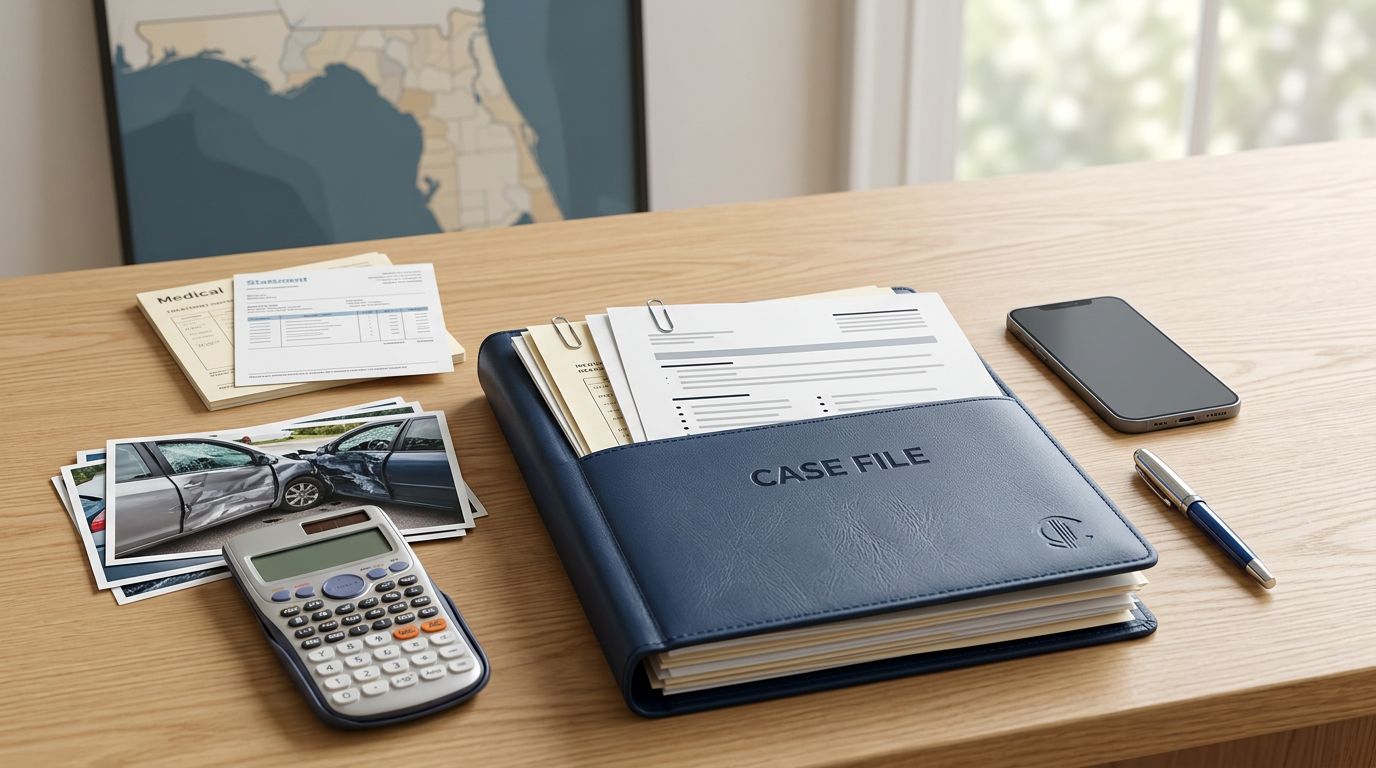
A car crash can create medical bills and missed paychecks before you have a clear answer about fault or insurance coverage. A well-supported Florida demand letter puts the insurer on notice that your injury claim has evidence behind it.
The letter should not be a rushed list of bills. It is a documented account of how the collision happened, how it injured you, and what financial losses followed.
Use this checklist to build a demand package that gives an insurance adjuster the information needed to evaluate your claim.
Start a Florida Demand Letter With the Right Foundation
A demand should follow medical care and evidence collection, not replace them. Early treatment protects your health and creates records that connect the collision to your symptoms.
Florida drivers often use Personal Injury Protection, or PIP, first. In most cases, treatment must begin within 14 days of the crash to qualify for PIP benefits. PIP may cover part of reasonable medical expenses and lost income, subject to policy limits and statutory conditions.
Confirm the correct claim and insurer
Before sending a Florida demand letter, verify the claim number, at-fault driver’s name, crash date, policy information, and adjuster’s contact details. One wrong digit can delay a review or send private records to the wrong file.
Also identify every possible source of coverage. This can include the other driver’s bodily injury policy, your uninsured or underinsured motorist coverage, and any umbrella policy. If the available limits are unclear, request the coverage information in writing.
A guide to requesting the other driver’s policy limits can help when the carrier gives vague or incomplete answers.
Avoid demanding settlement before losses are known
An early offer can look appealing when bills arrive. However, accepting it usually requires signing a release. That release may end your right to seek more compensation if therapy, surgery, or work restrictions continue.
You do not need to wait until every symptom disappears. Still, the demand should reflect a reasonably clear medical picture. If a physician recommends future treatment, include that recommendation and its expected cost when supported by records.
A signed release can close an injury claim even when the full course of treatment is still uncertain.
Give the Adjuster a Clear Account of Fault
The opening pages should make the claim easy to identify and hard to misunderstand. Lead with the collision date, location, vehicles involved, claim number, and the injured person’s name.
Then explain why the insured driver caused the crash. Use plain language and a logical sequence. A strong liability section does not exaggerate. It ties the driver’s conduct to traffic conditions and physical evidence.
State the crash facts in order
Describe what happened immediately before impact, at impact, and afterward. For example, identify lane positions, traffic signals, weather, speed if known, and the point of contact between vehicles.
Avoid estimates presented as facts. If you do not know a driver’s speed, say the available evidence does not establish it. Insurers often compare the demand letter with recorded statements, crash reports, photographs, and vehicle damage.
A citation can support your position, but it does not decide civil responsibility by itself. The same is true when an officer did not issue a ticket.
Address fault arguments before they grow
Insurers may claim you were distracted, following too closely, speeding, or able to avoid the crash. A Florida demand letter should address those allegations with evidence instead of broad denials.
For instance, photos may show the damage pattern. Video may establish lane position or a traffic signal. A witness may confirm that the other driver turned or merged without enough space.
If the crash report contains errors, do not ignore them. Preserve photos, witness information, and other proof that tells the accurate story. Review the steps for correcting an inaccurate Florida crash report before an insurer treats a mistake as settled fact.
Attach Evidence That Supports the Liability Story
A demand letter has more weight when every major statement points to an exhibit. Organize attachments so an adjuster can find them without searching through a large, unmarked file.
Create a numbered exhibit list and use the same labels in the letter. For example, “Exhibit 3, crash-scene photographs” is easier to review than a vague reference to attached pictures.
Preserve evidence before it disappears
Save original photos and video files, not only screenshots posted online. Request nearby business footage quickly because many systems overwrite recordings within days or weeks.
In addition, keep the damaged vehicle available for inspection until you have clear photographs and repair documentation. The location and shape of damage can support or challenge either driver’s version of events.
A Florida crash evidence preservation letter may be appropriate when a business, trucking company, property owner, or other party controls video, electronic data, or physical evidence.
Include the most useful liability exhibits
A focused demand package often includes:
- The crash report, along with a short explanation of any disputed or incorrect detail.
- Scene photographs showing vehicle positions, road markings, signs, debris, weather, and visibility.
- Vehicle photographs and repair estimates that show the impact area.
- Witness names, contact information, and signed statements when available.
- Dashcam, traffic-camera, or surveillance footage in its original format.
- Relevant citations, 911 records, or written admissions by the other driver.
Do not bury important proof beneath duplicate documents. Put the strongest evidence near the front and identify why it matters.
Document Injuries, Treatment, and Daily Losses
Medical records must show more than a diagnosis. They should connect the symptoms, treatment, and physical limits to the crash.
Seek care promptly after a collision, even if pain seems manageable at first. Neck, back, shoulder, wrist, and knee symptoms may worsen after the initial adrenaline fades. Tell each provider how the crash occurred and report every symptom that affects you.
Build a treatment timeline
Create a timeline that lists the date of each visit, provider, diagnosis, treatment, and next recommendation. Include emergency care, primary care, specialists, physical therapy, imaging, prescriptions, injections, and surgery consultations.
Attach itemized bills and records whenever possible. The demand should separate charges already paid by PIP or health insurance from outstanding balances. It should also identify future care recommended by a physician.
Gaps in treatment can give a carrier an opening to argue that your injury resolved or came from another event. If a gap occurred because of transportation problems, an authorization delay, or another real reason, explain it briefly and support it when possible.
Prove lost wages and life changes
Missed work needs evidence. Ask your employer for a wage-verification letter that confirms your job title, rate of pay, missed dates, and lost overtime or commissions. Pay stubs, W-2 forms, tax returns, and business records can support a claim for lost income.
Your Florida demand letter should also describe practical limits that bills do not show. Trouble sleeping, driving, lifting a child, completing household work, or performing job duties may support non-economic damages when the injury qualifies under Florida law.
Keep the description truthful and concrete. A short account of a doctor’s lifting restriction carries more weight than a general statement that daily life has been difficult.
Account for Florida Deadlines and Shared Fault
A demand letter begins a settlement discussion. It does not stop the deadline to file a lawsuit. Missing that deadline can end an otherwise strong claim.
For many negligence claims that accrued on or after March 24, 2023, Florida law provides a two-year filing period. Check Florida’s statute of limitations law early because the correct deadline can depend on the claim type and date of injury.
Put the lawsuit deadline on your calendar
Calculate the deadline from the date of the crash, then leave time for records requests, insurer review, negotiation, and legal action if needed. Do not rely on an adjuster’s promise that a claim remains “open.”
A claim file can stay open while the filing deadline passes. Settlement talks, a pending demand, and an insurer’s request for more records do not automatically preserve your right to sue.
If the carrier delays, denies fault, or makes a low offer, review your options before the deadline gets close. Florida crash claims when liability review stalls often require written follow-up and a closer look at the available proof.
Explain comparative fault with facts
Florida generally reduces damages by the claimant’s percentage of fault. In most negligence cases, a person found more than 50 percent responsible cannot recover damages. The state’s comparative-fault statute explains the percentage-based approach.
The current Florida Chapter 768 provisions also govern many injury and wrongful death claims. Because fault can directly reduce recovery, do not leave the adjuster to fill gaps with assumptions.
Address any real weakness in the evidence. A balanced explanation is more persuasive than pretending the other driver has no defense.
Set Out the Demand and Protect the Settlement
The final portion of the package should state the amount sought, response deadline, and materials included. The number should reflect documented damages, insurance coverage, and the facts of the case.
Avoid picking a figure based only on a multiple of medical bills. The value of an injury claim can also depend on future care, lost earning ability, permanency, fault evidence, and the coverage available.
Use a firm but reasonable response deadline
Give the insurer enough time to review records and obtain authority. A short deadline may make sense when liability is clear and policy limits are known. Yet an unrealistic deadline can produce a predictable request for more time.
Ask for a written response. If the insurer declines the demand or disputes part of it, request a clear explanation of its position. That response can identify missing evidence or an inaccurate fault theory.
A Florida accident settlement demand package should include a cover letter, supporting exhibits, and an attachment index. Clear organization helps prevent later claims that records were never received.
Review liens and releases before accepting
The gross settlement amount is not always the amount an injured person takes home. PIP insurers, health plans, Medicare, Medicaid, hospitals, and treatment providers may assert repayment or lien rights.
Before accepting an offer, identify those obligations and review the release language. A broad release may affect claims against other parties or your own uninsured motorist coverage.
Low offers deserve careful review, particularly when treatment continues or policy limits remain unclear. Learn more about evaluating a Florida injury settlement before signing away a claim.
When a Lawyer Should Review the Demand Package
Legal guidance is especially important when injuries are serious, fault is disputed, the other driver has limited insurance, or more than one insurer may provide coverage. It also helps when an adjuster seeks a recorded statement, requests broad medical authorizations, or pushes for a quick release.
An attorney can investigate the crash, gather records, evaluate insurance policies, and calculate damages before negotiations narrow your options. Early review also helps protect filing deadlines while the claim is still under discussion.
A Complete Demand Makes a Stronger Claim
A Florida demand letter is strongest when the crash evidence, medical timeline, wage proof, and requested settlement amount tell one consistent story. Accurate details carry more force than dramatic language.
Start with prompt treatment and evidence preservation. Then give the insurer a well-organized package that supports every major claim and protects your right to seek fair compensation.