
Florida Dog Knockdown Injury Claims Without a Bite
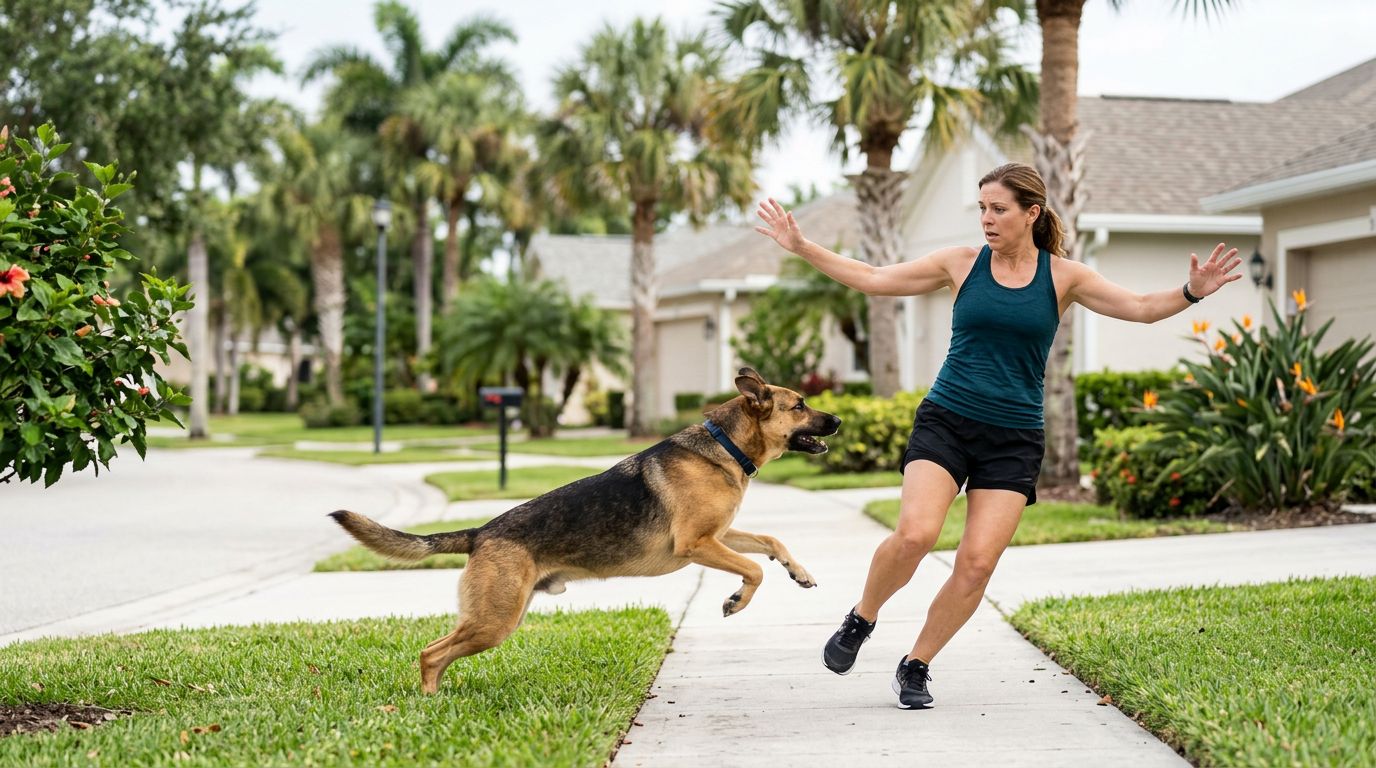
A large dog can cause serious injuries in seconds without breaking the skin. A sudden charge, jump, or chase can throw someone onto concrete, stairs, or a hard floor. Florida dog knockdown injury claims often depend on negligence rather than the state’s strict dog-bite statute.
If you were hurt in a fall caused by a dog, the owner may still owe compensation. The key issues include who controlled the animal, whether the conduct was foreseeable, and whether the fall caused your medical and financial losses. Understanding those issues helps you protect evidence before it disappears.
How a Florida dog knockdown injury claim works without a bite
Florida’s bite statute has a narrow trigger
Florida Statute 767.04 applies when a dog “bites any person” in a public place or while the person is lawfully on private property. The statute generally imposes liability on the owner regardless of the dog’s previous viciousness or the owner’s knowledge of that behavior. You can review the wording in Florida’s dog-bite statute.
A fall without a bite usually falls outside that statute’s plain language. Therefore, you shouldn’t assume that the strict-liability rule automatically applies to a dog that knocked you down.
The distinction matters. A bite claim may not require proof that the owner knew the dog was dangerous. A non-bite claim usually requires stronger evidence that the owner’s conduct was unreasonable under the circumstances.
For a broader explanation of the bite-specific rule, see Florida dog bite law. The analysis changes if the dog scratched or bit you and the bite caused you to fall.
Negligence may provide a separate legal path
A negligence claim generally requires proof of four points:
- The defendant owed you a duty to use reasonable care.
- The defendant failed to act with reasonable care.
- That failure caused the incident.
- You suffered actual damages.
The facts may support negligence when an owner allows a dog to run loose, fails to use a leash, opens a door without controlling the animal, ignores repeated chasing, or leaves a gate unsecured. A person handling the dog can also face responsibility if that person failed to control it.
The dog doesn’t have to be classified as dangerous before you can investigate a claim. However, prior complaints, aggressive conduct, or animal-control records can help show that the risk was foreseeable.
What must be proven in a Florida dog knockdown injury case
A Florida dog knockdown injury claim depends on evidence that connects the dog’s conduct to the harm. The fact that a dog was nearby isn’t enough. You need to show what the animal did and why a reasonable person would have taken additional precautions.
Prove who owned or controlled the dog
Start by identifying the owner, handler, property occupant, or business responsible for the animal. The owner may have been holding the leash, but another person may have released the dog or allowed it to leave a yard.
Collect the owner’s name, address, phone number, insurance information, and the dog’s license or tag details when possible. If the incident happened at an apartment, condominium, rental home, store, or vacation property, identify the person who controlled the area as well.
Witnesses may know who routinely handled the dog. Doorbell cameras, apartment surveillance, neighborhood cameras, and phone videos can also establish control and ownership.
Show what the dog did
Descriptions should be precise. “The dog attacked me” gives less useful information than “the dog ran through an open gate, chased me down the sidewalk, jumped into my legs, and caused my knee to twist.”
Write down the sequence as soon as possible. Include whether the dog barked, growled, chased, jumped, blocked your path, pulled against a leash, or knocked you from a bicycle. Note the dog’s size, the owner’s response, the distance between you, and any warnings.
Photographs can show an open gate, broken fence, missing leash, slippery surface, stairs, lighting, or posted warning. Preserve the scene before property conditions change.
Connect the fall to your injuries
Insurance companies often argue that a later medical problem came from a preexisting condition or unrelated event. Prompt medical treatment helps establish the timeline.
Tell the healthcare provider that a dog caused the fall. Keep emergency room records, imaging results, prescriptions, orthopedic evaluations, physical therapy notes, work restrictions, and bills. Concussion symptoms, torn ligaments, fractures, back injuries, and shoulder damage may appear or worsen after the incident.
Your claim should also document lost wages, missed shifts, reduced work capacity, transportation costs, and other financial losses. Photos of bruising or swelling can support the medical record, but they don’t replace professional evaluation.
Who may be responsible for a dog-related fall?
The dog owner is often the first person examined, but the owner isn’t always the only possible defendant. Responsibility depends on control, knowledge, and the location of the incident.
The owner or handler
An owner may face a negligence claim if the owner knew the dog chased people, jumped on visitors, escaped the yard, or couldn’t be controlled safely. A person temporarily caring for or walking the dog may also have a duty to handle it reasonably.
The defense may argue that the event happened too quickly to prevent or that the dog showed no prior aggressive behavior. Those arguments make witness testimony, video, and prior complaints especially useful.
A landlord or property manager
A landlord isn’t automatically responsible for every injury caused by a tenant’s dog. However, liability may exist when the landlord or property manager knew about a dangerous condition, had control over the area, and failed to take reasonable steps.
For example, a property manager may become part of the case if repeated complaints described a dog running through a shared hallway or common area. A broken gate or unsecured enclosure may raise a separate property-maintenance issue. Review the factors in Florida landlord liability for dog attacks.
A business or other property controller
A store, hotel, apartment complex, event organizer, or property management company may have duties related to animals and conditions under its control. Those duties may include enforcing leash rules, responding to complaints, repairing gates, or warning visitors about a known risk.
A premises claim focuses on the conduct of the person or business controlling the property. The Florida premises liability duty of care may become relevant when the fall involved a common area, entrance, walkway, or other property condition.
Compensation available after a dog knocks you down
A no-bite incident can still produce expensive and lasting injuries. Compensation may include economic and non-economic damages when the evidence proves liability.
Economic damages can include emergency treatment, surgery, medication, rehabilitation, medical equipment, future care, lost income, and reduced earning ability. Keep receipts and wage records because insurers often request documentation for each claimed expense.
Non-economic damages may include pain, limitations on daily activities, emotional distress, disfigurement, and loss of enjoyment of life. A broken wrist can affect household tasks. A knee injury may prevent work, exercise, or caring for family members.
The value of a claim depends on the injury, treatment, prognosis, financial losses, available insurance, and the strength of the liability evidence. Don’t accept a settlement before you understand whether additional treatment or future restrictions are likely.
Steps to take after a dog knocks you down
Protect your health and the evidence
Take these steps as soon as you reasonably can:
- Seek medical care, even if the injury first seems minor. Some head, spine, and soft-tissue injuries develop symptoms later.
- Report the incident to local animal control or law enforcement. Request the report number and ask whether the agency has records involving the dog.
- Photograph your injuries, clothing, the location, the dog, the leash or fence, warning signs, and any surface that contributed to the fall.
- Get names and contact information for witnesses. Ask nearby businesses, neighbors, or property managers whether cameras recorded the event.
- Preserve medical records, bills, work documentation, messages with the owner, and communications with insurance companies.
- Avoid posting details or photographs that could be taken out of context. Give a factual account, and don’t speculate about fault.
If an insurer contacts you, provide basic incident information but avoid guessing about your recovery or signing a broad release before legal review. A release can end claims for future medical care.
Watch the filing deadline
Florida’s limitations statute generally provides two years for an action founded on negligence. The rule and its exceptions appear in Florida’s limitations statute.
That deadline doesn’t mean you should wait. Video may be overwritten, witnesses may move, and animal-control records may require timely requests. Claims involving a city, county, or other government entity may involve additional notice requirements. A lawyer should review the incident date, location, defendants, and legal theories promptly.
Defenses that can affect a no-bite claim
Comparative fault and permission disputes
The owner or insurer may argue that your actions contributed to the incident. Common allegations include approaching an unfamiliar dog, reaching toward it, running near it, ignoring a warning, or entering private property without permission.
Florida’s comparative-fault rules may reduce recovery if a fact finder assigns part of the responsibility to you. The owner’s conduct still matters, and a warning doesn’t automatically defeat a negligence claim. The parties must examine whether the warning was visible, whether it accurately described the risk, and whether the owner took reasonable steps to control the dog.
Permission also matters. A delivery worker, invited guest, tenant, customer, or pedestrian may have a different legal status than someone who entered a restricted area. Preserve messages, delivery records, invitations, leases, and posted access rules.
Prior incidents and dangerous-dog records
A formal dangerous-dog designation isn’t required for every negligence claim. Still, prior complaints or official records may show that the owner had notice of the dog’s behavior.
Florida’s statutory definition of a dangerous dog includes conduct such as aggressively attacking or endangering a person, depending on the documented facts. The Legislature’s dangerous-dog definition and related records can help identify what animal control previously knew.
If a dog had already been declared dangerous, additional duties and penalties may apply. Florida’s statute on attacks by dangerous dogs addresses consequences after a dangerous-dog attack or bite. Those rules are separate from proving civil negligence, but the records may affect the case.
Conclusion
A dog doesn’t need to bite before its owner may face responsibility for a serious injury. When a dog knocks someone down, the claim usually turns on negligence, control, foreseeability, causation, and documented damages rather than Florida’s bite-specific liability rule.
Prompt medical care, preserved video, witness information, animal-control records, and early legal review can make the difference in a Florida dog knockdown injury claim. The strongest case explains exactly what the dog did, who could have prevented it, and how the fall changed your health and finances.