
Florida EDR Evidence After a Car Accident
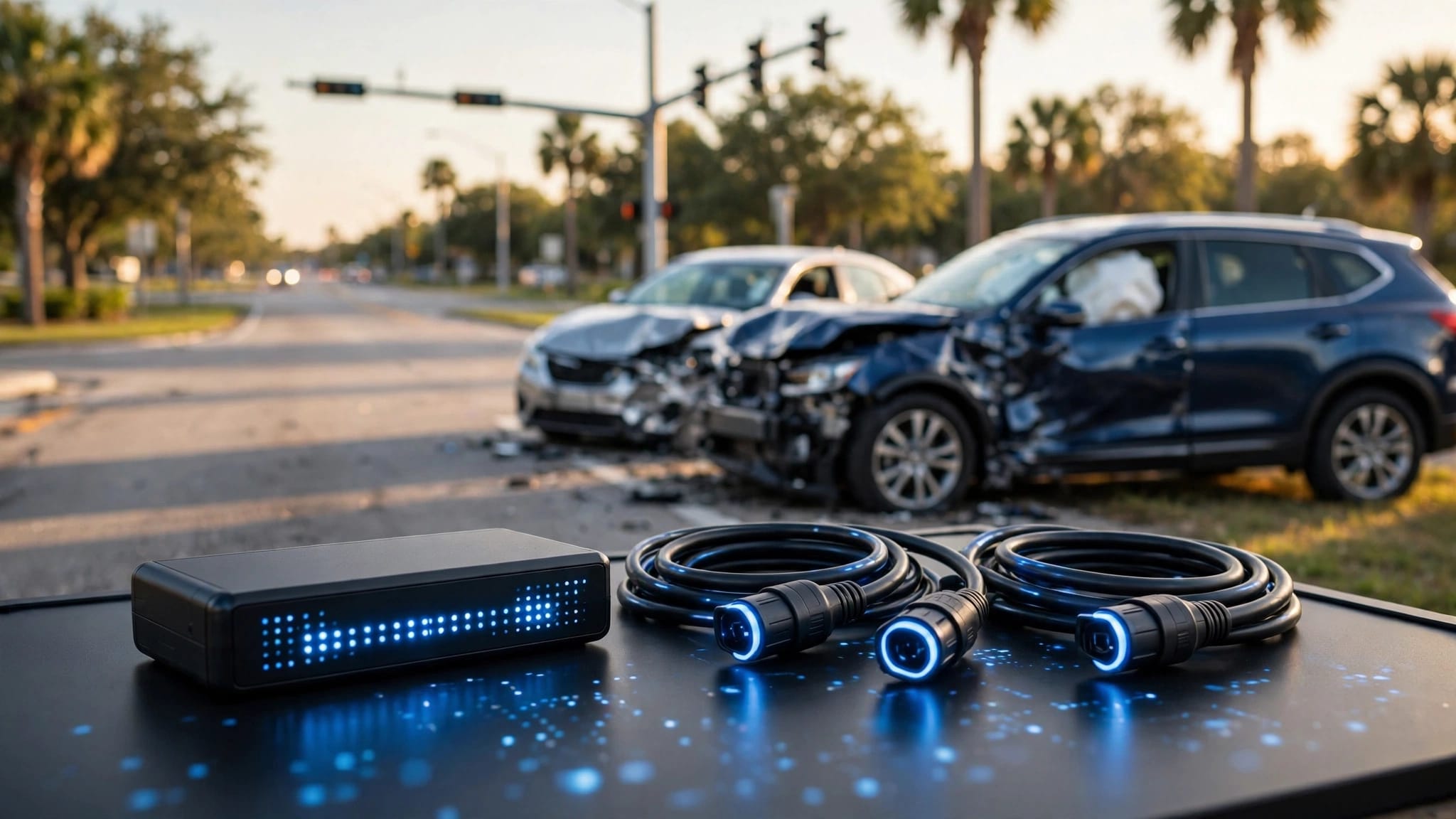
A serious crash can erase the clearest proof within days. A damaged vehicle may hold data about speed, braking, and seat belt use, but repairs, salvage, and repeated ignition cycles can put that evidence at risk.
Florida EDR evidence can help when drivers give different accounts of a collision. It cannot tell the whole story alone, yet it may clarify what happened during the seconds before impact. Quick action protects both the vehicle and your ability to pursue a claim.
How Florida EDR Evidence Can Clarify a Crash
An event data recorder, often called a vehicle “black box,” is an electronic function in many modern cars and trucks. It usually operates through the airbag or restraint-control system. Unlike an aircraft recorder, it does not create a full history of every trip.
Instead, an EDR may capture a short period before and during a qualifying crash event. That small window can matter when fault is disputed.
The seconds before impact often matter most
A driver may claim they braked hard, traveled below the speed limit, or had no time to avoid the collision. The EDR can sometimes test those claims. Depending on the vehicle and event, data may show vehicle speed, accelerator position, brake application, steering input, engine RPM, and change in velocity.
For example, a rear-end crash often brings arguments about sudden stopping or following distance. If recorder data shows the trailing driver did not apply the brakes until impact, that may conflict with a claim that they reacted promptly.
Similarly, in a disputed intersection collision, data may help establish whether a vehicle accelerated, slowed, or struck another car with enough force to deploy restraints.
EDR data supports, but does not replace, other proof
A data download is one piece of a larger case. Police reports, photographs, nearby surveillance footage, dashcam files, witness accounts, cell phone records, vehicle damage, and medical records often provide the rest of the picture.
An EDR may show what a vehicle did, but it does not identify every reason a driver made that choice.
A reconstruction professional can compare the recorded information with crush damage, roadway markings, and the final vehicle positions. This comparison may expose errors in a driver’s version of events. It can also show when electronic evidence does not fit the physical evidence.
What an Event Data Recorder May Capture
Federal EDR standards apply when manufacturers equip vehicles with an event data recorder. The current federal EDR requirements set rules for data elements, format, capture, and survivability.
However, vehicle makes, model years, installed equipment, and crash severity affect what exists and what a qualified technician can retrieve.
Common types of recorded crash data
A download may contain information such as:
- Vehicle speed during the seconds before impact.
- Brake switch activity and accelerator position.
- Engine speed and throttle application.
- Seat belt buckle status for certain seating positions.
- Airbag deployment, warning lamps, and restraint-system activity.
- Delta-V data, which measures the vehicle’s change in speed during a collision.
- Ignition-cycle information that may help identify when the event occurred.
Federal regulations require EDR-equipped vehicles to record certain core data elements under defined conditions. The data-element rule in 49 CFR 563.7 explains the required categories and technical standards.
What the “black box” does not show
Many people expect a black box to provide video, audio, GPS routes, or a driver’s complete travel history. An EDR generally does none of those things. The National Highway Traffic Safety Administration explains that event data recorders do not record conversations or video.
The recorder also may not capture every crash. A low-force collision might not trigger a recordable event. Some modules preserve deployment events more securely than non-deployment events. Other recorded events can be overwritten, depending on the manufacturer and system design.
That is why an attorney should never promise that Florida EDR evidence will be available or conclusive. The vehicle must be evaluated before anyone can know what data exists.
Florida Rules Limit Access to Vehicle Data
A crash does not make an EDR available for anyone to download. Florida Statutes section 316.0777 restricts retrieval, disclosure, and use of event data recorder information.
In most cases, the vehicle owner, lessee, or lessor controls access. Consent can permit retrieval. Without consent, a party seeking the data may need a court order, subpoena, or another lawful basis under the statute.
Insurers and repair shops do not have automatic permission
An insurance company may ask to inspect a damaged car. A body shop may need access to repair systems. Neither circumstance should lead to an informal EDR download without understanding what will be retrieved, preserved, shared, or potentially used against you.
Before authorizing access, ask for the request in writing. Identify the vehicle, the module at issue, the intended technician, and the scope of the download. A proper process should preserve the original data and document who handled the vehicle.
If the other driver owns the relevant vehicle, their consent may be unlikely. Your attorney can seek the information through formal discovery when a lawsuit is pending. Early legal action may also be needed if the vehicle is at risk of repair, auction, salvage, or destruction.
Ownership creates a practical deadline
The owner controls the vehicle, while an injured person may need its data to prove fault. That mismatch creates urgency. A towing yard, insurer, rental company, fleet owner, or salvage company may move the vehicle quickly.
A written preservation notice can tell the responsible party not to alter, repair, destroy, sell, or download the vehicle’s electronic modules without notice. For a closer look at this process, see this guide to preserving black box data after a Florida crash.
Protect the Vehicle Before Evidence Disappears
Medical care comes first after a collision. Still, evidence preservation should begin as soon as someone can act for you. The vehicle itself may be the strongest witness when the drivers disagree.
Do not assume a totaled car will sit untouched. Insurers often move quickly, especially when storage fees rise. A vehicle can be repaired, auctioned, dismantled, or declared salvage before anyone requests a download.
Take these steps after a Florida crash
If injuries or fault are disputed, take practical steps promptly:
- Photograph all sides of every vehicle, the roadway, debris, lane markings, traffic signals, skid marks, and visible damage before conditions change.
- Save photographs and videos in their original form. Do not rely on a social media post or an edited copy as the only version.
- Keep repair estimates, tow receipts, storage-yard records, and insurance correspondence.
- Tell your insurer in writing that the vehicle and its electronic data may be relevant to a legal claim.
- Avoid authorizing repairs, disposal, or an EDR download until you understand the consequences.
- Contact a Florida car accident attorney when injuries are serious or fault is contested.
A preservation letter is most effective when it reaches the person or business with actual control over the vehicle. That may include the owner, insurer, body shop, fleet operator, towing company, or salvage yard.
Do not alter the vehicle’s electronics
Repeated starts, battery work, module replacements, repairs, and diagnostic scans can affect electronic evidence. The risk varies by manufacturer and crash type, but there is no benefit in waiting when an EDR could matter.
A qualified technician should use the correct manufacturer-supported or forensic retrieval method. The process should document the vehicle identification number, module condition, software and equipment used, download date, and chain of custody.
Detailed records help answer a later challenge that someone changed the data or downloaded the wrong module.
Using EDR Data to Prove Fault and Damages
Florida EDR evidence has the greatest value when it answers a disputed factual question. It may support a claim that another driver sped, failed to brake, accelerated into an intersection, or struck a stopped vehicle.
Still, speed is not the same as legal fault. A driver traveling at a lawful speed can cause a crash by ignoring a red light. Another driver may brake but still carry responsibility for following too closely. The full record matters.
Compare the download with physical evidence
An attorney may work with an accident reconstruction professional to compare EDR data against the scene and vehicle damage. This analysis can test whether the timing and force of the crash fit the recorded data.
For instance, a low recorded speed paired with substantial damage does not automatically prove the data is wrong. The vehicles’ size, angle of impact, braking, and multiple impacts may explain the difference. A professional review avoids conclusions based on one number.
Florida’s modified comparative negligence rules can also affect recovery if each driver shares some responsibility. The current Florida negligence statutes address how fault can affect damages in motor vehicle injury cases.
Serious injury cases require a complete record
An EDR download cannot prove pain, disability, future treatment needs, or lost income. Those issues require medical records, treating-provider opinions, employment documentation, and evidence of how the injury changed daily life.
Yet crash data can strengthen the connection between the collision and the injuries. Delta-V, impact force, airbag deployment, and crash direction may help medical experts and juries understand the mechanics of a violent wreck.
When the other driver denies speeding, black box evidence in speeding accidents may be especially useful alongside skid marks, witness testimony, and vehicle damage.
Problems That Can Weaken EDR Evidence
Electronic data can be persuasive, but it is not immune from challenge. A strong case anticipates the limits before an insurer or defense lawyer points them out.
The most common issue is preservation. If a vehicle leaves the scene, changes hands, or undergoes repair, proving the module remained unchanged becomes harder.
A missing download is not the end of a claim
Some vehicles have no accessible EDR. Others may not record the specific event. A technician may find a damaged module, incomplete data, or a system that requires specialized equipment.
A claim can still proceed with other evidence. Video footage, 911 recordings, witnesses, photographs, roadway evidence, vehicle inspections, phone records, and admissions by a driver may establish fault.
The point is to identify available proof early, rather than placing every expectation on one electronic record.
The chain of custody matters
A download should have a clear history. The party offering it should be able to show where the vehicle stayed, who accessed it, what equipment retrieved the data, and whether the file was preserved in its original form.
An opposing insurer may question whether the report came from the correct vehicle or whether an earlier event was mistaken for the crash at issue. Vehicle identification information, crash reports, photographs, and ignition-cycle data can help resolve those disputes.
The federal government has continued updating EDR rules, including a 2026 final rule on recording requirements. However, the technology in the specific vehicle involved still controls what can be recovered.
A Timely Response Protects Florida EDR Evidence
The value of Florida EDR evidence often depends on timing. A short record of speed, braking, restraint use, and impact data can help resolve a contested account, but only if the vehicle remains available and access follows Florida law.
Preserve the car, keep your own records, and avoid casual authorization for repairs or data downloads. The first days after a collision may determine whether the vehicle can still tell its side of the story.