
Florida PIP Exhaustion: Paying for Treatment After a Crash
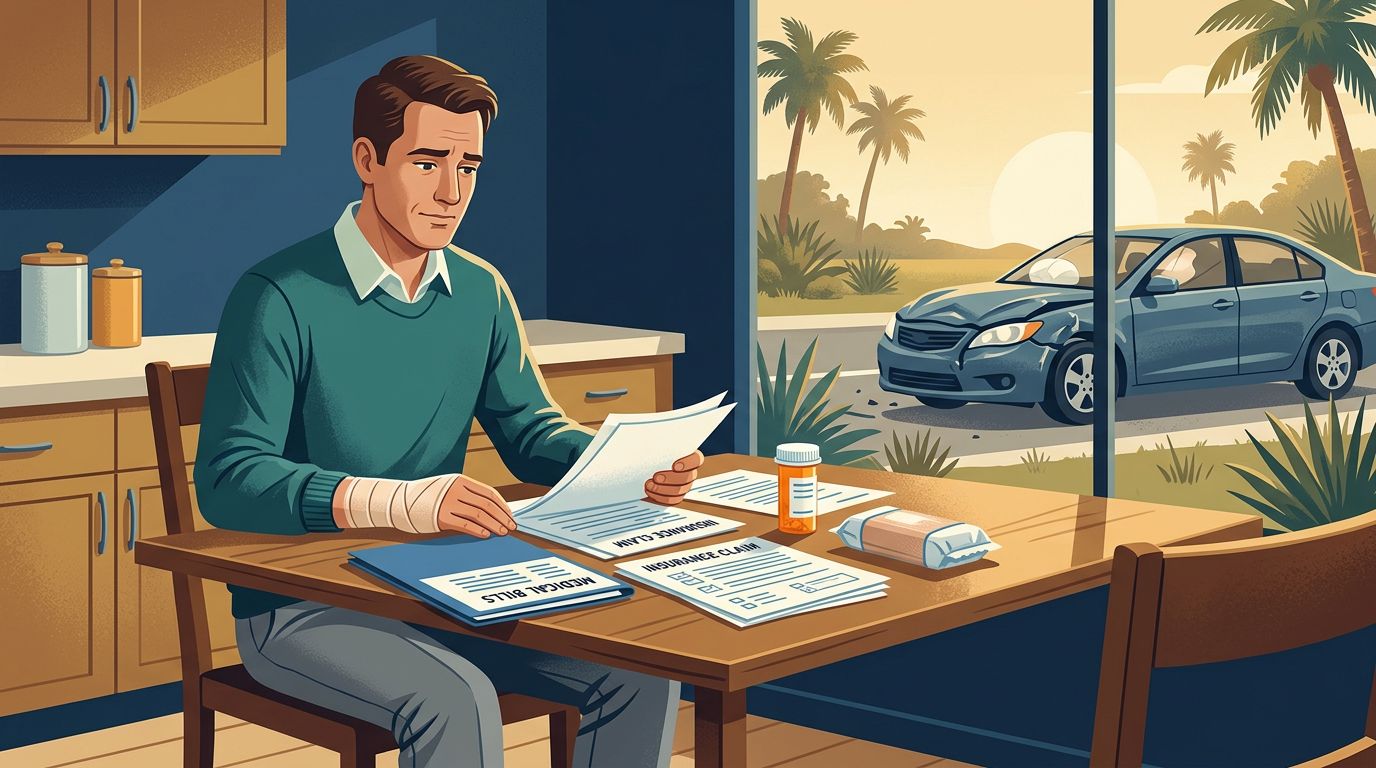
A Florida crash can leave you with medical bills long after your PIP insurer says the policy has no money left. Florida PIP exhaustion often arrives while you still need physical therapy, imaging, specialist care, medication, or surgery.
That notice doesn’t mean treatment must stop. It does mean you need to identify why PIP ended, what bills remain, and which insurance or legal claim may cover the gap.
What Florida PIP exhaustion means for medical care
Florida PIP is limited first-party coverage. Your own auto policy generally pays eligible benefits first, regardless of who caused the crash. Once the available benefit is spent, the insurer does not have to keep paying new accident-related charges under PIP.
The $10,000 limit can disappear quickly
Under Florida Statutes section 627.736, PIP generally pays 80% of reasonable and medically necessary treatment costs. It can also pay 60% of qualifying lost gross income when that coverage applies.
However, the $10,000 limit is a shared ceiling for covered medical and disability benefits. Emergency transport, hospital care, diagnostic imaging, follow-up appointments, and lost-wage benefits can use the available amount fast.
A provider may bill $12,000 for treatment, while PIP pays only a portion before the policy limit runs out. The remaining balance does not disappear because the crash was serious.
Exhaustion differs from a denied claim
A true exhaustion means the insurer paid all available PIP benefits. A denial or reduction means the insurer refused to pay a particular bill, claimed treatment was unnecessary, applied a lower cap, or calculated reimbursement incorrectly.
That distinction matters. A bill submitted after all benefits are spent may remain unpaid, but a bill denied before exhaustion may still be recoverable.
Ask for the insurer’s PIP payment ledger, explanation of benefits, and written exhaustion notice. These records show what the insurer paid, what it denied, and how much coverage remained at each point. Review how Florida PIP pays medical bills before assuming every unpaid charge is your responsibility.
Confirm why the insurer stopped paying
Before you seek another payment source, verify whether the insurer correctly applied Florida’s PIP rules. An incorrect exhaustion calculation can leave a patient with bills that should have been paid.
Check the 14-day rule and EMC finding
Florida requires injured people to obtain initial services and care within 14 days of a motor vehicle crash. Missing that deadline can prevent PIP medical benefits altogether. The details of Florida’s 14-day PIP treatment rule matter, especially when an insurer claims your first qualifying visit came too late.
The emergency medical condition, or EMC, determination also affects available benefits. A qualified provider must document an EMC for the full $10,000 medical benefit to be available. Without that finding, the medical-benefit cap may be limited to $2,500.
Pain alone does not automatically establish an EMC. Your medical records should explain the injury, symptoms, treatment plan, and why prompt care was medically necessary. An EMC determination affects PIP benefits far more than many crash victims realize.
Compare the ledger to actual billing
Insurance ledgers can be confusing. They may list billed charges, allowed amounts, deductible entries, payments, denials, and remaining benefits in separate columns.
Match each ledger entry to the provider’s itemized bill. Look for duplicate charges, bills sent to the wrong carrier, payment reductions, and treatment dates that were never submitted. A bill marked “patient responsibility” may reflect a legitimate co-payment, an unpaid deductible, PIP exhaustion, or an insurer error.
You should also ask whether PIP payments were applied to lost wages or other covered services. Those payments can reduce the amount left for medical treatment.
Use health coverage to keep treatment moving
PIP exhaustion should prompt a fast conversation with your health insurer and medical providers. Waiting for a liability settlement can leave needed care unpaid for months or longer.
Submit claims to health insurance after PIP ends
Health plans often require proof that auto coverage is exhausted before they will process crash-related treatment. Send the exhaustion letter, itemized medical bills, and any requested accident information to your health insurer.
Your plan may still require network providers, referrals, prior authorization, co-payments, or a deductible. Yet health insurance can be a more stable way to continue treatment than paying every new bill yourself.
Medicare, Medicaid, Medicare Advantage plans, and private health insurers may also pay covered treatment after PIP is depleted. If another insurer pays, it may claim reimbursement from a later injury settlement. Those repayment interests must be addressed before settlement funds are distributed.
Discuss payment arrangements in writing
Some providers will accept a payment plan, bill available health coverage, or agree to treat under a letter of protection. A letter of protection usually means the provider expects payment from a future settlement or verdict.
Read every agreement before signing. Check the interest rate, collection terms, cancellation language, and whether you are personally responsible if the case does not settle.
Medical choices should follow your doctor’s advice, not a billing arrangement. Still, clear communication with the provider can prevent surprise collections while you pursue other sources of payment.
A claim against the at-fault driver may cover the gap
PIP is only the starting point after a Florida car crash. If another driver caused the collision, a negligence claim may provide a path to recover medical expenses beyond the PIP limit.
Liability claims require proof of fault and damages
PIP exhaustion does not prove the other driver caused your injuries. A liability claim needs evidence that the driver acted negligently and that the crash caused your losses.
Useful evidence may include crash reports, photographs, witness statements, surveillance footage, vehicle data, medical records, and wage documentation. Your treatment records should also address prior injuries or degenerative conditions when they exist.
Florida’s injury threshold affects recovery for pain and suffering. A person may seek non-economic damages when the crash causes death, significant and permanent scarring or disfigurement, significant and permanent loss of an important bodily function, or a permanent injury within a reasonable degree of medical probability.
Look beyond one insurance policy
The at-fault driver may have bodily injury liability coverage, although Florida does not require it for every driver. Your own uninsured or underinsured motorist coverage may apply if you purchased it. MedPay, commercial policies, rideshare coverage, and employer policies can also matter.
A collision involving a delivery vehicle, work truck, rental car, or business-owned vehicle often requires a broader insurance review. The question of who pays medical bills after a Florida car accident depends on the crash facts and available policies.
Most negligence lawsuits for newer Florida injury claims have a two-year filing deadline. Waiting while bills accumulate can make evidence harder to preserve and can put a valid claim at risk.
Challenge a PIP decision that was wrong
Some Florida PIP exhaustion notices are accurate. Others reflect a denial, a coding issue, missing medical documentation, or a reimbursement calculation that deserves closer review.
Build a record before disputing unpaid bills
Collect the documents that show both the treatment and the payment problem:
- Keep the PIP ledger, explanation of benefits, denial letters, and exhaustion notice.
- Request itemized bills and medical records from each provider.
- Save referrals, prescriptions, imaging reports, and work restrictions.
- Gather employer records that support any lost-wage claim.
Medical records should connect the treatment to the crash and explain its medical purpose. A provider can sometimes correct a diagnosis code, clarify a treatment note, or submit missing records that change an insurer’s decision.
When an insurer says care was not medically necessary, review what to do when PIP denies treatment before accepting the denial as final.
Follow the required dispute process
Florida law sets procedures for disputed PIP benefits. A lawsuit for overdue benefits generally requires written pre-suit notice to the insurer. The insurer typically has 60 days to pay overdue benefits after receiving a proper notice of intent to initiate litigation.
An attorney can review the policy, payment history, medical file, and claimed balance. That review can separate a legitimate policy exhaustion from an underpayment that the insurer should correct.
Do not wait until a provider sends the account to collections. A dispute is easier to investigate while records, bills, and insurer communications are organized.
Protect yourself from avoidable billing problems
Unpaid medical balances create pressure, especially when treatment is ongoing. Stay involved in billing, even if your lawyer or provider communicates with the insurer.
Do not treat an exhaustion letter as a final bill
A PIP exhaustion notice tells you that the auto insurer believes no PIP benefits remain. It does not explain whether every provider billed correctly or whether a different insurer must pay.
A zero PIP balance does not establish what you personally owe. It only shows that the PIP carrier says no further benefits remain under that policy.
Ask each provider for an updated balance and a copy of any assignment of benefits, lien, payment agreement, or letter of protection. Keep those papers with your insurance records.
Keep a clear file of expenses and symptoms
Use one folder for medical bills, receipts, mileage records, wage-loss documents, prescriptions, insurer letters, and provider statements. Record the date of each appointment and note how injuries affect work, sleep, mobility, or daily tasks.
Consistent records support both a PIP dispute and a claim against the at-fault driver. They also help prevent the same bill from being paid twice or sent to collections by mistake.
Continue medical care as your provider recommends. Gaps in treatment can give an insurer room to argue that the injury resolved or that later care was unrelated to the collision.
The Next Step After PIP Benefits Run Out
Florida PIP exhaustion can create a serious financial gap, but it is not the end of your options. First confirm the insurer calculated benefits correctly, then use available health coverage and assess whether the at-fault driver or another policy should pay the remaining losses.
A complete review of the medical records, PIP ledger, and insurance policies can reveal unpaid benefits or another source of recovery. Prompt action protects your treatment, your financial stability, and your ability to pursue fair compensation.