
Florida Police Pursuit Claims for Injured Bystanders
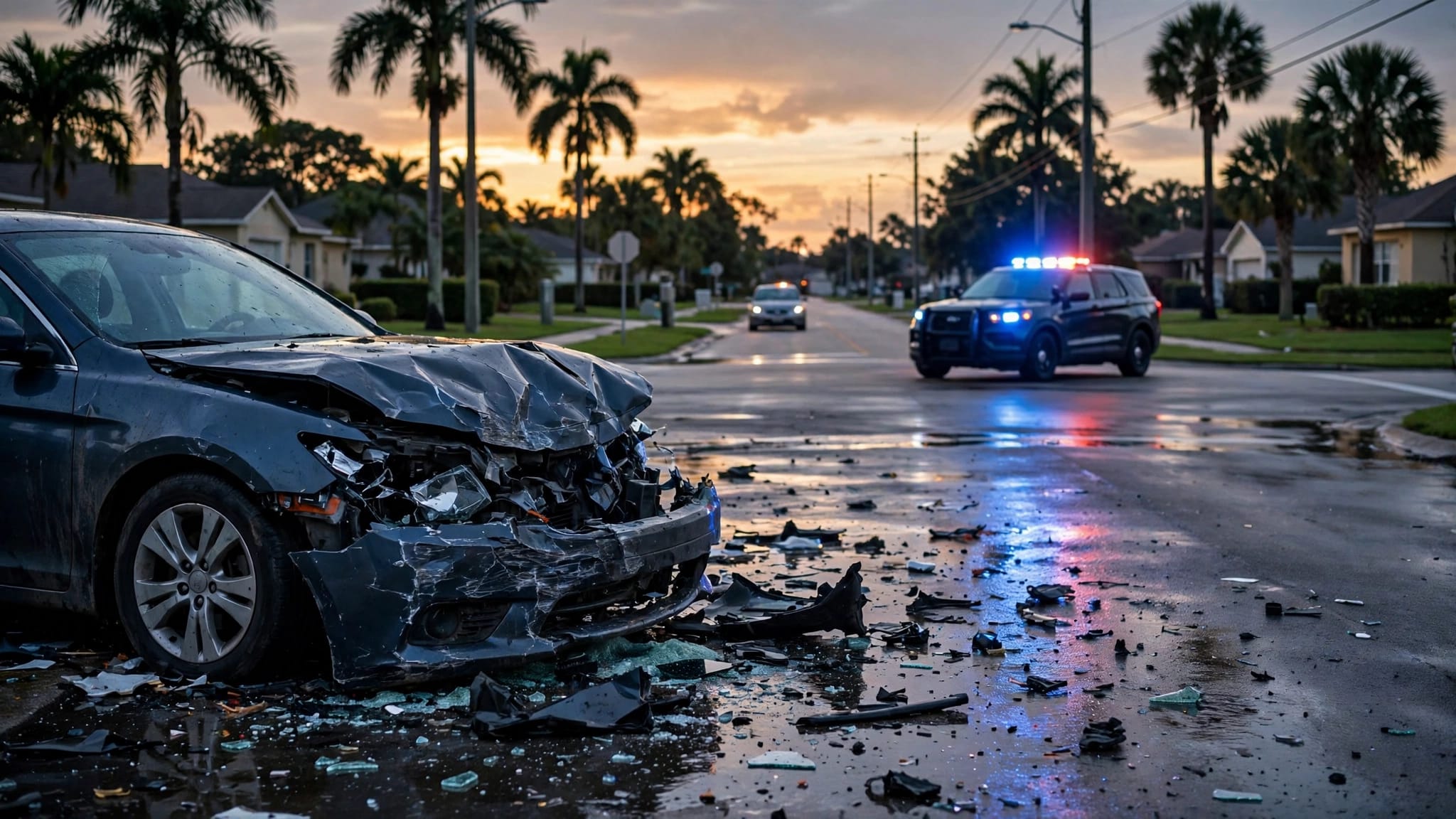
Injured bystanders can pursue compensation after a Florida police chase, but responsibility depends on who caused the crash and which legal protections apply. Florida police pursuit claims may involve the fleeing driver, a government agency, or other responsible parties.
Your claim needs evidence connecting the pursuit to your injuries, along with an assessment of insurance and government immunity. A suspect’s arrest alone doesn’t establish your right to payment.
Start by separating the fleeing driver’s conduct from the legal rules governing the pursuing officers and their agency.
Key Takeaways
- A fleeing driver and a pursuing officer raise separate liability questions, even when both contributed to the same collision.
- Government claims involve immunity defenses, written notice requirements, and limits on recovery.
- Pursuit recordings, dispatch communications, vehicle evidence, and witness accounts can explain what happened before impact.
- Criminal proceedings and insurance negotiations don’t automatically extend civil filing deadlines.
Establishing Liability in Florida Police Pursuit Claims
The fleeing driver’s responsibility
A fleeing driver may face civil liability for speeding, running a signal, driving against traffic, or forcing another motorist off the road. The claim must connect that conduct to the collision and your losses.
A criminal charge can identify relevant evidence, but it doesn’t replace the civil investigation. Likewise, you don’t need to wait for a conviction before preserving evidence or pursuing an injury claim.
Physical contact isn’t always necessary. An unsafe maneuver can cause a crash even when the fleeing vehicle never touches yours. However, witness accounts, recordings, and physical evidence must support that sequence.
The officer and agency require separate analysis
A patrol car striking your vehicle presents different questions than a suspect hitting you during a pursuit. The investigation must identify each driver’s actions and their connection to the harm.
Florida’s emergency-vehicle statute recognizes pursuit as a qualifying circumstance for emergency-driving privileges. That provision alone doesn’t resolve civil liability.
Government immunity and the circumstances of the pursuit require separate analysis. The proper defendant may be the employing public entity rather than the individual officer. Agency involvement alone doesn’t establish liability, and a department policy violation doesn’t automatically prove a civil claim.
How Government Immunity Can Affect Recovery
Pursuit-specific protections matter
Florida’s sovereign immunity statute permits certain negligence claims against government entities, subject to restrictions.
It also provides pursuit-specific protection for an employing agency when a fleeing motorist causes injury and statutory conditions apply. Those conditions concern the officer’s conduct, a reasonable belief that the fleeing person committed a forcible felony, and written pursuit-policy and training requirements.
The reason officers started the chase therefore matters. So do agency policies, training records, and communications about continuing or ending it. A serious injury doesn’t, by itself, defeat an immunity defense.
Payment limits can restrict compensation
Government liability and the amount recoverable are separate questions. Florida generally limits payment under its sovereign immunity waiver to $200,000 per person and $300,000 per incident.
Several injured people may therefore face a shared incident limit. A judgment exceeding the statutory cap doesn’t automatically require the government to pay the excess.
Additional recovery can involve available insurance or a legislative claims bill. Neither route guarantees payment. Punitive damages are unavailable against the government under this waiver.
These restrictions make it important to identify every supported claim and applicable source of coverage, rather than assuming the agency can pay all documented losses.
Evidence That Explains the Pursuit and Collision
Preserve the approach, not only the wreckage
Photographs of damaged vehicles establish important facts, but they may not show why the crash occurred. Dashcam recordings, nearby surveillance footage, and witnesses can reveal vehicle movements before impact.
When it’s safe, photograph vehicle positions, traffic signals, debris, roadway marks, and sight obstructions. Keep original files with their date information intact. Don’t rely only on edited clips or social-media copies.
Witnesses should describe what they actually saw. Someone who watched the vehicles approach provides different evidence than someone who arrived afterward. Avoid guessing speeds or distances you can’t reliably recall.
Seek records controlled by others
Potential evidence includes dispatch audio, 911 calls, patrol-car video, body-camera recordings, location data, and communications about the pursuit. Availability depends on the agency, equipment, and circumstances.
An attorney can seek preservation of relevant records before routine deletion removes them. A preservation request and a public-records request serve different purposes; requesting a copy alone may not protect every relevant item.
Damaged vehicles also deserve attention before repairs or disposal. Some contain electronic data concerning speed, braking, or other activity near impact.
A missing or disputed crash report doesn’t necessarily defeat your case. Our guidance on claims without a police report explains how other evidence can support the collision account.
Compensation, Insurance, and Shared Fault
An injury claim may seek medical expenses, lost earnings, reduced earning capacity, and other legally recoverable losses. Pain and suffering may also qualify, although Florida’s motor vehicle injury threshold can restrict noneconomic damages in covered cases.
Medical records should connect your symptoms and treatment to the crash. Tell providers about prior injuries so they can distinguish earlier conditions from new or worsened problems. Keep work restrictions, pay records, bills, and receipts.
Insurance coverage requires a separate review. The fleeing driver’s bodily injury coverage and any available uninsured or underinsured motorist coverage may matter. A finding of fault doesn’t create insurance that the policy doesn’t provide.
When several people suffer injuries, competing claims against limited coverage can affect the money available. Claimants don’t automatically receive equal shares.
Under Florida’s comparative-fault statute, your assigned fault reduces damages in covered negligence actions. A finding that you’re more than 50% responsible for your own harm bars recovery in those actions.
An insurer’s proposed percentage isn’t a court finding. Claims that you sped, changed lanes unsafely, or could have avoided impact need evidence connecting that conduct to the harm.
Government Notice and Lawsuit Deadlines Are Different
Florida’s general limitations statute generally provides two years for negligence actions involving recent crashes. Wrongful death actions also generally have a two-year filing period.
Claims against government defendants follow additional rules. Section 768.28 generally provides a four-year period for covered government tort actions, while wrongful death claims follow the applicable wrongful death limitations period.
For most government claims, written notice must reach the appropriate agency within three years after accrual. Wrongful death notice generally must occur within two years. Except for claims against a municipality, county, or the Florida Space Authority, notice must also go to the Florida Department of Financial Services.
Ordinary claims generally involve a six-month investigation period unless denied earlier. Wrongful death claims have a shorter, 90-day review period. Statutory tolling rules can also affect the calculation.
A crash report or police investigation doesn’t replace the written claim notice required for a government lawsuit.
Notice periods, investigation periods, and filing deadlines perform different functions. A claim against a private driver may expire before a related government claim.
Settlement discussions, an open insurance file, or a pending criminal prosecution don’t automatically stop these clocks. An attorney should assess each potential defendant and deadline early, while evidence remains available.
Frequently Asked Questions
Can I bring a claim if the police car never hit me?
Potentially. Physical contact isn’t always required to establish causation. However, a claim against the agency must overcome applicable immunity defenses and connect actionable conduct to your injury.
The fact that officers pursued the driver doesn’t, by itself, establish government responsibility.
What if the pursuit caused a fatal crash?
A personal representative generally brings a Florida wrongful death action for eligible survivors and the estate. Recoverable losses depend on the statutory relationships and circumstances.
Our discussion of Florida wrongful death damages explains lost support, services, and other potential damages. Government notice requirements and payment limits may still apply when a public entity is a defendant.
What should I bring to an attorney consultation?
Bring the crash report number, photographs, original recordings, witness contacts, insurance documents, and correspondence. Available medical records, work restrictions, and pay information also help document your losses.
Include towing information and the damaged vehicle’s location. You don’t need a completed investigation before seeking legal help. Early involvement can help protect records or physical evidence that another party controls.
Protect Your Claim With a Complete Record
Florida police pursuit claims require separate proof of crash responsibility, government liability, and your losses. Early preservation can protect the recordings and records needed to answer those questions.
At Avard Law Offices, we offer a free initial consultation for people seeking guidance about a potential injury claim. Bring the records you have so we can discuss the liability, coverage, and deadline issues affecting your options.