
Florida Road Debris Claims: Finding Highway Records
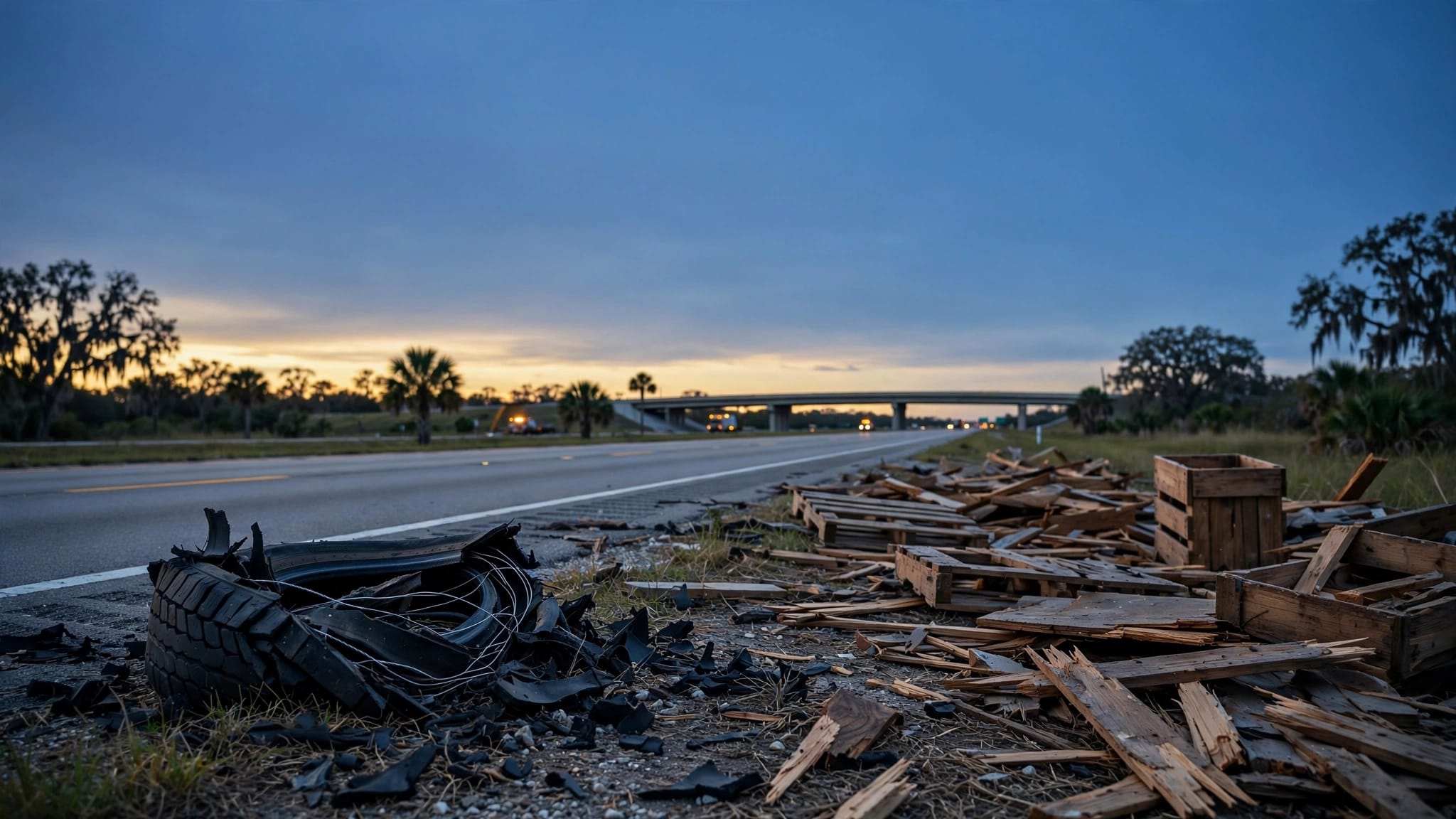
A shredded tire, loose lumber, fallen cargo, or abandoned equipment can cause a violent crash in seconds. Yet Florida road debris claims often turn on what happened before impact, including who dropped the object, who controlled the road, and whether anyone had time to remove a known hazard.
The debris may have come from a private truck, a work zone, or a roadway that needed attention. Prompt medical care, a complete crash record, and fast evidence preservation can protect both your health and your claim.
Key Takeaways
- A road debris crash does not automatically make a government agency responsible. The evidence must identify the debris source or show that the agency had notice and a reasonable opportunity to respond.
- Highway maintenance records can reveal patrol activity, prior complaints, cleanup work, repair orders, and communications about the location.
- Florida government claims have special notice requirements under section 768.28. Waiting for every medical record or agency response can put important deadlines at risk.
- Photos, dashcam footage, witness information, the crash report, and vehicle damage often establish the timeline better than one document alone.
- A private driver, trucking company, road contractor, county, city, or FDOT may each require a different investigation.
How Florida Road Debris Claims Begin
The first issue is identifying the object and connecting it to a responsible party. A ladder that fell from a trailer creates a different claim than debris that sat in an interstate travel lane for an unknown period.
Florida road debris claims become harder when the object is gone before officers arrive. Still, photographs, witness accounts, truck markings, dashcam recordings, and damage patterns may establish what caused the crash.
Trace the debris to its source
A driver or company may be liable if an unsecured load, failed tarp, poor vehicle maintenance, or careless transport put debris on the road. Tire fragments can also point to a commercial vehicle with a damaged or neglected tire.
Look for a license plate, business name, USDOT number, distinctive paint, cargo labels, or a direction of travel. Witnesses may have seen debris fall from a vehicle even if they did not see the collision.
Commercial cases often produce useful records. Dispatch data, inspection reports, GPS information, loading documents, and repair history can show who controlled the vehicle and whether the problem was foreseeable. Review proving fault in a Florida road debris accident for more on evidence tied to unsecured loads.
Do not treat the crash report as final
A Florida Traffic Crash Report can identify vehicles, list witnesses, describe roadway conditions, and include a diagram. It may also contain errors about lane position, travel direction, or the debris itself.
Request and review the report as soon as it is available. Compare the officer’s narrative with your own photos, medical records, vehicle damage, and video. A citation can support a claim, but it does not decide civil liability. Likewise, the absence of a citation does not erase negligence.
The strongest debris cases connect the object, the roadway timeline, and the injury evidence with records that can be checked independently.
When a Debris Crash May Involve a Government Agency
Florida roads do not all have the same owner or maintenance authority. An interstate may fall under the Florida Department of Transportation, while a county, city, toll authority, or private contractor may handle another location.
Before directing a claim to a public entity, identify the exact crash location, road name, mile marker, travel direction, and nearby intersection. Those details help determine who controlled maintenance at that point.
Government control is only the first step
A public agency is not responsible for every object that appears on a highway. A claim generally needs evidence that the agency controlled the roadway, had actual or constructive notice of the dangerous condition, and had a reasonable opportunity to act.
Actual notice may come from a prior 911 call, maintenance report, traffic incident, employee observation, or public complaint. Constructive notice can depend on evidence that the debris remained long enough for a reasonable inspection or patrol to find it.
The precise timeline matters. A chair that fell from a pickup moments before a collision creates a different issue than construction material reported repeatedly over several hours.
Contractors and work zones require separate scrutiny
Road construction can involve FDOT, a local government, a general contractor, subcontractors, traffic-control vendors, and trucking companies. Each party may have separate duties under project contracts and maintenance-of-traffic plans.
Requesting project records quickly can reveal lane closures, daily field reports, inspection notes, debris removal assignments, and communications about unsafe conditions. Florida work zone injury claims may involve records that are routinely overwritten or discarded after a project advances.
Highway Maintenance Records That Can Strengthen a Claim
Maintenance records do not automatically prove liability. However, they can show whether a public entity knew about debris, sent crews to the area, or left a reported hazard unaddressed.
A focused public-records request works better than a broad demand for “all records.” Include the crash date, time range, road name, county, mile marker, direction of travel, and a clear description of the debris.
Patrol logs, inspections, and incident reports
Roadway agencies may keep inspection schedules, patrol logs, incident reports, maintenance tickets, or operations records. These materials can help establish when employees last checked the area and whether someone reported the hazard.
Ask for records from a meaningful period before and after the crash. A request limited to the exact minute of impact may miss earlier complaints or a dispatch entry that explains why no crew arrived.
Work orders and earlier complaints
Work orders, contractor service tickets, cleanup invoices, internal emails, and prior debris complaints can establish a timeline. They may also identify another party, such as a contractor assigned to remove litter or maintain a work zone.
The following categories can help organize a request:
| Record type | What it may show |
|---|---|
| Patrol and inspection logs | When the area was checked or a hazard was observed |
| Service tickets and work orders | Whether cleanup or repairs were assigned |
| 911 and incident records | Reports made by motorists or responders |
| Prior complaints | Whether the condition appeared before the crash |
| Project documents | Contractor duties and work-zone traffic plans |
These records may be unavailable, exempt, or subject to retention limits. Still, asking early preserves the best chance of locating them. Florida government injury claims often depend on maintenance history and proof of notice.
Preserve Evidence Before It Disappears
A debris crash can leave little physical evidence after traffic resumes. Road crews remove hazards, vehicles are repaired, and nearby recordings may be overwritten. Take practical steps as soon as your medical condition allows.
Document the scene and your vehicle
Photograph the debris from a safe location if it remains present. Capture wide shots of the highway, lane markings, shoulder, signs, skid marks, lighting, weather, and nearby businesses or cameras.
Also photograph each side of your vehicle before repairs. Damage to a bumper, undercarriage, windshield, wheel, or suspension can support your account of the object and impact sequence.
Keep the damaged vehicle available for inspection when the crash caused significant damage or injuries. Repairing or selling it too soon can remove evidence that later becomes disputed.
Secure video and witness information
Ask witnesses for names, phone numbers, and a brief description of what they saw. A witness who observed cargo fall from a truck may be more important than one who only saw the crash aftermath.
Traffic cameras can help, although a camera may have a limited view or no retained recording. Requesting FDOT traffic camera footage may require a prompt public-records request, and nearby business, residential, or vehicle video can fill gaps.
Written preservation requests can also target trucking companies, contractors, insurers, and government entities. They should identify the incident, date, location, involved vehicles, and relevant categories of video, electronic data, inspections, and communications.
Deadlines in Claims Against Florida Public Entities
Claims against Florida agencies and subdivisions involve procedures that do not apply in the same way to an ordinary claim against a private driver. Florida Statute section 768.28 contains notice rules, an investigation period, and limits on recovery.
The correct deadline depends on the accident date, legal theory, potential defendants, and other facts. Do not assume an insurance claim, a public-records request, or settlement talks pause a filing deadline.
Written notice has its own timetable
Under Florida Statute section 768.28, most claims require written notice within three years after the claim accrues. Wrongful death claims generally require notice within two years.
The notice must go to the appropriate agency. Except for claims against a municipality, county, or the Florida Space Authority, it must also go to the Florida Department of Financial Services.
The agency has a 180-day investigation period before an action may begin. Missing a procedural requirement can lead to a dispute even when the evidence of unsafe roadway conditions is strong.
Ordinary negligence deadlines may also apply
For many Florida negligence claims arising from injuries on or after March 24, 2023, the general filing period is two years. Older claims and claims involving government defendants can follow different rules.
A child claimant, delayed symptoms, an unknown contractor, or multiple defendants can complicate the analysis. Early review allows time to preserve evidence and identify every responsible party without gambling on a deadline calculation.
Common Problems That Weaken Road Debris Cases
Insurers often argue that a driver should have seen and avoided debris. They may also claim the object appeared too suddenly for any agency or driver to respond. Records and physical proof provide the best response to those arguments.
Waiting to seek care or document injuries
Medical treatment should not wait while you investigate the debris source. Florida PIP benefits generally require initial treatment within 14 days after a crash, and gaps in care can give an insurer grounds to question the injury.
Tell each provider how the crash occurred and describe all symptoms, including pain that worsens after the first day. Save discharge instructions, imaging results, prescriptions, therapy notes, work restrictions, and receipts.
Giving estimates instead of facts
Stay accurate when speaking with officers, insurers, and medical providers. If you do not know the debris source, vehicle speed, or exact sequence, say so rather than guessing.
Florida’s modified comparative negligence rules can reduce damages by an injured person’s share of fault. In many covered negligence cases, a person found more than 50 percent responsible cannot recover damages. Clear evidence about visibility, braking, lane position, and the debris location matters.
Frequently Asked Questions
Can I make a claim if I never saw where the debris came from?
Yes. The investigation may identify a responsible party through witnesses, video, a nearby commercial vehicle, tire debris, maintenance records, or prior reports. However, an unknown source makes documentation and prompt evidence requests more important.
Is FDOT liable for debris on every Florida highway?
No. FDOT may not control the roadway, and control alone does not establish liability. A claim must examine the agency’s duties, notice of the hazard, the time available to respond, and whether another driver, contractor, or property owner caused the debris.
What records should I request after a highway debris crash?
Request crash-related incident records, patrol and inspection logs, complaints, work orders, cleanup records, traffic operations records, and relevant video. Use the precise location and time range, then preserve copies of every response.
Can an insurance company blame me for hitting debris?
It may try. The insurer can argue that the debris was visible or avoidable, but that position must fit the evidence. Photos, witness accounts, damage patterns, road conditions, and video may show that evasive action was unsafe or impossible.
Moving Forward After a Road Debris Crash
A successful road debris claim depends on a documented chain of events, not assumptions about who should have cleaned the road. The best evidence shows where the object came from, how long it remained, and how it caused the collision.
Prompt action protects Florida road debris claims while video, maintenance records, witnesses, and vehicle evidence still exist.